Artwork
The Mitre, Paddington Canal
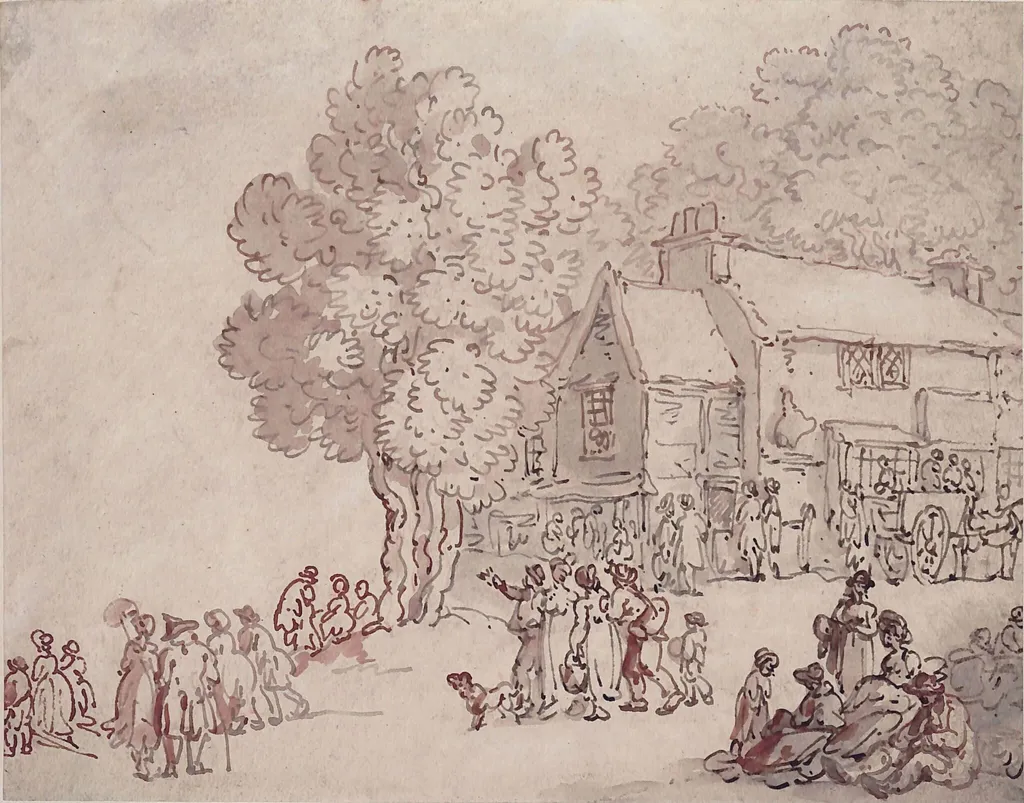
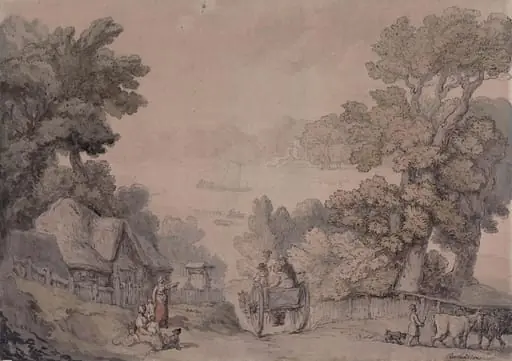
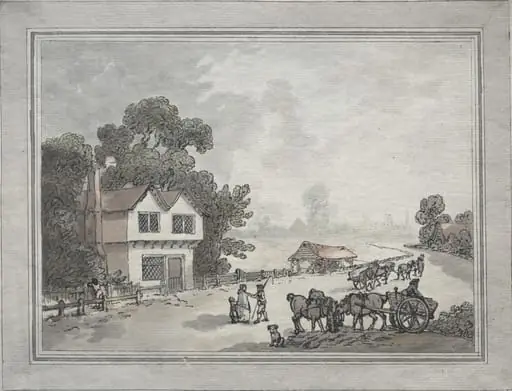
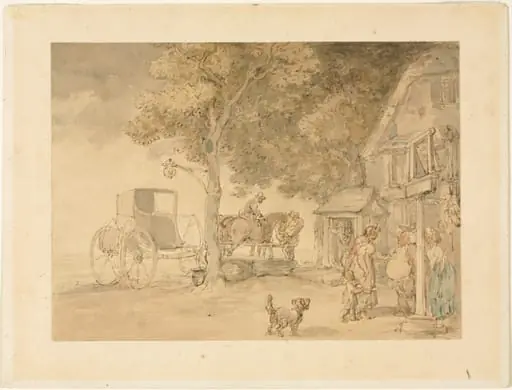
The Mitre, Paddington Canal is a watercolor work on paper by the British Romanticist artist Thomas Rowlandson. It dates from 1812 and is held in the collection of the Victoria and Albert Museum.
About this work
Overview
The work reflects Rowlandson’s interest in everyday observation rather than grand narrative, using delicate washes to convey atmosphere over detail.
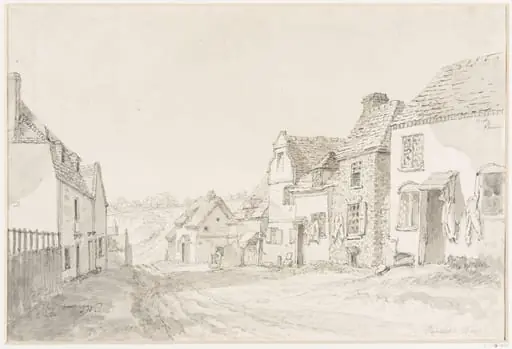
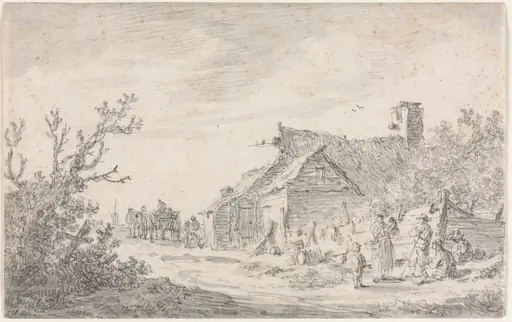
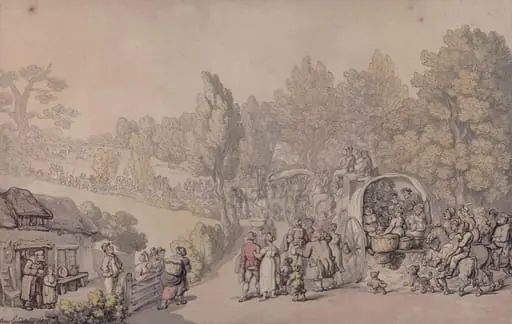
Painted in 1812, this watercolour by Thomas Rowlandson captures a quiet moment along the Paddington Canal. One of three known variants of the same scene, it presents an unidealized slice of urban life, rendered with the spontaneity of a personal sketch. The work reflects Rowlandson’s interest in everyday observation rather than grand narrative, using delicate washes to convey atmosphere over detail.
Subject & Meaning
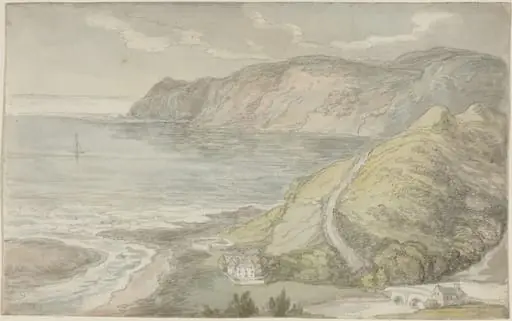
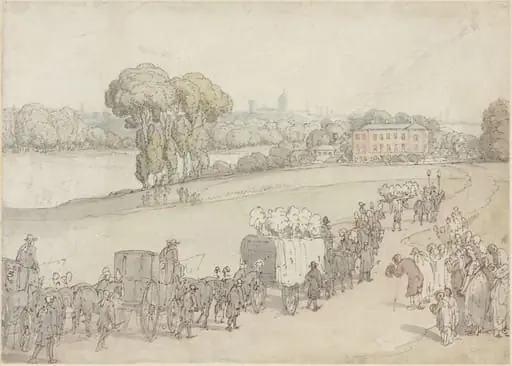
The scene centers on a group of people gathered near a tree beside the canal—some walking, others seated or conversing. A modest building with a pointed roof, possibly a pub or shop, anchors the background. The composition suggests ordinary leisure, not spectacle, emphasizing the canal as a social space for local residents. The absence of dramatic action invites quiet contemplation of daily routines.
Technique & Style
Rowlandson employed loose, fluid brushwork and translucent watercolour washes to suggest movement and light. Forms are suggested rather than defined, with muted tones blending softly across the paper. The sketchlike quality, with minimal detail and rapid strokes, mirrors the immediacy of a field study, aligning with Romantic-era tendencies toward informal, observational art.
History & Provenance
Created in 1812, the work belongs to a small group of related watercolours by Rowlandson depicting the Paddington Canal. Its provenance traces through private collections in Britain, though its early ownership remains undocumented. It was not exhibited publicly during the artist’s lifetime, suggesting it was made for personal or limited circulation rather than public display.
Context
The Paddington Canal, opened in 1801, was a working waterway connecting London to the Grand Junction Canal. By 1812, it had become a routine part of urban life, lined with modest businesses and frequented by locals. Rowlandson’s depiction reflects the growing interest in ordinary urban environments during the early 19th century, away from idealized landscapes.
Legacy
Though not widely known outside specialist circles, this watercolour exemplifies Rowlandson’s contribution to British topographical art. Its informal style influenced later artists who valued candid observation over formal composition. Today, it stands as a quiet record of early industrial-era London, valued for its authenticity rather than its polish.
Artist & collection
Artist
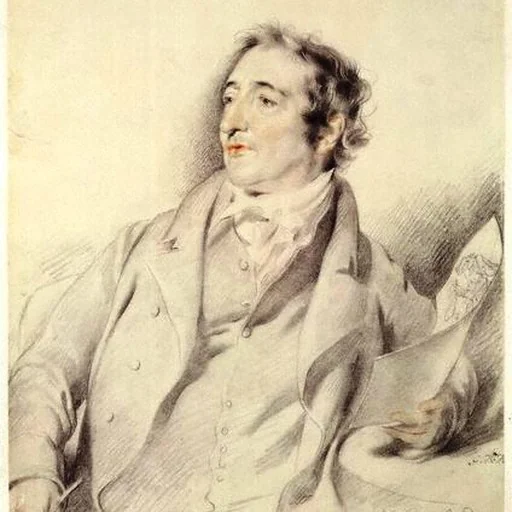
Thomas Rowlandson (; 13 July 1757 – 21 April 1827) was an English artist and caricaturist of the Georgian Era, noted for his political satire and social observation.