Artwork
Uciderea pruncilor
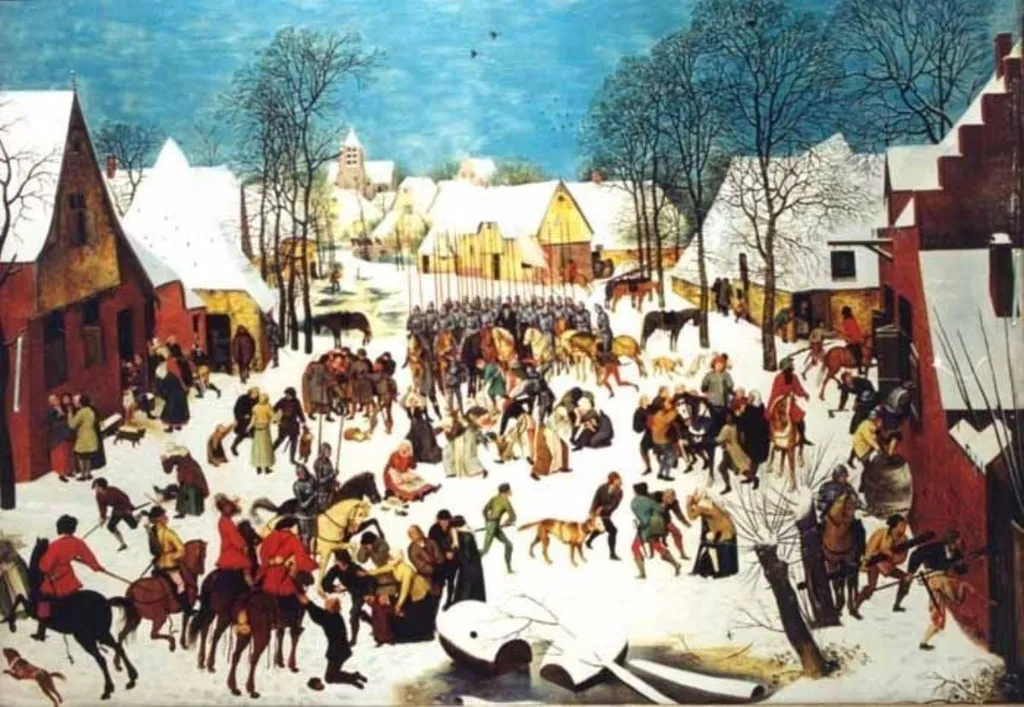
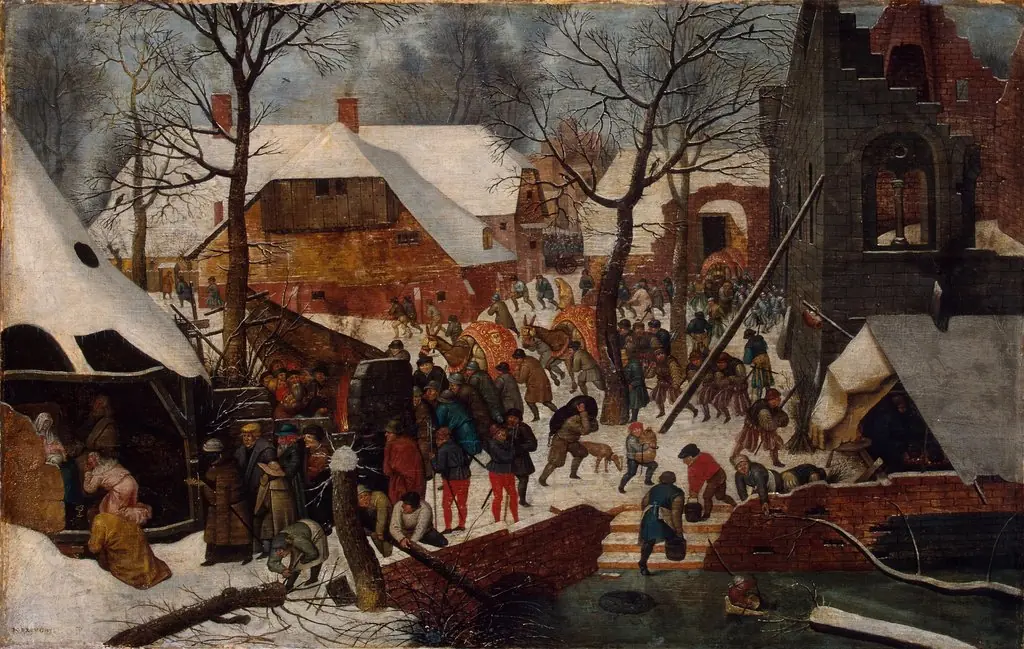
Uciderea pruncilor is an unspecified painting by the Northern Renaissance artist Peter și colaboratorii Brueghel cel Bătrân. It dates from 1550 and is held in the collection of the National Museum of Art of Romania. Created around 1550, this winter landscape is attributed to Pieter Bruegel the Elder and his workshop.
About this work
Overview
Created around 1550, this winter landscape is attributed to Pieter Bruegel the Elder and his workshop. The composition presents a bustling village under a heavy snowfall, populated with figures engaged in everyday activities, from skating on a frozen pond to traversing snow‑laden streets on foot or horseback.
Subject & Meaning
The scene captures a snapshot of communal life during a harsh winter, juxtaposing leisure pursuits such as skating with the presence of armed soldiers bearing spears. The mixture of civilian and military figures suggests a narrative of social order and collective endurance in the face of cold.
Technique & Style
Bruegel’s hallmark attention to minute detail is evident in the varied costumes, the texture of snow, and the subtle play of light across the landscape. The crowded composition, rendered with a fine, almost miniature brushwork, creates depth through overlapping figures and a gradual recession of the village into the background.
History & Provenance
The work, titled "Uciderea pruncilor," is catalogued as a collaborative piece from Bruegel’s studio, reflecting the common practice of workshop assistance in the mid‑16th century. Its attribution to Bruegel the Elder and his assistants has been supported by stylistic analysis and documentation dating to the period.
Context
The painting belongs to a broader tradition of Northern Renaissance genre scenes that depict peasant life with both realism and moral undertones. Winter settings were popular among Flemish artists, serving as a vehicle to explore human activity within a unified, often symbolic, natural environment.
Artist & collection
Artist
Peter și colaboratorii Brueghel cel Bătrân
Peter Bruegel painted crowds the way most of us remember holidays—everyone jostling in the same space, same time, same weather.

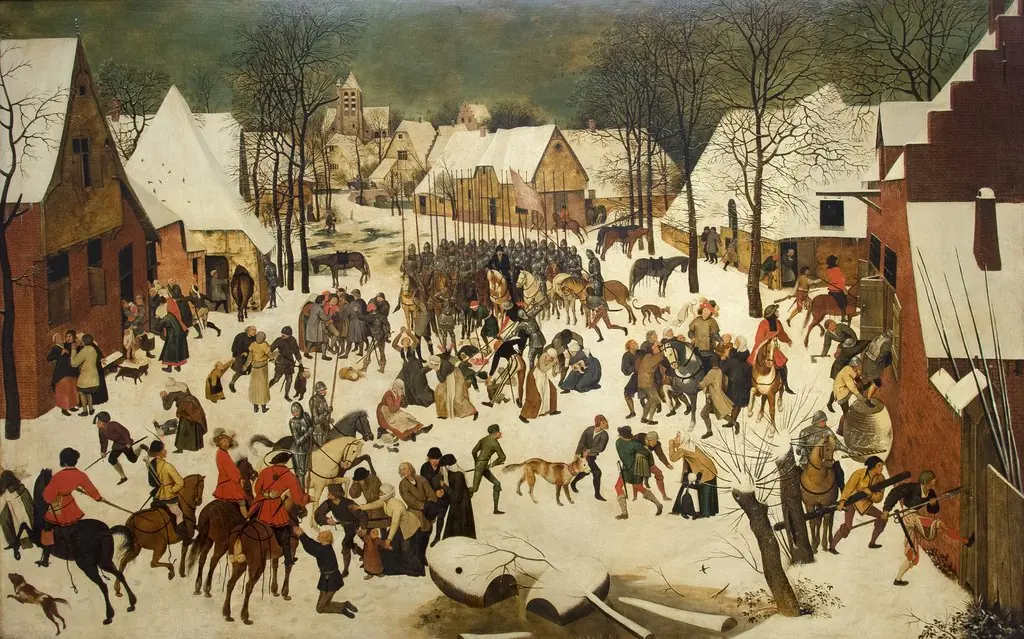 The Massacre of the Innocents
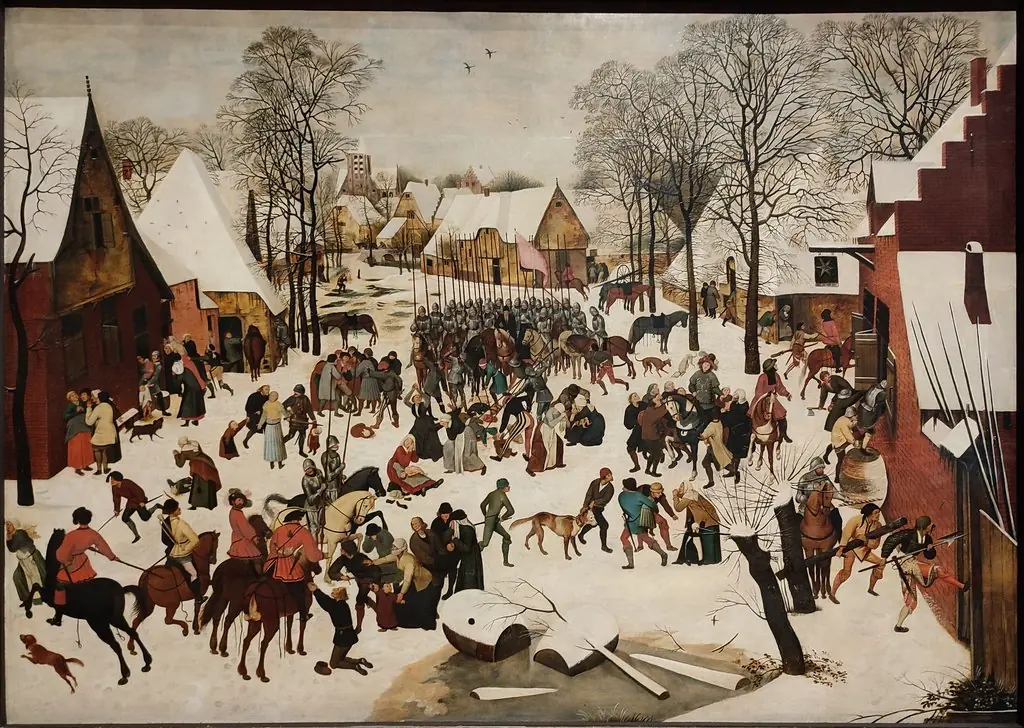 Massacre of the Innocents
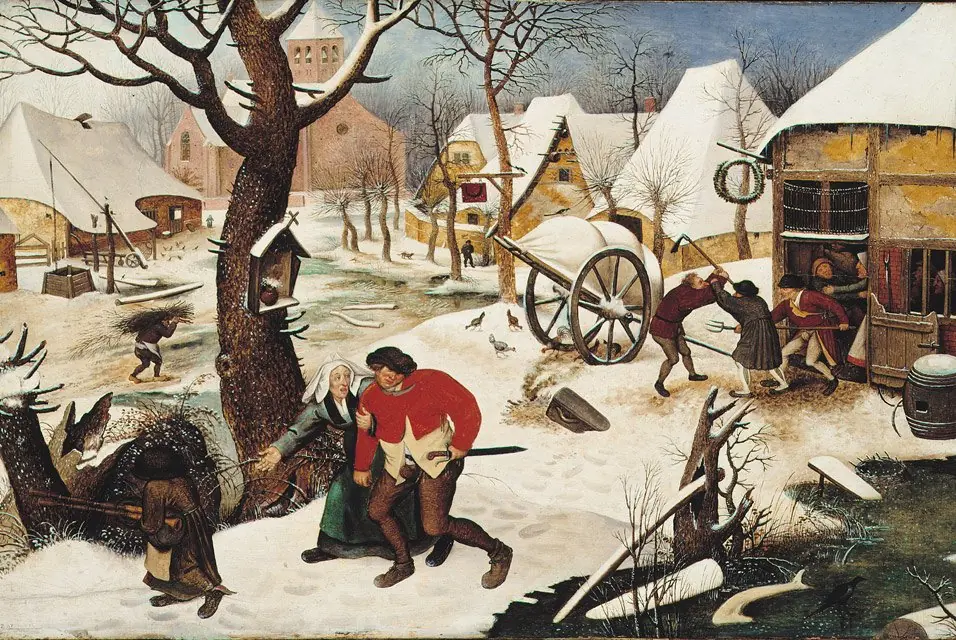 The Return from the Inn
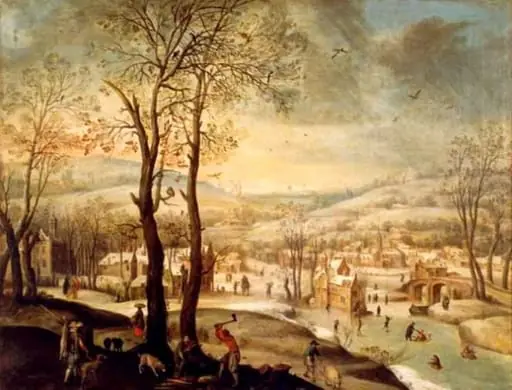 Peisaj de iarnă
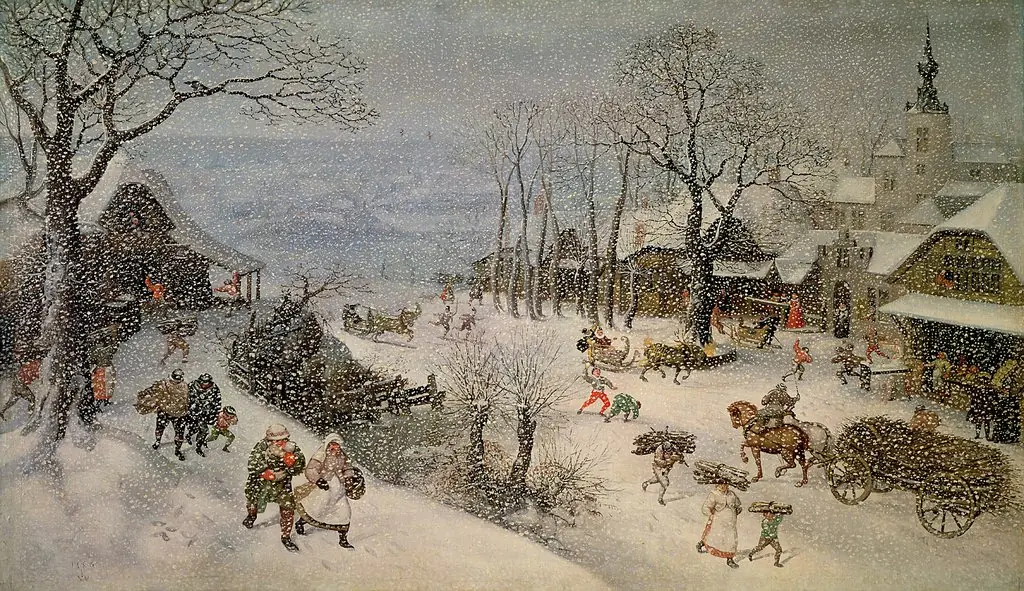 Winter landscape (January or February)
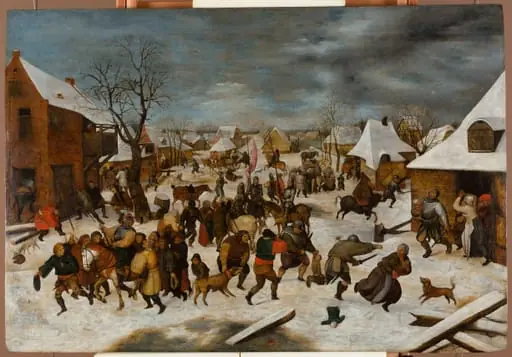 Der bethlehemitische Kindermord
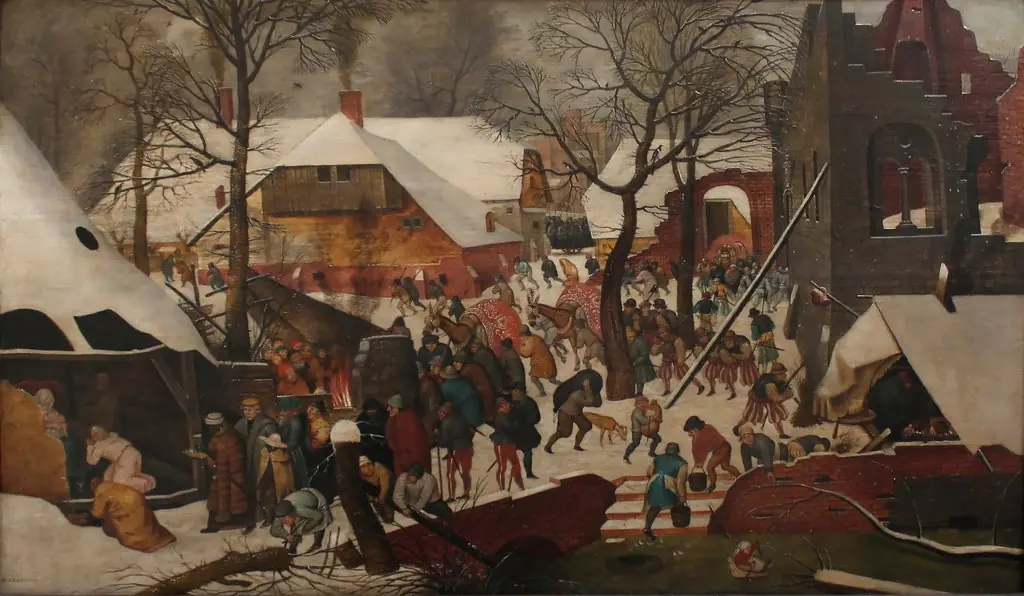 Adoration of the Magi in the Snow
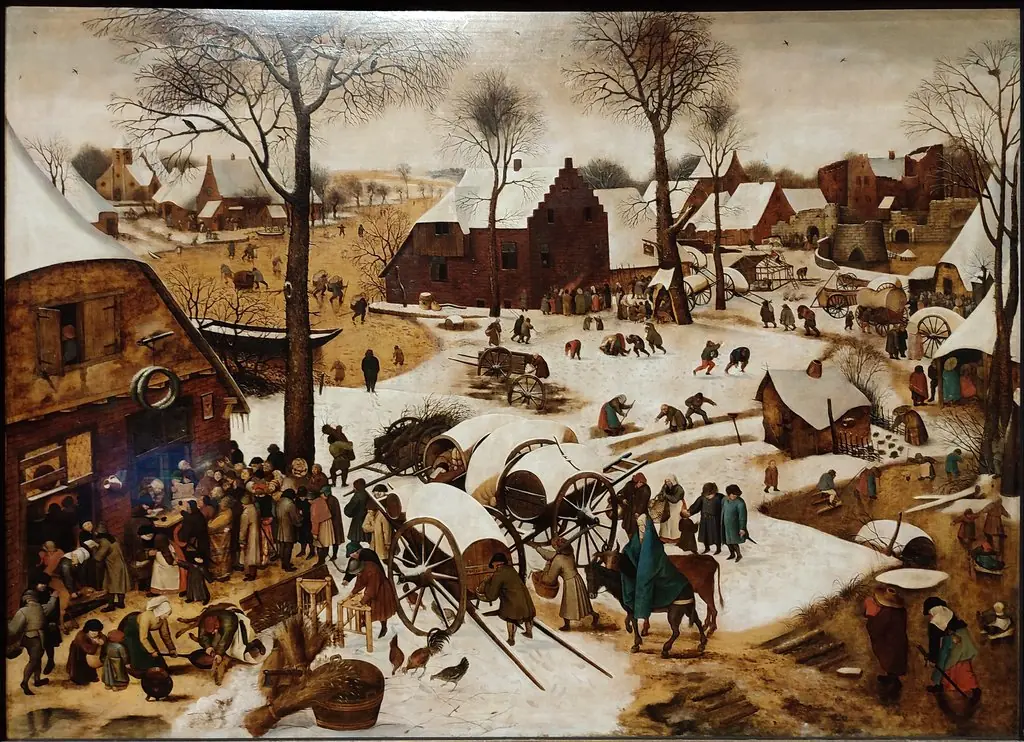 Census in Bethlehem by Pieter Brueghel the Younger
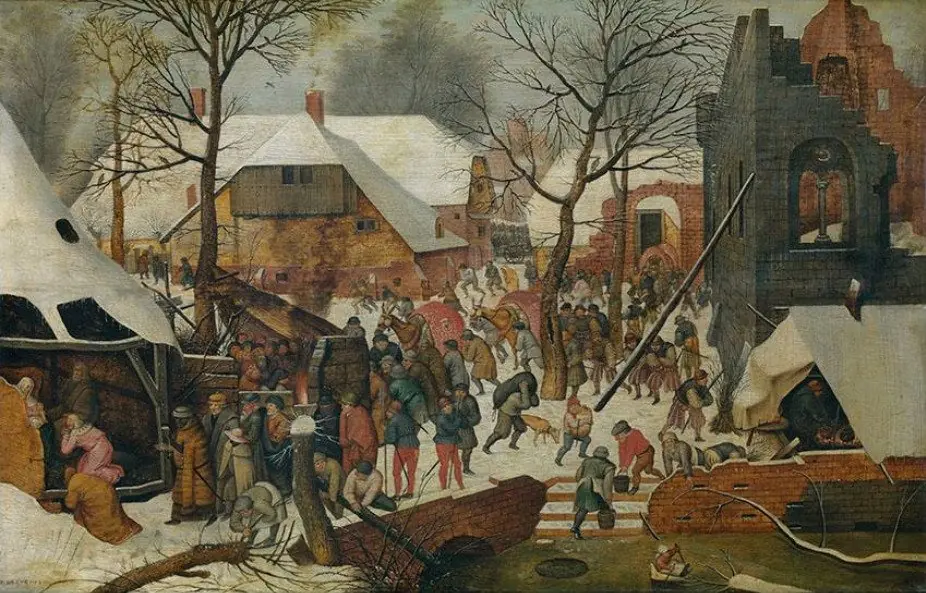 The Adoration of the Magi in the Snow
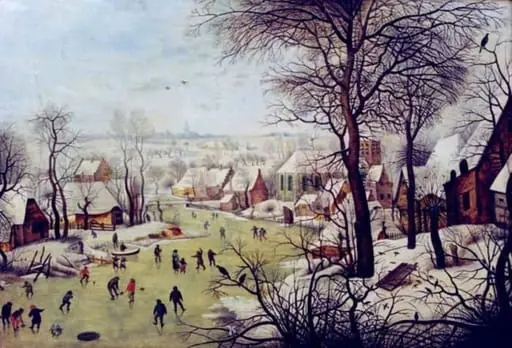 Peisaj de iarnă cu patinatori și cursă de păsări
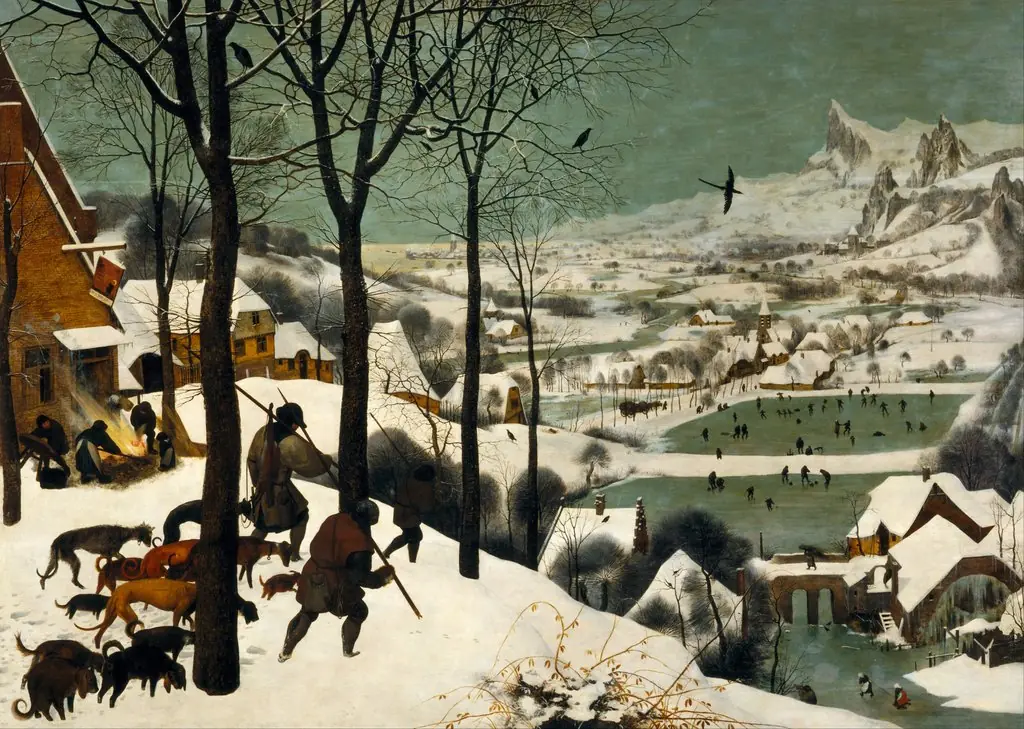 The Hunters in the Snow
 Adoration of the Magi