Artwork
Untitled
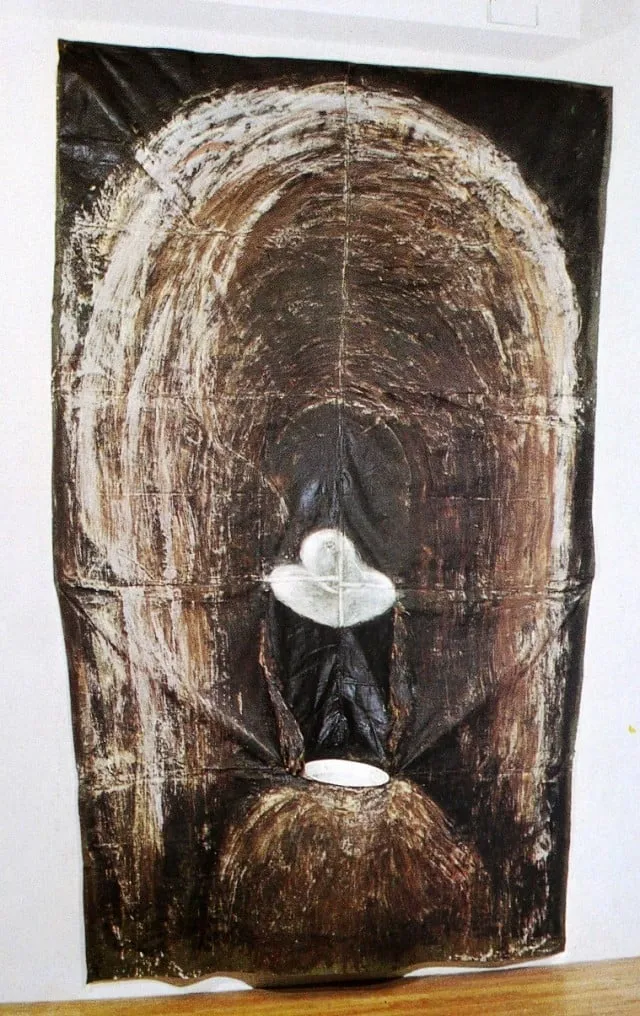
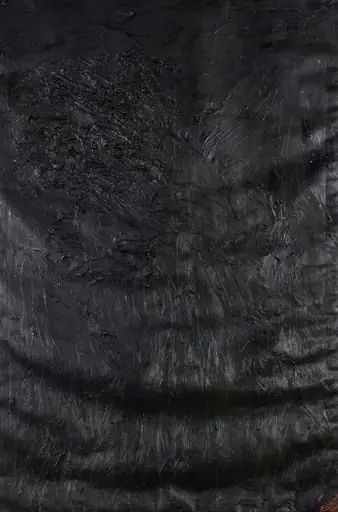
Untitled is an oil painting by Bruno Ceccobelli. It dates from 1982 and is held in the collection of the Museum of Modern Art.
About this work
Overview
The use of unconventional substances challenges traditional boundaries of the medium, emphasizing texture and physicality over illusionistic representation.
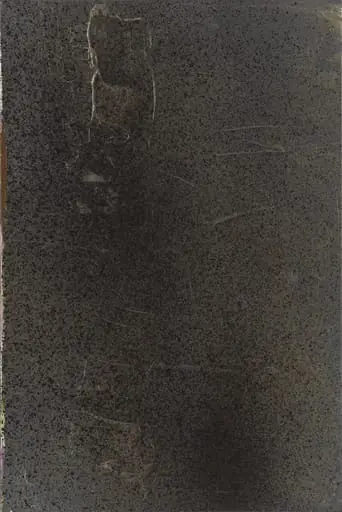
Created in 1982 by Italian artist Bruno Ceccobelli, this untitled work combines oil paint, tar, sulphur, rope, and a metal bucket applied to tarpaulin. It reflects the material experimentation of post-Arte Povera practices and aligns with the Transavanguardia movement’s return to expressive painting. The use of unconventional substances challenges traditional boundaries of the medium, emphasizing texture and physicality over illusionistic representation.
Subject & Meaning
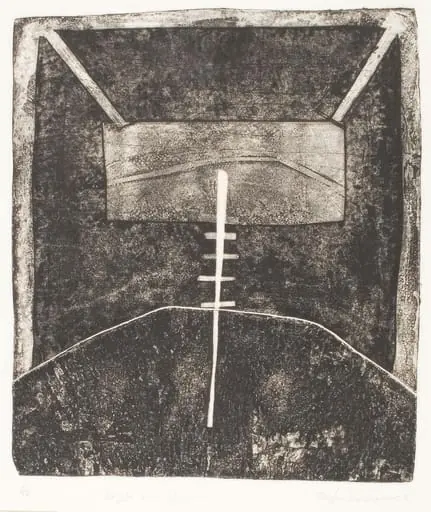
The central form is a stylized human face, rendered with coarse, layered textures that suggest erosion or decay. A pale circle on the forehead and another encircling the mouth create focal points of contrast, possibly evoking ritual markings or spiritual markers. The face appears partially obscured, as if emerging from or sinking into the ground, conveying ambiguity between presence and absence, identity and anonymity.
Technique & Style
Ceccobelli builds the surface through thick applications of oil paint mixed with tar and sulphur, creating a brittle, uneven crust. Rope is embedded into the composition, adding linear tension, while the metal bucket contributes a sculptural element. The impasto technique is pushed beyond mere brushwork, resulting in a tactile, almost archaeological surface that resists smoothness and demands close physical engagement from the viewer.
History & Provenance
The work was produced during Ceccobelli’s active involvement with the Scuola di San Lorenzo, a Rome-based collective reacting to the dominance of conceptual art in the late 1970s. It entered the collection of The Museum of Modern Art in New York, reflecting institutional recognition of Italy’s postmodern painting resurgence. Its inclusion signals a broader reevaluation of material-based painting in the early 1980s.
Context
Emerging alongside Transavanguardia, Ceccobelli’s work responded to the austerity of Arte Povera by reintroducing symbolic imagery and emotional intensity. While retaining the movement’s interest in raw materials, it shifted toward mythic and archetypal forms. This piece situates itself within a broader European trend of reclaiming painting as a vehicle for psychological and cultural resonance after years of theoretical abstraction.
Legacy
The work contributes to a redefined notion of painting in the late 20th century, where materiality and gesture carry symbolic weight. Ceccobelli’s integration of industrial and organic substances influenced subsequent generations of artists exploring the limits of the canvas. Its presence in MoMA’s collection anchors it within a critical discourse on the revival of expressive painting in postmodern Italy.
Artist & collection
Artist
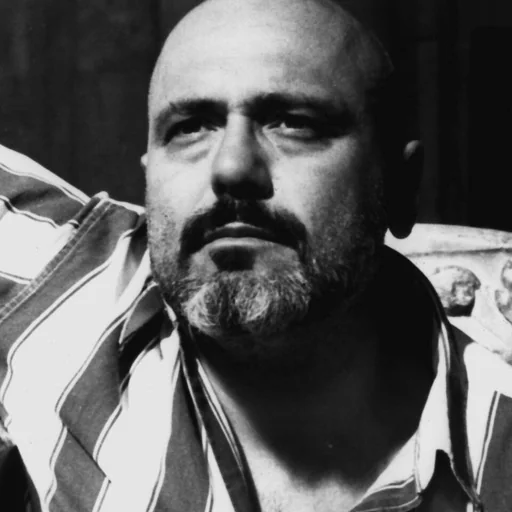
Bruno Ceccobelli (born 2 September 1952) is an Italian painter and sculptor. He currently resides and works in Todi, Italy. Ceccobelli was one of the six artists of the Nuova Scuola Romana or Scuola di San Lorenzo, an…