Artwork
There were Giants in those days
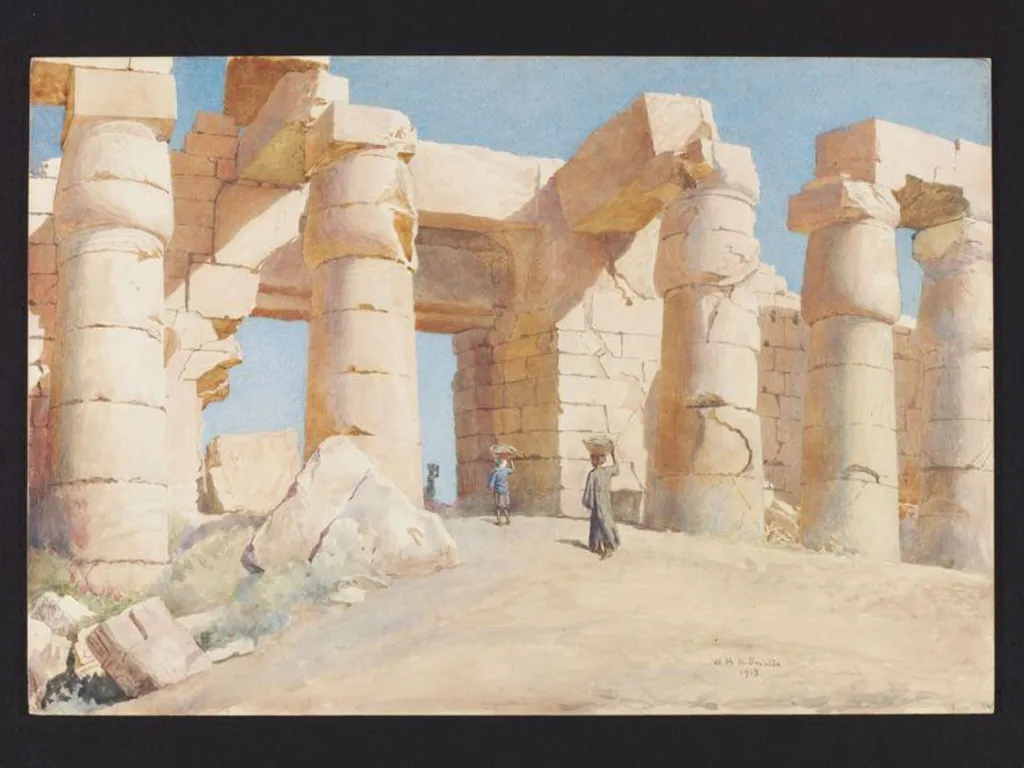
There were Giants in those days is a watercolor work on paper by Winifred Mary Newbery Brunton. It dates from 1913 and is held in the collection of the Victoria and Albert Museum.
About this work
Overview
A watercolour by Winifred Mary Newbery Brunton, completed in 1913, captures the first forecourt of the Great Temple of Amun at Karnak.
A watercolour by Winifred Mary Newbery Brunton, completed in 1913, captures the first forecourt of the Great Temple of Amun at Karnak. The work is rendered in delicate washes, emphasizing the scale and silence of ancient stone architecture. Its modest size and medium reflect a personal, observational approach rather than grand commemoration. The piece was later included in a 1974 Bonhams sale and previously shown at London’s Hanover Gallery.
Subject & Meaning
The scene portrays three figures moving through the ruins, their small forms dwarfed by towering pillars and fallen blocks. Each carries a load on their head, suggesting daily labor amid monumental decay. The contrast between human scale and architectural grandeur evokes time’s passage and the quiet persistence of life among ruins, without overt narrative or symbolism.
Technique & Style
Brunton employed transparent watercolour to suggest the warmth of desert light and the texture of weathered stone. Subtle gradations of tone create depth, while soft shadows elongate across the ground, enhancing spatial recession. Fine brushwork defines the folds of clothing and the grain of limestone, grounding the scene in observed detail rather than idealized form.
History & Provenance
Executed during Brunton’s travels in Egypt, the watercolour remained in private hands until its 1974 auction at Bonhams. It had been previously exhibited at the Hanover Gallery in London, though the exact date is unrecorded. No public record indicates further exhibitions or institutional ownership after the sale, suggesting its continued presence in private collections.
Context
Brunton’s work emerged during a period of heightened European interest in Egyptian antiquities, though her approach avoided exoticism. Unlike many contemporaries who depicted ruins as dramatic spectacles, she focused on quiet, everyday presence within them—aligning with a growing trend of intimate, ethnographic observation in early 20th-century travel art.
Legacy
The watercolour stands as a quiet example of early 20th-century female artists engaging with archaeological sites through direct observation. While not widely reproduced or studied, it contributes to a lesser-known body of work that documents Egypt’s monuments not as monuments alone, but as lived-in spaces, shaped by time and human continuity.
Artist & collection
Artist
Winifred Brunton kept a pet parrot named Caesar that perched on her shoulder while she painted.

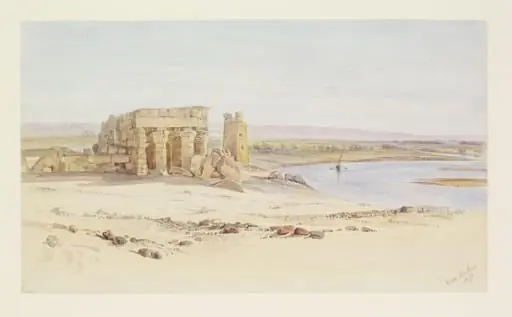 Kom Ombos
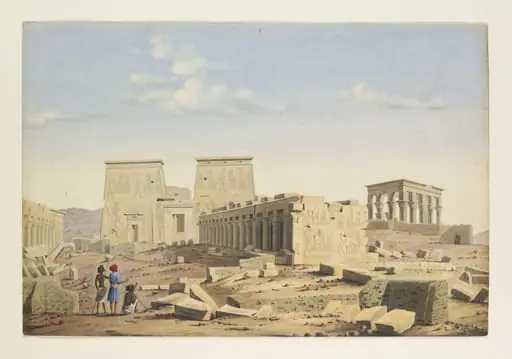 Ile de Philoé
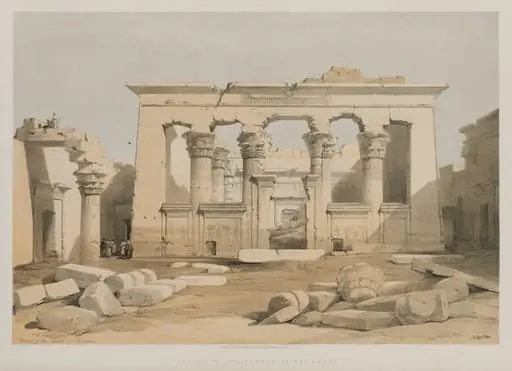 Egypt and Nubia, Volume I: Portico of the Temple of Kalabshe
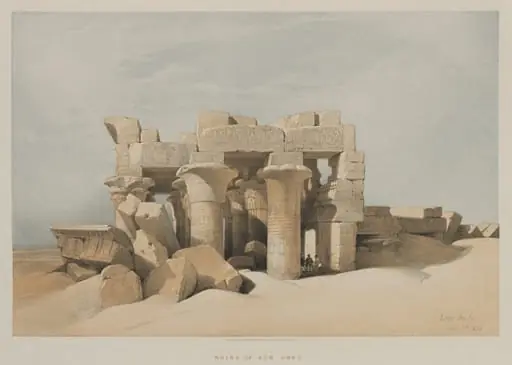 Egypt and Nubia, Volume I: Kom-Ombo
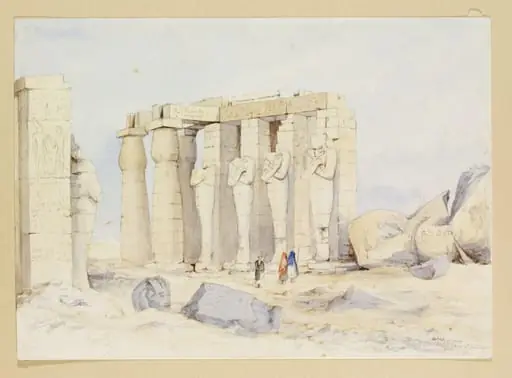 Osiride columns broken statue of Rameses II Memnonium Thebes
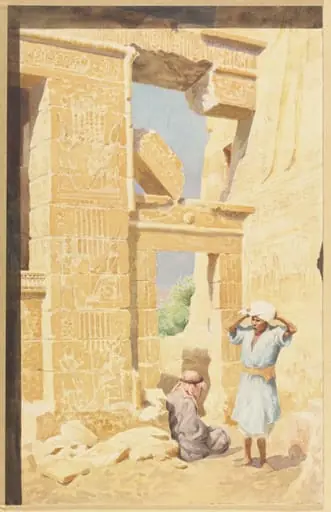 A Doorway at Philae
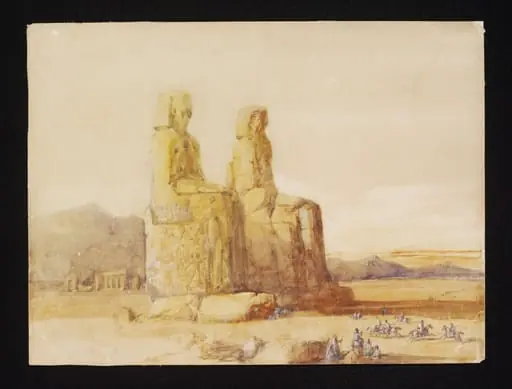 The Vocal Statue - Thebes, 1848
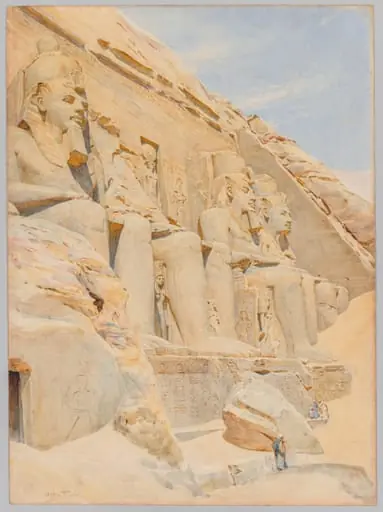 The Great Temple of Abu Simbel
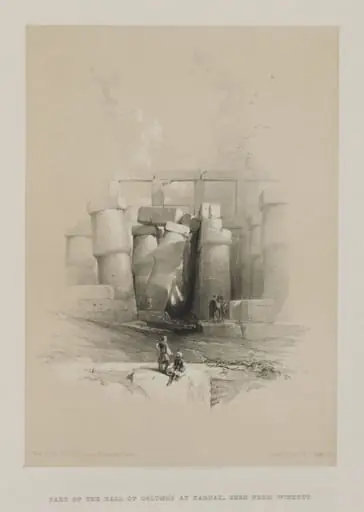 Egypt and Nubia, Volume II: Part of the Hall of Columns at Karnak, Thebes
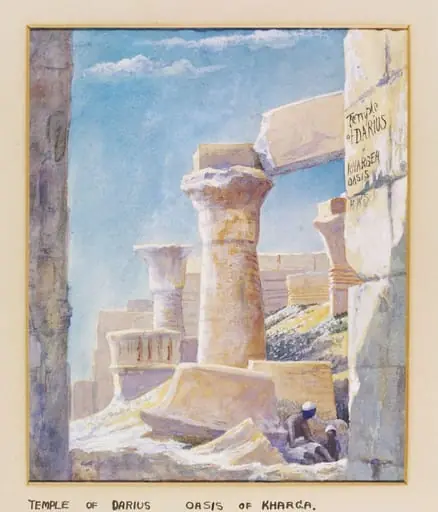 Temple of Darius Khargeh Oasis
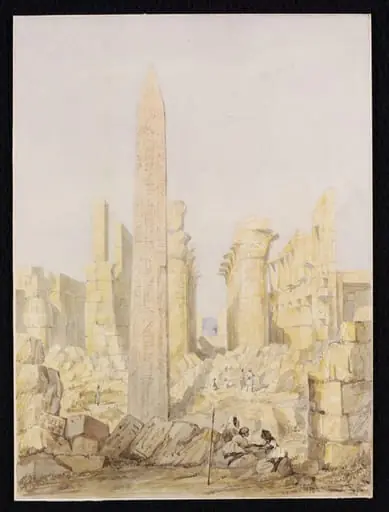 Great Temple. Karnac. Thebes
 Les cariatides du Ramesseum 134