Artwork
Egypt and Nubia, Volume I: Portico of the Temple of Kalabshe
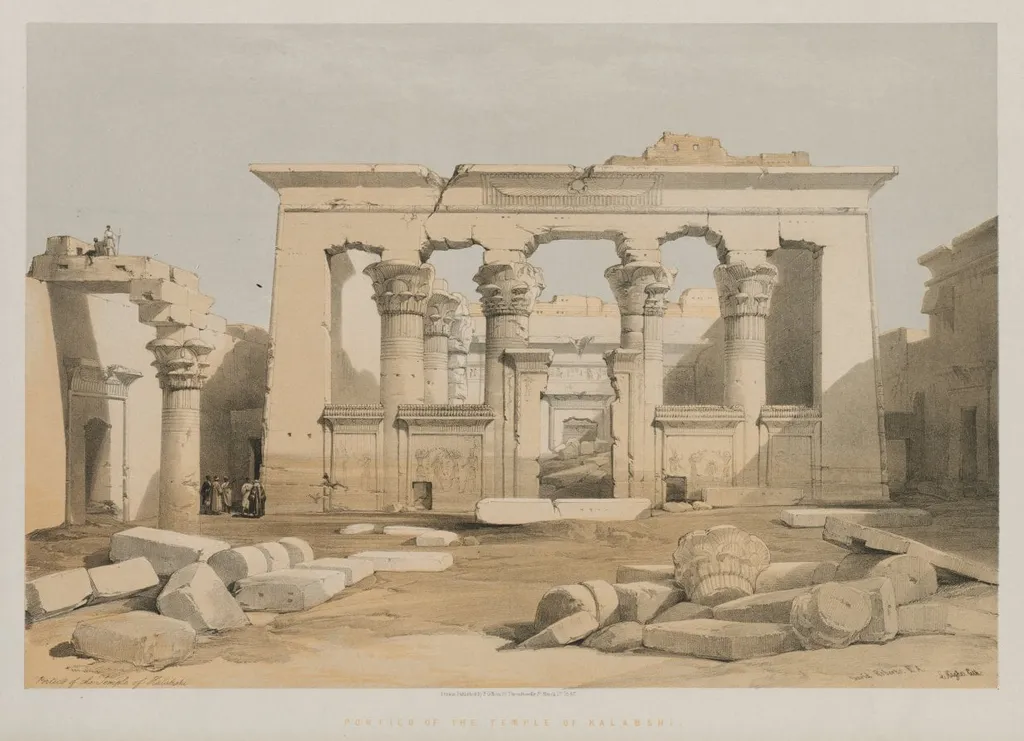
Egypt and Nubia, Volume I: Portico of the Temple of Kalabshe is a print by the Romanticist artist Louis Haghe. It dates from 1847 and is held in the collection of the Cleveland Museum of Art.
About this work
Overview
The print captures the portico of the Temple of Kalabshe, reflecting mid-19th-century efforts to systematically document ancient sites in the Nile Valley.
Created in 1847 by Louis Haghe, this lithograph is part of the first volume of a documentary series on Egyptian and Nubian monuments. Haghe, a Belgian-born artist based in London, specialized in lithographic reproduction and collaborated with William Day to produce detailed architectural records. The print captures the portico of the Temple of Kalabshe, reflecting mid-19th-century efforts to systematically document ancient sites in the Nile Valley.
Subject & Meaning
The image focuses on the ruined entrance of the Temple of Kalabshe, featuring six weathered columns topped with carved capitals. Scattered stone blocks and faint human figures at the left suggest both the scale of the ruin and the presence of contemporary observers. The composition emphasizes decay and endurance, conveying the passage of time without romantic embellishment, aligning with scholarly documentation rather than mythic interpretation.
Technique & Style
Haghe employed lithography to render fine tonal gradations in monochrome, using shades of gray and brown to evoke age and erosion. The technique allowed precise replication of architectural detail, from column fluting to fragmented inscriptions. The absence of color and the restrained palette enhance the archaeological tone, prioritizing accuracy over dramatic effect, characteristic of scientific illustration in the Victorian era.
History & Provenance
The print was produced by Day & Haghe, a leading London firm known for high-quality lithographic publications. It was issued as part of a multi-volume survey commissioned to record temples along the Nile, likely under the patronage of antiquarian or governmental interests. The work circulated among European scholars and collectors, contributing to the growing archive of Egyptological records before widespread archaeological excavation.
Context
Produced during a period of heightened European interest in ancient Egypt, the lithograph reflects the era’s shift from exoticized travelogues to systematic documentation. While Romanticism often idealized ruins, Haghe’s approach aligned more closely with emerging archaeological standards—emphasizing measurement, preservation, and factual representation over emotional or aesthetic interpretation.
Legacy
Haghe’s lithograph remains a valuable record of the Temple of Kalabshe’s condition in the mid-19th century, before later restoration efforts. Its precision makes it a reference for architectural historians studying the site’s deterioration. Though not widely exhibited today, it endures in institutional collections as an example of early documentary printmaking in Egyptology.
Artist & collection
Artist
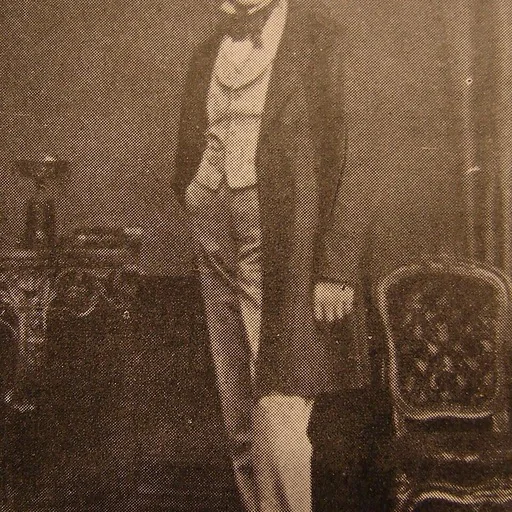
Louis Haghe (17 March 1806 – 9 March 1885) was a lithographer and watercolourist from the Netherlands and then the United Kingdom.

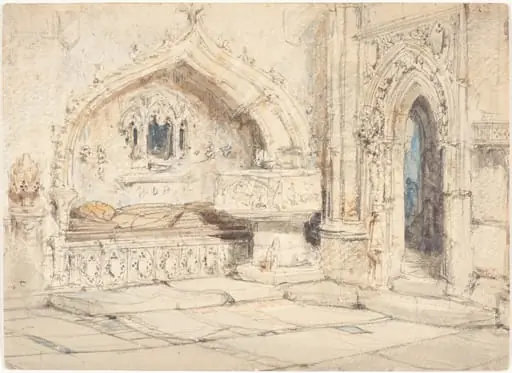 Interior of a Church with a Wall Tomb and Medieval Font
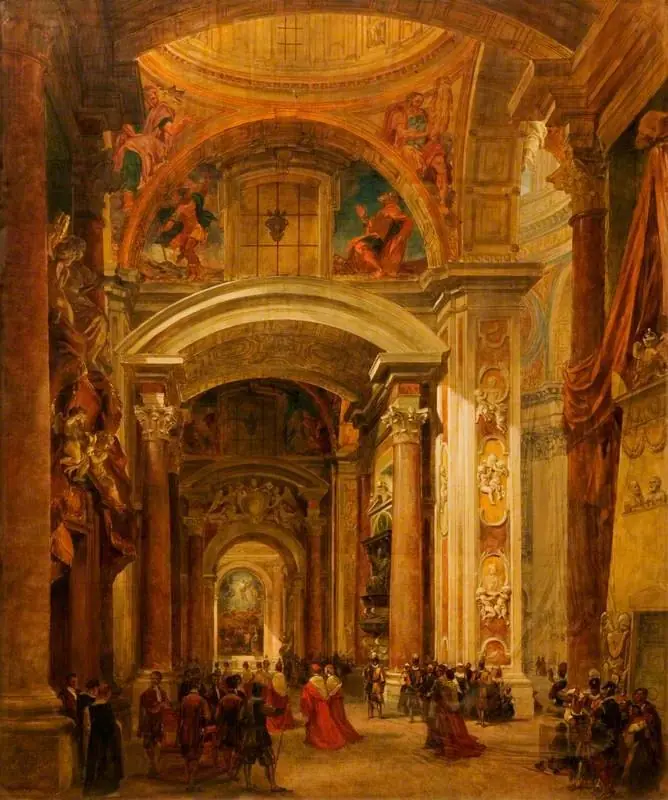 Interior of St Peter's, Rome
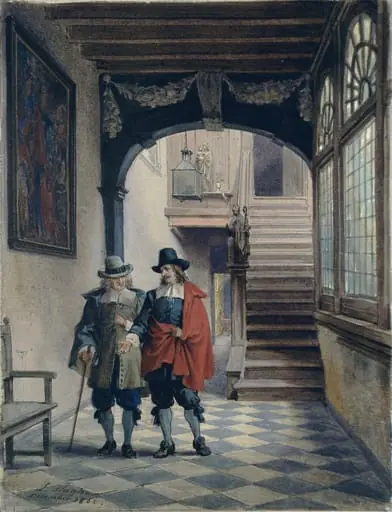 The Corridor, Brewer's Hall, Antwerp
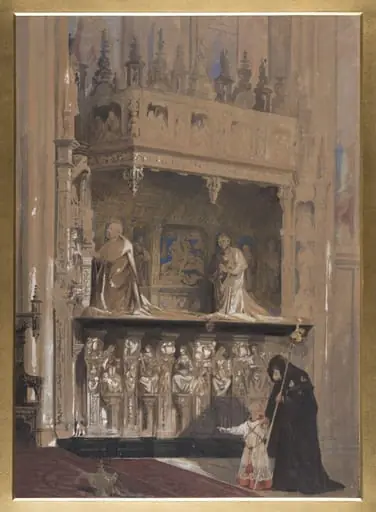 Monument of the Cardinald D'Amboise in Rouen Cathedral
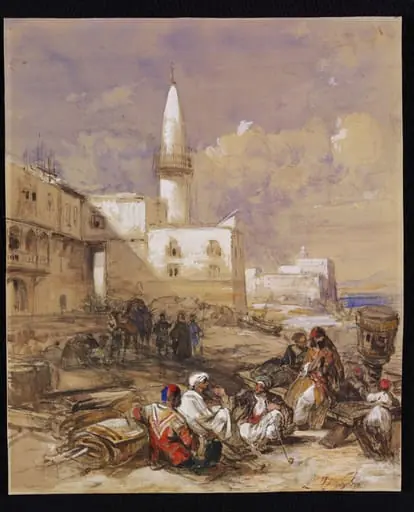 The Quay at Suez
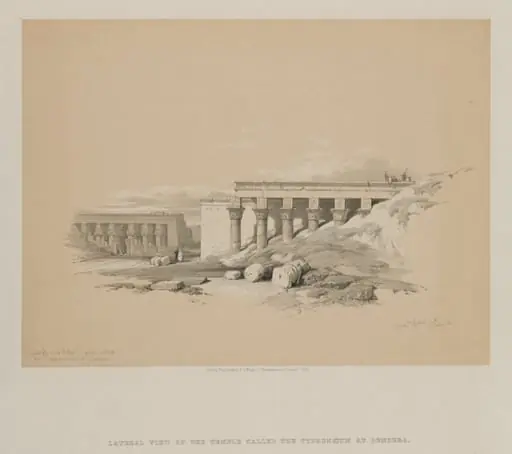 Egypt and Nubia, Volume II: Lateral View of the Temple called The Typhonoeum at Dendera
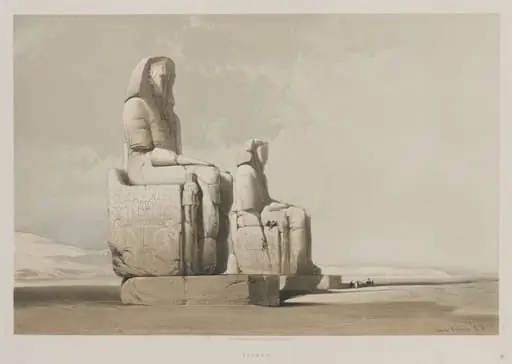 Egypt and Nubia, Volume I: Thebes
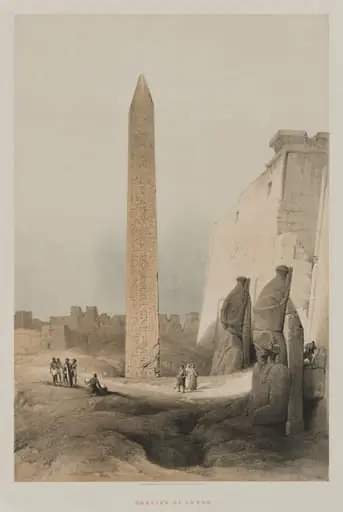 Egypt and Nubia, Volume I: Luxor
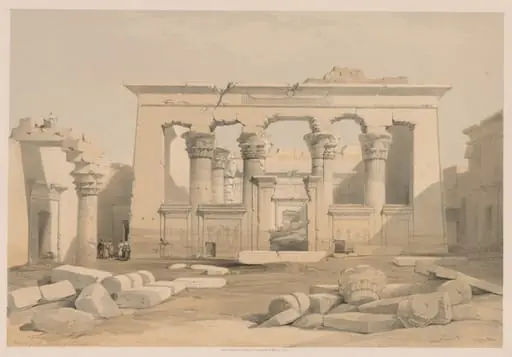 Egypt and Nubia: Volume I - No. 28, Portico of the Temple of Kalabshi
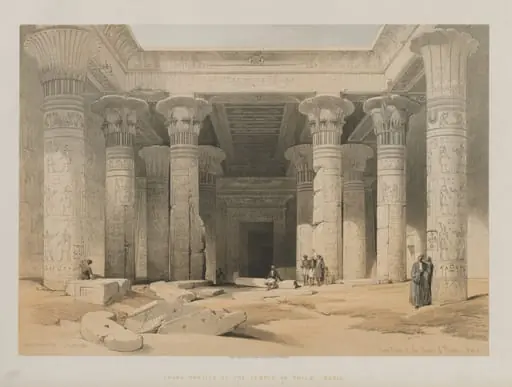 Egypt and Nubia, Volume I: Grand Portico of the Temple of Philae, Nubia
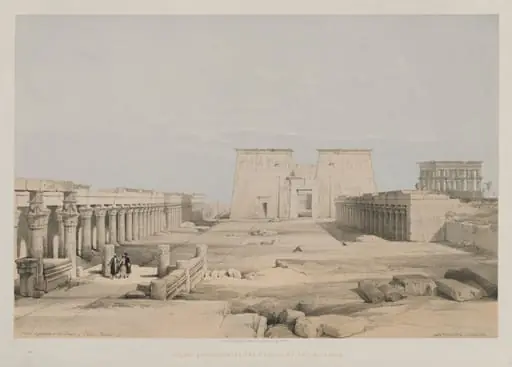 Egypt and Nubia, Volume I: Grand Approach to the Temple of Philae, Nubia
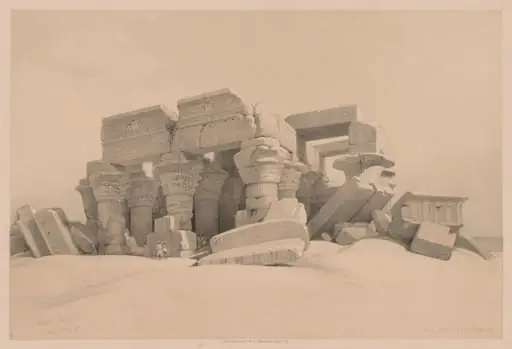 Egypt and Nubia: Volume I - No. 1, No. 2, Remains of the Portico of the Temple of Kom Ombo
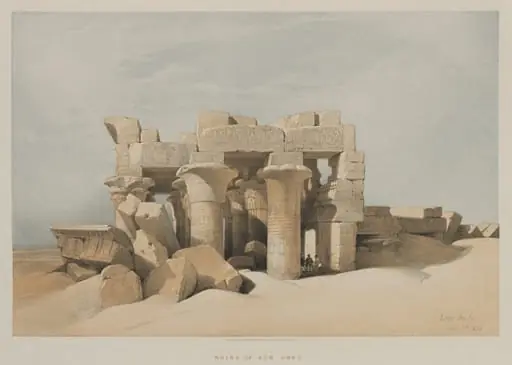 Egypt and Nubia, Volume I: Kom-Ombo
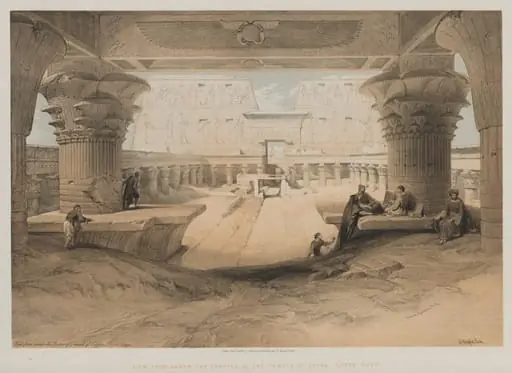 Egypt and Nubia, Volume I: View from Under the Portico of the Temple of Edfou, Upper Egypt
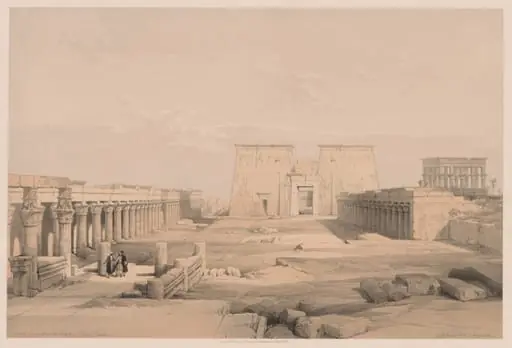 Egypt and Nubia: Volume I - No. 42, Grand Approach to the Temple of Philae, Nubia
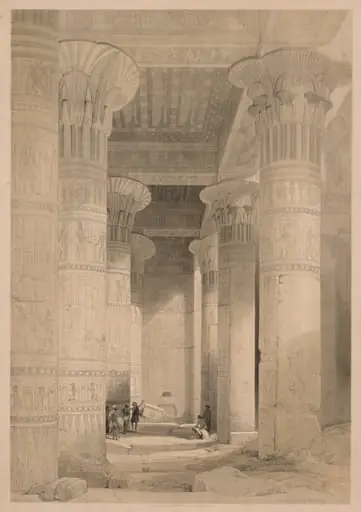 Egypt and Nubia: Volume I - Frontispiece, View under the Grand Portico, Philae
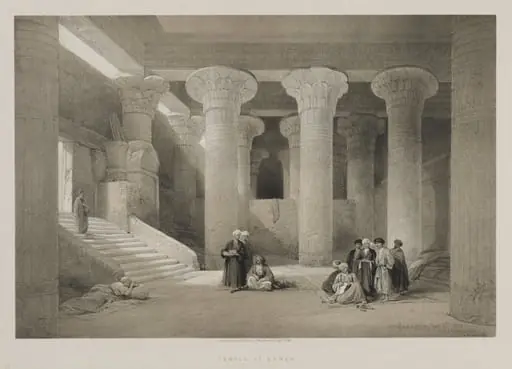 Egypt and Nubia, Volume I: Temple at Esneh
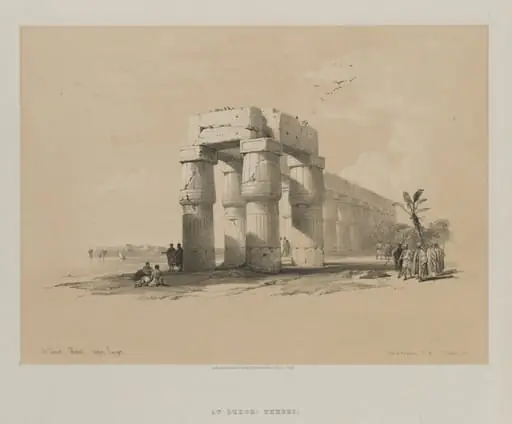 Egypt and Nubia, Volume I: At Luxor, Thebes, Upper Egypt