Artwork
Great Temple. Karnac. Thebes
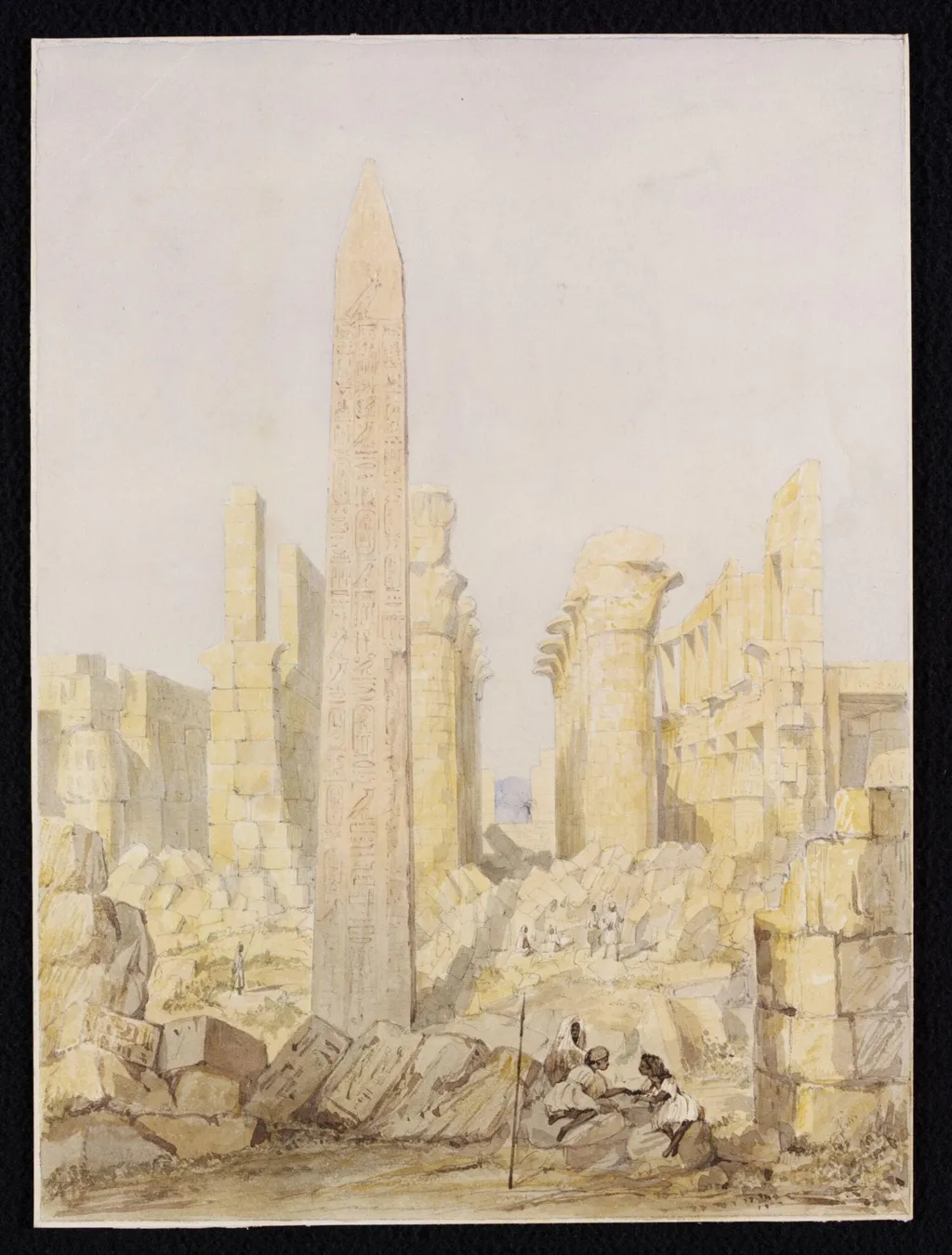
Great Temple. Karnac. Thebes is a watercolor work on paper by the Orientalist artist Owen Jones. It dates from 1832 and is held in the collection of the Victoria and Albert Museum.
About this work
Overview
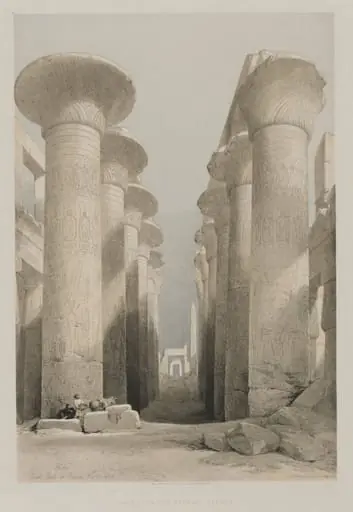
Created in 1832 by Owen Jones, this watercolour captures the Great Temple at Karnak in Thebes. It was later reproduced as plate 11 in his 1843 publication, *Views on the Nile from Cairo to the Second Cataract*. Part of a series of eleven drawings, it belongs to the Searight Collection and reflects Jones’s systematic documentation of Egyptian monuments during his travels.
Subject & Meaning
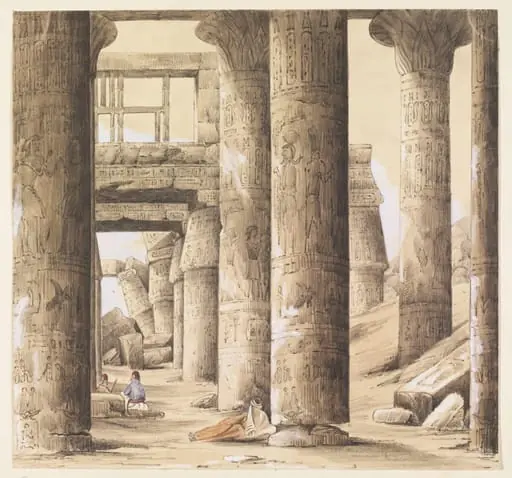
The scene presents the temple’s towering columns and carved hieroglyphs in a state of decay, surrounded by scattered stonework. Two figures sit quietly on rocks in the foreground, their presence suggesting ongoing human interaction with the ancient site. The composition emphasizes continuity—ruins no longer sacred or exclusive, but integrated into daily life.
Technique & Style
Jones employed delicate watercolour washes to render the weathered stone in muted yellows and browns, evoking the dry, sun-baked atmosphere of the Nile Valley. Fine linear detail defines the hieroglyphs and architectural forms, while the softness of the medium conveys the erosion of time. The palette and composition prioritize atmospheric tone over dramatic effect.
History & Provenance
The drawing originated during Jones’s journey along the Nile in the early 1830s and was later included in his published volume. It is one of eleven related works in the Searight Collection. Comparable studies by Jones are held in the Victoria and Albert Museum and the British Museum, reflecting his role in early European documentation of Egyptian antiquities.
Context
Painted nearly three millennia after the temple’s construction, the work reflects 19th-century European interest in Egypt’s material past. Jones’s focus on architectural detail and the quiet presence of local figures aligns with contemporary archaeological documentation, distinguishing his approach from romanticized depictions common in the period.
Legacy
Jones’s watercolours contributed to the visual record of Egyptian monuments before widespread photography. His precise renderings influenced later archaeological illustration and helped shape Western perceptions of ancient Egypt as a landscape of enduring, lived-in ruins rather than purely lost civilizations.
Artist & collection
Artist
English architect and designer Owen Jones spent the 1830s in Egypt and later sketched its temples in crisp watercolours.

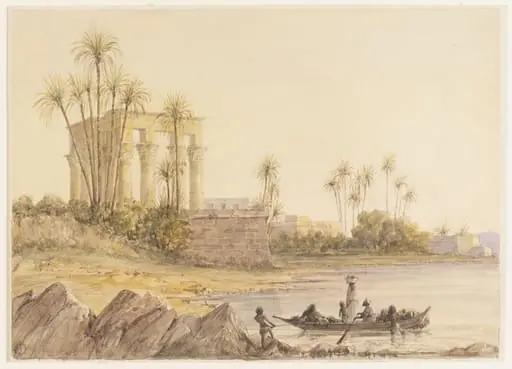 Landing Place. Philoe
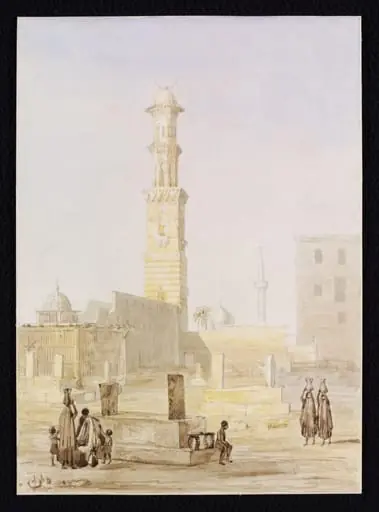 Tombs near Cairo
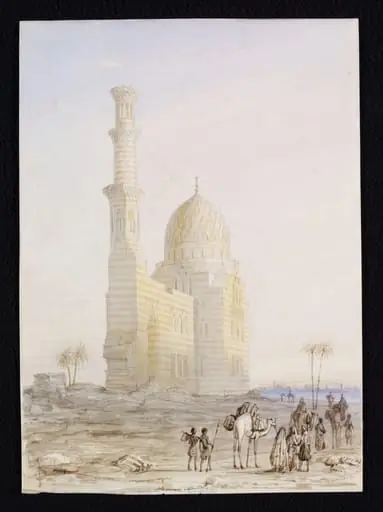 Tomb near Cairo
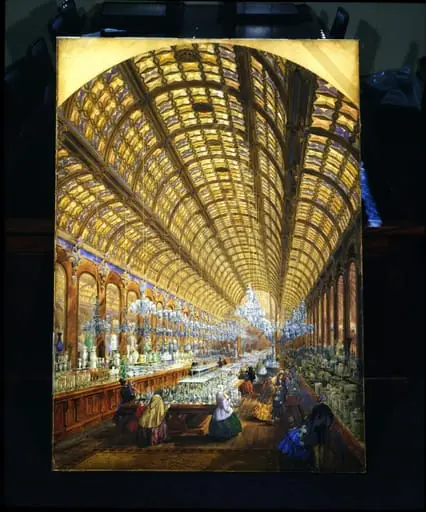 Osler's Gallery, Oxford Street, London
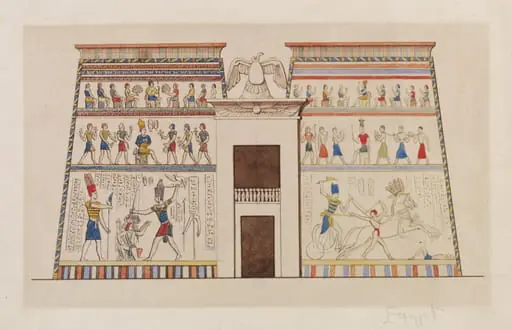 Architectural drawing of an entrance pylon to an Egyptian temple
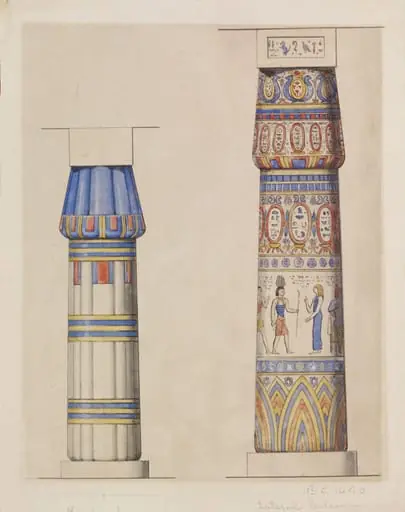 Temple of Luqsor B.C.1490 Lateral Column Temple of Karnak B.C.1490
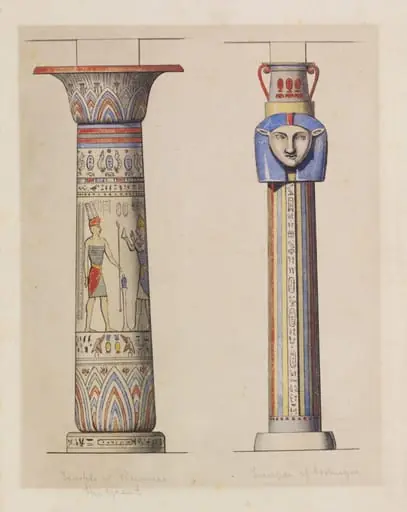 Temple of Ramses the Great B.C.1420. Temple of Sedingar B.C.1490
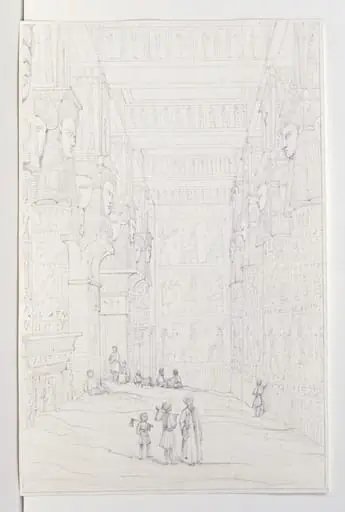 Denderah. Interior of Great Temple