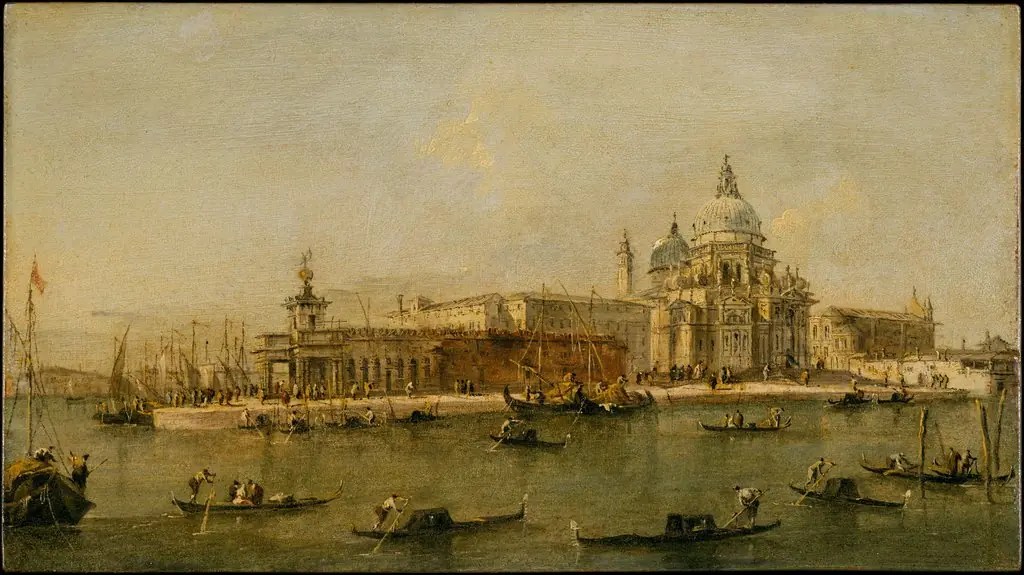
Artwork
Annual Visit of the Doge to Santa Maria della Salute
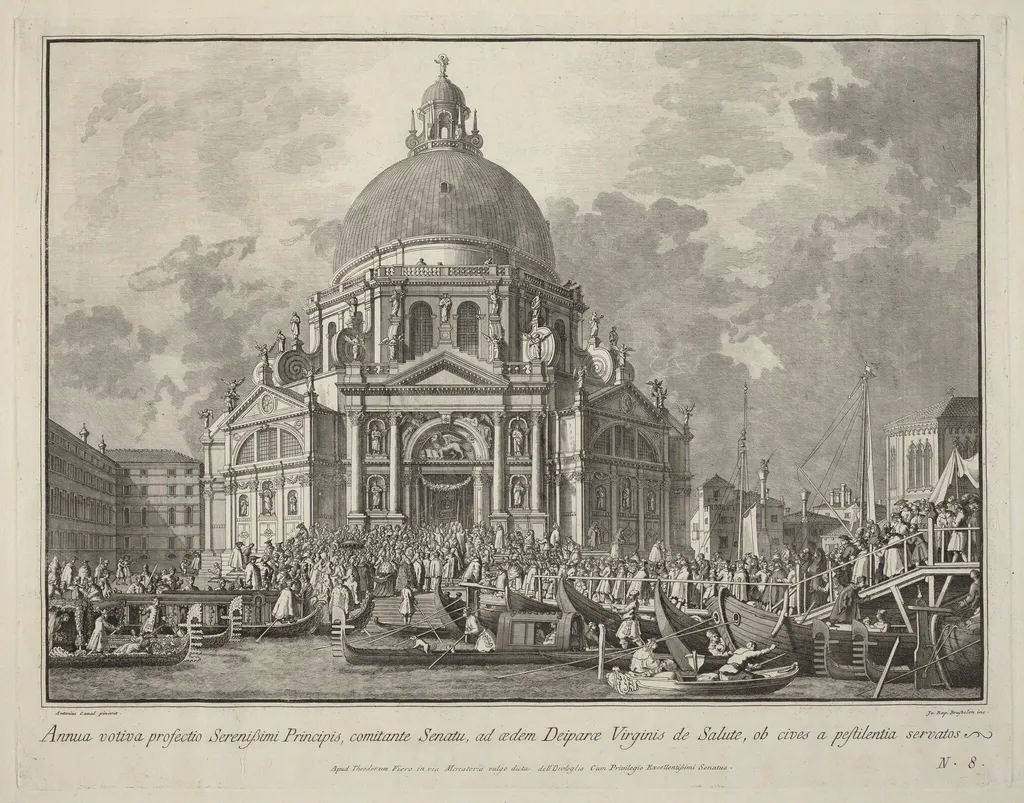
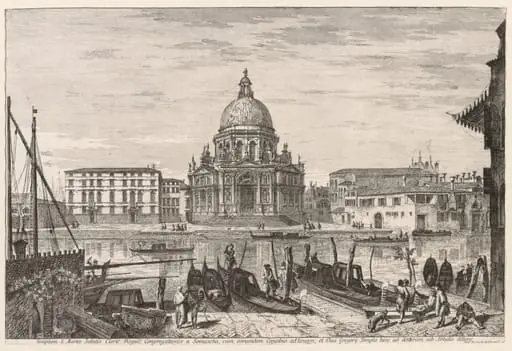
Annual Visit of the Doge to Santa Maria della Salute is an ink print by the Romanticist artist Giovanni Battista Brustolon. It dates from 1764 and is held in the collection of the National Gallery of Art.
About this work
Overview
Giovanni Battista Brustolon’s 1764 print, titled *Annual Visit of the Doge to Santa Maria della Salute*, portrays a ceremonial procession set before the Venetian basilica of Santa Maria della Salute. Executed as an engraving on laid paper, the image combines architectural grandeur with bustling human activity, capturing a moment of civic and religious significance in mid‑eighteenth‑century Venice.
Subject & Meaning
The composition centers on the domed church, its richly detailed façade framed by a gathering of dignitaries, citizens, and vessels on the adjacent waterway. The presence of the Doge, the elected head of the Republic, underscores the ritual’s political weight, while the surrounding crowd and gondolas suggest a communal celebration linking civic authority with the city’s maritime culture.
Technique & Style
Brustolon employed fine line engraving to render the intricate stone carvings, statues, and clouded sky, achieving a high degree of textural contrast on laid paper. The careful modulation of hatching conveys depth in both the architectural elements and the bustling foreground, while the crisp delineation of figures and boats demonstrates the artist’s command of perspective and narrative detail.
Context
The print reflects a tradition of documenting official ceremonies that reinforced Venice’s identity as a maritime republic.
The print reflects a tradition of documenting official ceremonies that reinforced Venice’s identity as a maritime republic. Produced in 1764, it coincides with a period when the Doge’s public appearances were staged to affirm the continuity of republican governance, and the basilica itself served as a symbol of gratitude for deliverance from plague, further enriching the scene’s symbolic resonance.
Artist & collection


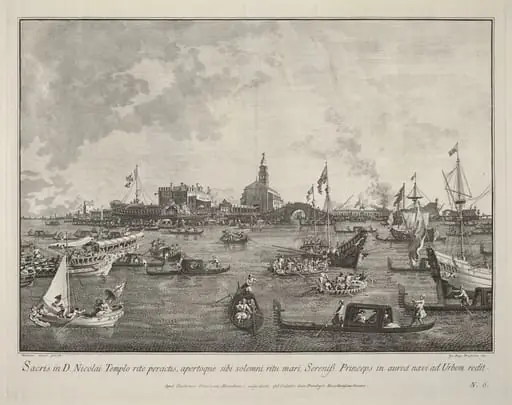 The Doge in the Bucintoro Leaving San Nicolò di Lido
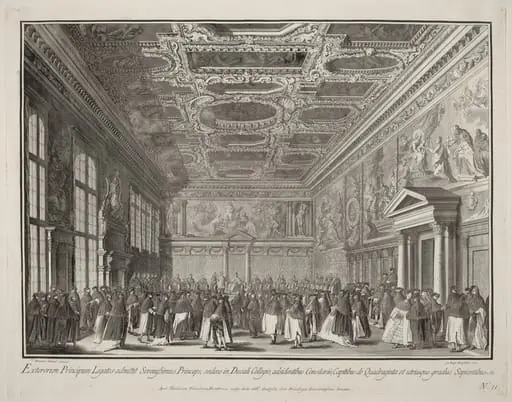 Reception by the Doge of Foreign Ambassadors in the Sala del Collegio
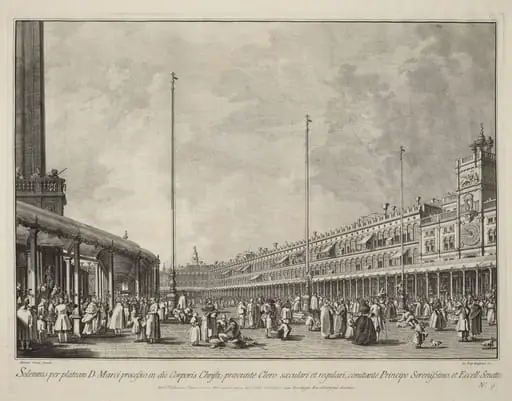 Procession on Corpus Christi Day in the Piazza San Marco
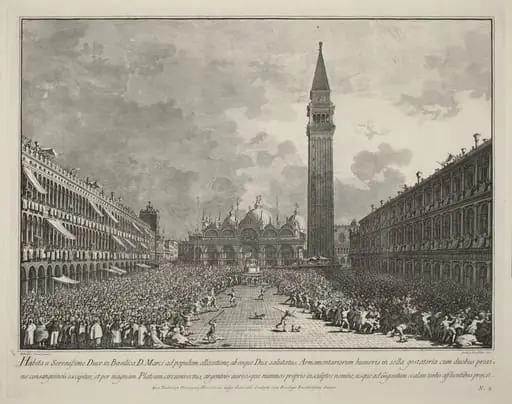 The Doge Carried around the Piazza San Marco
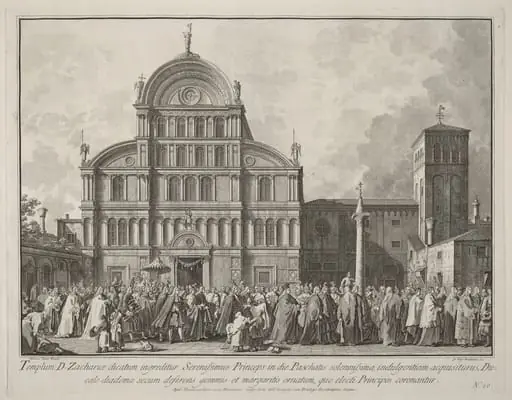 Visit of the Doge to San Zaccaria on Easter Day
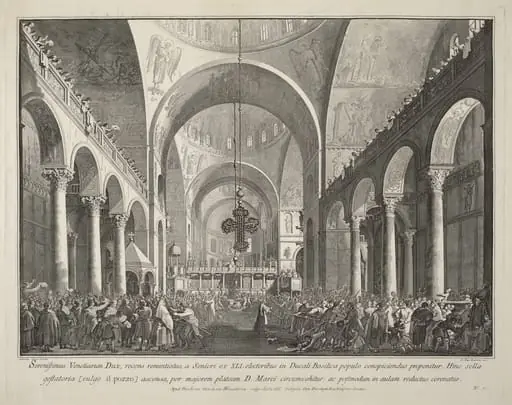 The Newly Elected Doge Presented to the People in San Marco
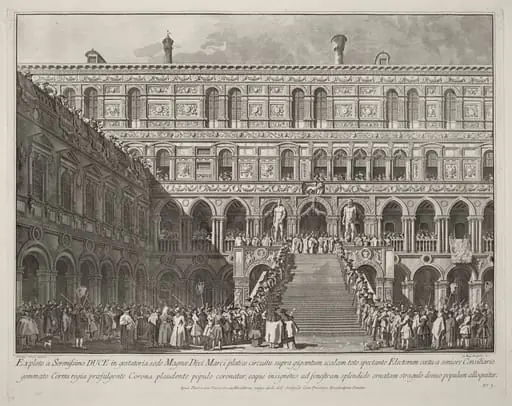 The Doge Crowned on the Scala dei Giganti of the Ducal Palace
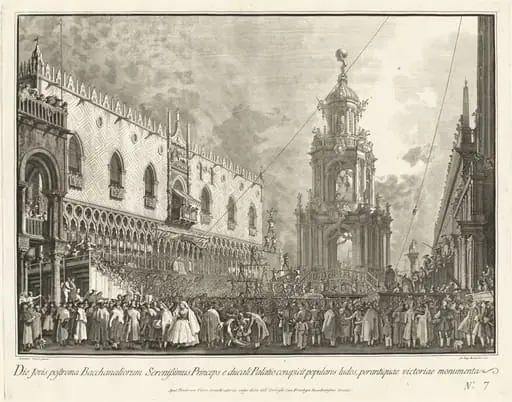 The Doge Attends the Giovedi Grasso Festival in the Piazzetta