Artwork
Reception by the Doge of Foreign Ambassadors in the Sala del Collegio
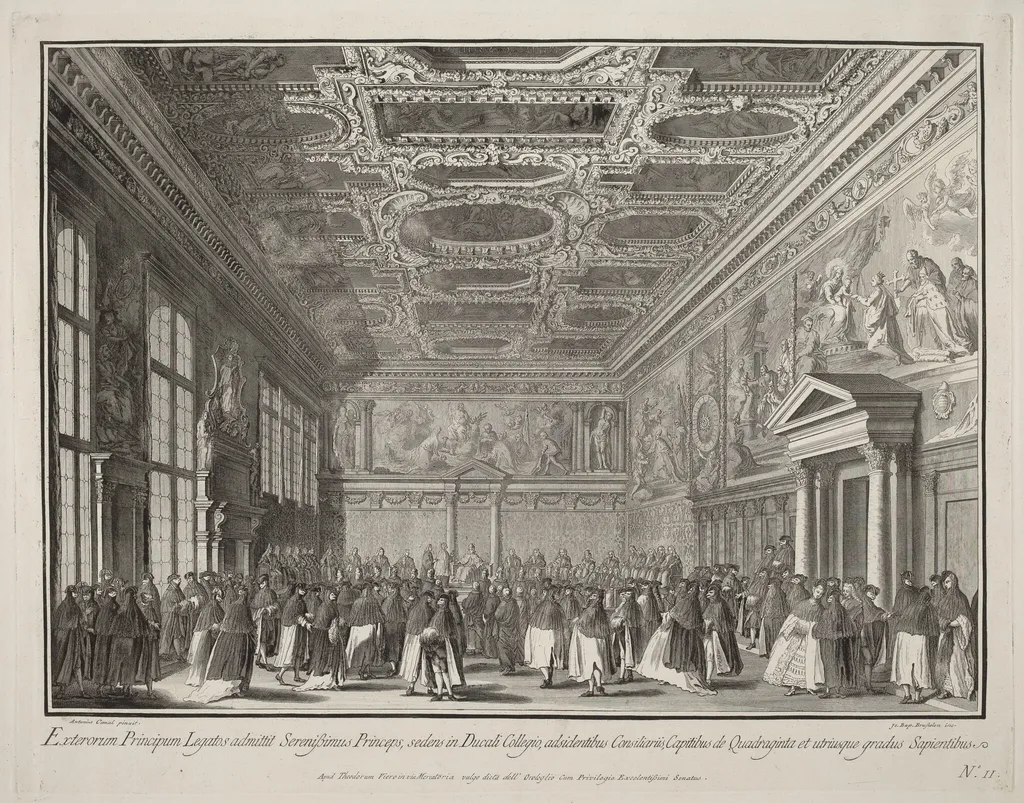
Reception by the Doge of Foreign Ambassadors in the Sala del Collegio is an ink print by the Romanticist artist Giovanni Battista Brustolon. It dates from 1764 and is held in the collection of the National Gallery of Art.
About this work
Overview
This 1764 print by Giovanni Battista Brustolon depicts a formal audience in the Sala del Collegio, a ceremonial space within the Doge’s Palace in Venice.
This 1764 print by Giovanni Battista Brustolon depicts a formal audience in the Sala del Collegio, a ceremonial space within the Doge’s Palace in Venice. Rendered in etching and engraving on laid paper, the work captures the architectural grandeur and hierarchical order of Venetian state rituals. The composition emphasizes spatial depth and meticulous detail, characteristic of 18th-century topographical prints used to document civic ceremonies.
Subject & Meaning
The scene portrays foreign ambassadors being received by the Doge and his council, a ritual reinforcing Venice’s diplomatic prestige. Figures are arranged in orderly lines, reflecting the rigid protocols of the Republic. The presence of clergy, nobles, and attendants underscores the ceremony’s political and religious significance. The setting, richly adorned, serves as a visual assertion of Venetian authority and institutional continuity.
Technique & Style
Brustolon employed fine-line etching and engraving to render intricate architectural elements and textile textures. The use of cross-hatching and delicate line work defines the carved ceiling, drapery, and facial features with precision. Light is suggested through open windows, casting subtle gradients across the tiled floor. The print’s clarity and controlled detail reflect the conventions of documentary printmaking in Venice during the late Baroque period.
History & Provenance
Created in 1764, the print likely served as a record for diplomatic archives or as a souvenir for foreign dignitaries. Brustolon, known for architectural and ceremonial subjects, produced several works documenting Venetian state functions. The print’s survival in institutional collections suggests it was valued for its accuracy and historical utility, though its original distribution remains undocumented.
Context
In mid-18th century Venice, ceremonial receptions were central to maintaining the Republic’s image abroad. The Sala del Collegio, a key venue for diplomatic encounters, was adorned with artworks symbolizing Venetian power. Prints like this one circulated among elites and diplomats, functioning as both records and instruments of political representation during a period of declining Venetian influence.
Legacy
Brustolon’s print contributes to a broader corpus of Venetian topographical prints that preserved the visual language of state ritual. While not widely reproduced, it remains a reference for scholars studying the intersection of architecture, ceremony, and print culture in late Republic Venice. Its technical precision offers insight into how visual media sustained institutional identity beyond the city’s borders.
Artist & collection


 The Doge in the Bucintoro Leaving San Nicolò di Lido
 Procession on Corpus Christi Day in the Piazza San Marco
 The Doge Carried around the Piazza San Marco
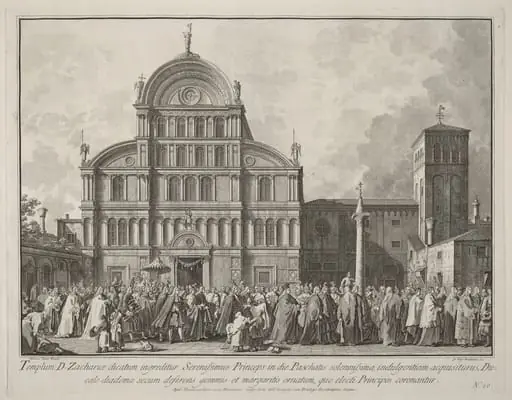 Visit of the Doge to San Zaccaria on Easter Day
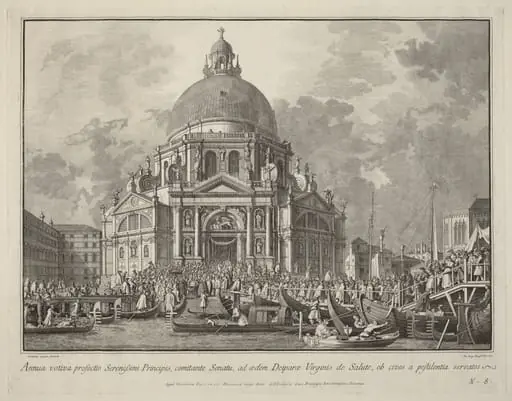 Annual Visit of the Doge to Santa Maria della Salute
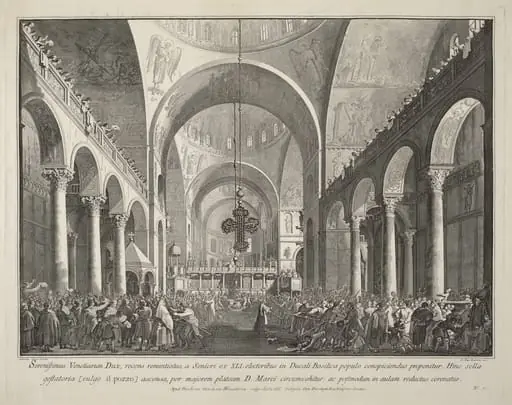 The Newly Elected Doge Presented to the People in San Marco
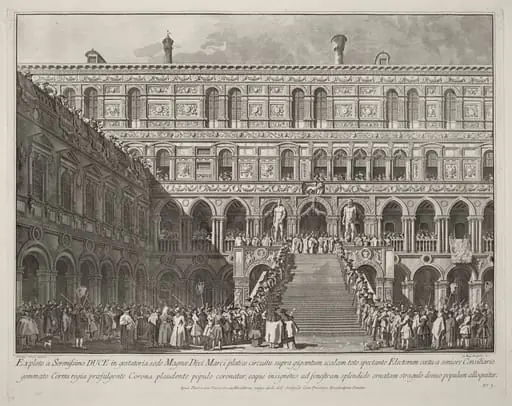 The Doge Crowned on the Scala dei Giganti of the Ducal Palace
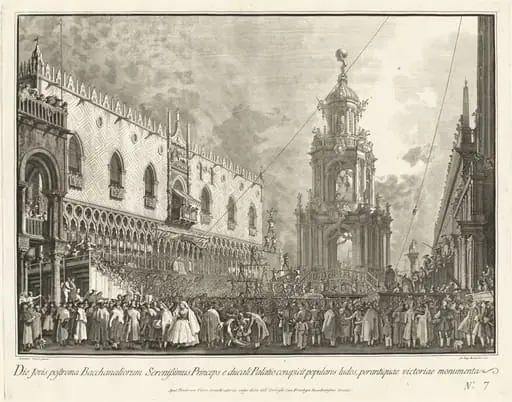 The Doge Attends the Giovedi Grasso Festival in the Piazzetta
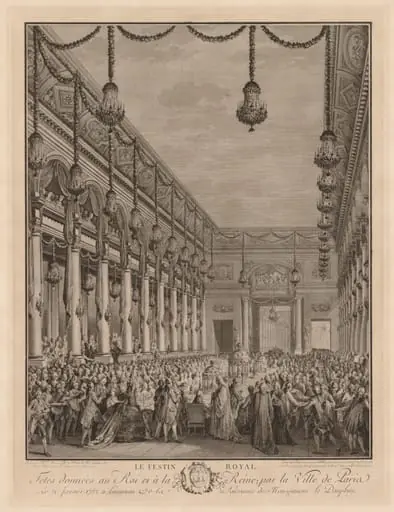 The Royal Banquet
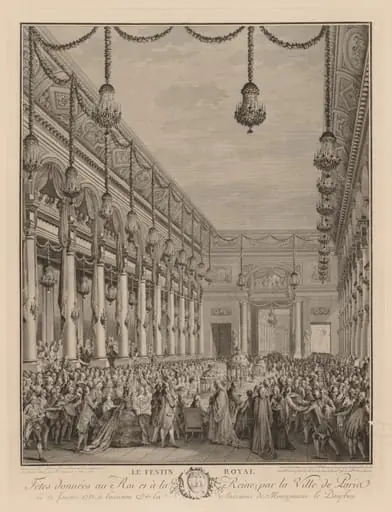 Royal Feast at the Hôtel de Ville, January 21, 1782
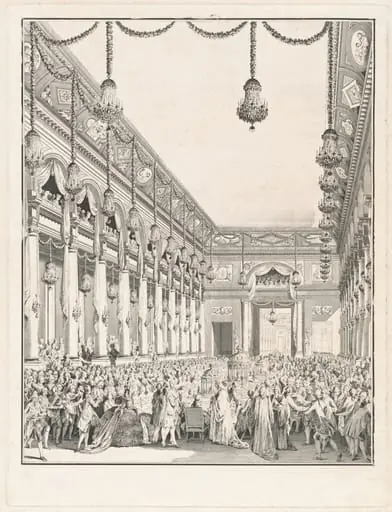 Le festin royal - Fête donnée à l'occasion de la naissance de Monseigneur le Dauphin, 21 janvier 1782
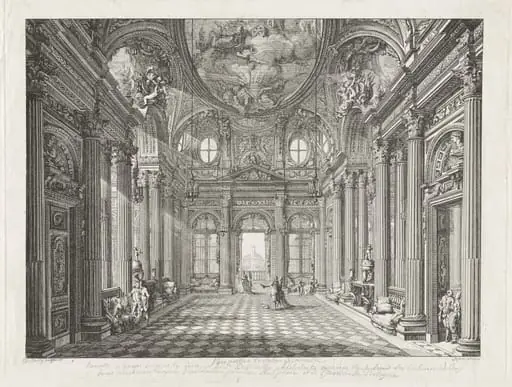 Perspectival View of the Salon of the Palazzo Spinola, Genoa
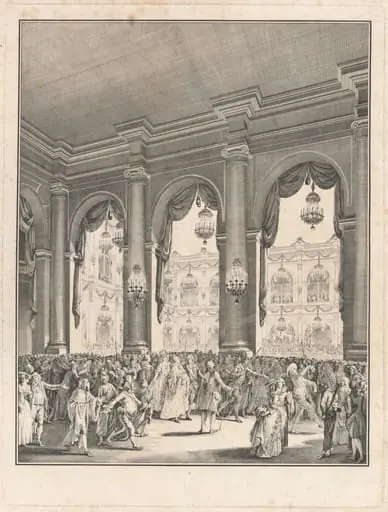 Le bal masqué - Fête donnée à l'occasion de la naissance de Monseigneur le Dauphin, 23 janvier 1782
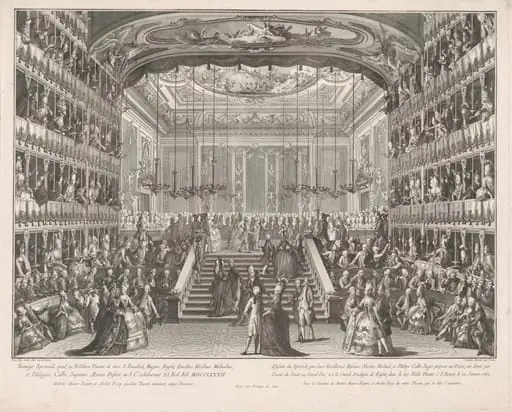 Spectacle in Honor of the Grand Dukes of Russia in the Theater of San Benedetto, 1782
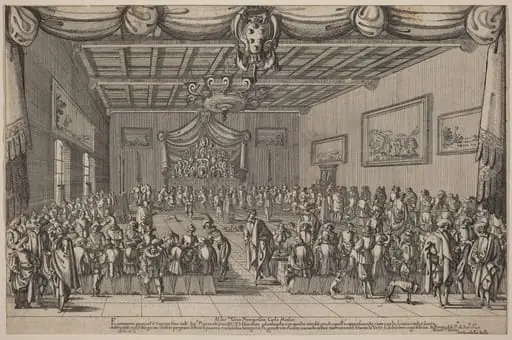 The Banquet of the Piacevoli
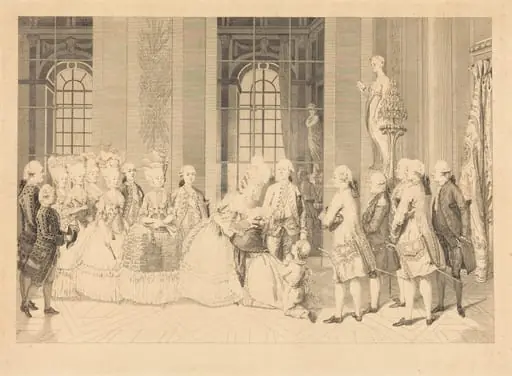 La Reine annonçant à Mme Bellegarde, des Juges, et la liberté de son mari en mai 1777
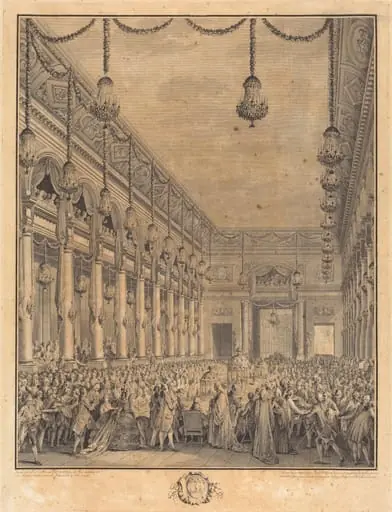 Le festin royal