Artwork
Visit of the Doge to San Zaccaria on Easter Day
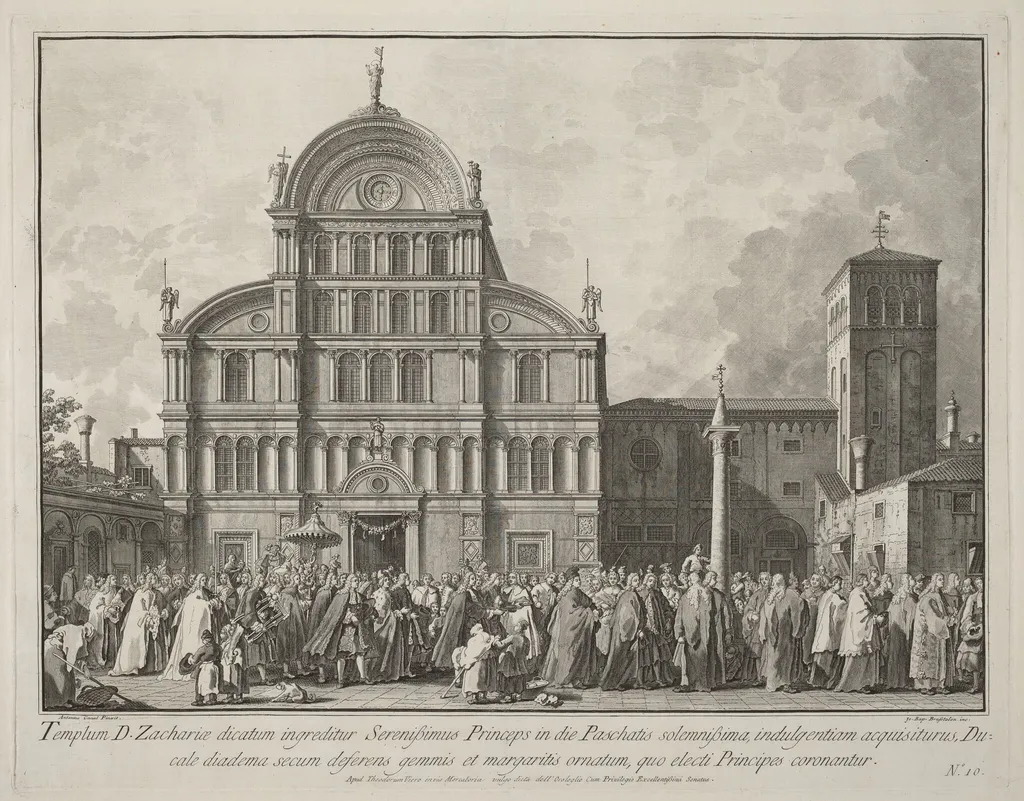
Visit of the Doge to San Zaccaria on Easter Day is an ink print by the Romanticist artist Giovanni Battista Brustolon. It dates from 1764 and is held in the collection of the National Gallery of Art.
About this work
Overview
Created in 1764, this print by Giovanni Battista Brustolon depicts a ceremonial procession in Venice on Easter Day. Rendered in etching and engraving on laid paper, it captures the architectural grandeur of San Zaccaria and the public gathering surrounding the Doge’s attendance. The work belongs to a tradition of topographical prints documenting civic rituals in the Venetian Republic.
Subject & Meaning
The scene portrays the Doge’s annual Easter visit to the Church of San Zaccaria, a ritual affirming the union of religious and state authority in Venice.
The scene portrays the Doge’s annual Easter visit to the Church of San Zaccaria, a ritual affirming the union of religious and state authority in Venice. Figures in 18th-century dress observe the event, some holding umbrellas against the spring weather, while stray dogs move among the crowd. The inclusion of everyday details underscores the ceremony’s public, communal character rather than its solemnity alone.
Technique & Style
Brustolon employed fine, controlled lines typical of etching and engraving to render intricate textures—the dome’s stone, fabric folds, and individual figures. The composition balances architectural symmetry with the organic disorder of the crowd, using tonal contrast to guide the eye toward the church entrance. Precision in detail reflects the print’s documentary intent rather than expressive flourish.
History & Provenance
The print was produced during the final decades of the Venetian Republic, a period when civic rituals retained symbolic weight despite political decline. Brustolon, known for architectural subjects, likely made this for collectors interested in Venetian customs. Its survival in museum collections suggests early interest in preserving visual records of the city’s ceremonial life.
Context
Easter processions in Venice were key expressions of state piety, with the Doge participating in rituals that reinforced his role as both political and spiritual leader. San Zaccaria, housing relics and serving as a convent church, held particular significance. Such prints circulated among elites and foreign visitors, functioning as both souvenirs and affirmations of Venetian identity.
Legacy
Brustolon’s print contributes to a broader corpus of Venetian topographical prints that document urban life before the Republic’s fall in 1797. While not widely reproduced, it remains a precise visual record of a now-lost ritual, valued by historians for its fidelity to architectural detail and social observation.
Artist & collection


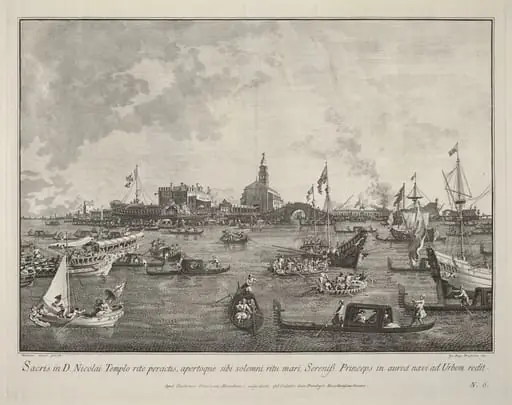 The Doge in the Bucintoro Leaving San Nicolò di Lido
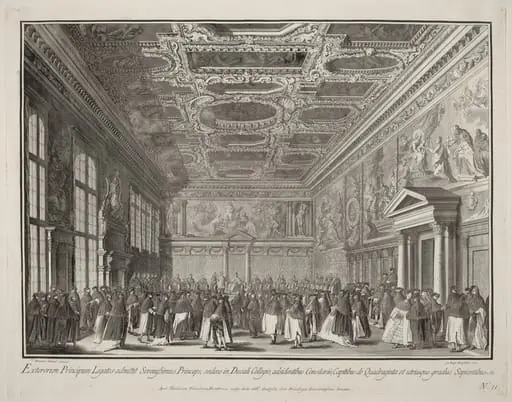 Reception by the Doge of Foreign Ambassadors in the Sala del Collegio
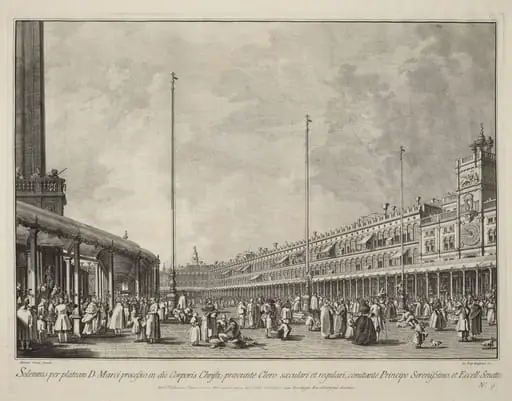 Procession on Corpus Christi Day in the Piazza San Marco
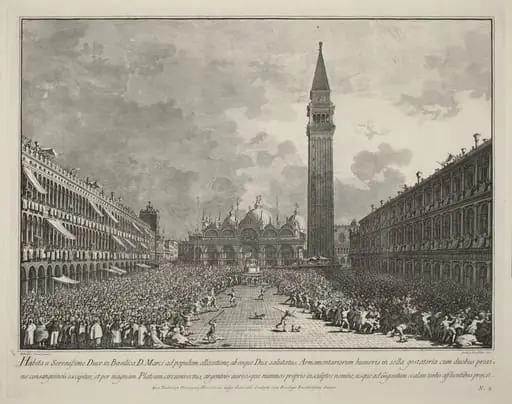 The Doge Carried around the Piazza San Marco
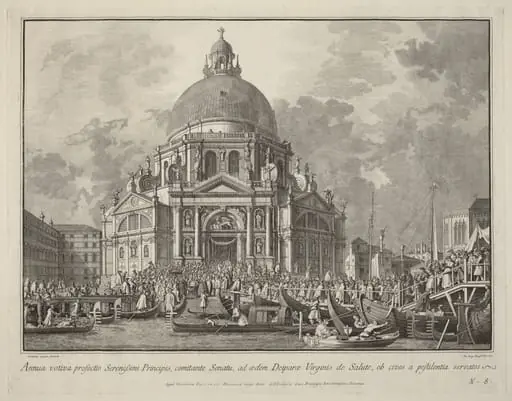 Annual Visit of the Doge to Santa Maria della Salute
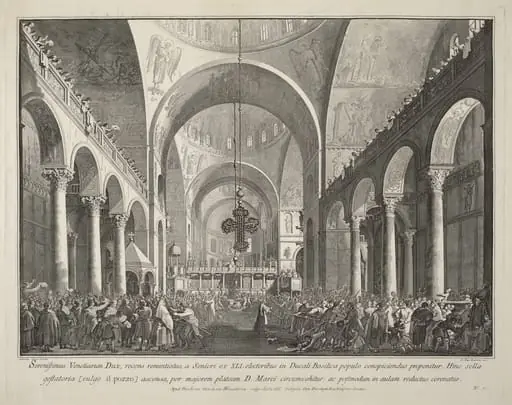 The Newly Elected Doge Presented to the People in San Marco
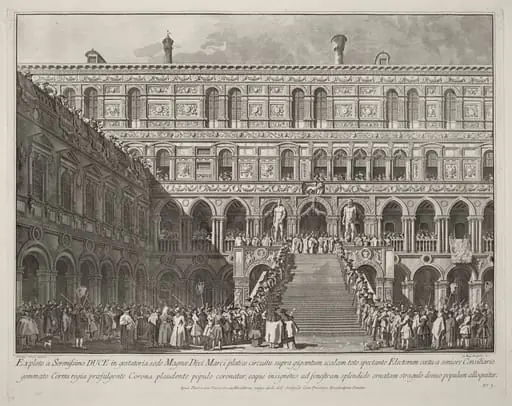 The Doge Crowned on the Scala dei Giganti of the Ducal Palace
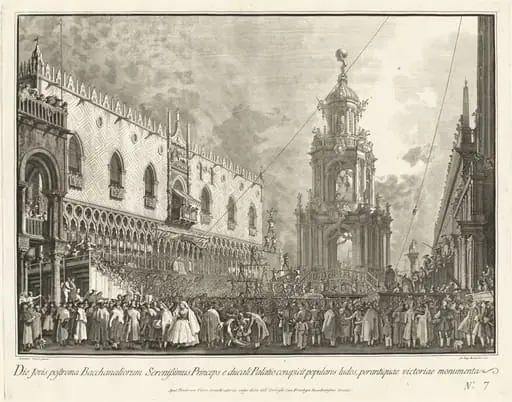 The Doge Attends the Giovedi Grasso Festival in the Piazzetta
![Santa Maria Maggiore from "Prospectus Locurum Urbis Romae Insign[ium]", by Lievin Cruyl](https://artifactworldgallery.com/img/lievin-cruyl--santa-maria-maggiore-from-prospectus-locurum-urbis-romae-ins--552492caf03c6a55-w320.webp)