Artwork
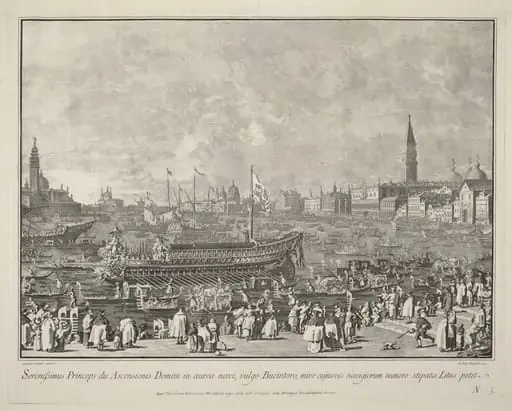
The Doge in the Bucintoro Leaving San Nicolò di Lido
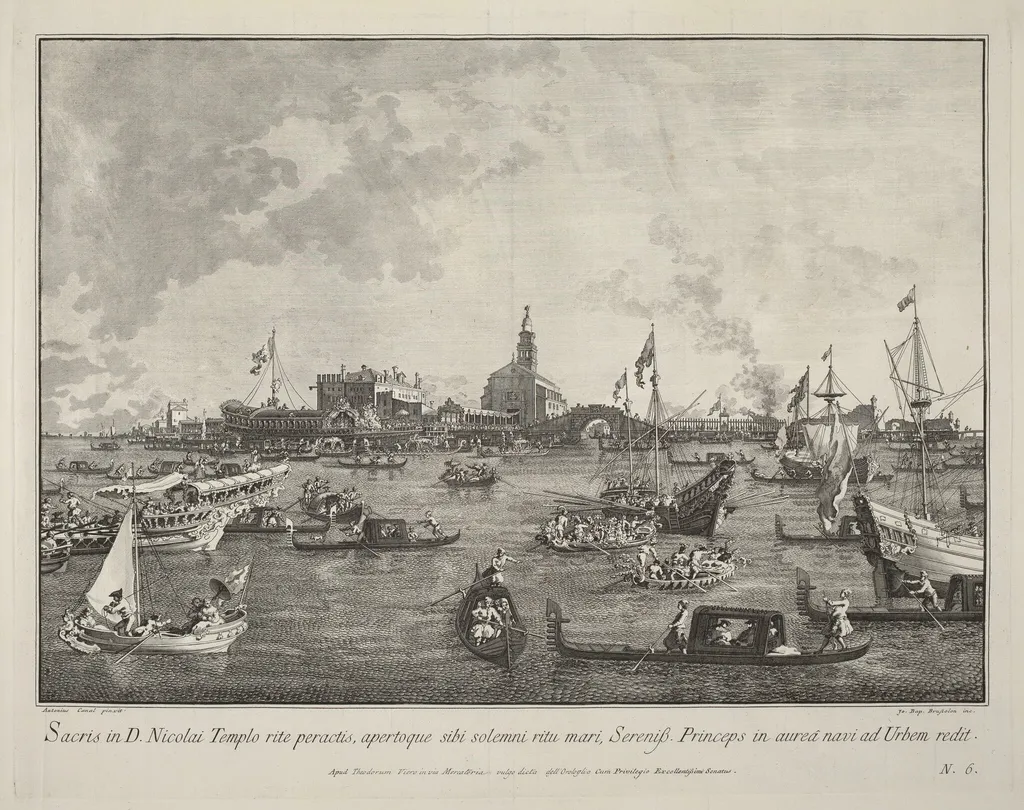
The Doge in the Bucintoro Leaving San Nicolò di Lido is an ink print by the Romanticist artist Giovanni Battista Brustolon. It dates from 1764 and is held in the collection of the National Gallery of Art.
About this work
Overview
The composition emphasizes scale and movement, anchored by the ornate barge and the looming silhouette of a church tower.
This 1764 print by Giovanni Battista Brustolon depicts the Doge of Venice departing from the church of San Nicolò di Lido aboard the bucintoro, the ceremonial barge used for state occasions. Rendered in etching and engraving on laid paper, the scene captures a maritime procession amid a dense assembly of vessels, with figures on shore and aboard smaller boats observing the event. The composition emphasizes scale and movement, anchored by the ornate barge and the looming silhouette of a church tower.
Subject & Meaning
The image records a ritual departure tied to Venice’s annual Feast of the Ascension, when the Doge symbolically wedded the sea. The bucintoro, richly adorned and centrally positioned, signifies the authority of the Republic’s leader. Crowds on boats and land reflect civic participation, while the church in the distance anchors the event in religious and political tradition. The scene conveys order, spectacle, and the ceremonial role of the Doge within Venetian society.
Technique & Style
Brustolon employed fine, precise lines characteristic of etching and engraving to render intricate details: rippling water, individual figures, and the gilded ornamentation of the barge. Contrasting light and shadow, achieved through controlled hatching and cross-hatching, heightens the drama of the sky and the depth of the harbor. The density of the composition reflects a topographical precision, prioritizing clarity of form over emotional expression.
History & Provenance
Created in 1764, the print likely served as a documentary record or commemorative item for Venetian elites. Brustolon, known for architectural and maritime subjects, produced this during the waning years of the Republic’s independence. The work was probably circulated among patrician families and foreign dignitaries, preserving a visual account of state rituals before the Republic’s fall in 1797.
Context
The bucintoro procession was a key ritual in Venetian civic life, reinforcing the city’s maritime identity and the Doge’s symbolic union with the sea. By the mid-18th century, such ceremonies retained ceremonial weight despite political decline. The print reflects Venice’s enduring emphasis on spectacle as a tool of state legitimacy, even as its global influence waned under external pressures.
Legacy
Brustolon’s print contributes to a broader corpus of Venetian topographical prints that document the city’s rituals and architecture. While not widely known outside specialist circles, it remains a valuable record of ceremonial practice and print culture in late Republic Venice. Its technical precision and compositional clarity offer insight into how visual media sustained civic memory in an era of political transition.
Artist & collection


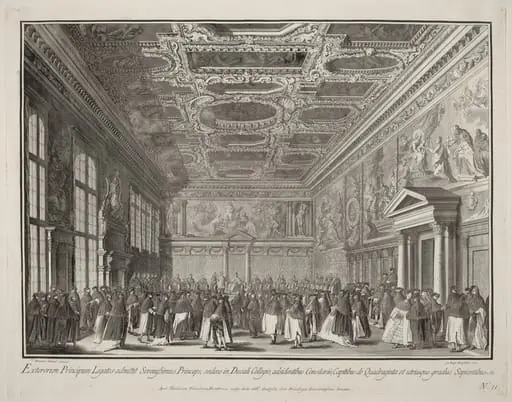 Reception by the Doge of Foreign Ambassadors in the Sala del Collegio
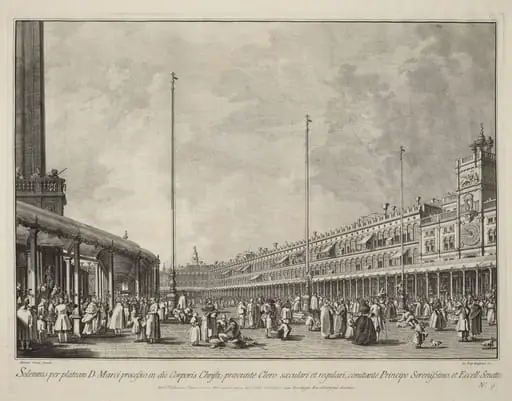 Procession on Corpus Christi Day in the Piazza San Marco
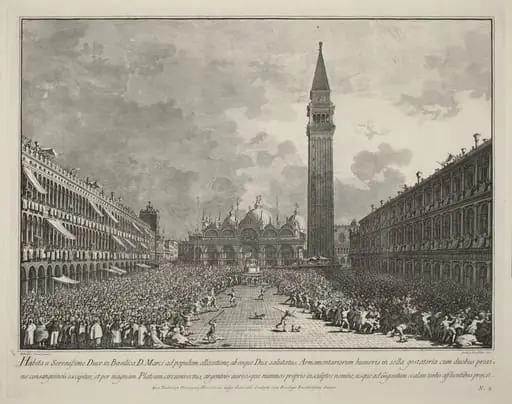 The Doge Carried around the Piazza San Marco
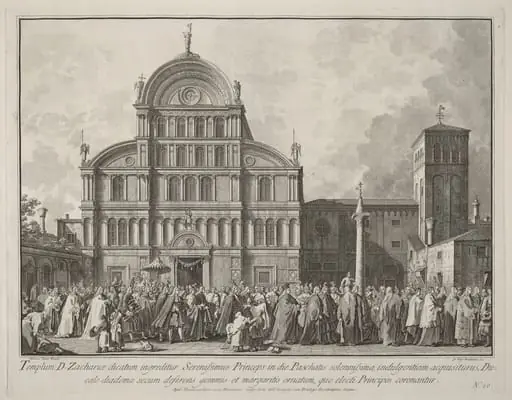 Visit of the Doge to San Zaccaria on Easter Day
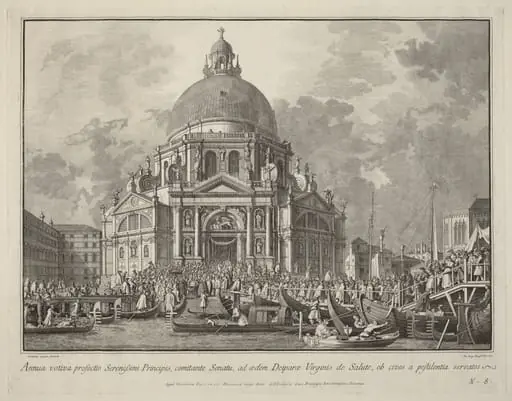 Annual Visit of the Doge to Santa Maria della Salute
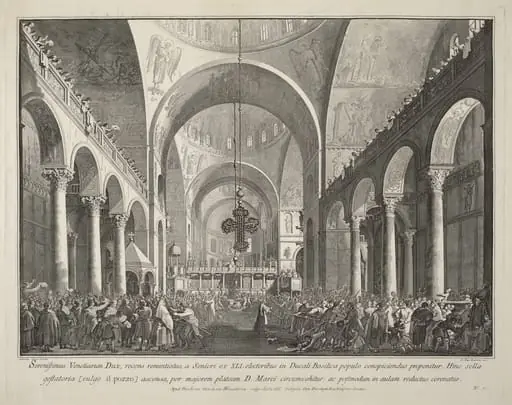 The Newly Elected Doge Presented to the People in San Marco
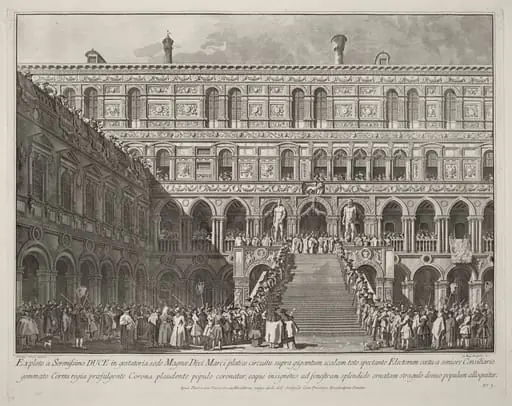 The Doge Crowned on the Scala dei Giganti of the Ducal Palace
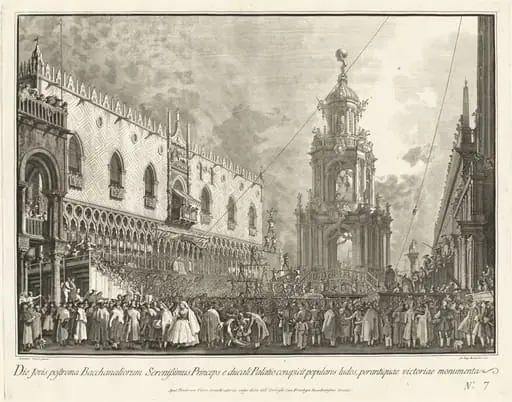 The Doge Attends the Giovedi Grasso Festival in the Piazzetta
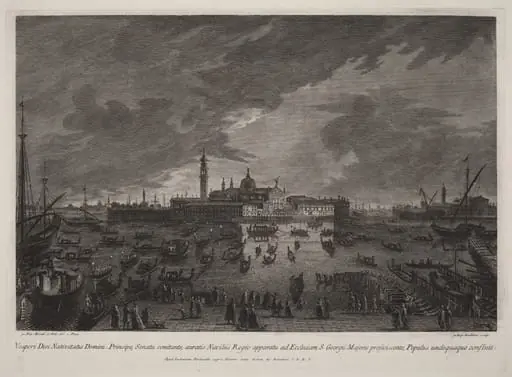 Christmas Eve Procession to San Giorgio Maggiore
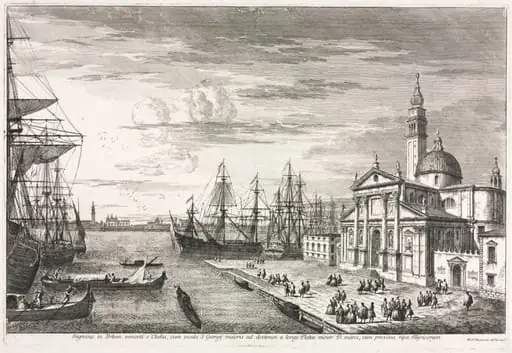 S. Giorgio Maggiore
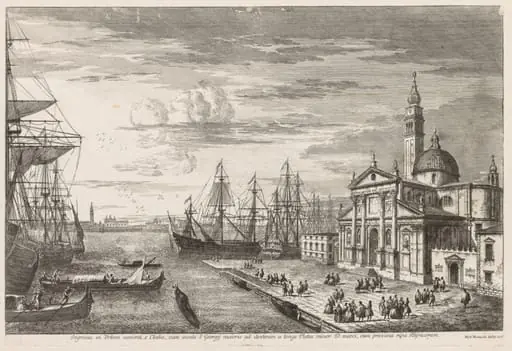 Views of Venice: The Basin of St. Mark's
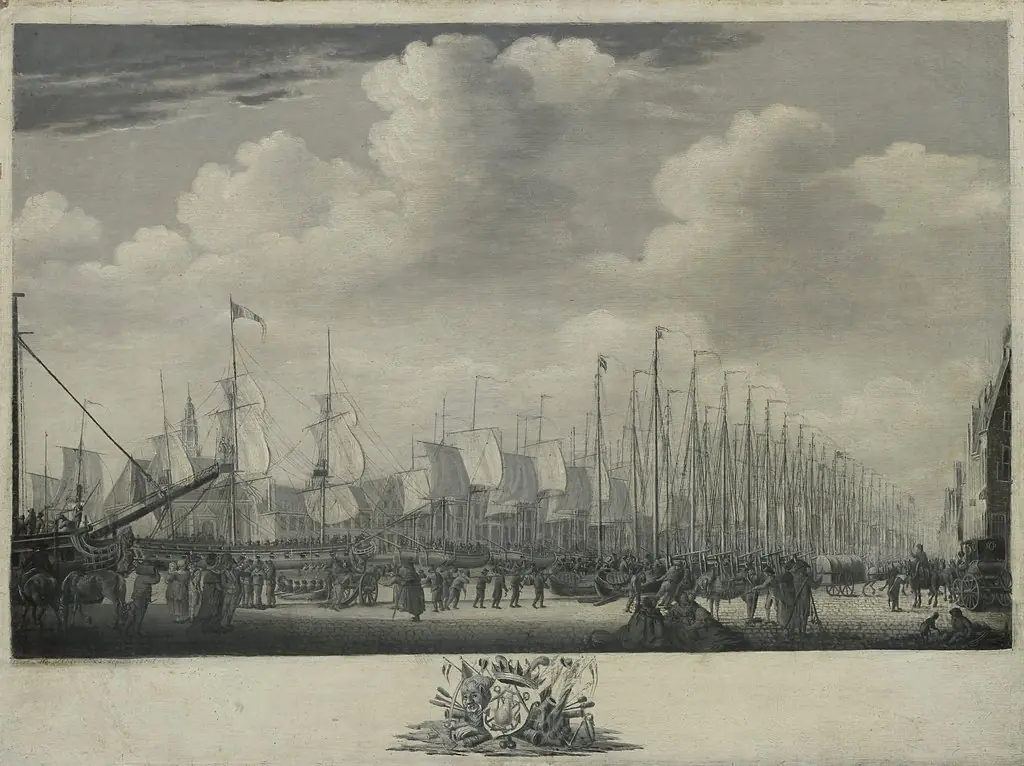 Manning the Fleet in the Harbor of Flushing, 1804
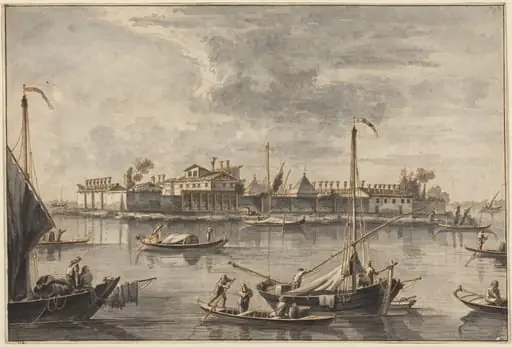 Isola del Lazaretto Nuovo
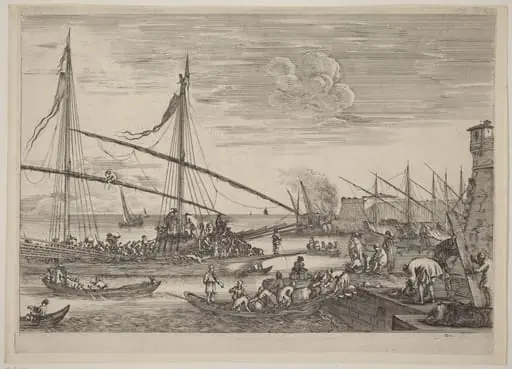 The Fortifications at Livorno
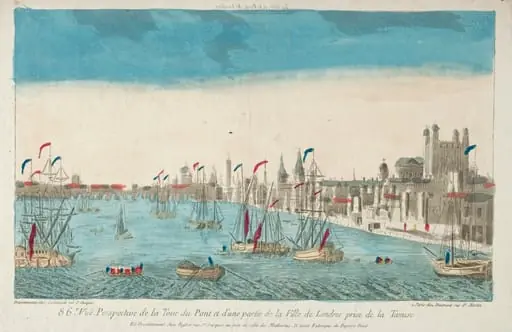 View of London Bridge and Tower
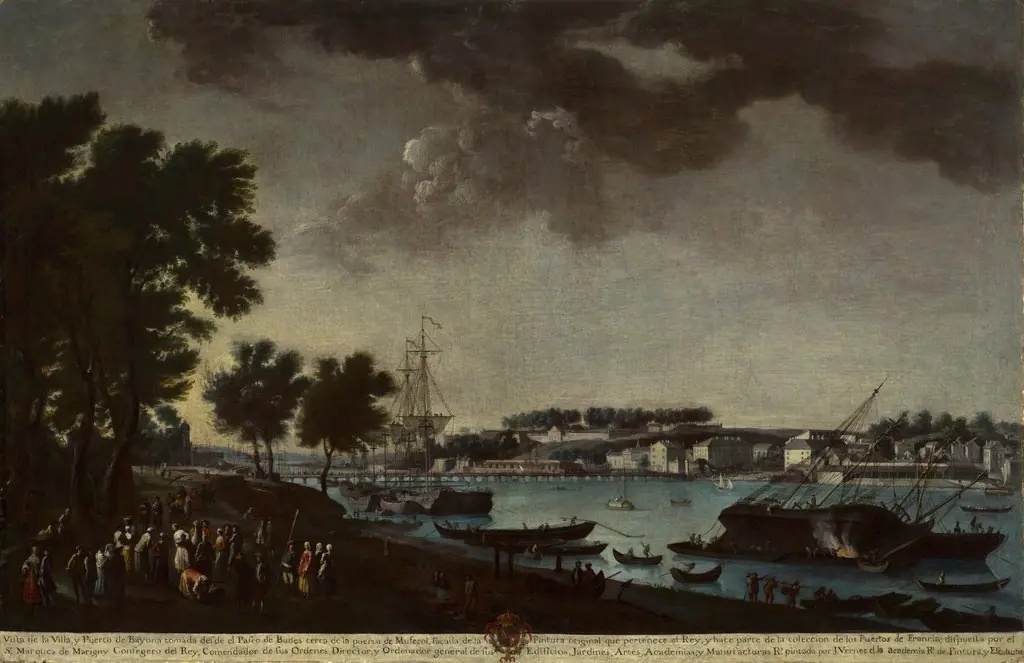 View of the Town and Port of Bayonne from the Pathways of Boufflers (La villa y puerto de Bayona tomada desde el paseo de Boufflers)
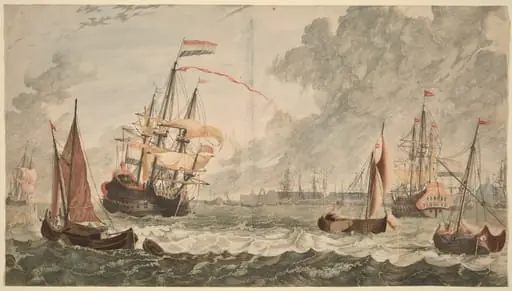 Amsterdam, Ships at the IJ on Choppy Waters
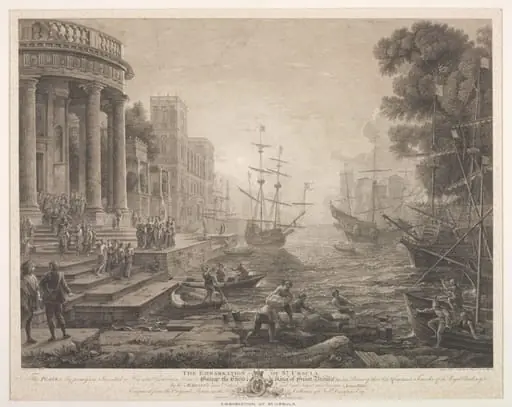 Embarkation of St. Ursula
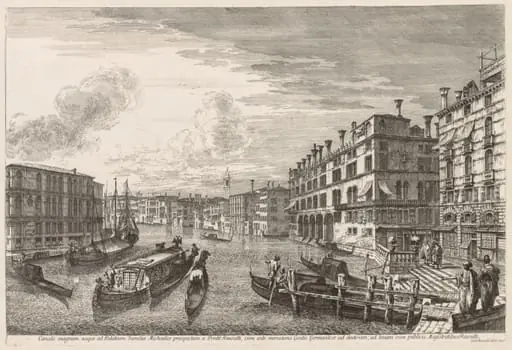 Views of Venice: Grand Canal
 The Doge in the Bucintoro Departing for the Porto di Lido on Ascension Day