Artwork
Gerona
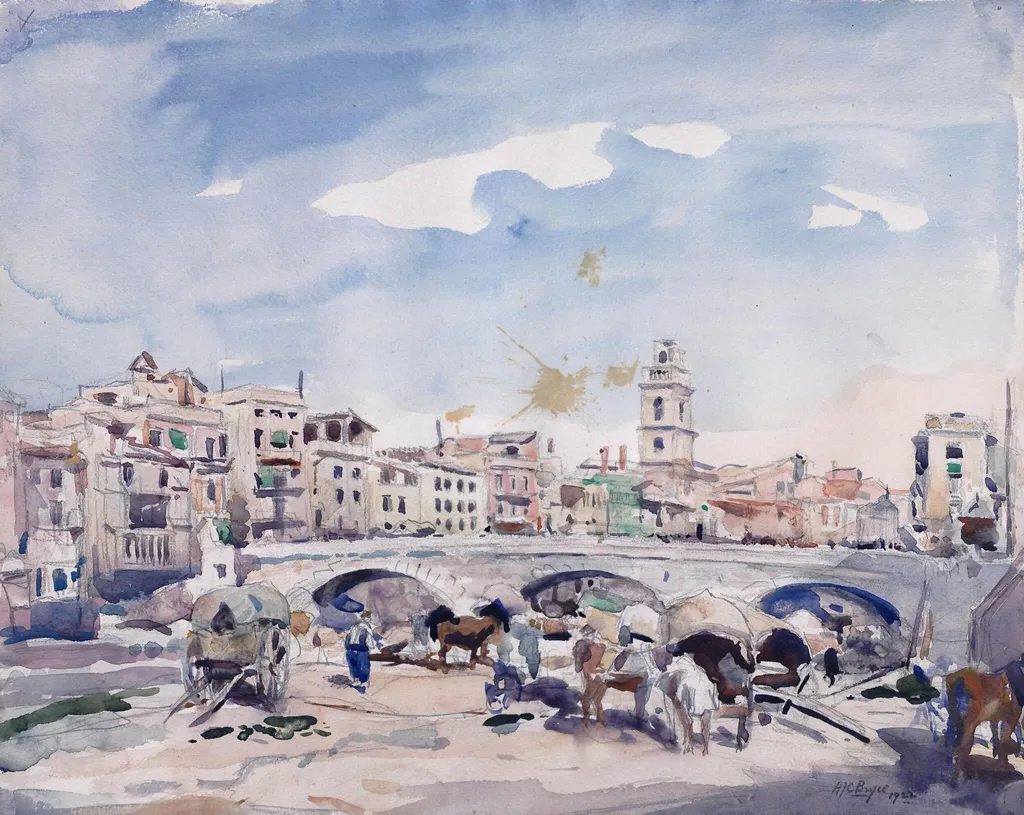
Gerona is a watercolor work on paper by the Post-Impressionist artist Alexander Joshua Caleb Bryce. It dates from 1922 and is held in the collection of the Victoria and Albert Museum.
About this work
Overview
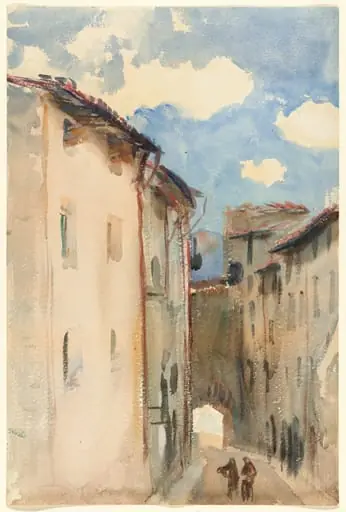
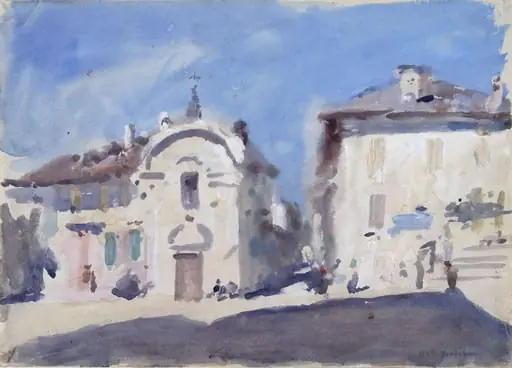
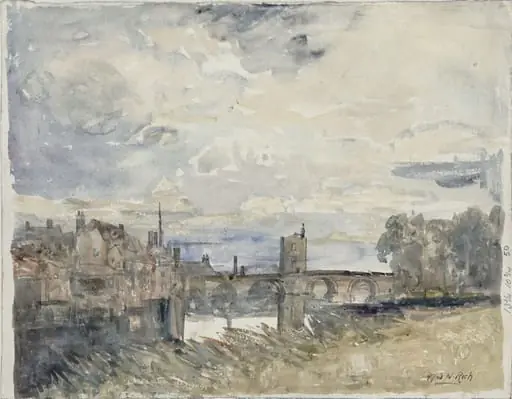
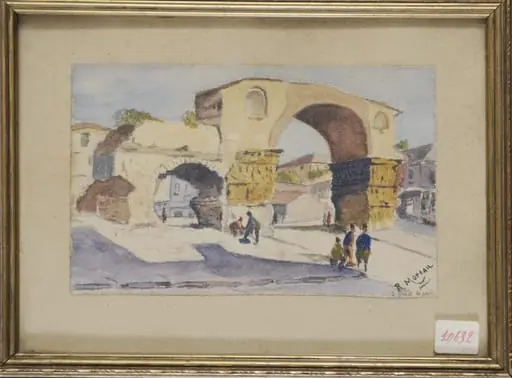
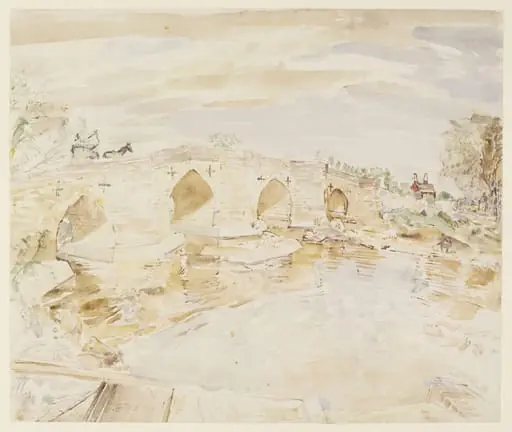
Created in 1922, this watercolour by Alexander Joshua Caleb Bryce captures the Catalan city of Girona. The work is signed and dated by the artist, with the title clearly inscribed. Executed in transparent washes, it conveys a moment of everyday urban life with a sense of immediacy, reflecting the artist’s interest in spontaneous observation rather than polished finish.
Subject & Meaning
The scene depicts a bustling public square, populated by figures sheltering under umbrellas, accompanied by horses and carts moving along cobbled streets. The architecture behind them—weathered, warm-toned buildings—suggests the quiet endurance of historic urban fabric. The composition emphasizes ordinary activity, avoiding grandeur in favor of quiet, lived-in atmosphere.
Technique & Style
Bryce employed loose, fluid brushwork to suggest form without precise definition. Soft clouds and diffused light create an airy atmosphere, while shadows and overlapping umbrellas imply depth without heavy modeling. Colors are muted and faded, enhancing the sense of time and weather. The technique favors sketch-like spontaneity over detailed rendering.
History & Provenance
The work was completed during a period when British artists frequently traveled through southern Europe, documenting regional landscapes and urban scenes. Its survival with the artist’s inscription suggests it was kept as a personal record. While its early ownership is undocumented, it is now held in a public collection, likely acquired through donation or purchase.
Context
In the early 1920s, watercolour remained a favored medium for travel sketches among British artists, valued for its portability and immediacy. Girona, with its medieval streets and Catalan character, attracted such observers seeking authentic, unidealized views of Iberian towns. Bryce’s approach aligns with a broader trend of documentary watercolour painting in this era.
Legacy
This piece contributes to a modest but persistent body of early 20th-century British watercolours documenting European urban life. It reflects neither academic tradition nor avant-garde experimentation, but rather a quiet, observational practice. Its preservation in institutional collections underscores its value as a record of everyday visual culture from the period.
Artist & collection
Artist
Alexander Joshua Caleb Bryce painted the streets of early-20th-century London in watercolour.