Artwork
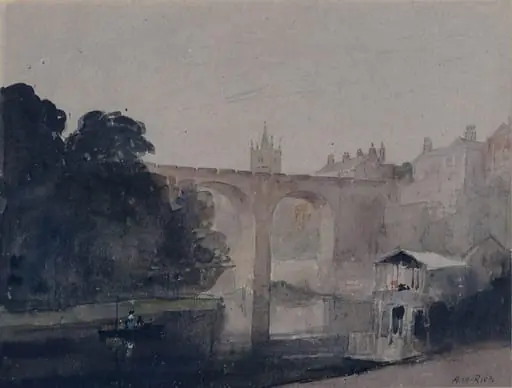
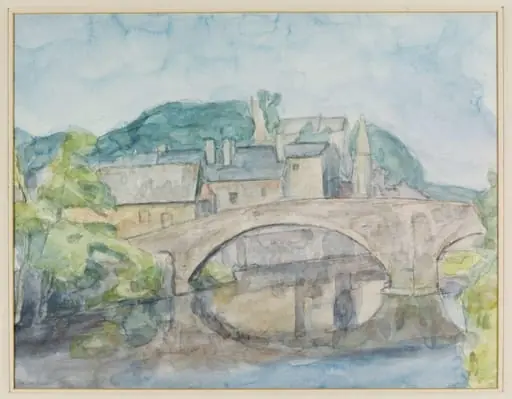
The Bridge, St. Ives, Huntingdonshire
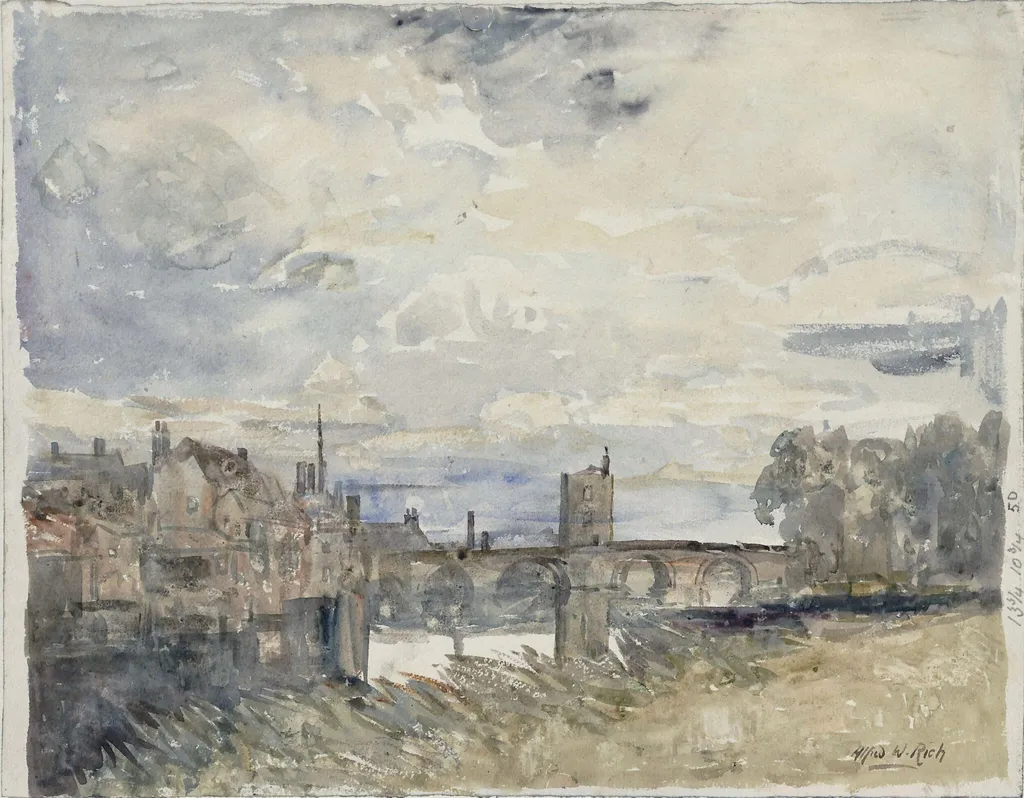
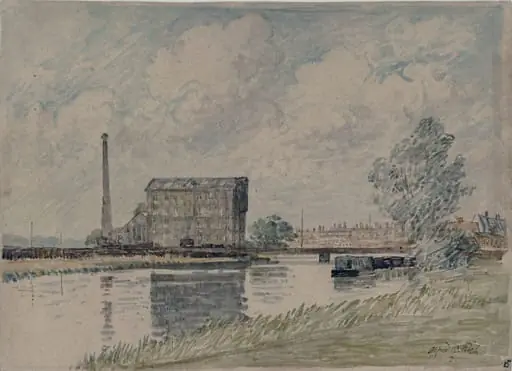
The Bridge, St. Ives, Huntingdonshire is a watercolor work on paper by the Impressionist artist Alfred William Rich. It dates from 1880 and is held in the collection of the Victoria and Albert Museum.
About this work
Overview
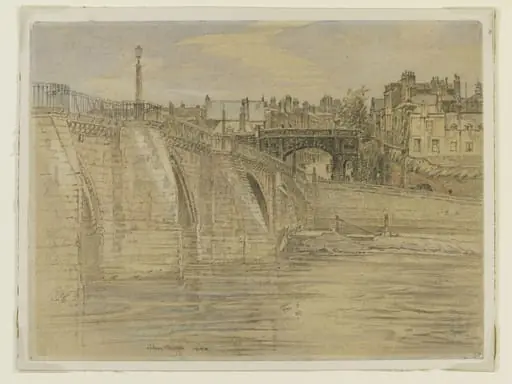
Created in 1880, this watercolour by Alfred William Rich depicts a modest bridge spanning a quiet river in St.
Created in 1880, this watercolour by Alfred William Rich depicts a modest bridge spanning a quiet river in St. Ives, Huntingdonshire. Executed in transparent washes, the work captures a fleeting moment of rural tranquility. Rich signed the piece, affirming its status as a finished study rather than a preparatory sketch. Its scale and medium suggest it was intended for private contemplation rather than public display.
Subject & Meaning
The scene centers on a stone bridge, flanked by weathered buildings that hint at local habitation. No figures appear, emphasizing stillness and solitude. The calm water and overcast sky convey a sense of quiet endurance, reflecting the unassuming rhythm of rural life. The absence of dramatic action invites quiet observation, aligning with a tradition of English topographical art that values place over narrative.
Technique & Style
Rich employed loose, fluid brushwork to suggest form through tone rather than detail. Layers of diluted pigment create soft transitions between sky, water, and land. Earthy greys, pale greens, and muted blues dominate, avoiding bold contrasts. The technique prioritizes atmospheric effect over precision, echoing the observational approach of emerging Impressionist practices while retaining a distinctly British restraint.
History & Provenance
The work was completed during Rich’s early career, before his association with the New English Art Club. Its survival suggests it remained in private hands, possibly within the artist’s circle or among local collectors in Huntingdonshire. No public exhibition record from the period is known, and its current location reflects a lineage of modest, non-commercial ownership.
Context
In 1880, British landscape art was shifting from academic precision toward direct observation of nature. Rich’s watercolour aligns with this transition, paralleling the work of contemporaries like Philip Wilson Steer. While not overtly avant-garde, the piece reflects a growing interest in capturing transient light and everyday scenery, bridging traditional topography and modern sensibility.
Legacy
Though not widely exhibited or reproduced, the painting exemplifies Rich’s consistent focus on quiet English landscapes. It contributes to a body of work that helped redefine watercolour as a medium capable of nuanced expression, influencing later generations of regional painters who valued subtlety over spectacle.
Own this work as a print
Artist & collection

 Avignon, the Ruined Bridge
 Aylesford Bridge
 South Bridge Gate and Old Dee Bridge, Chester
 Figure by a river with a distant view of bridges and a town
 Dordecht
 River - Sunset
![The Bridge at Grez [recto], by Childe Hassam](https://artifactworldgallery.com/img/childe-hassam--the-bridge-at-grez-recto--61cc1291cadd28b1-w320.webp) The Bridge at Grez [recto]
The Bridge at Grez [recto] From Renton, near Dumbarton, with the pillar to Smollett
 Gadshill, from the Three Crutches on the Gravesend - Rochester Road
 A bridge over a stream, with a cottage behind
 View over a wide landscape
 Old Bridge, Bridgend, Glamorganshire