Artwork
Magdalen College, Oxford
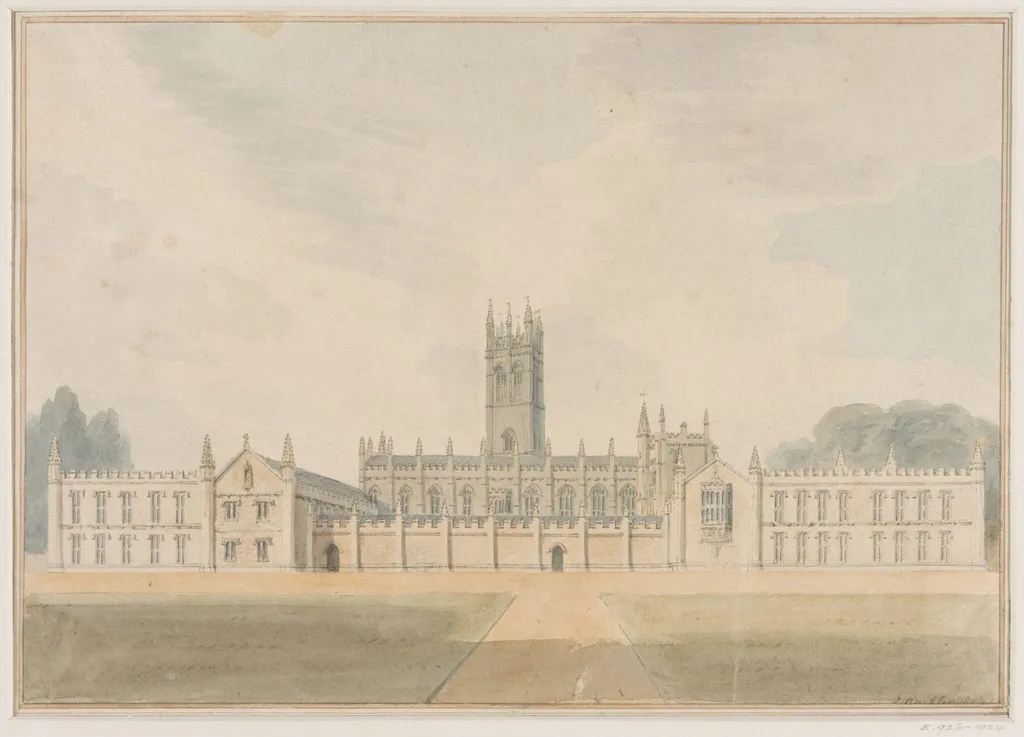
Magdalen College, Oxford is a watercolor work on paper by the British Romanticist artist John Chessell Buckler. It dates from 1804 and is held in the collection of the Victoria and Albert Museum.
About this work
Overview
Painted in 1804 by John Chessell Buckler, this watercolor depicts Magdalen College, Oxford, capturing its architectural form with precision.
Painted in 1804 by John Chessell Buckler, this watercolor depicts Magdalen College, Oxford, capturing its architectural form with precision. Executed in delicate washes, the work reflects the topographical tradition of early 19th-century British art. It is part of the Victoria and Albert Museum’s collection, where it serves as a record of collegiate architecture during a period of renewed interest in Gothic heritage.
Subject & Meaning
The painting presents Magdalen College’s east front, emphasizing its medieval structure with pointed arches, slender towers, and a central spire. The barren ground and muted sky draw attention to the building’s silhouette, suggesting a contemplative, almost reverent observation. Rather than depicting activity, the scene conveys stillness, aligning with the era’s scholarly idealization of ancient institutions.
Technique & Style
Buckler employed transparent watercolor washes to render the stone surfaces with subtle gradations of tone. Fine lines define the tracery of windows and the texture of masonry, while minimal color—soft greys, pale blues, and earth tones—enhances the atmospheric clarity. The technique prioritizes architectural accuracy over expressive brushwork, characteristic of topographical watercolor practices of the time.
History & Provenance
Created during Buckler’s early career, the work likely originated as a study for a larger architectural project or personal documentation. It entered the Victoria and Albert Museum’s collection through its longstanding commitment to preserving British decorative and topographical art. The painting’s survival reflects its value as a documentary record rather than a commercial piece.
Context
In the early 1800s, British artists increasingly turned to historic buildings as subjects, responding to Gothic Revival ideals and antiquarian scholarship. Buckler’s depiction aligns with this trend, where precision and fidelity to structure outweighed romantic embellishment. Such works supported efforts to preserve and understand England’s architectural past amid rapid urban change.
Legacy
Buckler’s watercolor remains a representative example of topographical art from the Regency period. It contributes to the historical record of Oxford’s collegiate architecture and illustrates how watercolor functioned as a tool for documentation before photography. Its presence in the V&A underscores its role in shaping perceptions of heritage through careful visual observation.
Artist & collection


 Merton College, Oxford
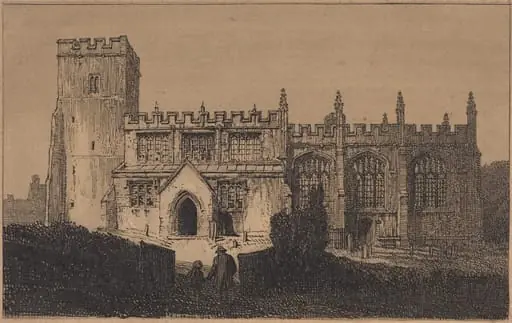 North Marston Church
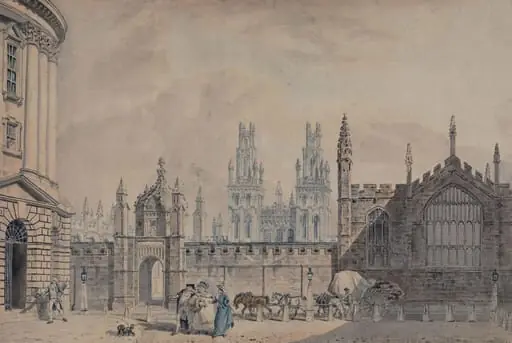 All Souls' College, Oxford
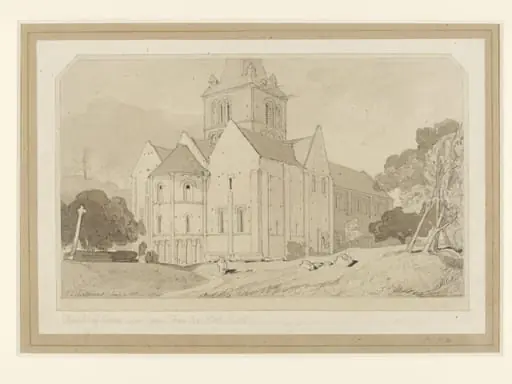 Church of Cheux, near Caen
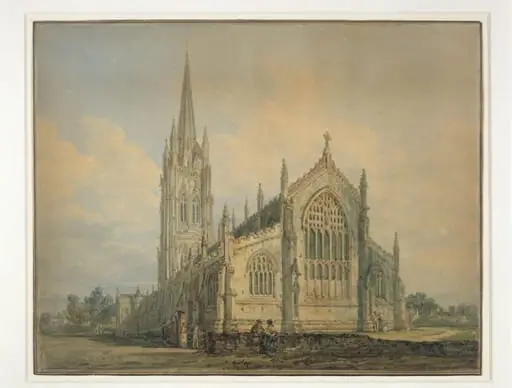 Louth Church, Lincolnshire
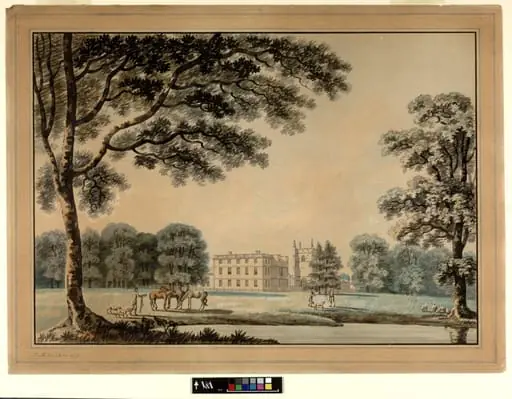 A Country House and Park, probably Norton Hall, near Sheffield
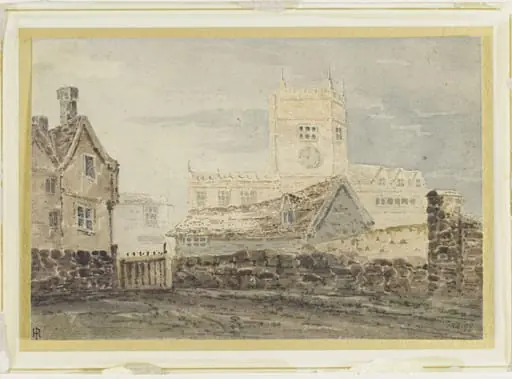 The school, Shrewsbury
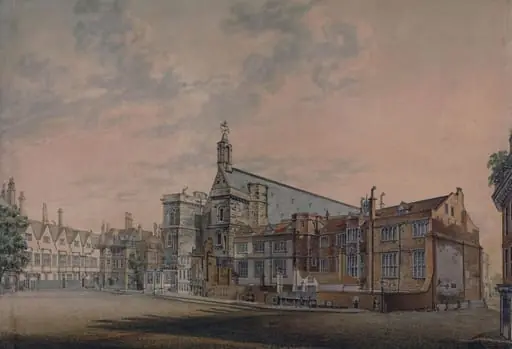 New Palace Yard with the Augmentation Office as in 1793 and the Offices of the Exchequer
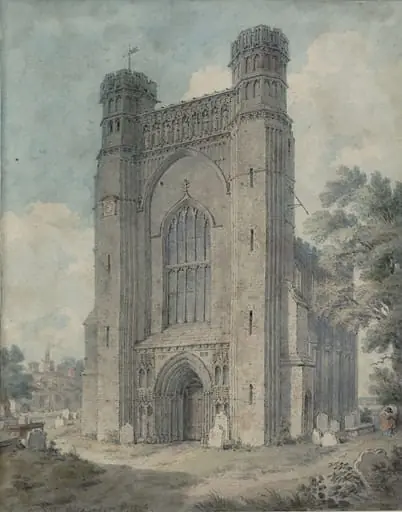 Thorney Abbey, Cambridgeshire