Artwork
Architectural Motif with Three Shields
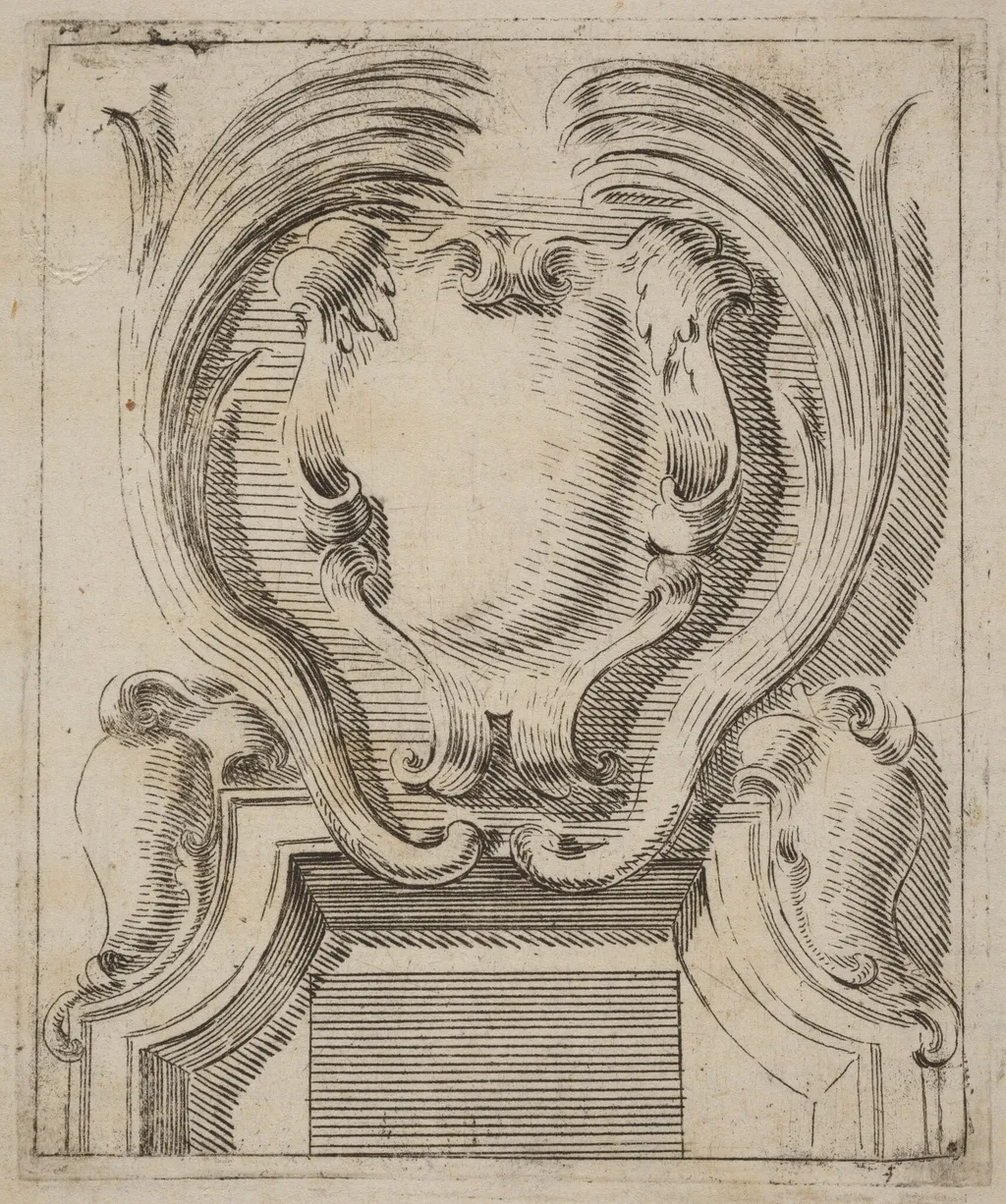
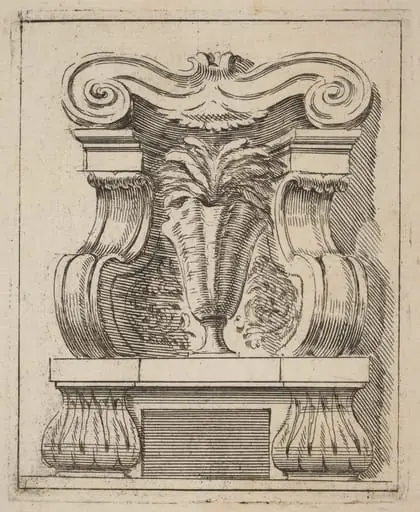
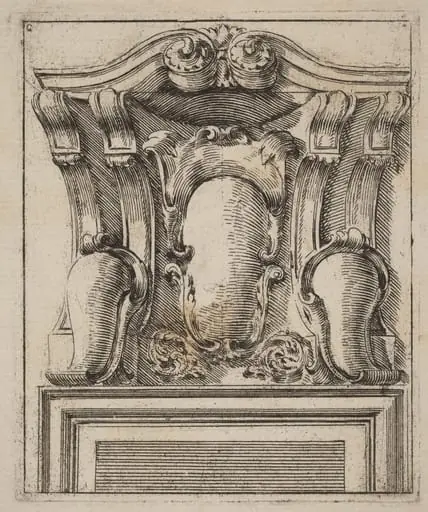
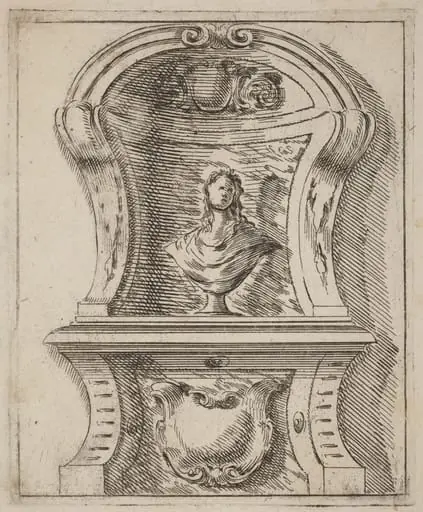
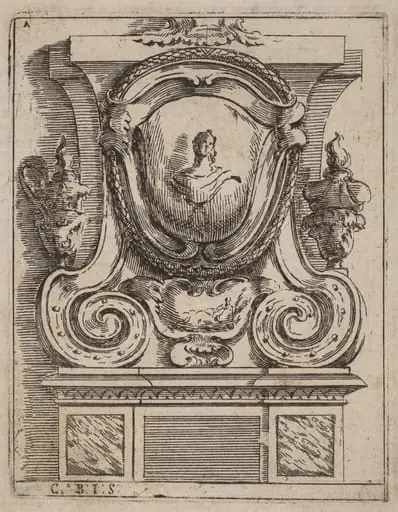
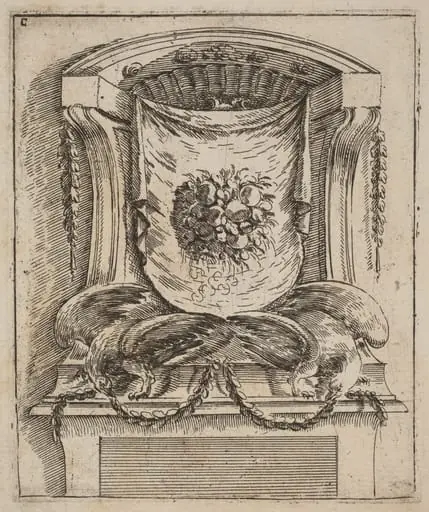
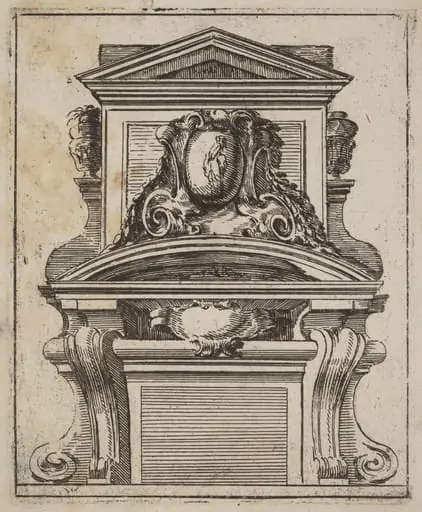
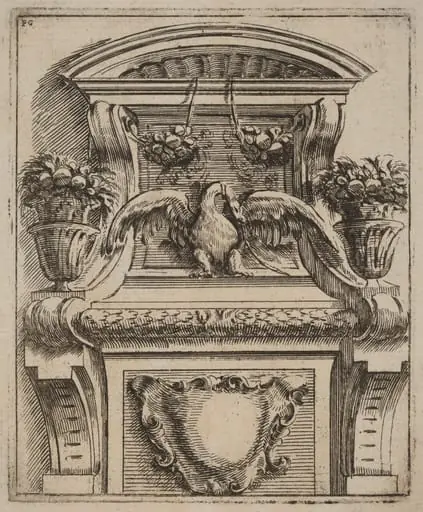
Architectural Motif with Three Shields is an ink print by the Baroque artist Carlo Antonio Buffagnotti. It dates from 1690 and is held in the collection of the National Gallery of Art.
About this work
Overview
The work is rendered in fine, incised lines that hold ink densely, producing a high-contrast, textured surface typical of the drypoint technique.
Carlo Antonio Buffagnotti created this etching around 1690, using drypoint to carve directly into a metal plate. The resulting image depicts a stylized architectural base supporting three ornamental shields. The work is rendered in fine, incised lines that hold ink densely, producing a high-contrast, textured surface typical of the drypoint technique. It is printed on laid paper, a common support for prints of the period.
Subject & Meaning
The composition centers on three shields, each adorned with swirling, abstract patterns. Positioned atop a solid, block-like structure, they suggest heraldic or decorative elements, possibly referencing familial or civic emblems. The absence of text or figural detail leaves their specific symbolic meaning ambiguous, but their arrangement implies a deliberate, formal order rather than spontaneous ornamentation.
Technique & Style
Buffagnotti employed drypoint, a printmaking method involving scratching lines directly into a metal plate with a hardened needle. This produces burrs along the incisions that retain ink, yielding rich, velvety dark lines. The scratchy, dense marks in the image reflect the tactile immediacy of this technique, contrasting with the cleaner lines of traditional etching. The style emphasizes texture over precision, favoring expressive mark-making.
History & Provenance
The print is attributed to Buffagnotti, an Italian artist active in the late 17th century, known for architectural and decorative prints. While no documented early ownership records survive, the work aligns with the period’s interest in ornamental design and print circulation among collectors. Its survival in institutional collections suggests it was preserved as an example of technical skill rather than as a commissioned piece.
Context
In late 17th-century Italy, architectural motifs and heraldic imagery were frequently explored in prints as both decorative studies and references to classical traditions. Buffagnotti’s work fits within a broader trend of artists documenting or reimagining ornamental forms, often for use by craftsmen or as artistic exercises. The focus on structure and pattern, rather than narrative, reflects a shift toward formal experimentation in printmaking.
Legacy
Though not widely reproduced or celebrated in his time, Buffagnotti’s etching contributes to the understanding of Italian printmaking’s technical diversity. The work exemplifies how drypoint was used to explore texture and form beyond traditional etching. It remains a reference for scholars studying the intersection of architectural design and print culture in early modern Europe.
Artist & collection