Artwork
Architectural Motif with Three Shields
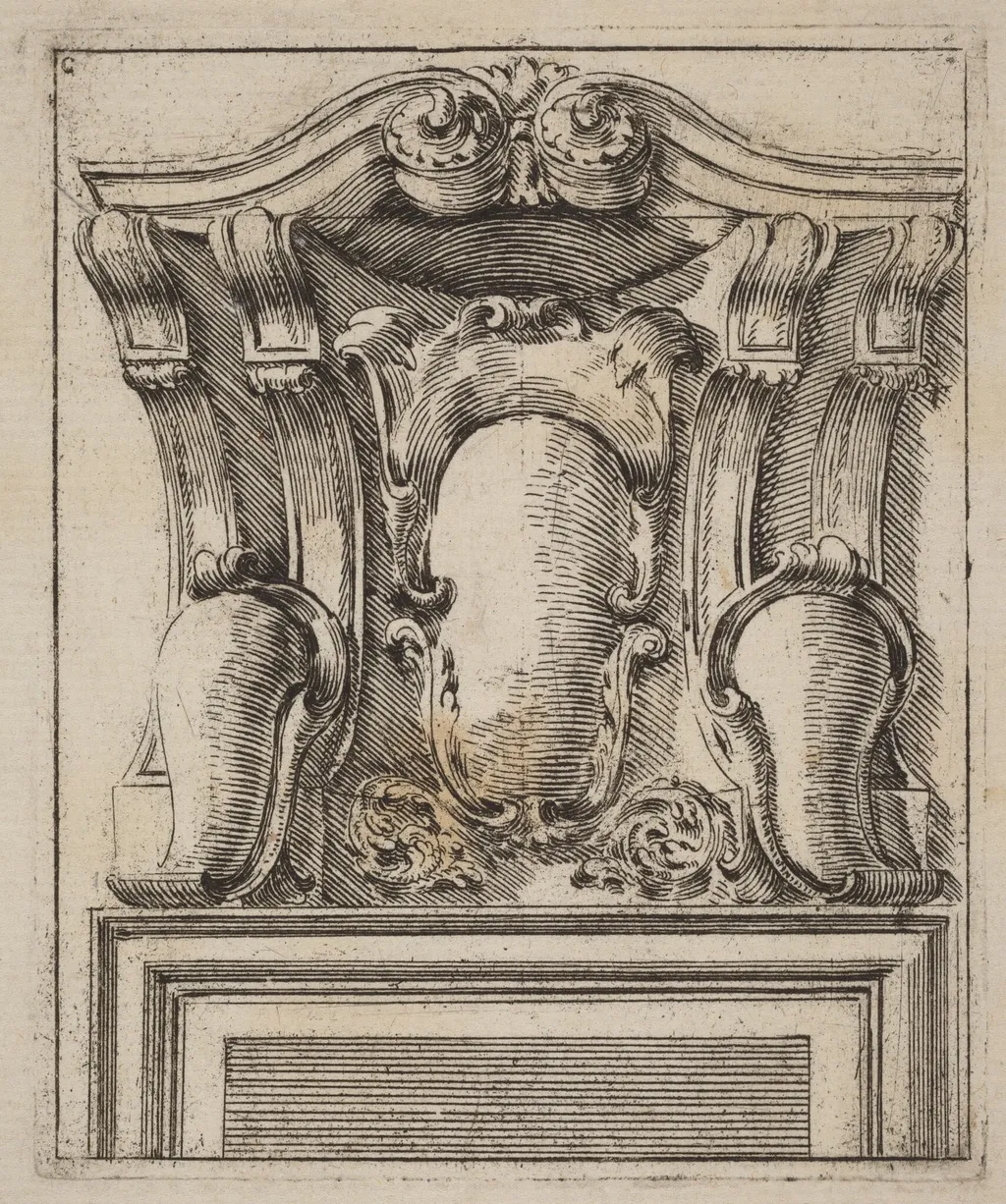
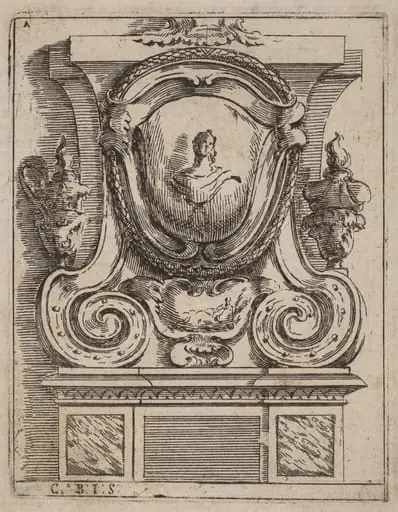
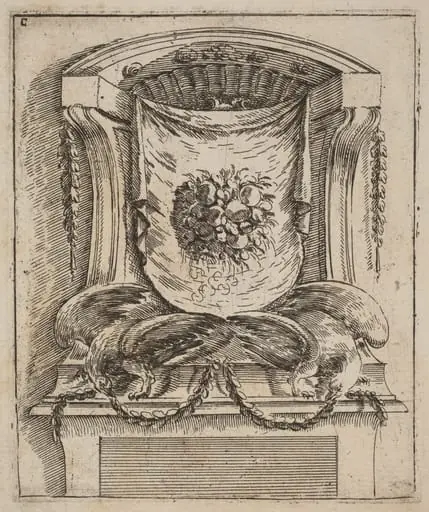
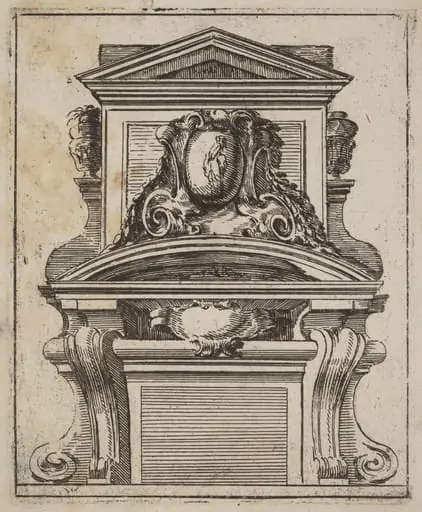
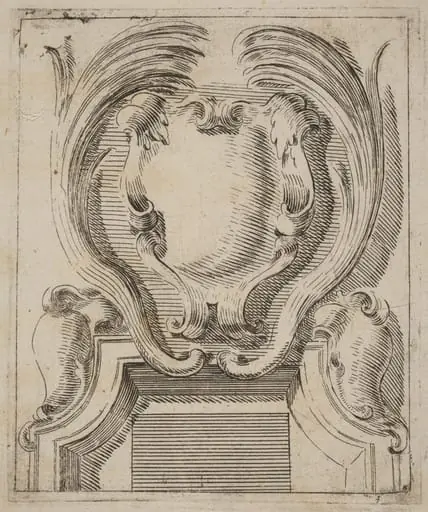
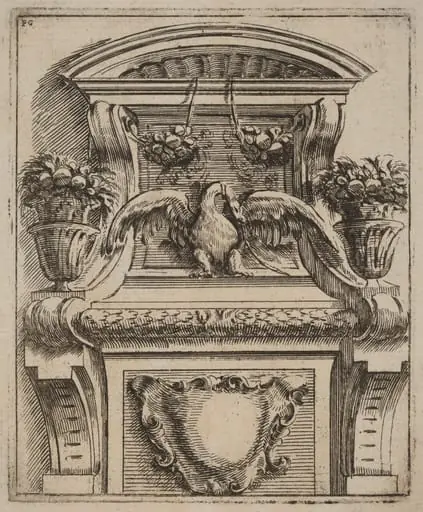
Architectural Motif with Three Shields is an ink print by the Baroque artist Carlo Antonio Buffagnotti. It dates from 1690 and is held in the collection of the National Gallery of Art.
About this work
Overview
The lower edge is marked by a modest ledge supporting a rectangular panel, giving the scene a sense of architectural framing.
Carlo Antonio Buffagnotti’s etching, titled Architectural Motif with Three Shields, dates to around 1690. Executed on laid paper, the work presents a symmetrical composition of two vertically elongated, ornamented structures framing a central shield bearing a stylised coat of arms. The lower edge is marked by a modest ledge supporting a rectangular panel, giving the scene a sense of architectural framing.
Subject & Meaning
The central shield, adorned with swirling motifs, a crown and a wreath, suggests a heraldic emblem, likely referencing a noble or royal lineage. The surrounding arches and decorative elements echo Baroque architectural vocabulary, positioning the emblem within a grand, ceremonial setting, though no narrative figures accompany the design.
Technique & Style
Buffagnotti employed the etching process, incising fine lines and cross‑hatching into a metal plate before applying acid to create the image. The resulting marks on the paper display crisp contours and varied tonal shading, a characteristic approach for late‑17th‑century prints that sought to convey depth and texture through line work rather than tonal washes.
History & Provenance
The print is attributed to the late Baroque period in Italy, a time when decorative architectural prints were popular among collectors of heraldic and ornamental designs. Specific ownership records for this particular impression are not documented, and it remains catalogued primarily through museum and scholarly inventories of Buffagnotti’s oeuvre.
Artist & collection