Artwork
Architectural Motif with a Bird
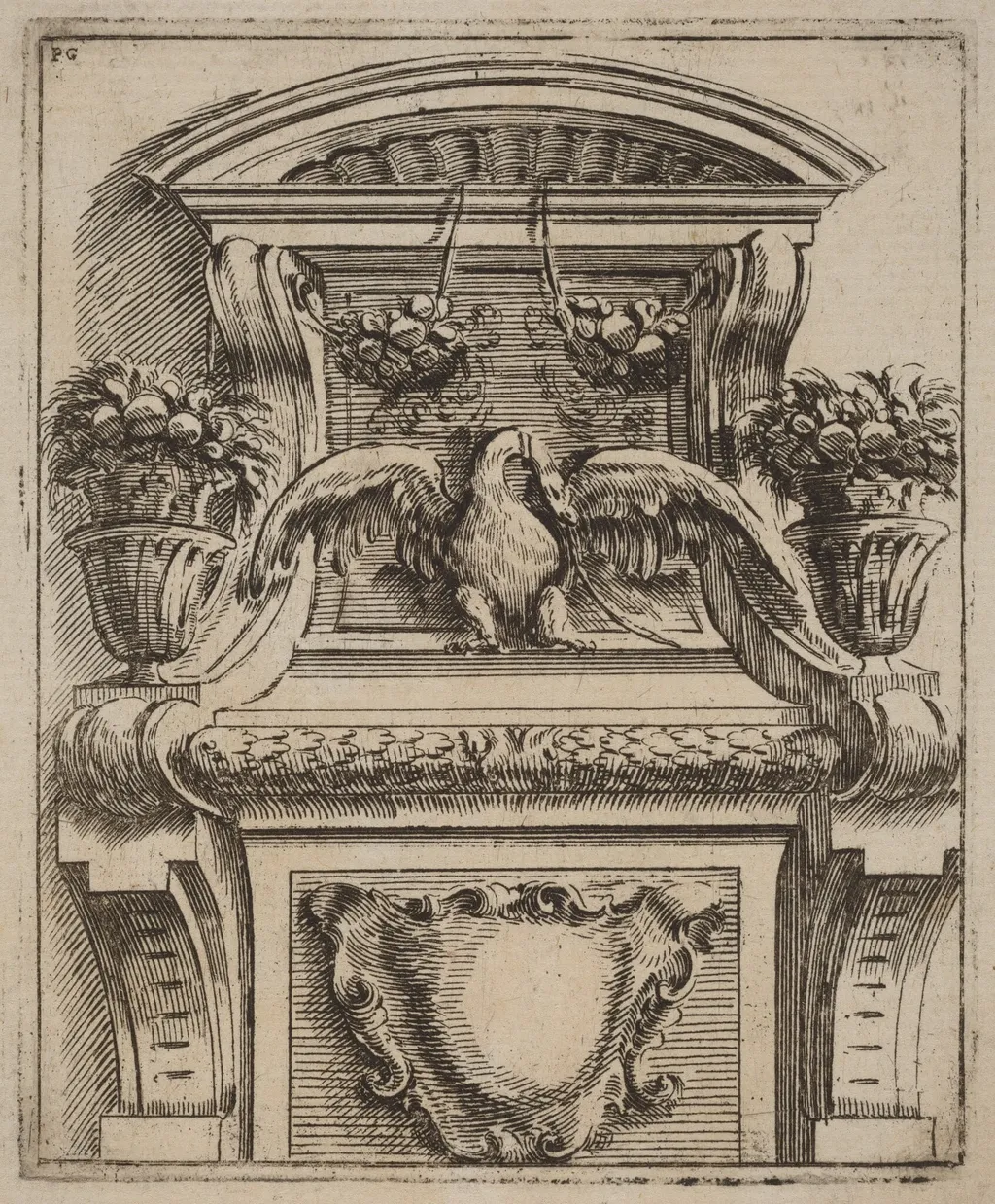
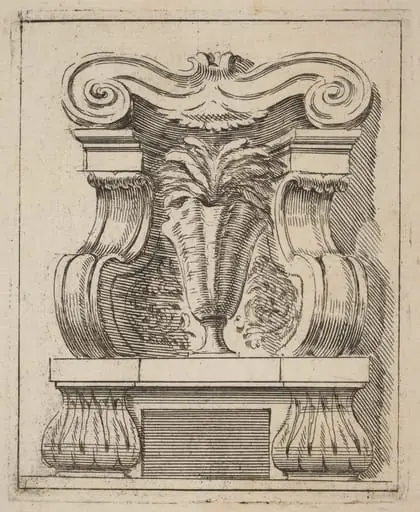
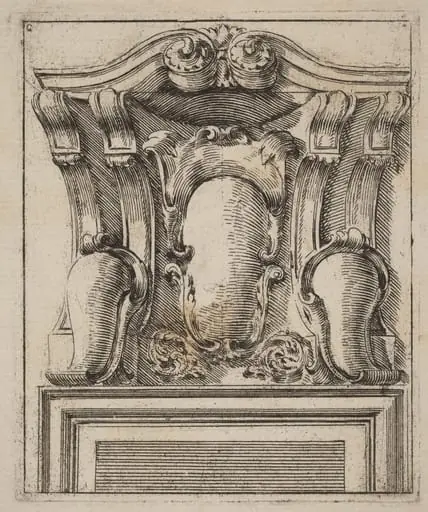
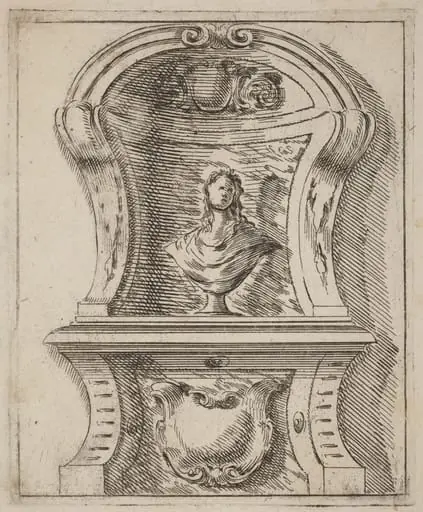
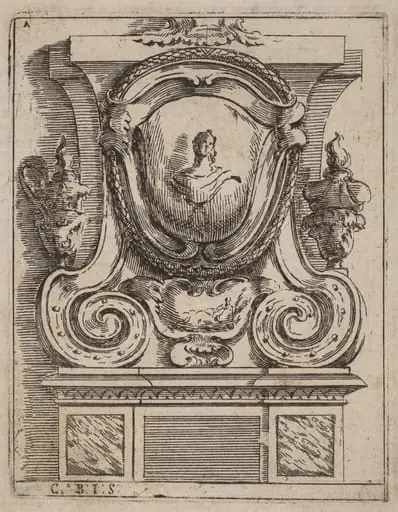
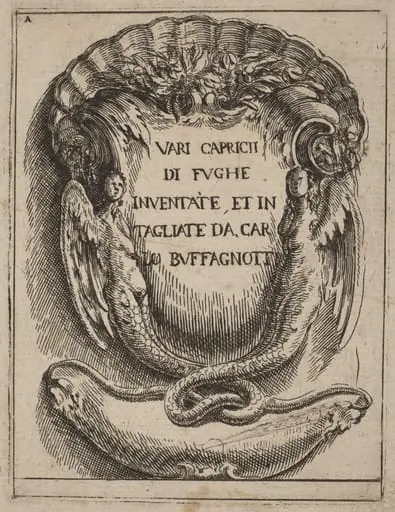
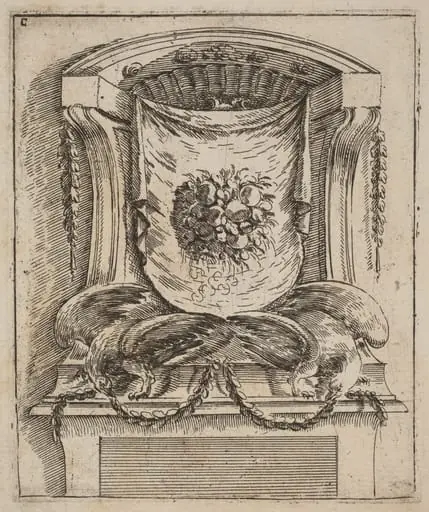
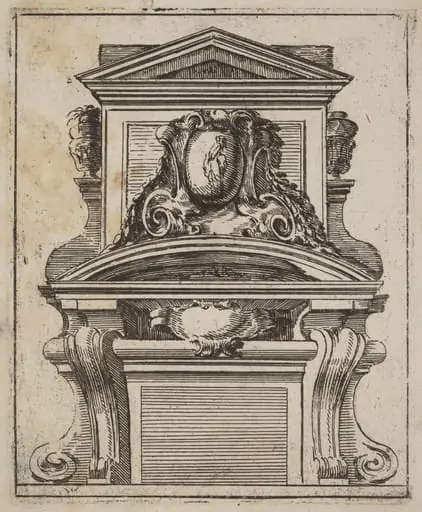
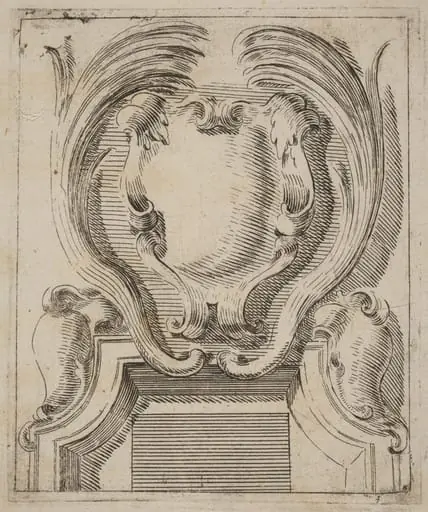
Architectural Motif with a Bird is an ink print by the Baroque artist Carlo Antonio Buffagnotti. It dates from 1690 and is held in the collection of the National Gallery of Art.
About this work
Overview
The composition balances architectural solidity with delicate natural elements, creating a decorative vignette typical of late‑seventeenth‑century print design.
Carlo Antonio Buffagnotti’s etching known as Architectural Motif with a Bird dates from around 1690. Executed on laid paper, the work presents a stylised stone‑like frame that encloses ornamental foliage and two small birds positioned opposite one another at the top. The composition balances architectural solidity with delicate natural elements, creating a decorative vignette typical of late‑seventeenth‑century print design.
Subject & Meaning
The central motif consists of a heavy, curving frame reminiscent of carved stone, within which a rectangular panel bears swirling, leaf‑shaped ornamentation. Atop the frame, two birds face each other, suggesting a symmetrical dialogue between fauna and architecture. The juxtaposition of the birds’ liveliness against the rigid frame may reflect contemporary interests in harmonising nature and built form.
Technique & Style
Buffagnotti employed the etching process, incising lines into a metal plate with acid to achieve fine detail. Shading is rendered through cross‑hatching, giving the birds and ornamental foliage a sense of depth against the flat background. The heavy, bold outlines of the frame and the fluid, decorative scrollwork exemplify the Baroque taste for elaborate, ornamental designs in printed media.
History & Provenance
Created circa 1690, the print belongs to a period when Italian printmakers produced decorative panels for interior decoration and pattern books. While specific ownership records are scarce, the work appears in several catalogues of Buffagnotti’s output, indicating it circulated among collectors of ornamental prints in the late seventeenth and early eighteenth centuries.
Context
During the late 1600s, architectural and botanical motifs were frequently combined in prints used as design references for artisans, architects, and interior decorators. Buffagnotti’s piece fits within this tradition, offering a compact, repeatable pattern that could be adapted for wall panels, furniture ornamentation, or book illustrations, reflecting the era’s integration of art and applied design.
Artist & collection