Artwork
Frontispiece for "Les Graveurs du XIXe siècle de Henri Beraldi"
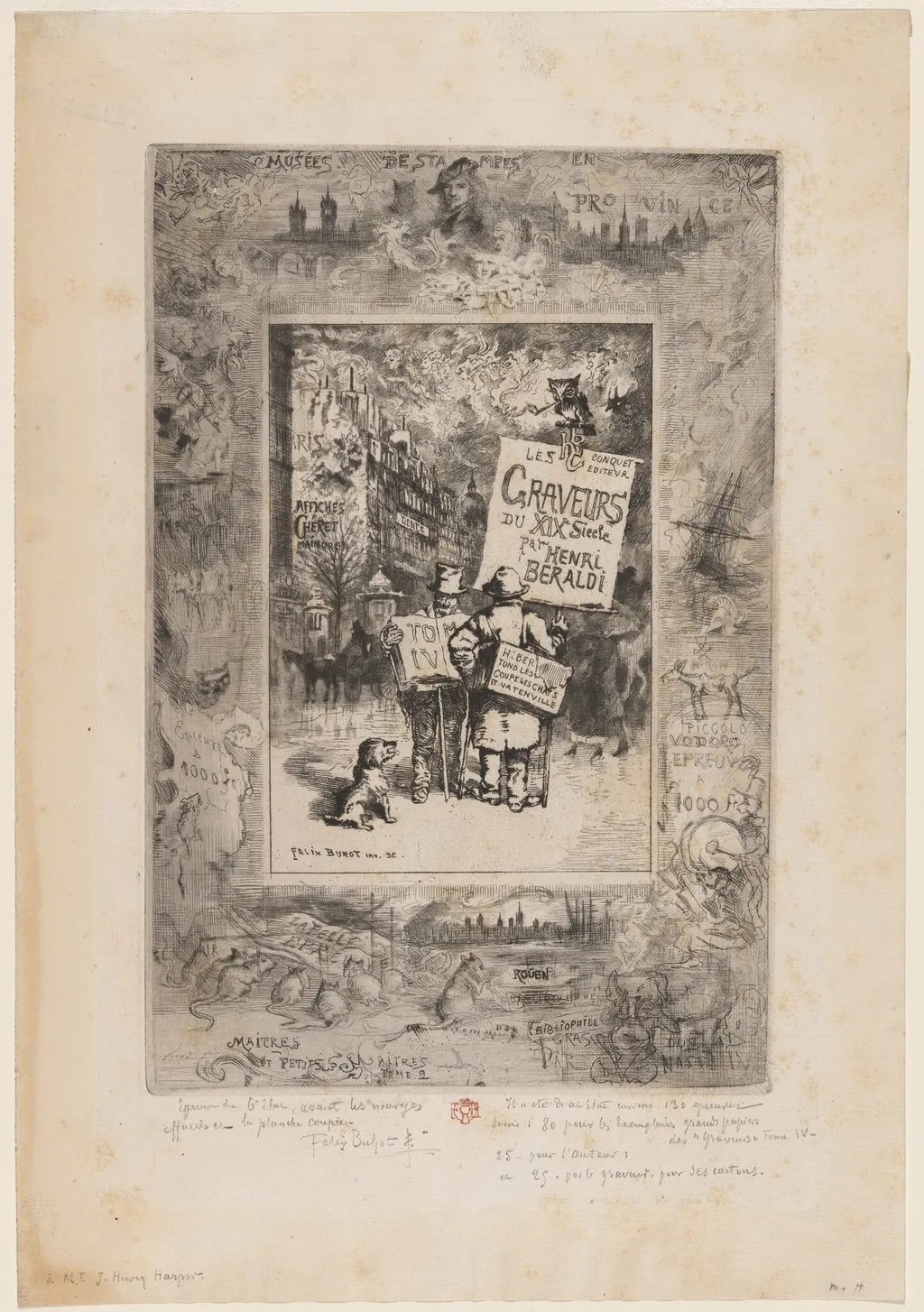
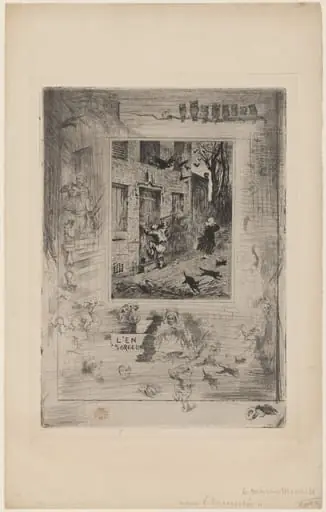
Frontispiece for "Les Graveurs du XIXe siècle de Henri Beraldi" is an ink print by the Impressionist artist Félix-Hilaire Buhot. It dates from 1877 and is held in the collection of the National Gallery of Art.
About this work
Overview
The image retains the spontaneous quality of a sketch, with layered details and marginal notations that suggest an artist’s working notebook.
Created in 1877 by Félix-Hilaire Buhot, this print serves as the frontispiece for Henri Beraldi’s catalog of 19th-century engravers. Executed in etching, drypoint, and roulette on laid paper, it combines fine line work with textured tonal areas. The image retains the spontaneous quality of a sketch, with layered details and marginal notations that suggest an artist’s working notebook. It is held in the collection of the National Gallery of Art in Washington, D.C.
Subject & Meaning
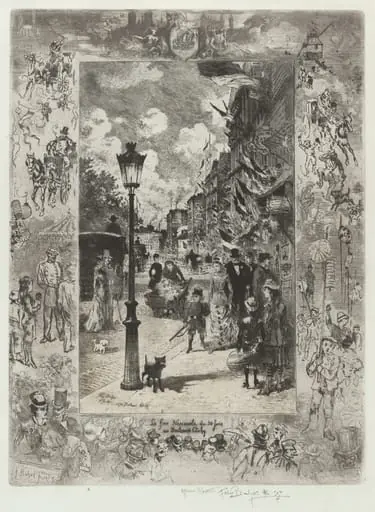
The scene centers on a man holding a large sign advertising Beraldi’s book on engravers, surrounded by smaller notices, a dog, a cat, and passersby. Sheet music tucked under his arm hints at urban cultural life. The cluttered composition reflects the bustling energy of 19th-century Paris, while the sign’s presence ties the image directly to the publication it introduces. The work functions as both a visual advertisement and a snapshot of street life.
Technique & Style
Buhot employed etching and drypoint to achieve fine, expressive lines, while roulette added granular texture to surfaces like pavement and walls. Selective wiping created subtle gradations of tone, enhancing depth without full shading. The rough, sketchlike quality comes from visible tool marks and unrefined edges, with marginal doodles suggesting the artist’s process. The print mimics the immediacy of a drawn page rather than a polished final image.
History & Provenance
Produced in 1877 as the opening image for Beraldi’s multi-volume reference on printmakers, the work was likely printed in a small run for subscribers or institutional use. It entered the National Gallery of Art’s collection through established acquisition channels, possibly from a donor with an interest in 19th-century French printmaking. Its survival in good condition reflects its role as a specialized, rather than mass-produced, item.
Context
In late 19th-century France, illustrated catalogs of artists and printmakers were gaining scholarly attention. Buhot, known for urban scenes and printmaking techniques, was well positioned to visualize such a project. The crowded street setting mirrors the era’s fascination with documenting everyday life, while the inclusion of music and signage reflects the expanding visual culture of Parisian commerce and media.
Legacy
This frontispiece endures as a rare example of an artist directly engaging with the physical form of a scholarly publication. Its sketchlike aesthetic influenced later printmakers who valued process over polish. Though not widely reproduced, it remains a key artifact in understanding how 19th-century bibliographic works were visually framed, bridging art, documentation, and urban observation.
Artist & collection

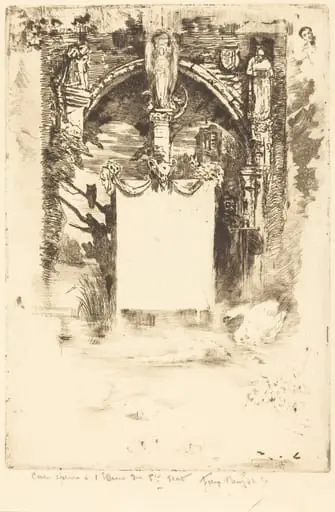 Ex-Libris pour "L'Ensorcelée" (Bookplate for "L'Ensorcelée")
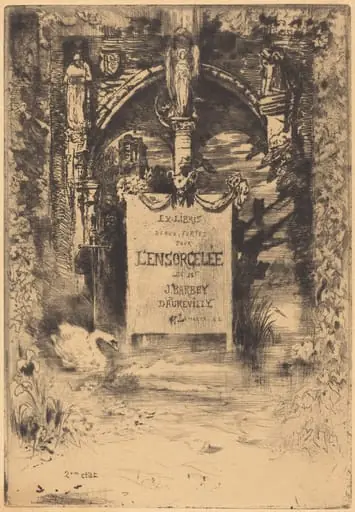 Ex-Libris pour "L'Ensorcelée" (Bookplate for "L'Ensorcelée")
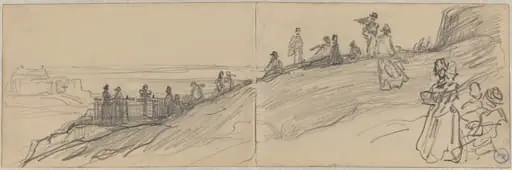 Figures on Top of a Hill, Overlooking the Sea
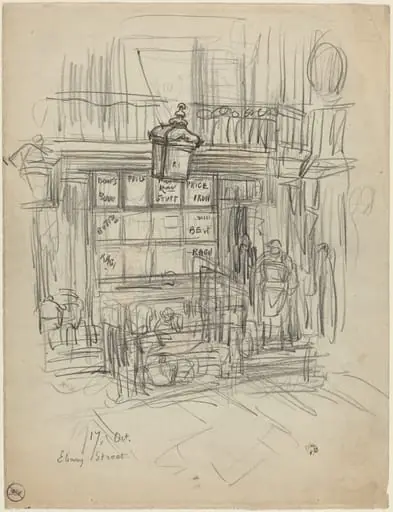 Ebury Street
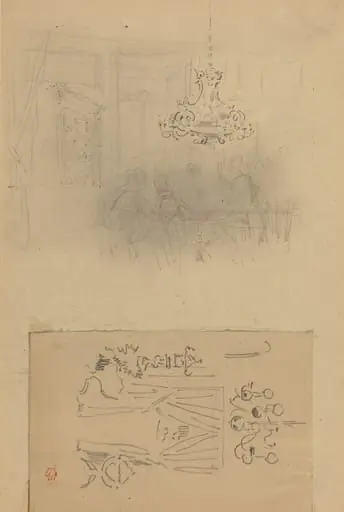 A Gathering in an Interior; A Curtained Doorway
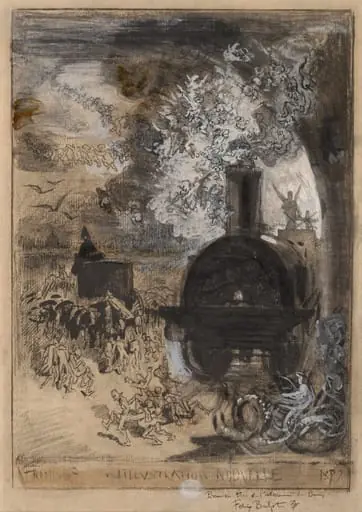 Frontispiece for L'Illustration Nouvelle: The Burial of the Burin
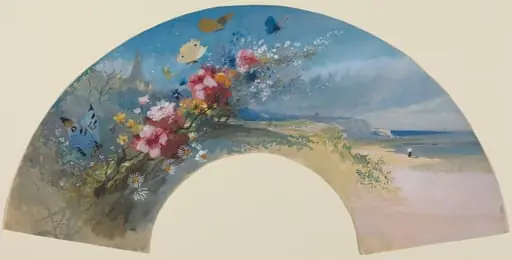 Fan with Wildflowers and Butterflies against the Norman Coast
![Gillingham Pier, London [verso], by Félix-Hilaire Buhot](https://artifactworldgallery.com/img/felix-hilaire-buhot--gillingham-pier-london-verso--641e03dd7de8217b-w320.webp) Gillingham Pier, London [verso]
Gillingham Pier, London [verso]
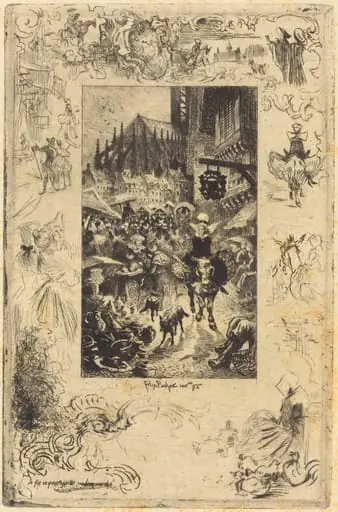 Je fis ce qu'on appelle un bon marché (I made what I would call a good bargain)
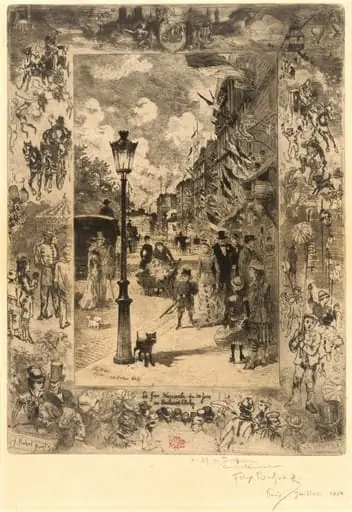 La Fête nationale au Boulevard Clichy (National Holiday on the Boulevard de Clichy)
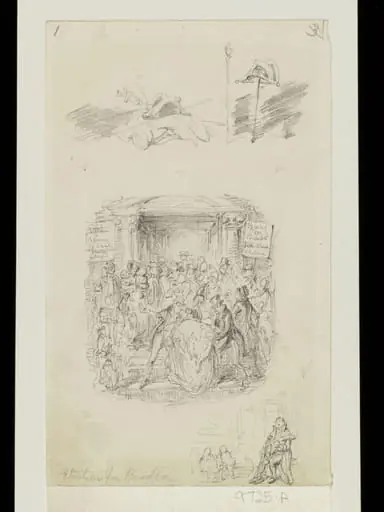 Election for Beadle
 Untitled
 La Fete Nationale au Boulevard de Clichy (National Holiday on the Boulevard de Clichy)
 Brownies at Home - Twelve Vignettes
 The Bookplate of the Printer's Devil
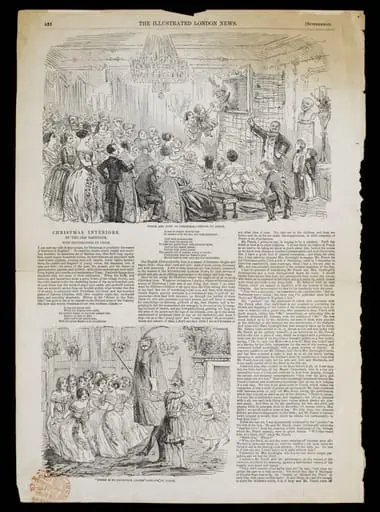 George Speaight Punch & Judy Collection
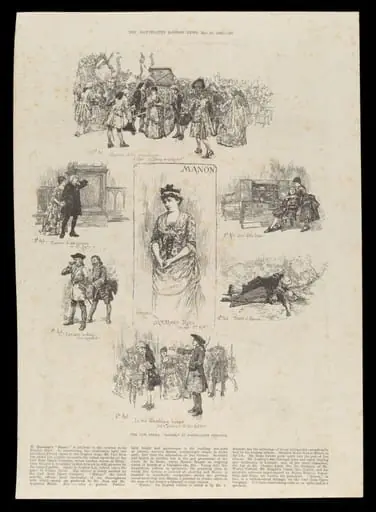 H Beard Print Collection
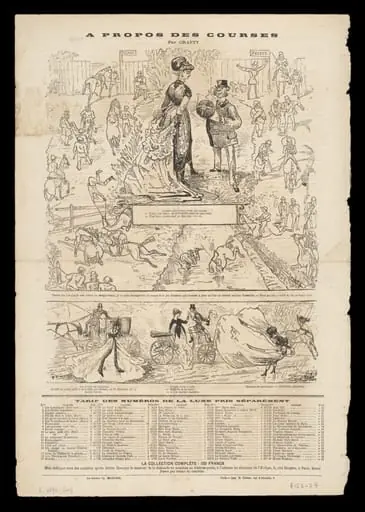 H Beard Print Collection
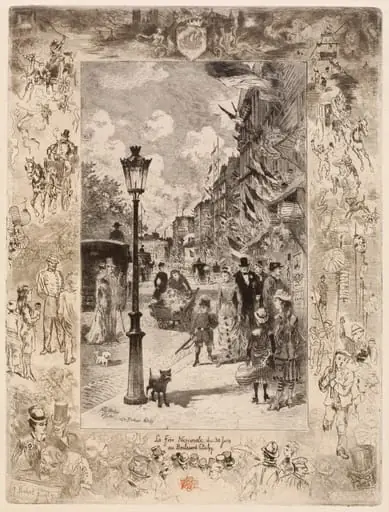 La Fête nationale au Boulevard Clichy (National Holiday on the Boulevard de Clichy)
 La Maison Maudite (The House of the Damned)