Artwork
La Maison Maudite (The House of the Damned)
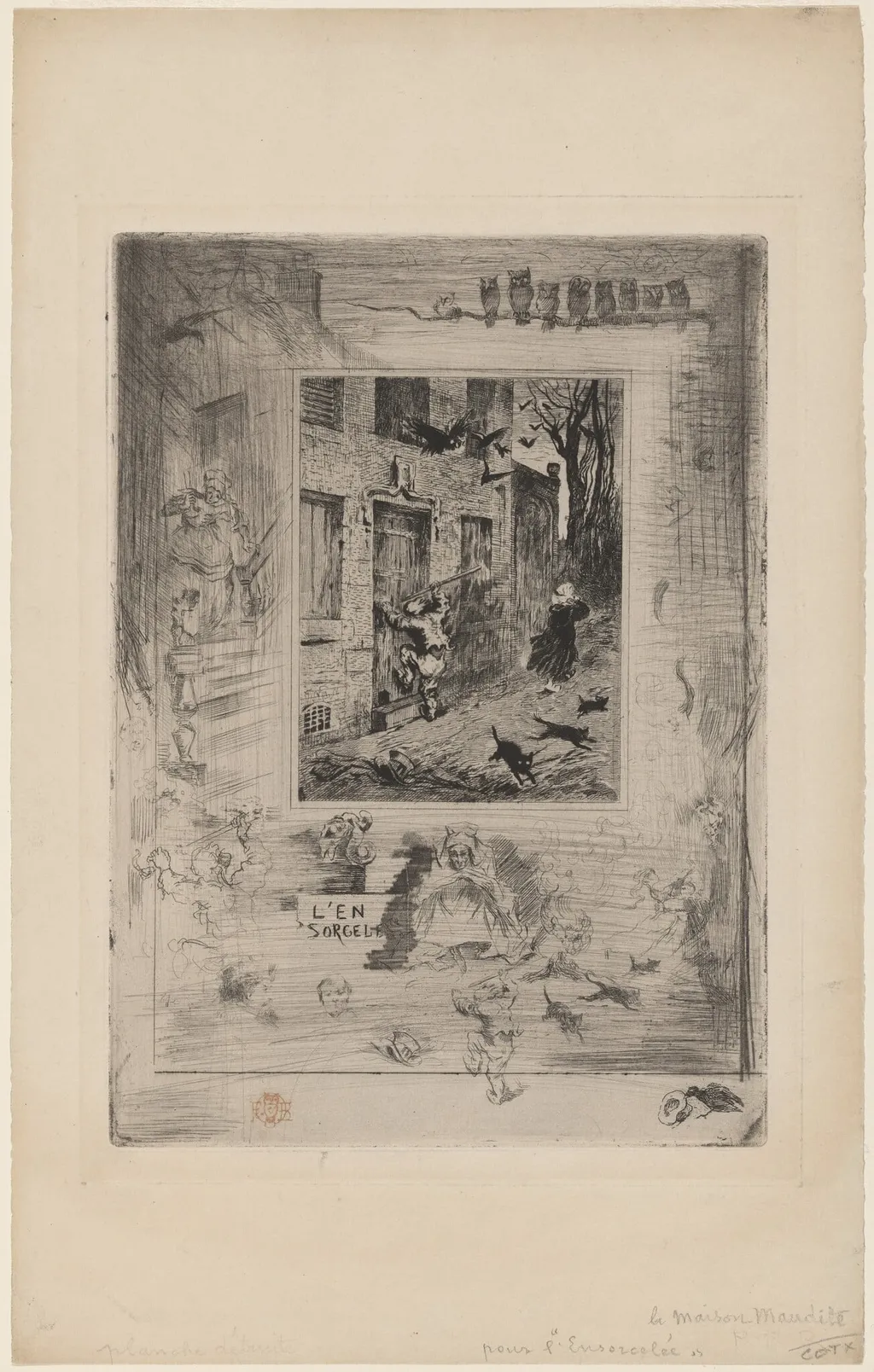
La Maison Maudite (The House of the Damned) is an ink print by the Impressionist artist Félix-Hilaire Buhot. It dates from 1884 and is held in the collection of the National Gallery of Art.
About this work
Overview
La Maison Maudite is a print by Félix-Hilaire Buhot, dated around 1884, executed in etching, drypoint, and roulette on wove paper.
La Maison Maudite is a print by Félix-Hilaire Buhot, dated around 1884, executed in etching, drypoint, and roulette on wove paper. It depicts a narrow, shadowed urban alley at night, rendered with dense line work and textured shading. The work is part of the National Gallery of Art’s collection in Washington, D.C., and exemplifies Buhot’s interest in atmospheric street scenes and the psychological weight of urban environments.
Subject & Meaning
The scene centers on a woman near a doorway and a man holding a lantern, their gazes directed toward a disorderly alley. Above them, a sign reading 'L'En Sorcellerie' suggests supernatural dread, while a rearing horse and fleeing figures amplify a sense of sudden panic. The imagery evokes unease without explicit narrative, inviting interpretation of fear, superstition, or social chaos in late 19th-century Parisian streets.
Technique & Style
Buhot combined etching for fine lines, drypoint for rich, scratchy textures, and roulette for stippled shadows to build depth and motion. The rough, uneven surfaces and heavy contrasts create a tactile, almost chaotic surface. The sketchlike quality suggests immediacy, as if capturing a fleeting moment, enhancing the scene’s tension and emotional resonance through deliberate imperfection.
History & Provenance
Created in the mid-1880s, the print emerged during Buhot’s most active period of urban scene studies. It entered the National Gallery of Art’s collection through established acquisition channels, likely as part of a broader effort to document French graphic art of the period. Its preservation reflects its significance within the context of late 19th-century printmaking practices in France.
Context
Buhot worked amid Paris’s rapid modernization, often portraying its marginalized corners and nocturnal life. La Maison Maudite aligns with contemporary interest in the uncanny and the psychological undercurrents of city living. The use of witchcraft symbolism reflects broader cultural anxieties about the unknown, echoing literary and artistic trends that questioned rational progress in an industrial age.
Legacy
The print remains a notable example of Buhot’s contribution to the revival of etching as a medium for expressive, non-idealized urban observation. While not widely reproduced, it influenced later artists interested in mood-driven printmaking and the depiction of psychological space. Its presence in major collections underscores its role in documenting the emotional texture of modern life.
Artist & collection

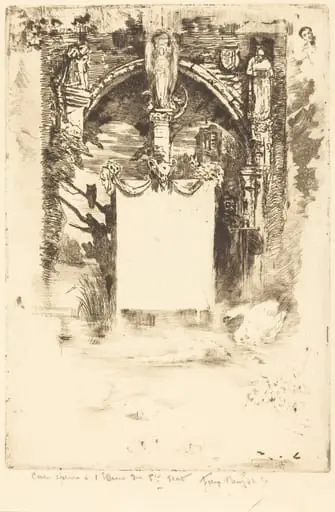 Ex-Libris pour "L'Ensorcelée" (Bookplate for "L'Ensorcelée")
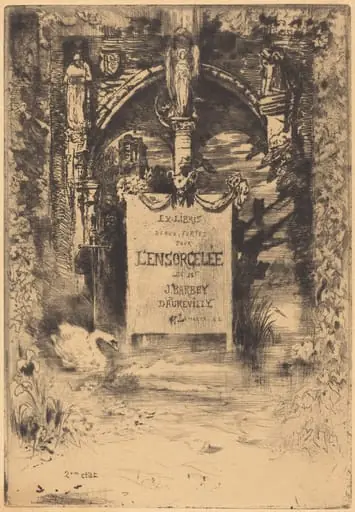 Ex-Libris pour "L'Ensorcelée" (Bookplate for "L'Ensorcelée")
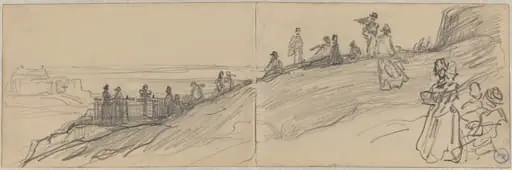 Figures on Top of a Hill, Overlooking the Sea
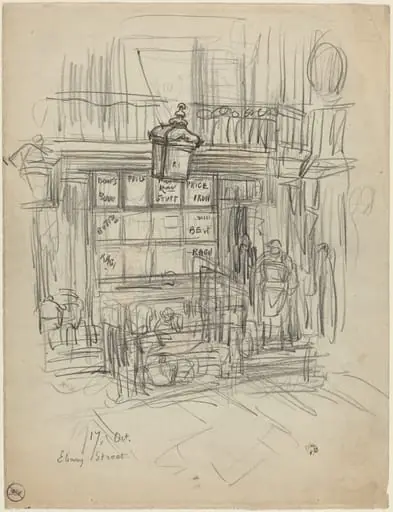 Ebury Street
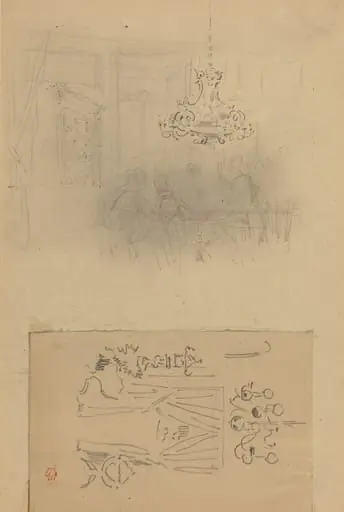 A Gathering in an Interior; A Curtained Doorway
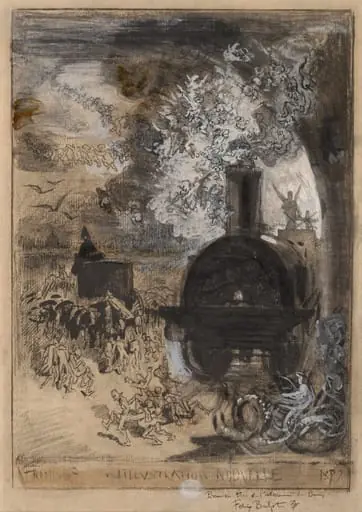 Frontispiece for L'Illustration Nouvelle: The Burial of the Burin
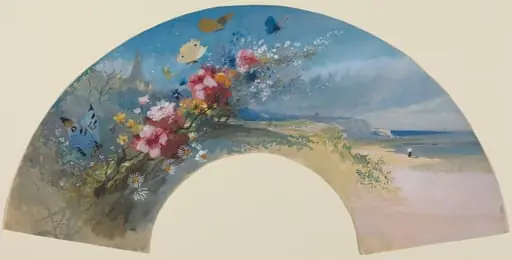 Fan with Wildflowers and Butterflies against the Norman Coast
![Gillingham Pier, London [verso], by Félix-Hilaire Buhot](https://artifactworldgallery.com/img/felix-hilaire-buhot--gillingham-pier-london-verso--641e03dd7de8217b-w320.webp) Gillingham Pier, London [verso]
Gillingham Pier, London [verso]
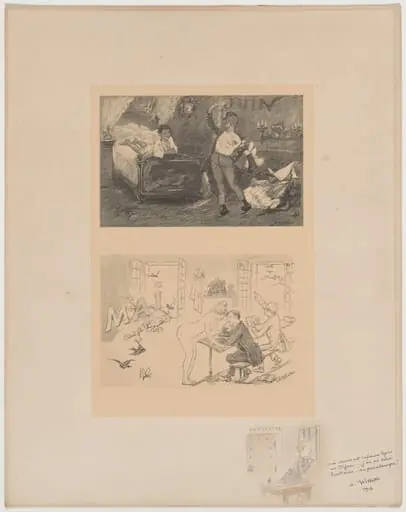 Séquestré
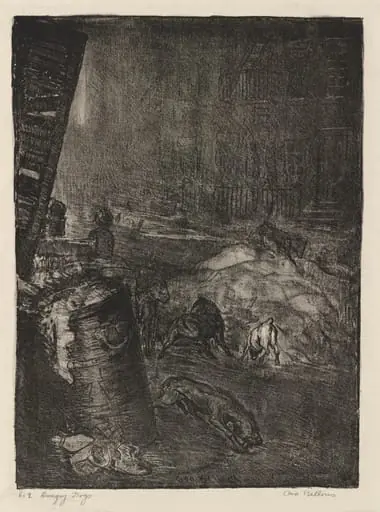 Hungry Dogs, Second Stone, second state
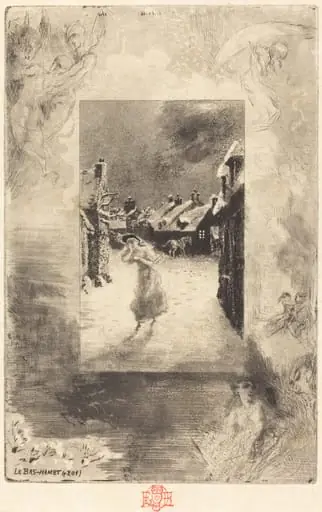 Le Bas-Hamet
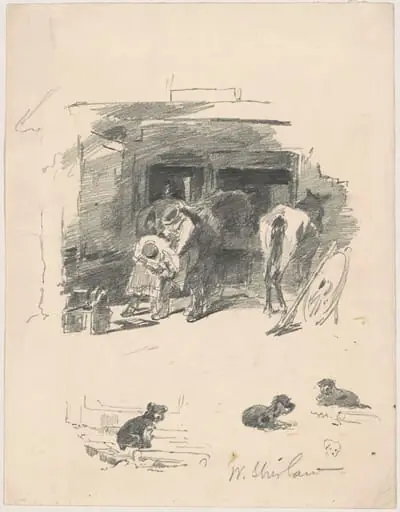 Men Shoeing a Horse
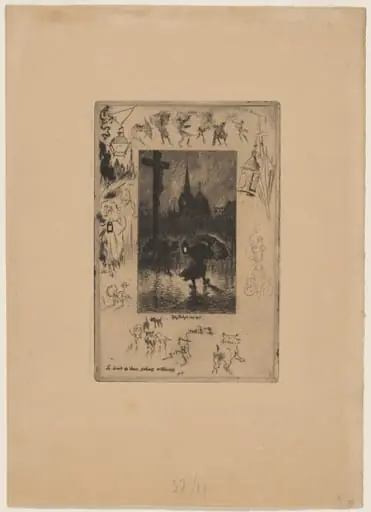 Le Bruit de deux sabots trainant...
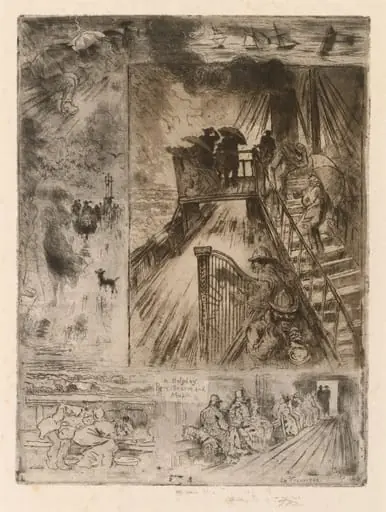 The Passage
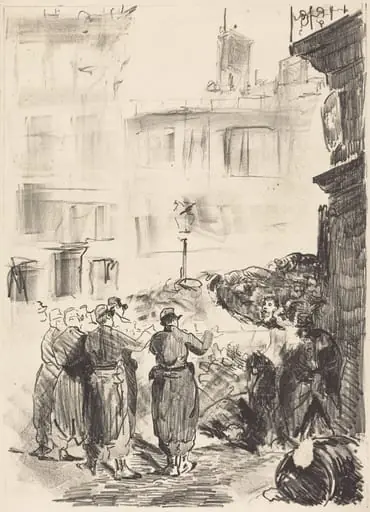 The Barricade (La barricade)
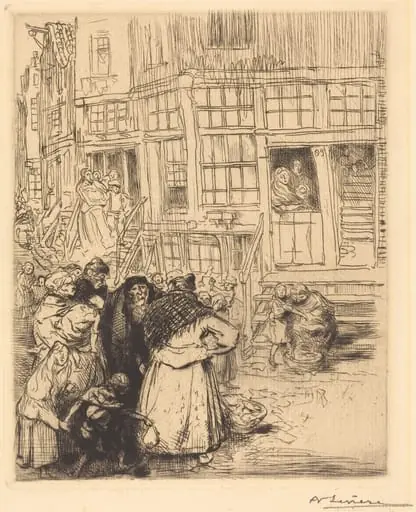 Jewish Quarters in Amsterdam
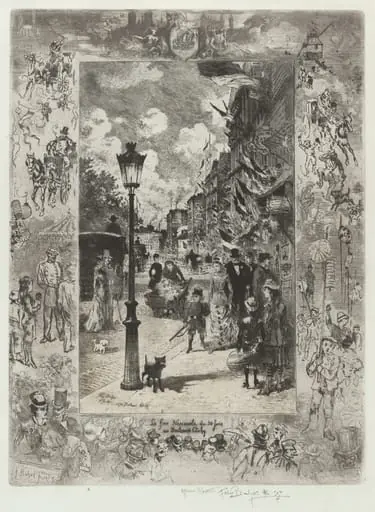 La Fete Nationale au Boulevard de Clichy (National Holiday on the Boulevard de Clichy)
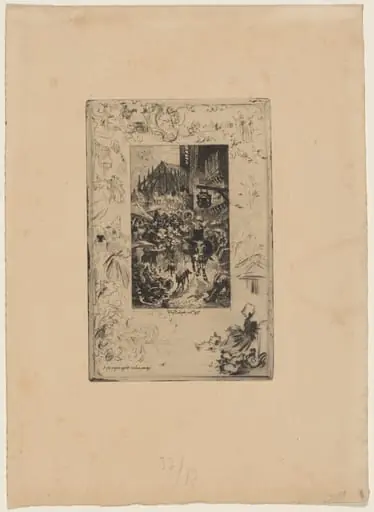 Je fis ce qu'on appelle un bon marche.