Artwork
Les Voisins de Campagne (Country Neighbors)
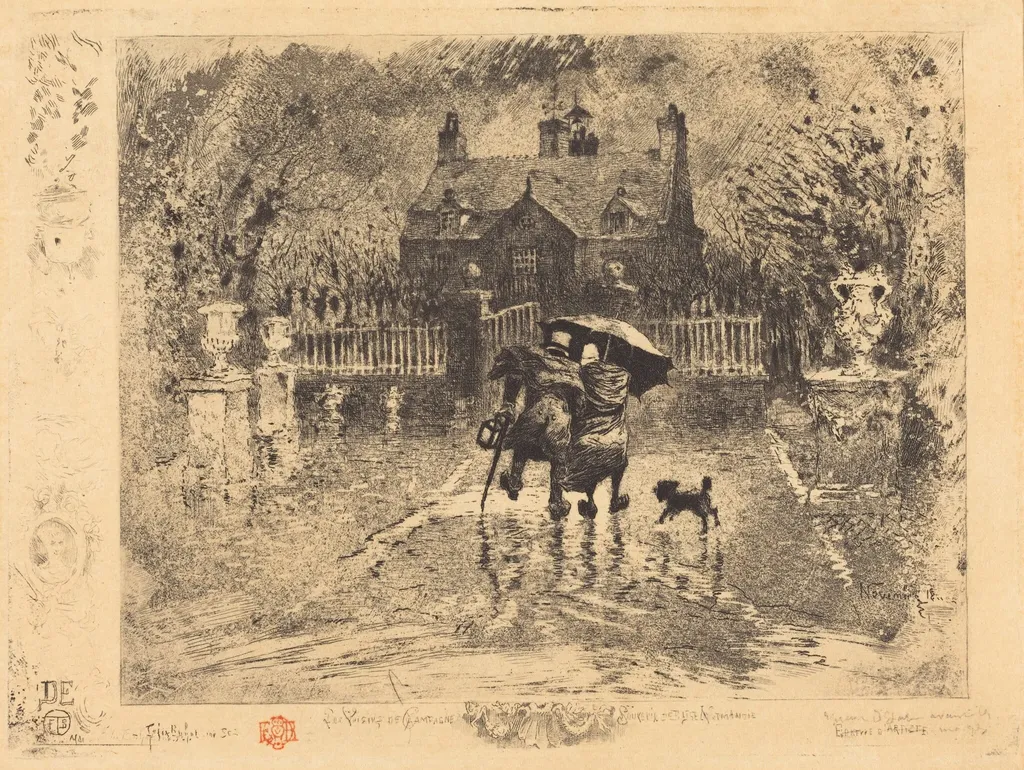
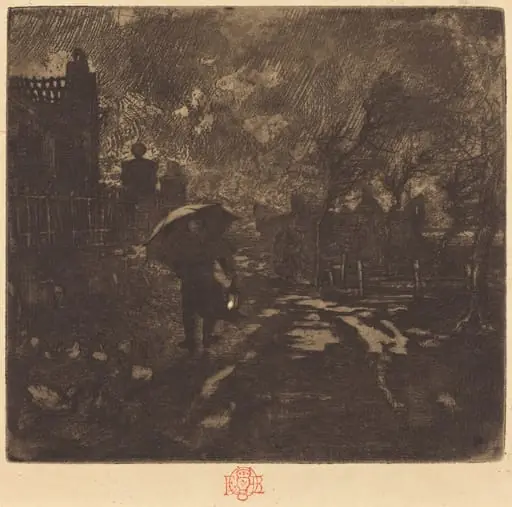
Les Voisins de Campagne (Country Neighbors) is an ink print by the Impressionist artist Félix-Hilaire Buhot. It dates from 1880 and is held in the collection of the National Gallery of Art.
About this work
Overview
Though titled to suggest rural life, the setting reflects the damp, narrow streets of a Parisian suburb, blending domestic routine with atmospheric detail.
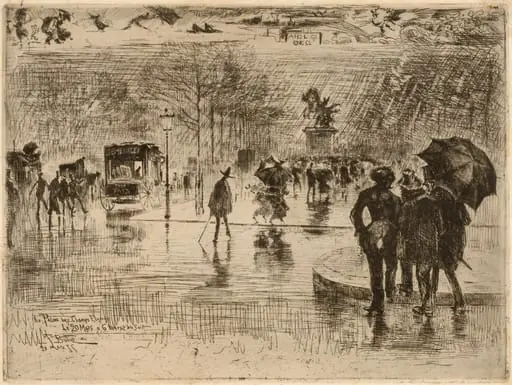
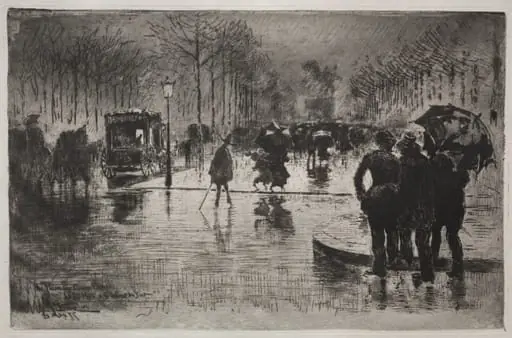
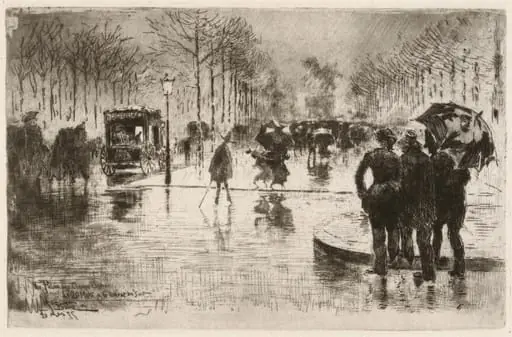
Created in 1880 by Félix-Hilaire Buhot, Les Voisins de Campagne is a print combining etching, aquatint, and drypoint on cream laid paper. It captures a moment of pedestrian movement through a rain-slicked urban lane, rendered with rapid, textured lines that convey moisture and motion. Though titled to suggest rural life, the setting reflects the damp, narrow streets of a Parisian suburb, blending domestic routine with atmospheric detail.
Subject & Meaning
Two figures traverse a muddy path, one sheltered by an umbrella, the other supported by a cane, accompanied by a dog. Their postures suggest familiarity and shared rhythm, evoking quiet companionship amid inclement weather. The title, referencing neighbors, contrasts with the urban setting, hinting at the blurring boundaries between countryside and city in late 19th-century France, where suburban life was becoming increasingly common.
Technique & Style
Buhot employed scratchy drypoint lines to suggest wet surfaces, while aquatint created soft, granular tones for the damp ground and overcast sky. Etching defined structural elements like fences and house outlines with precision. The hurried, almost sketch-like quality reflects his interest in capturing transient moments, prioritizing mood over detail, and using the plate’s texture to mimic the physicality of rain-soaked streets.
History & Provenance
The print was produced during Buhot’s most active period in printmaking, when he focused on urban and suburban scenes of Paris and its outskirts. It was likely part of a series documenting everyday life, circulated among collectors and artists. No documented early ownership is recorded, but it aligns with the broader 19th-century French interest in intimate, observational prints rather than grand historical narratives.
Context
In the 1880s, Paris expanded rapidly, absorbing surrounding villages into its periphery. Buhot’s work reflects this transition, portraying ordinary life in newly urbanized zones. His prints stood apart from academic art, favoring spontaneity and atmospheric realism. This piece mirrors contemporary literary and artistic trends that valued the poetic in the mundane, especially under changing weather and light.
Legacy
Buhot’s approach influenced later printmakers interested in capturing fleeting urban moments with expressive line and tone. Les Voisins de Campagne exemplifies his contribution to the revival of etching as a medium for personal observation rather than reproduction. Though not widely exhibited today, it remains a quiet testament to the dignity of ordinary transit in the modernizing French landscape.
Artist & collection

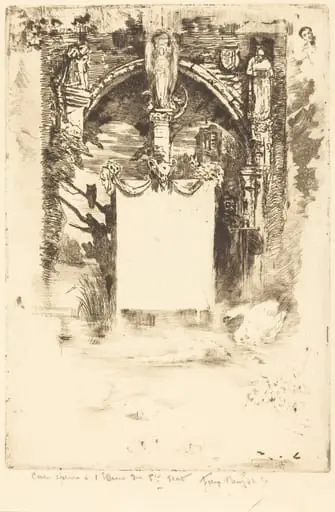 Ex-Libris pour "L'Ensorcelée" (Bookplate for "L'Ensorcelée")
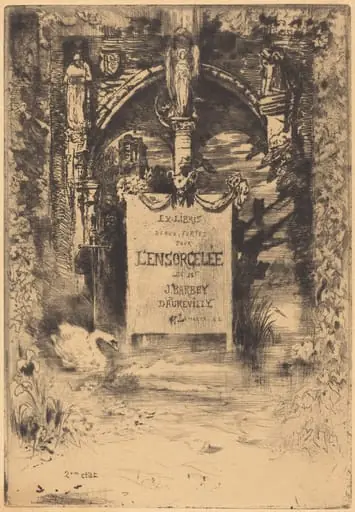 Ex-Libris pour "L'Ensorcelée" (Bookplate for "L'Ensorcelée")
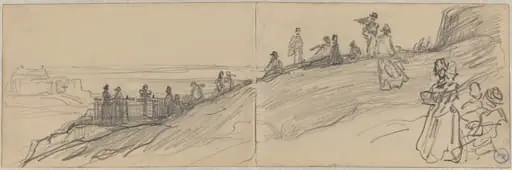 Figures on Top of a Hill, Overlooking the Sea
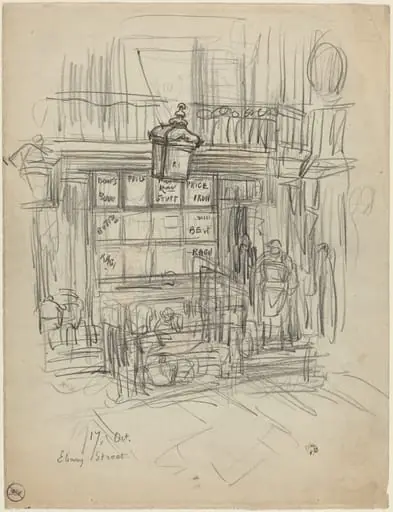 Ebury Street
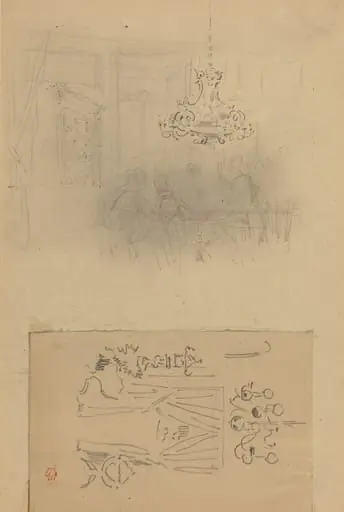 A Gathering in an Interior; A Curtained Doorway
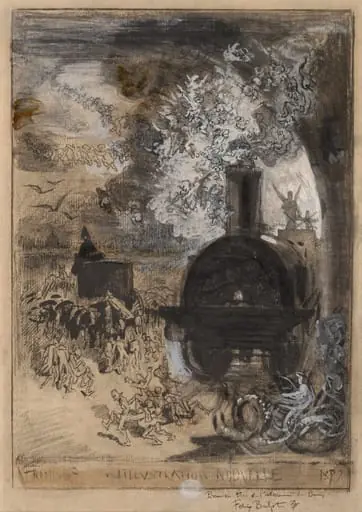 Frontispiece for L'Illustration Nouvelle: The Burial of the Burin
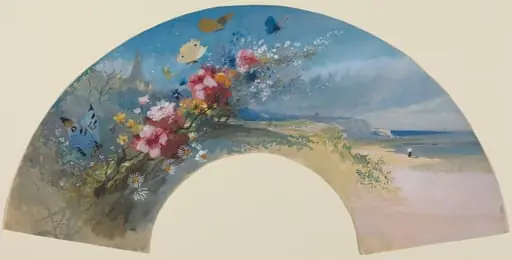 Fan with Wildflowers and Butterflies against the Norman Coast
![Gillingham Pier, London [verso], by Félix-Hilaire Buhot](https://artifactworldgallery.com/img/felix-hilaire-buhot--gillingham-pier-london-verso--641e03dd7de8217b-w320.webp) Gillingham Pier, London [verso]
Gillingham Pier, London [verso]