Artwork
L'Angélus
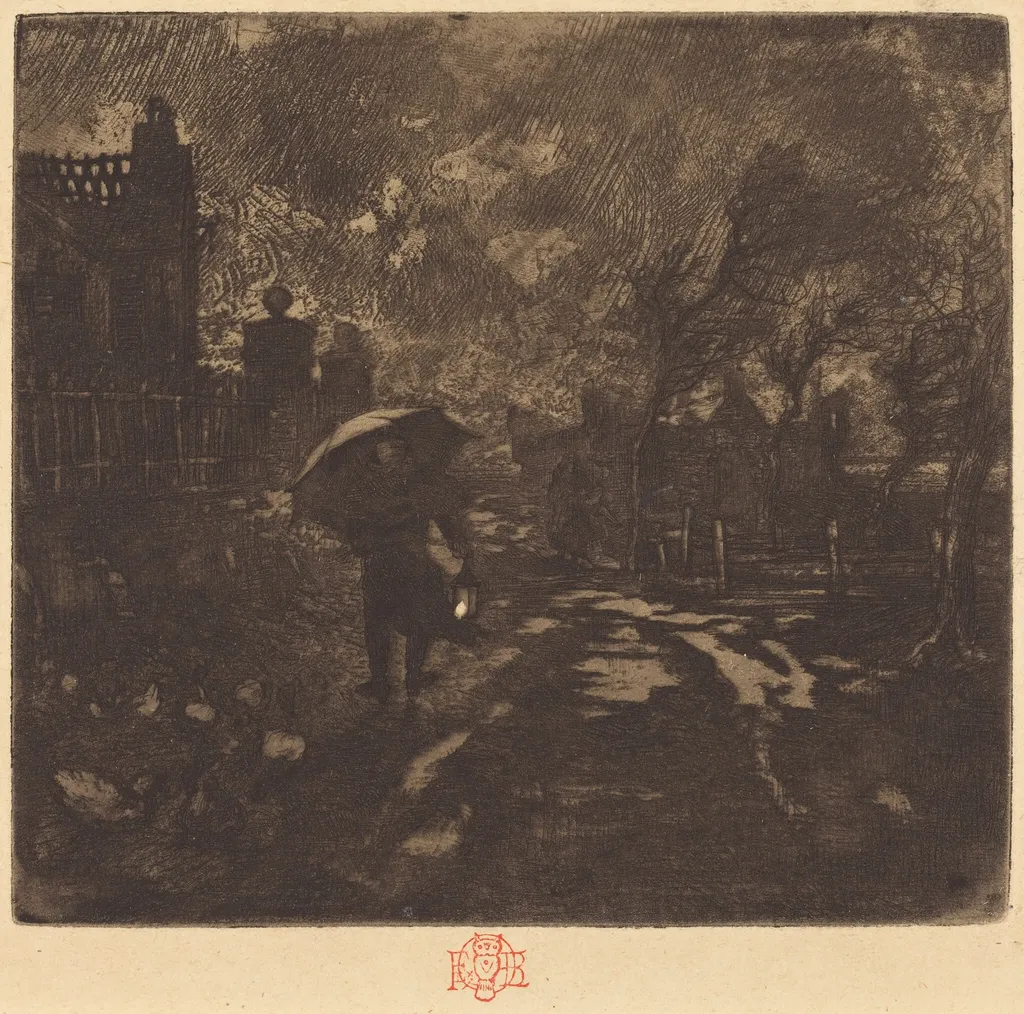
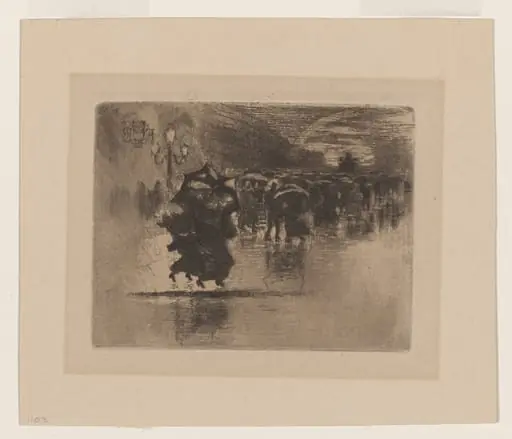
L'Angélus is an ink print by the Impressionist artist Félix-Hilaire Buhot. It dates from 1876 and is held in the collection of the National Gallery of Art.
About this work
Overview
L'Angélus is a black-and-white print made around 1876 by Félix-Hilaire Buhot using etching and drypoint techniques on cream laid paper. It captures a brief, quiet moment in an urban-rural setting, where two figures stand beneath a tree during or just after rain. The composition balances stillness with subtle motion, suggesting the passage of time through atmospheric detail and textured surfaces.
Subject & Meaning
Two figures are depicted in a moment of quiet contemplation—one bent forward, shielding their head with a shawl, the other upright and turned away.
Two figures are depicted in a moment of quiet contemplation—one bent forward, shielding their head with a shawl, the other upright and turned away. Their postures imply a shared, unspoken ritual, possibly a moment of prayer or respite. The setting, with its damp ground and distant architecture, grounds the scene in everyday life, avoiding overt symbolism while evoking introspection amid ordinary surroundings.
Technique & Style
Buhot employed etching and drypoint to create a richly textured surface, using fine, scratchy lines to suggest rain-slicked ground, wet foliage, and shifting light. The contrast between the dark, heavy sky and the reflective puddles enhances depth. Drypoint’s burr adds softness to shadows, while the paper’s cream tone subtly warms the monochrome, reinforcing the damp, cool atmosphere of the scene.
History & Provenance
Created in 1876, L'Angélus belongs to Buhot’s series of urban and suburban scenes from the 1870s, a period when he focused on capturing transient moments in Parisian life. The print was likely produced in small editions for collectors interested in modern printmaking. Its survival in museum collections reflects its recognition among contemporaries for its emotional restraint and technical precision.
Context
In the 1870s, French printmakers like Buhot turned away from grand historical themes toward intimate, everyday observations. L'Angélus aligns with this shift, echoing the quiet realism of contemporaries such as Degas and Daumier. The scene’s modest setting—a tree, a fence, a distant balcony—reflects a growing interest in the poetic potential of ordinary urban and peri-urban landscapes.
Legacy
L'Angélus remains a representative example of late 19th-century French printmaking’s turn toward atmospheric realism. Buhot’s ability to convey mood through texture and light influenced later printmakers interested in capturing fleeting moments. Though not widely known outside specialist circles, the work endures as a quiet testament to the expressive power of etching and drypoint in depicting solitude within the everyday.
Artist & collection

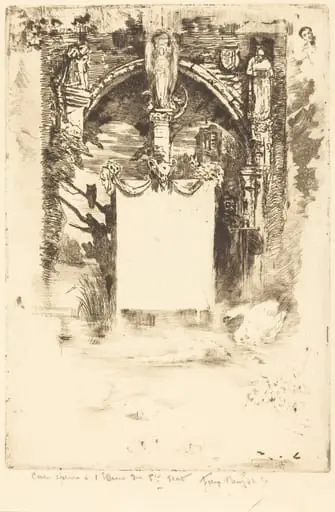 Ex-Libris pour "L'Ensorcelée" (Bookplate for "L'Ensorcelée")
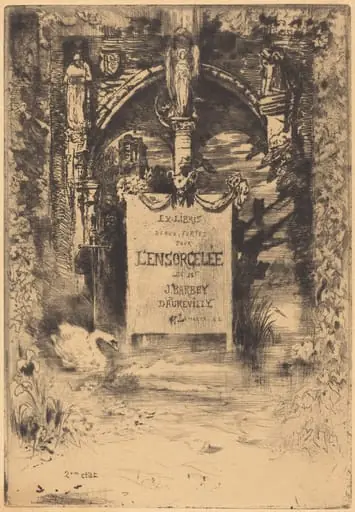 Ex-Libris pour "L'Ensorcelée" (Bookplate for "L'Ensorcelée")
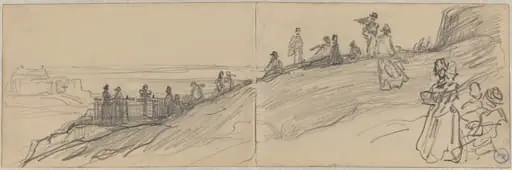 Figures on Top of a Hill, Overlooking the Sea
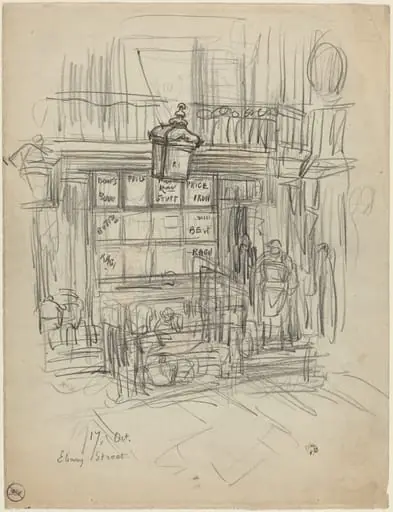 Ebury Street
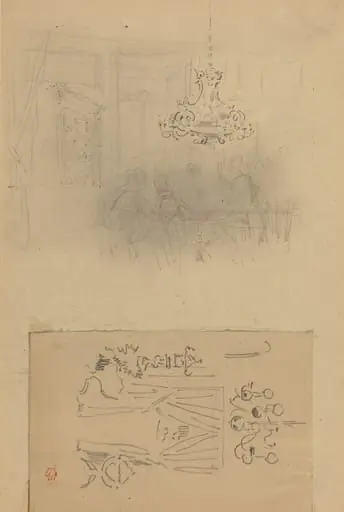 A Gathering in an Interior; A Curtained Doorway
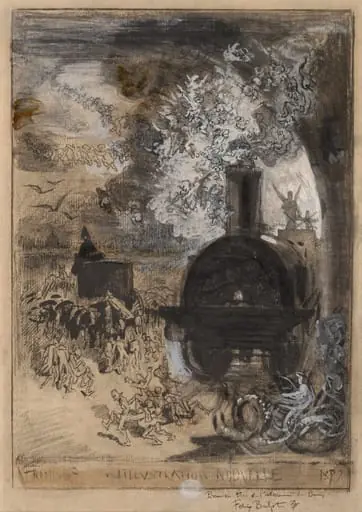 Frontispiece for L'Illustration Nouvelle: The Burial of the Burin
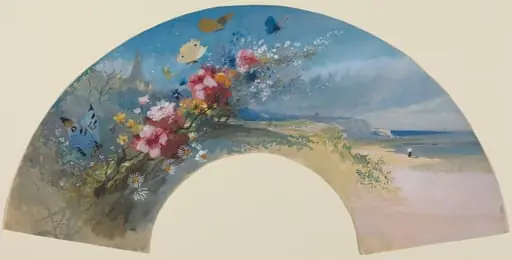 Fan with Wildflowers and Butterflies against the Norman Coast
![Gillingham Pier, London [verso], by Félix-Hilaire Buhot](https://artifactworldgallery.com/img/felix-hilaire-buhot--gillingham-pier-london-verso--641e03dd7de8217b-w320.webp) Gillingham Pier, London [verso]
Gillingham Pier, London [verso]
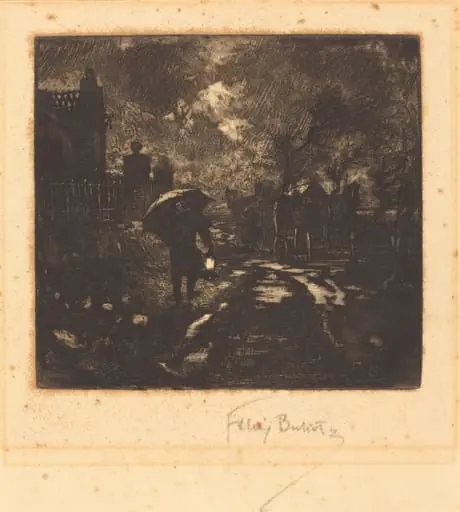 La Ronde de Nuit (Night Patrol)
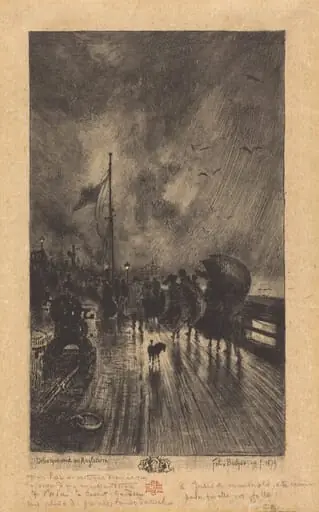 Un Débarquement en Angleterre (Landing in England)
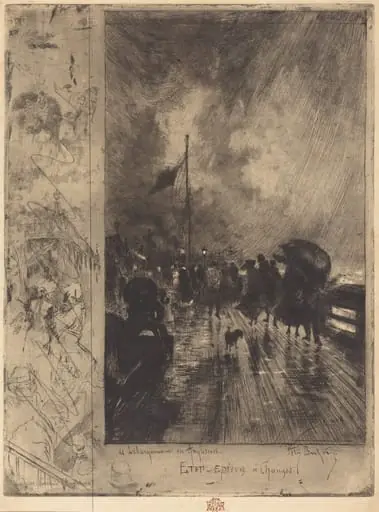 Un Débarquement en Angleterre (Landing in England)
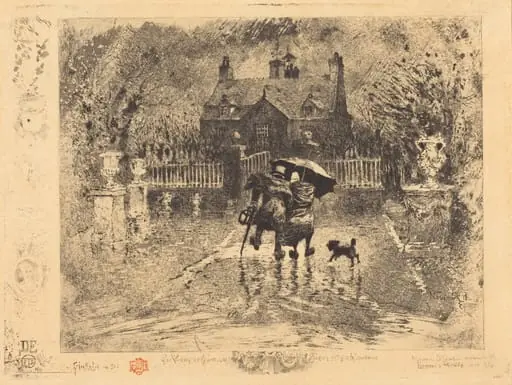 Les Voisins de Campagne (Country Neighbors)
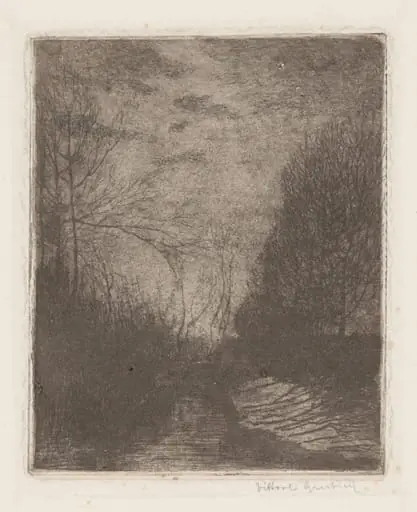 Countryside
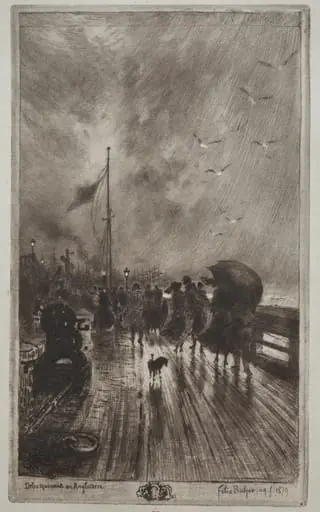 Landing in England
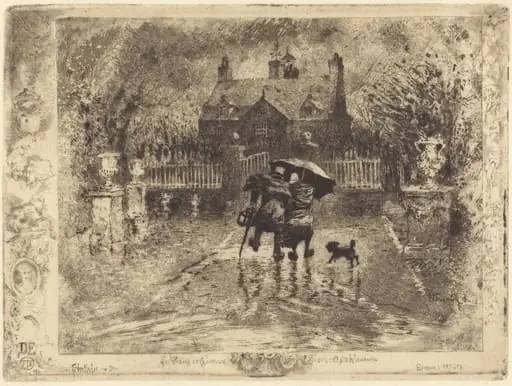 Les Voisins de Campagne (Country Neighbors)
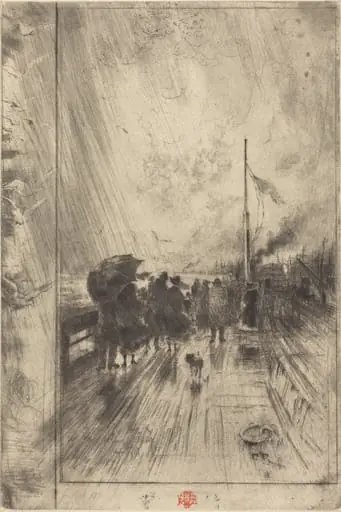 Une Jetée en Angleterre (A Pier in England)
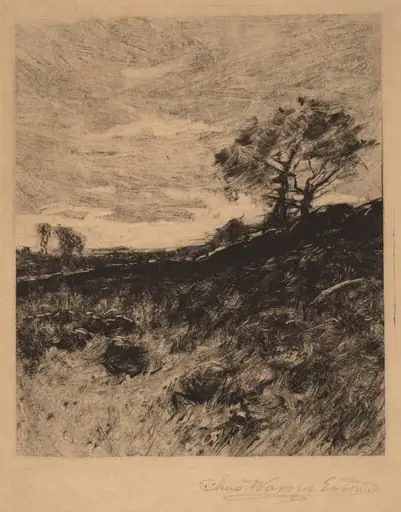 Landscape
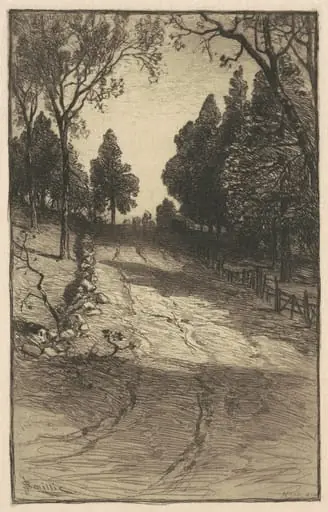 Up the Hill
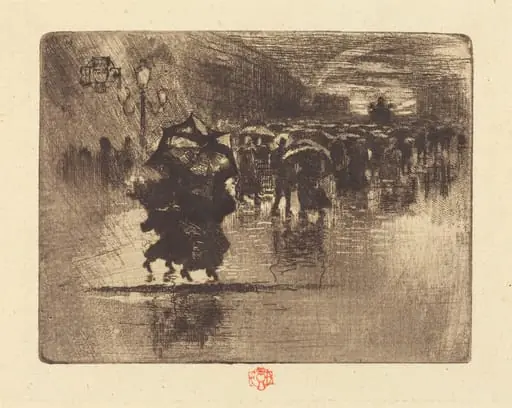 Le Petit Enterrement (The Burial - Small Plate)
 Le Petite Enterrement (The Burial -- Small Plate)