Artwork
The Cab
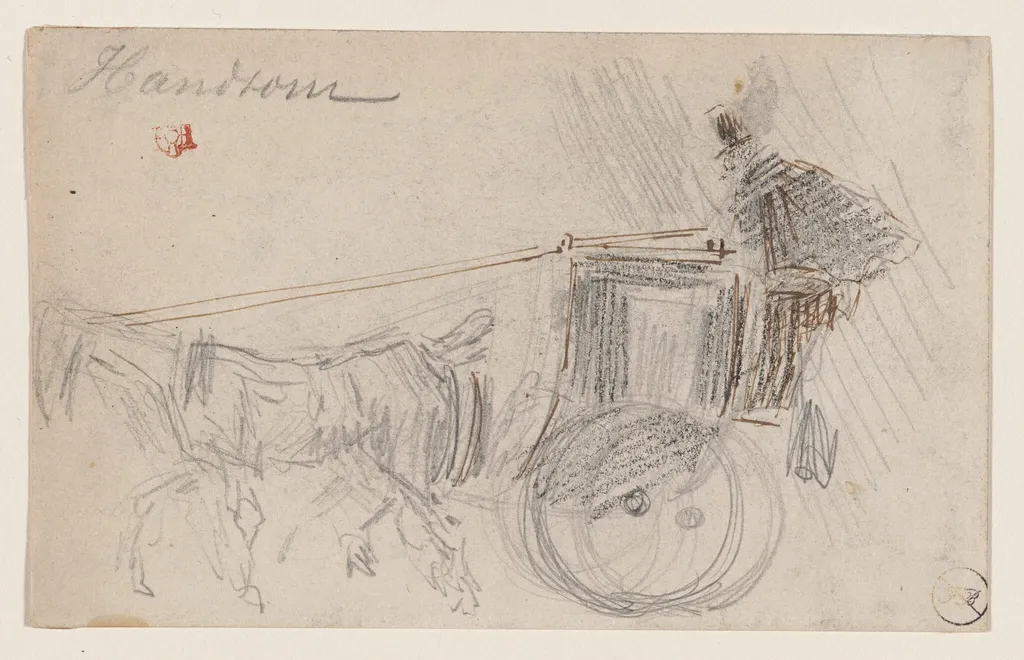
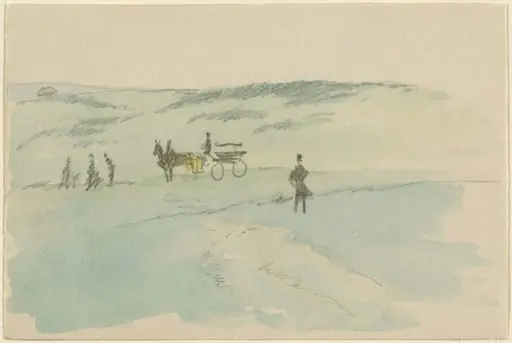
The Cab is a graphite drawing by the Romanticist artist Félix-Hilaire Buhot. It dates from 1872 and is held in the collection of the National Gallery of Art.
About this work
Overview
Félix‑Hilaire Buhot’s drawing titled *The Cab* dates from 1872 and is part of the National Gallery of Art’s collection in Washington, D.C. Executed on laid paper, the work combines graphite, black crayon and brown ink. It presents a brief, sketch‑like view of a horse‑drawn cab, rendered with swift, gestural lines that capture a fleeting moment of urban transport.
Subject & Meaning
The composition centers on a modest carriage pulled by a pair of horses that appear weary from labor. Minimal detail is given to the vehicle itself; instead, the emphasis lies on the animals’ muscular tension and the sense of movement. The drawing can be read as a quick visual note taken during travel, highlighting the everyday rhythm of 19th‑century city life.
Technique & Style
Buhot employs a loose, rapid application of graphite and crayon, reinforced by brown ink accents. Cross‑hatching creates depth in the horses’ bodies, while broader strokes define the cab’s silhouette. The laid paper’s textured surface interacts with the marks, enhancing the impression of immediacy and suggesting that the artist worked on location, capturing the scene with minimal preparation.
History & Provenance
Created in the early 1870s, *The Cab* entered the National Gallery of Art’s holdings through acquisition, though the precise chain of ownership prior to its museum entry is not extensively documented. Its presence in the gallery’s drawing collection underscores the institution’s interest in 19th‑century French sketching practices and the work of lesser‑known artists such as Buhot.
Artist & collection
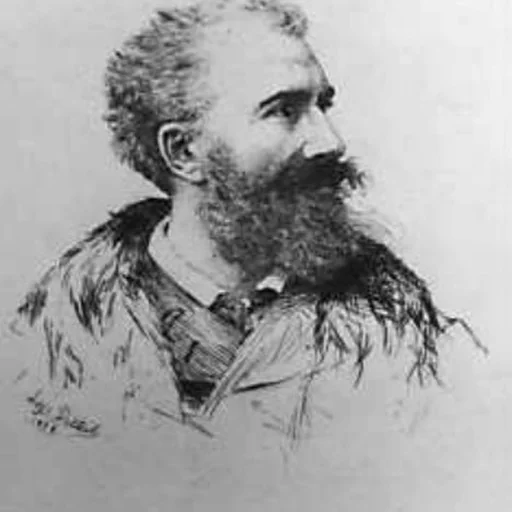

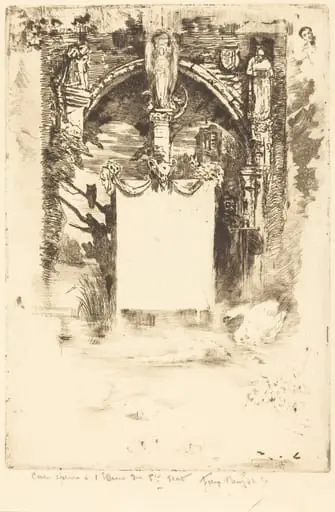 Ex-Libris pour "L'Ensorcelée" (Bookplate for "L'Ensorcelée")
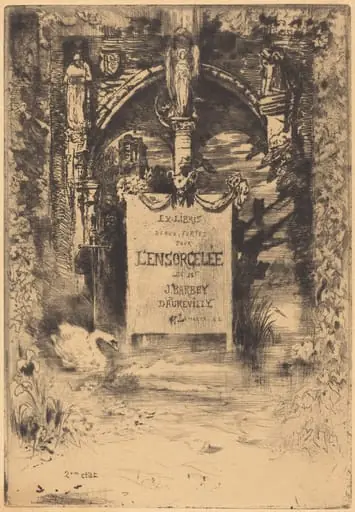 Ex-Libris pour "L'Ensorcelée" (Bookplate for "L'Ensorcelée")
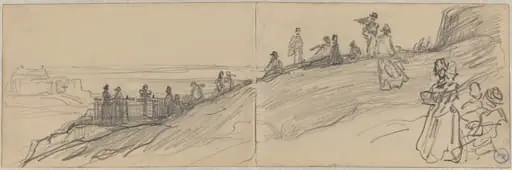 Figures on Top of a Hill, Overlooking the Sea
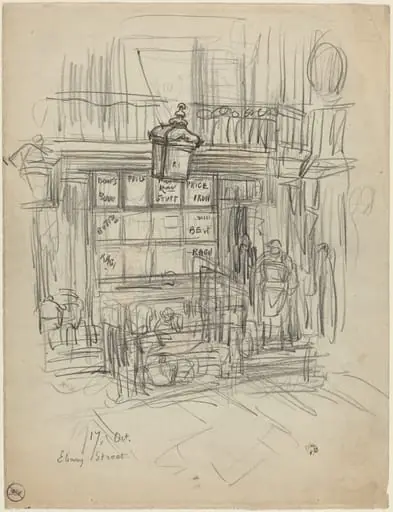 Ebury Street
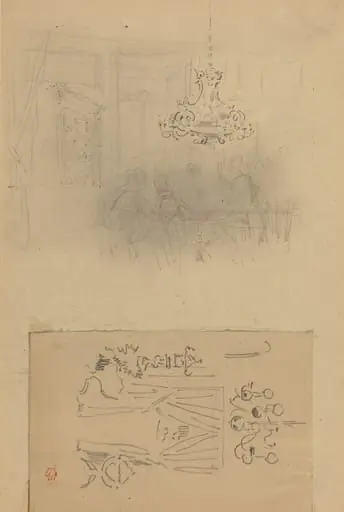 A Gathering in an Interior; A Curtained Doorway
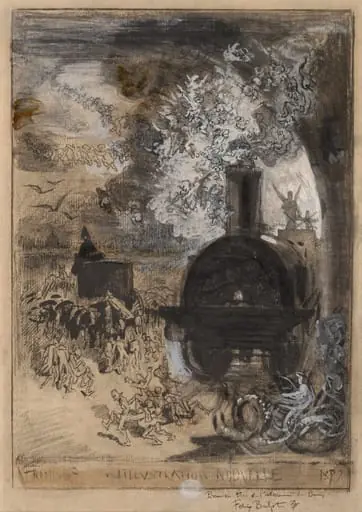 Frontispiece for L'Illustration Nouvelle: The Burial of the Burin
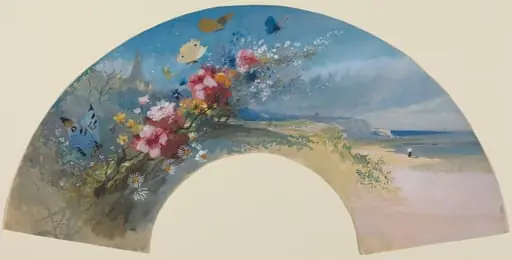 Fan with Wildflowers and Butterflies against the Norman Coast
![Gillingham Pier, London [verso], by Félix-Hilaire Buhot](https://artifactworldgallery.com/img/felix-hilaire-buhot--gillingham-pier-london-verso--641e03dd7de8217b-w320.webp) Gillingham Pier, London [verso]
Gillingham Pier, London [verso]
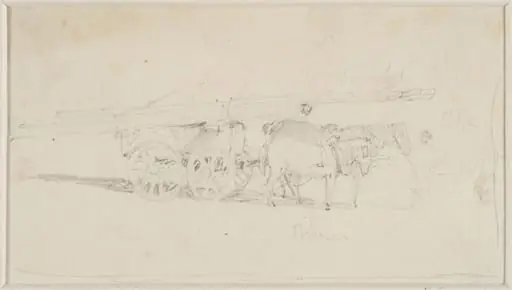 Study of two horses drawing a cart laden with timber
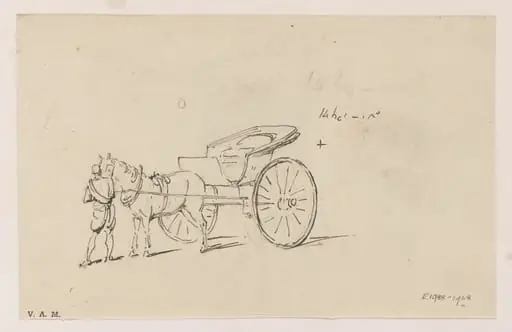 An Indian figure with a horse and carriage
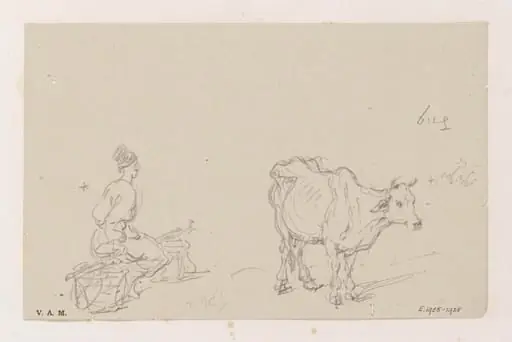 A figure seated between two baskets, and a cow
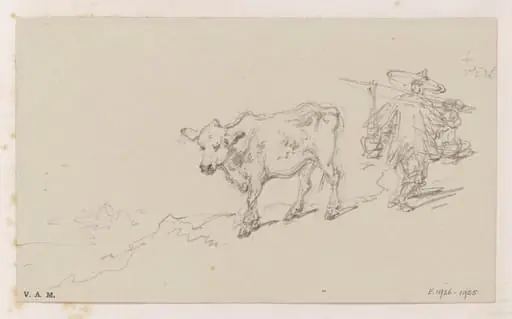 A Chinese porter and a cow
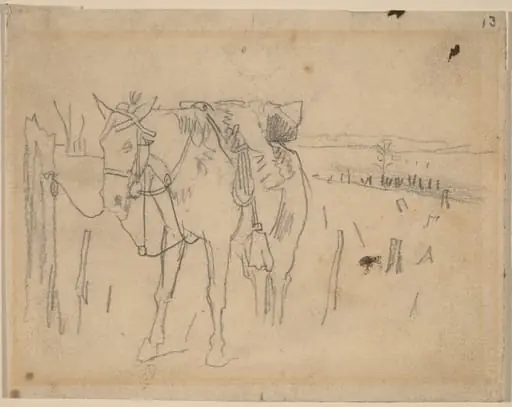 Tethered
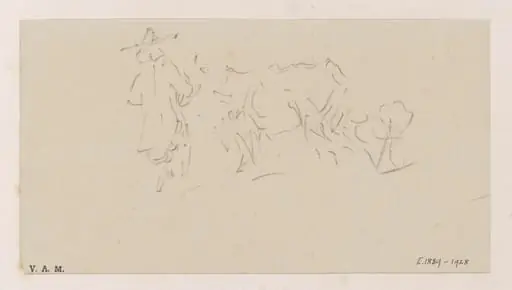 A cowherd and cow
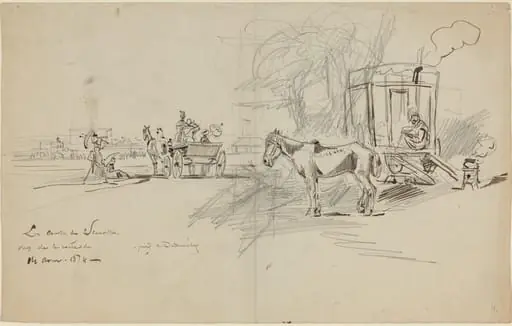 Les Courses de Deauville
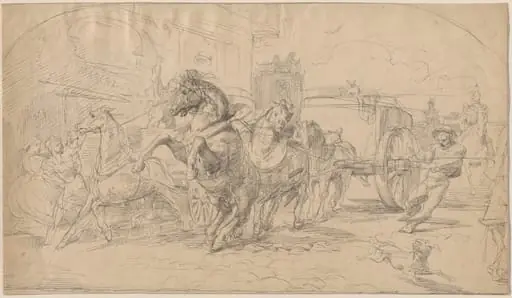 The Runaway Carriage
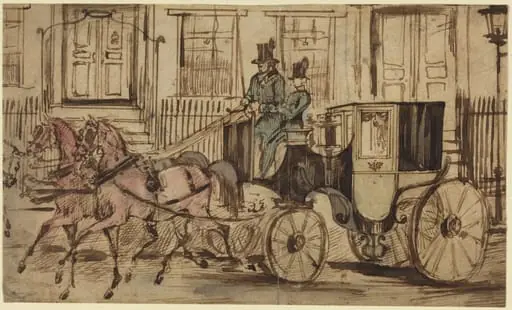 The Strawberry Roans
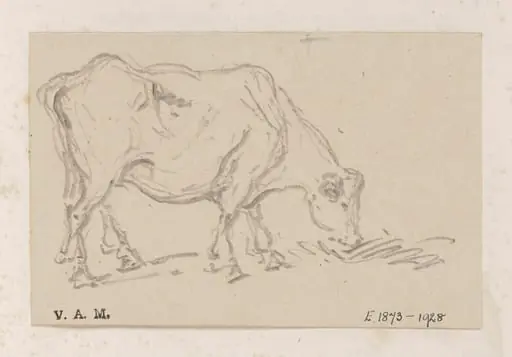 A grazing cow
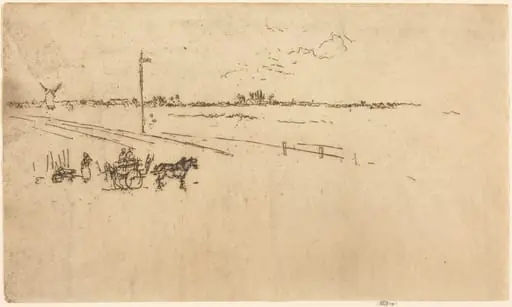 Railway Station, Voves
 Landscape with Figures and a Carriage