Artwork
Landscape with Figures and a Carriage
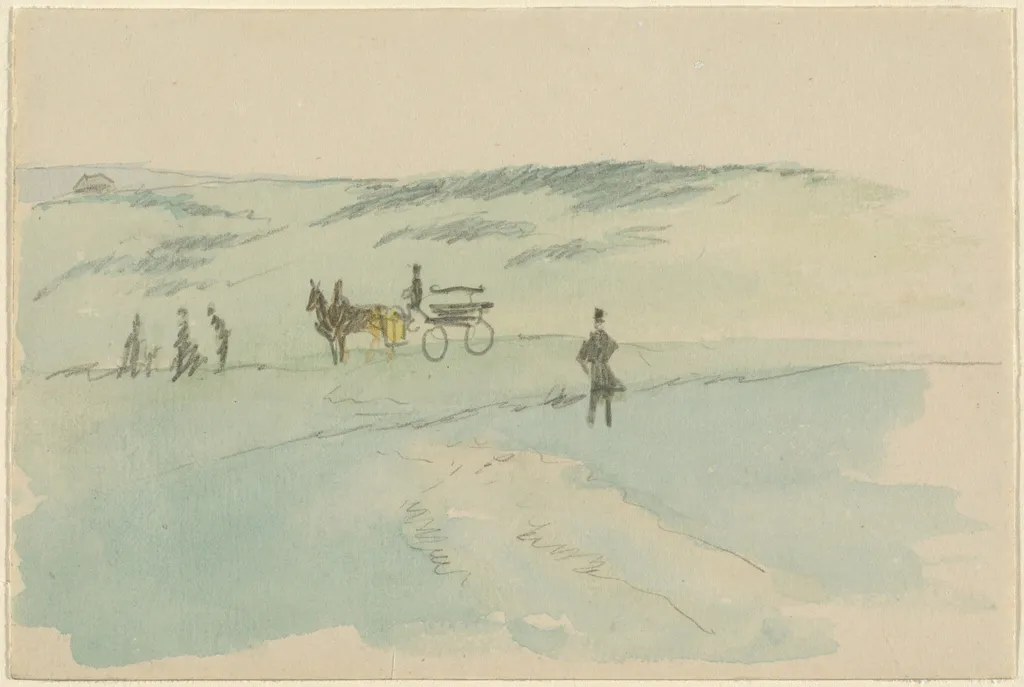
Landscape with Figures and a Carriage is a graphite drawing by the Romanticist artist David, Sir Wilkie. It dates from 1813 and is held in the collection of the National Gallery of Art. Created in 1813 by Sir David Wilkie, this drawing combines graphite and watercolor on wove paper to depict a quiet rural scene.
About this work
Overview
Created in 1813 by Sir David Wilkie, this drawing combines graphite and watercolor on wove paper to depict a quiet rural scene. The composition centers on a stationary carriage with nearby figures, set against a softly rendered backdrop of distant hills. The medium allows for subtle tonal gradations, balancing line and wash to suggest atmosphere without overt detail.
Subject & Meaning
The scene portrays ordinary travelers paused in a landscape, their presence suggesting a moment of rest rather than narrative drama. The figures, minimally defined, convey movement through posture rather than facial expression. The carriage, neither grand nor broken, implies routine travel, reinforcing the work’s focus on unremarkable, everyday life in the countryside.
Technique & Style
Wilkie employed graphite for crisp outlines and structural definition, particularly in the carriage and figures, while watercolor washes established atmospheric depth in the background. Light blue tones suggest sky and distant terrain, with darker strokes hinting at topographical contours. The restrained palette and loose handling reflect a sketch-like immediacy, prioritizing mood over precision.
History & Provenance
Executed during Wilkie’s early career, this work aligns with his interest in genre scenes and observational drawing. It likely originated as a study made during travel, consistent with his practice of recording scenes en plein air. The piece remained within private collections until entering institutional holdings, where it is now preserved as part of his graphic oeuvre.
Context
In early 19th-century Britain, landscape drawing was increasingly valued as both artistic practice and personal record. Wilkie, known for narrative paintings, used such sketches to refine his understanding of light, space, and human presence in nature. This work reflects broader trends among artists seeking authenticity in everyday rural life, away from idealized classical settings.
Legacy
Though not among Wilkie’s most celebrated works, this drawing exemplifies his disciplined approach to observation and his ability to convey quiet narrative through minimal means. It contributes to understanding his development as a draftsman and his role in elevating the status of watercolor as a serious medium for artistic study.
Own this work as a print
Artist & collection


![Study of a Mother and Child [verso], by David, Sir Wilkie](https://artifactworldgallery.com/img/david-sir-wilkie--study-of-a-mother-and-child-verso--91f999f529326586-w320.webp)
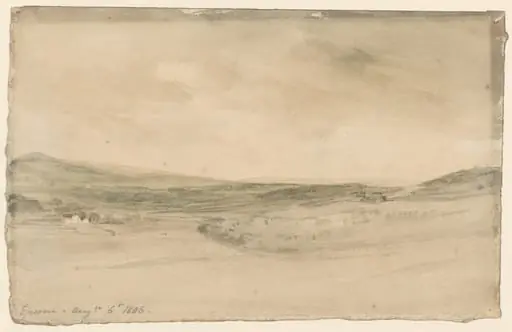 Epsom Heath
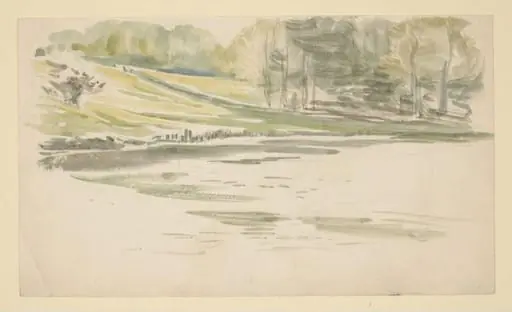 A lake with trees; study relating to The Tale of Mr Tod
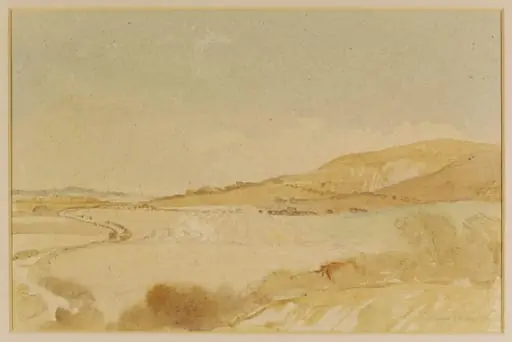 The Southdown, Underhill Road; Clayton to Westmeston
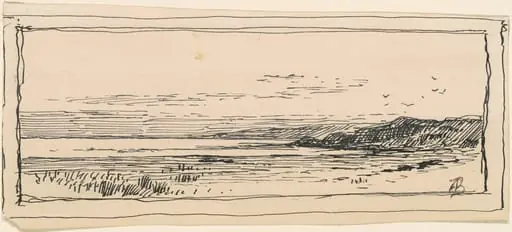 The Shore
 The Bucking Horse
 Mountains and Cattle
 An Extensive View in Shropshire
 Sand-dunes
 Solway Firth
 Looking towards Bury from the North of the city
 Shore scene, sunset
 Landscape with Figures