Artwork
Un Grain à Trouville (Squall at Trouville)
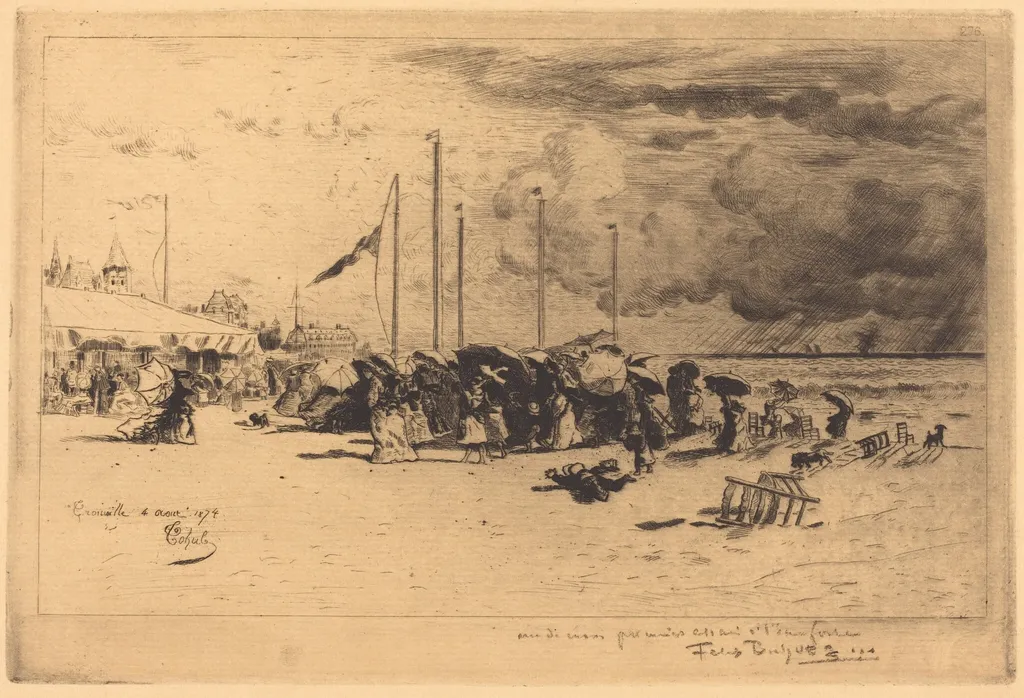
Un Grain à Trouville (Squall at Trouville) is an ink print by the Impressionist artist Félix-Hilaire Buhot. It dates from 1874 and is held in the collection of the National Gallery of Art.
About this work
Overview
Buhot’s technique emphasizes transient conditions—wind, shifting light, and human movement—conveying the immediacy of a seaside encounter disrupted by nature.
Created in 1874, Un Grain à Trouville is an etching by Félix-Hilaire Buhot capturing a momentary scene on the Normandy coast. The work depicts a coastal beach under sudden inclement weather, with figures, vessels, and structures rendered in rapid, expressive lines. Buhot’s technique emphasizes transient conditions—wind, shifting light, and human movement—conveying the immediacy of a seaside encounter disrupted by nature.
Subject & Meaning
The scene portrays ordinary beachgoers caught in an unexpected squall: figures huddle under umbrellas, dogs dart across damp sand, and chairs lie overturned. In the distance, a church steeple and buildings anchor the composition, suggesting a settled community against the unpredictability of the sea. The work does not idealize leisure but observes the disruption of routine, revealing the fragile balance between human activity and natural force.
Technique & Style
Buhot employed etching to achieve a loose, sketch-like quality, using incised lines to suggest motion rather than define form. The wet sand, swirling clouds, and tilted umbrellas are rendered with energetic, uneven strokes, mimicking the turbulence of the moment. The plate’s tonal contrasts—darkened areas against pale, open spaces—enhance the sense of atmospheric pressure and fleeting light, characteristic of his observational approach to printmaking.
History & Provenance
Executed during Buhot’s period of active engagement with coastal subjects, this print emerged from his frequent visits to Trouville, a popular seaside resort in the 1870s. It was likely produced as part of a series documenting everyday life along the Normandy coast, circulated among collectors and print enthusiasts. No record of early ownership is widely documented, but it reflects his broader interest in urban and coastal ephemera.
Context
In the 1870s, French artists increasingly turned to modern life as subject matter, moving away from historical or mythological themes. Buhot, influenced by the realism of Daumier and the immediacy of Japanese prints, focused on transient moments in public spaces. His etchings of beaches, streets, and harbors captured the rhythms of contemporary existence, aligning with broader trends in print culture and the rise of the illustrated press.
Legacy
Buhot’s etchings, including Un Grain à Trouville, contributed to the revival of etching as a medium for spontaneous observation in late 19th-century France. His ability to convey mood and motion through minimal, incised lines influenced later printmakers interested in capturing urban and natural environments with psychological nuance. Though not widely known today, his work remains a quiet testament to the aesthetic value of the everyday.
Artist & collection
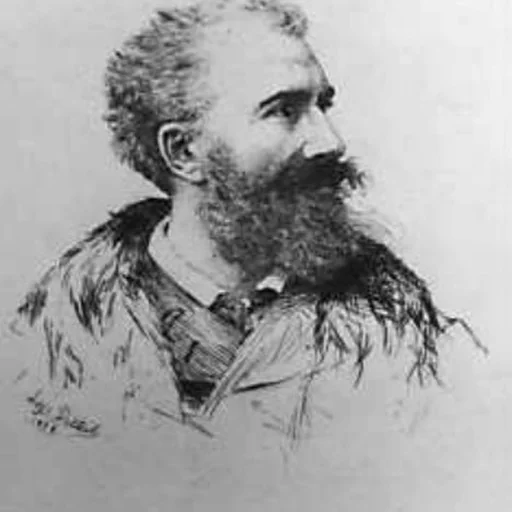

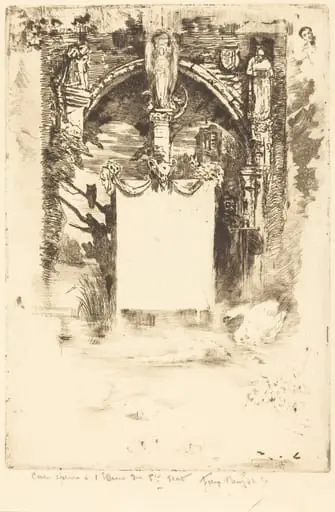 Ex-Libris pour "L'Ensorcelée" (Bookplate for "L'Ensorcelée")
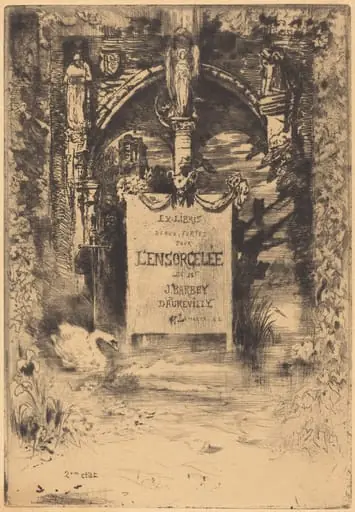 Ex-Libris pour "L'Ensorcelée" (Bookplate for "L'Ensorcelée")
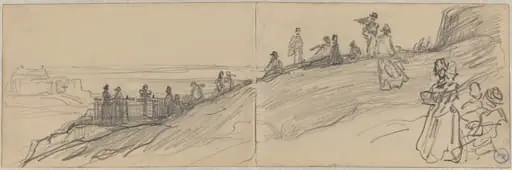 Figures on Top of a Hill, Overlooking the Sea
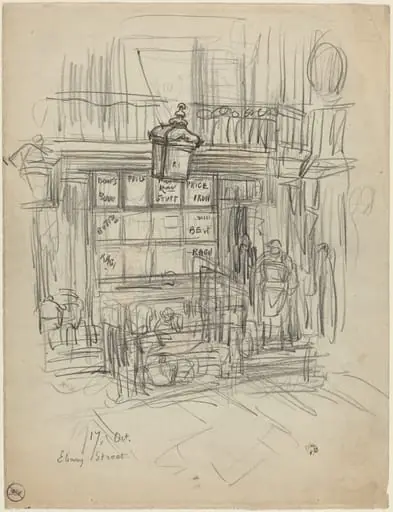 Ebury Street
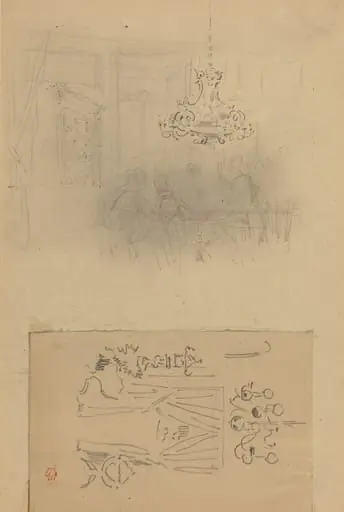 A Gathering in an Interior; A Curtained Doorway
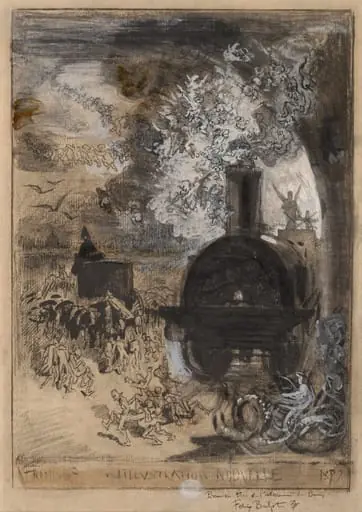 Frontispiece for L'Illustration Nouvelle: The Burial of the Burin
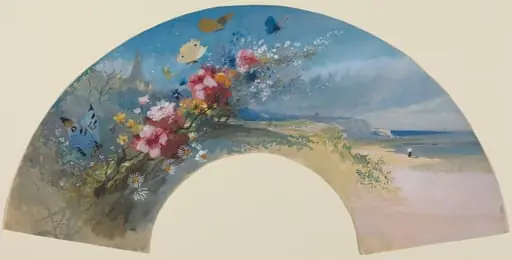 Fan with Wildflowers and Butterflies against the Norman Coast
![Gillingham Pier, London [verso], by Félix-Hilaire Buhot](https://artifactworldgallery.com/img/felix-hilaire-buhot--gillingham-pier-london-verso--641e03dd7de8217b-w320.webp) Gillingham Pier, London [verso]
Gillingham Pier, London [verso]