Artwork
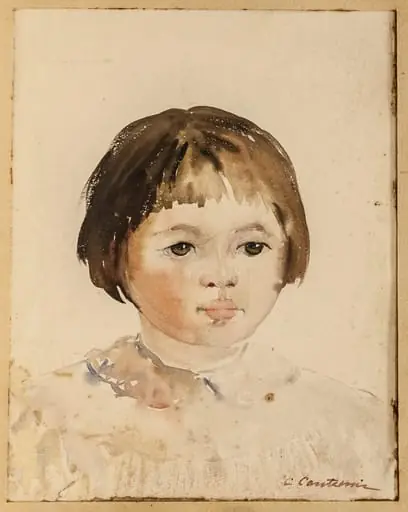
Cap de fetiță
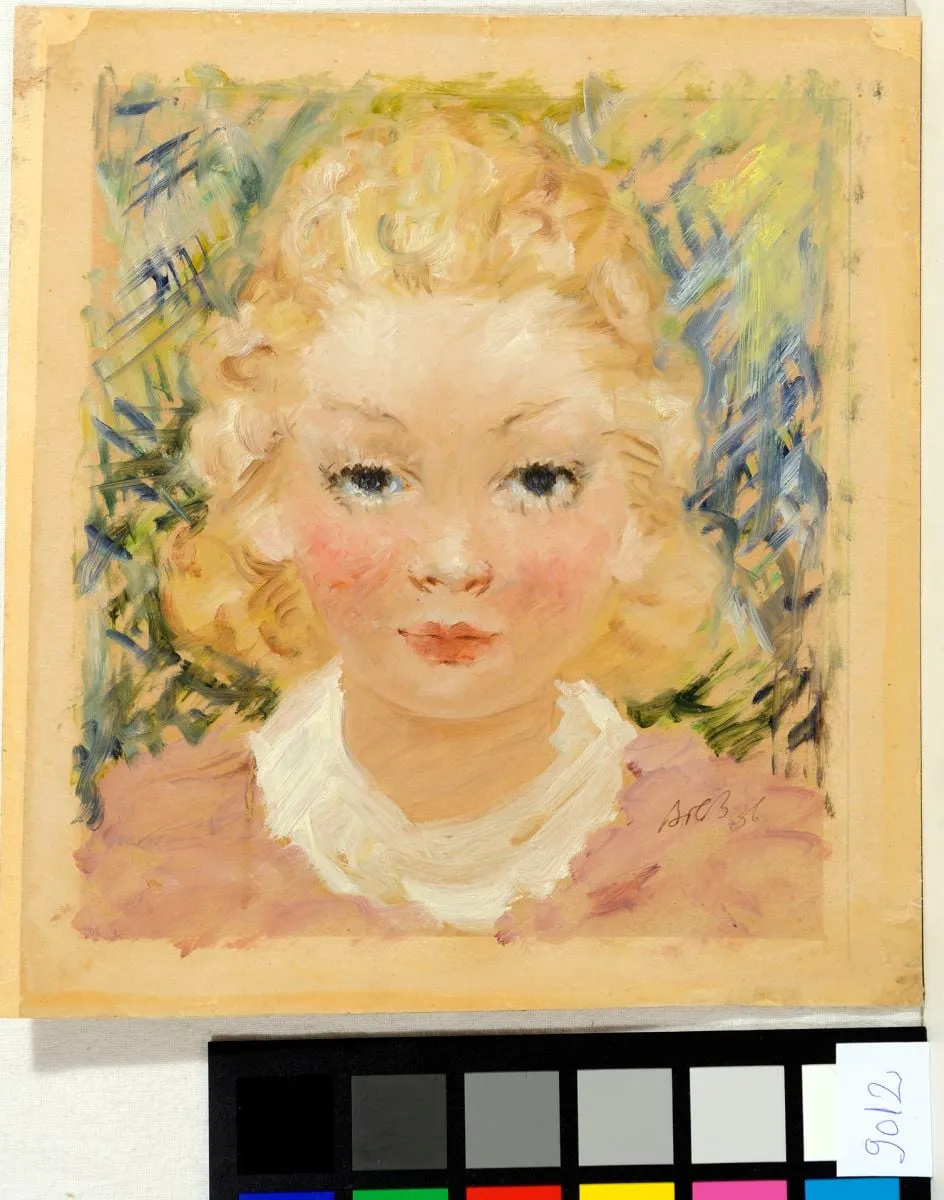
Cap de fetiță is a print by Bob Bulgaru. It dates from 1936 and is held in the collection of the National Museum of Art of Romania.
About this work
Overview
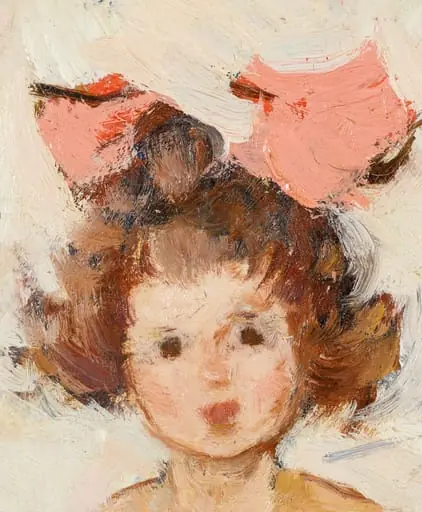
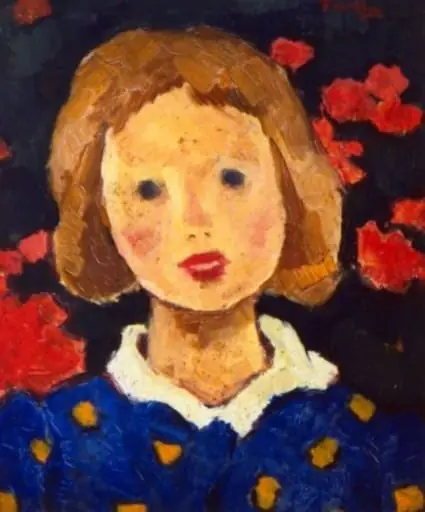
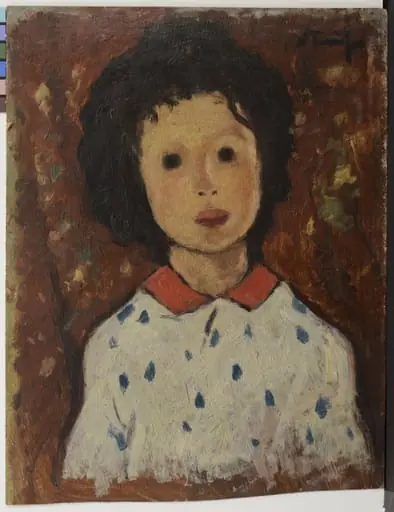
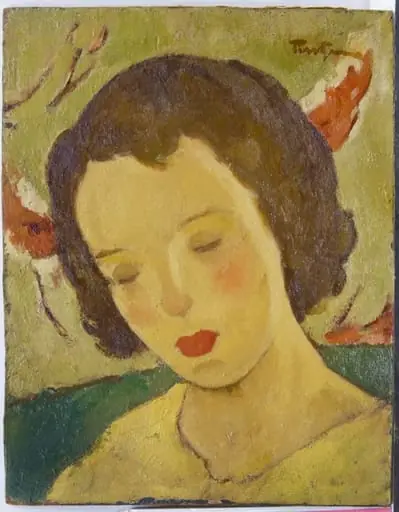
Painted in 1936 by Bob Bulgaru, Cap de fetiță is a portrait fragment focusing solely on a young girl’s face. The composition excludes the body, framing the subject tightly against a muted backdrop of blended greens and blues. The loose, rapid brushwork suggests an immediate, intuitive approach, capturing a fleeting moment rather than a formal likeness.
Subject & Meaning
The subject is a child, rendered with quiet intimacy. Her wide, dark eyes and pale skin, touched with a soft pink hue, convey a sense of stillness and vulnerability. The cropped composition draws attention to her gaze, inviting contemplation without narrative context. The absence of the body emphasizes the psychological presence of the child over her physical identity.
Technique & Style
Bulgaru employed thick, uneven applications of paint, particularly in the hair and skin, creating a tactile surface. Colors blend loosely on the canvas, with visible brushstrokes and unblended edges that suggest spontaneity. The impasto technique adds dimensionality, while the sketchy handling conveys immediacy, aligning the work with expressive modernist tendencies of the period.
History & Provenance
The painting was completed in 1936 during Bulgaru’s early career, a time when Romanian artists were engaging with European modernist trends. It remained in private hands for decades, with limited public exposure until its inclusion in regional retrospectives in the late 20th century. Its provenance reflects its status as a personal, rather than commissioned, work.
Context
Created in interwar Romania, the piece reflects broader artistic shifts toward emotional expression and informal portraiture. While academic realism still dominated official circles, artists like Bulgaru explored looser styles influenced by French and German modernism. This work stands as a quiet counterpoint to grand historical narratives of the era.
Legacy
Cap de fetiță is now recognized as a representative example of Bulgaru’s intimate, expressive portraiture. Though not widely reproduced, it has influenced later Romanian artists interested in psychological depth over formal precision. Its enduring appeal lies in its restraint and the emotional resonance achieved through minimal means.
Artist & collection
Artist
Bob Bulgaru’s quiet body of work sits between figuration and the everyday. You’ll find two pieces here: the 1936 print Cap de fetiță and the untitled Nud, both rendered with a direct, unadorned touch that feels closer…