Artwork
Cap de fată
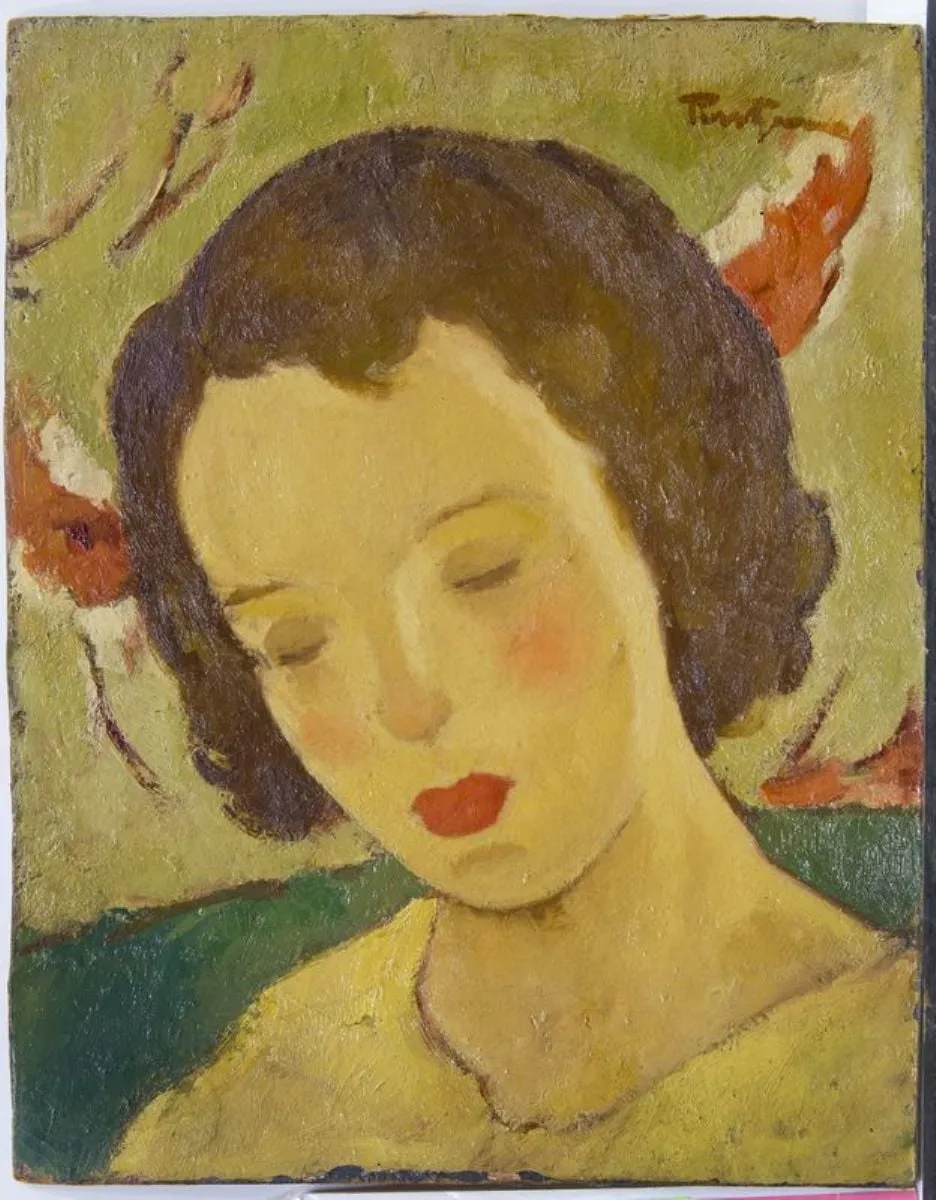
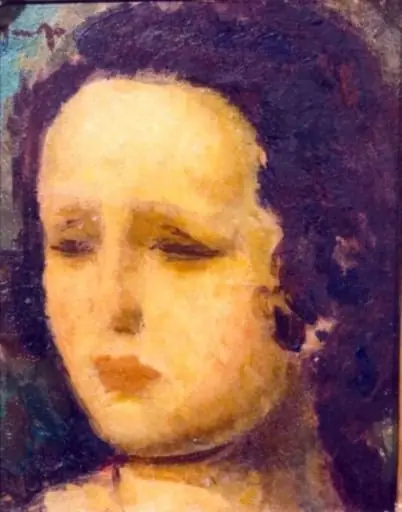
Cap de fată is a print by Nicolae Tonitza. It dates from 1923 and is held in the collection of the National Museum of Art of Romania.
About this work
Overview
Tonitza’s approach avoids ornamental detail, favoring a quiet, meditative presence that emphasizes form and tone over narrative.
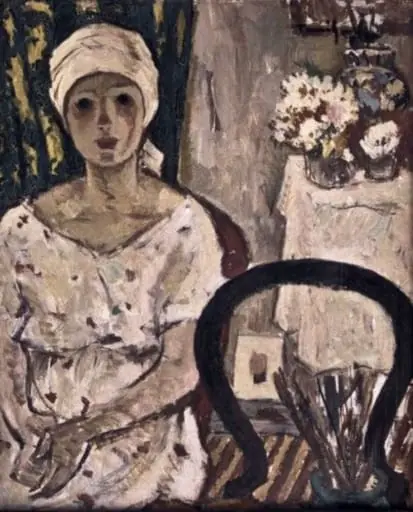
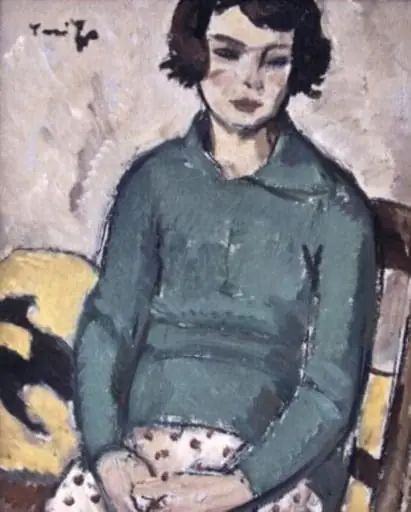
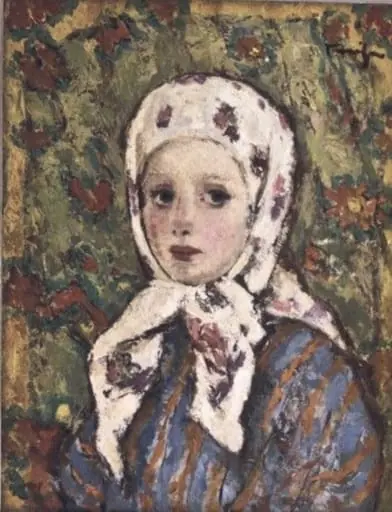
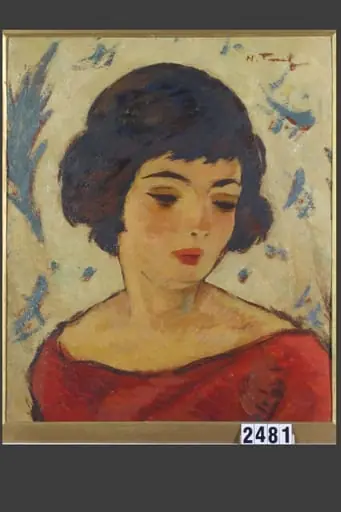
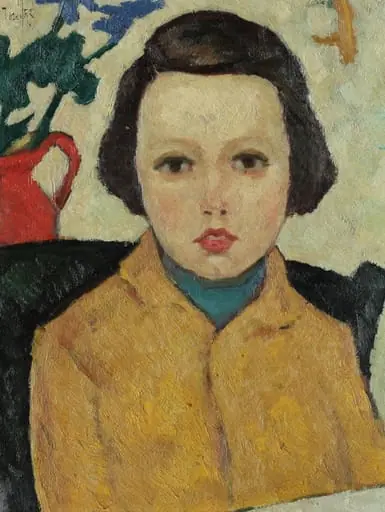
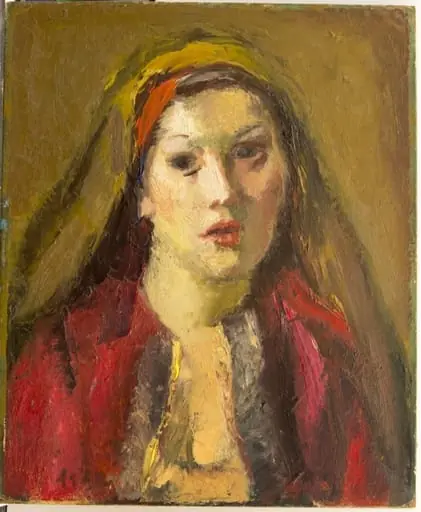
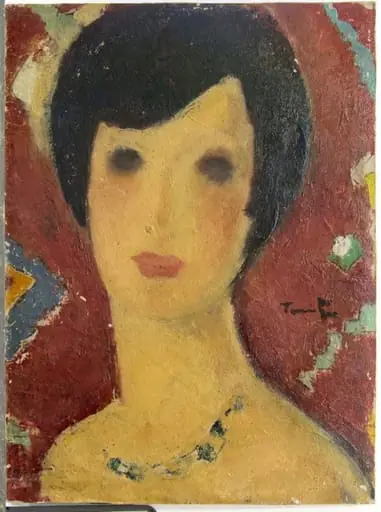
Cap de fată, painted around 1923 by Nicolae Tonitza, is a portrait focusing on a woman’s head and shoulders. The composition is restrained, with no background detail beyond abstracted washes of color. The subject’s closed eyes and slight turn of the head suggest introspection. Tonitza’s approach avoids ornamental detail, favoring a quiet, meditative presence that emphasizes form and tone over narrative.
Subject & Meaning
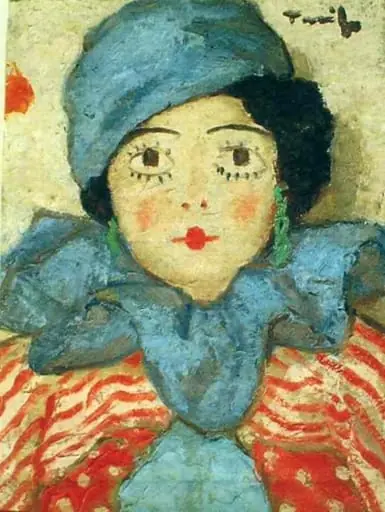
The subject is a young woman, rendered with minimal features yet evoking stillness and inner focus. Her closed eyes invite contemplation rather than engagement, distancing the viewer from conventional portraiture. The red lips and yellow garment introduce subtle contrasts, but the overall effect is one of calm detachment. The work does not convey emotion overtly; instead, it suggests a private, unspoken moment.
Technique & Style
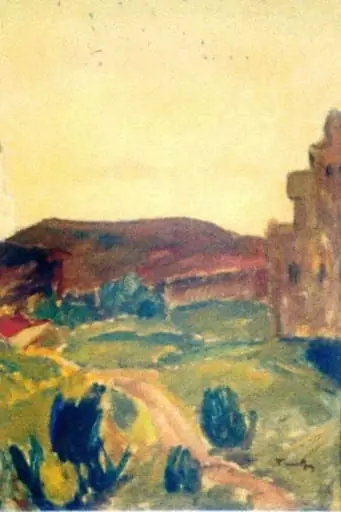
Tonitza employs broad, deliberate brushstrokes and flat planes of color to define form. The background blends green, yellow, and orange in loose, unblended strokes, creating atmosphere without depth. Facial features are simplified—eyes shut, lips sharply defined—reducing the portrait to essential shapes. The style reflects modernist tendencies, prioritizing expressive structure over realism, with an emphasis on color harmony and rhythmic line.
History & Provenance
Created in the early 1920s, Cap de fată belongs to a period when Tonitza was refining his personal style after exposure to European modernism. The painting was likely made in Romania, where he was active as a painter and critic. It remains part of the Romanian cultural record, held in public collections, though specific ownership history after its creation is not widely documented.
Context
In the 1920s, Romanian artists were navigating between traditional academic styles and emerging modernist trends. Tonitza, influenced by Post-Impressionism and Expressionism, sought to distill human presence into essential forms. Cap de fată reflects this shift—moving away from detailed realism toward emotional resonance through color and simplified structure, aligning with broader European artistic experiments of the era.
Legacy
The painting exemplifies Tonitza’s contribution to Romanian modernism: a quiet, introspective approach to portraiture that prioritized mood over spectacle. While not widely exhibited internationally, it remains a touchstone in Romanian art history for its restraint and sensitivity. Later artists have cited its economy of form as an influence in the development of national modernist aesthetics.
Artist & collection

Artist
Nicolae Tonitza was a Romanian painter, engraver, lithographer, journalist and art critic. Drawing inspiration from Post-Impressionism and Expressionism, he had a major role in introducing modernist guidelines to local art.