Artwork
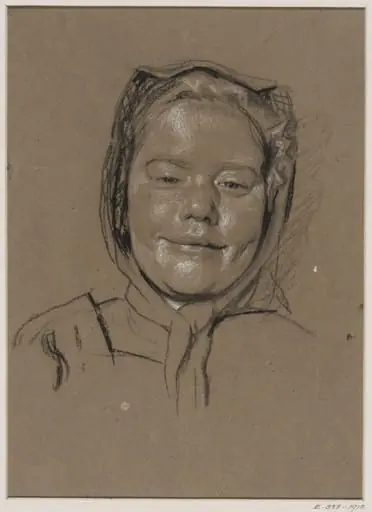
Portret de fetiță
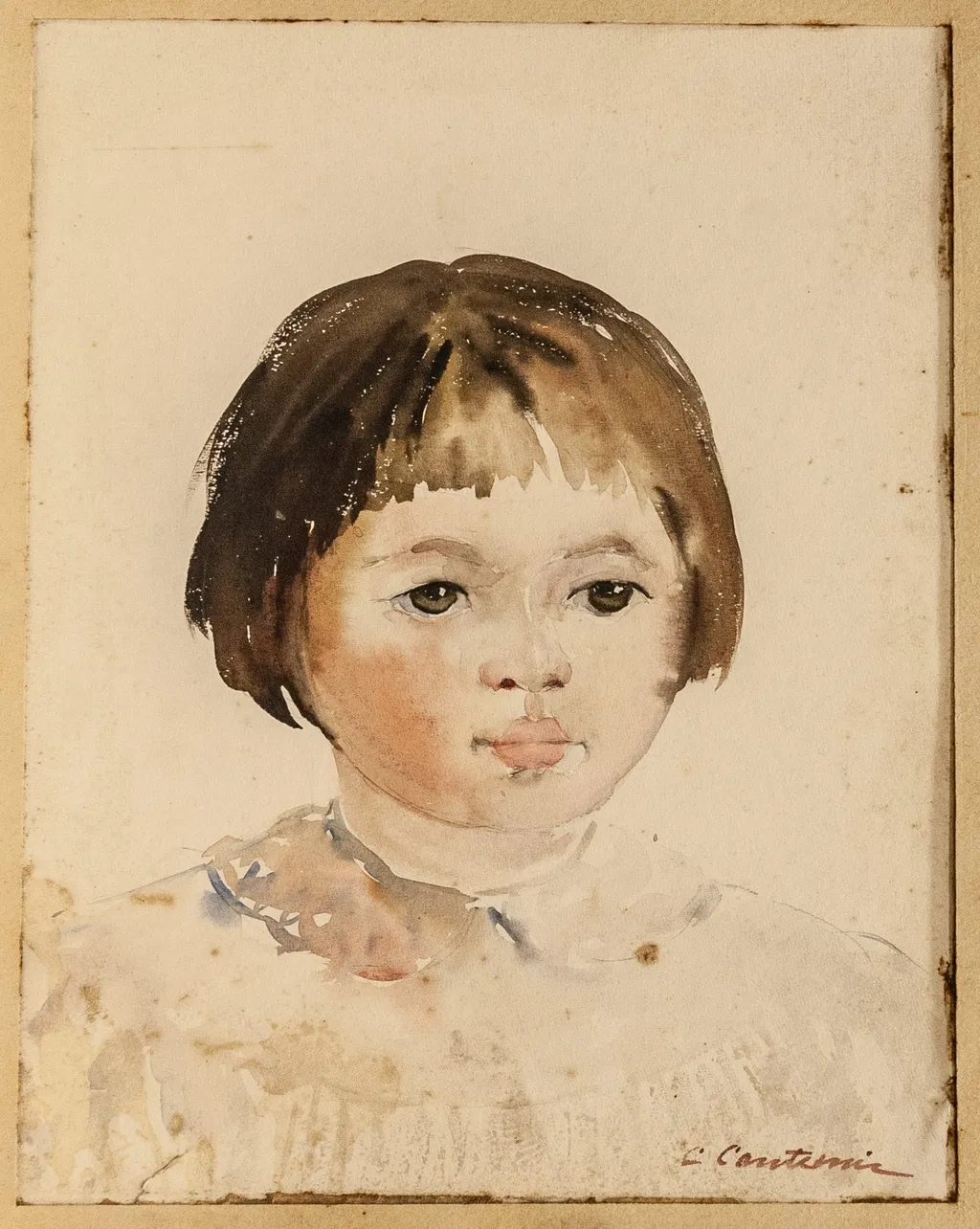
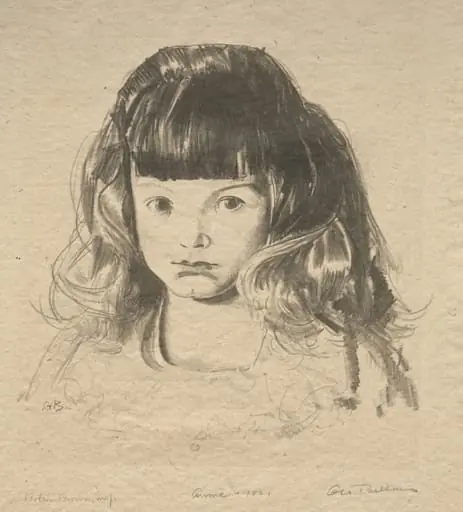
Portret de fetiță is a print by Clara Cantemir. It dates from 1950 and is held in the collection of the Gavrila Simion Eco-Museum Research Institute Tulcea.
About this work
Overview
Portret de fetiță is a portrait painted around 1950 by Clara Cantemir, a Romanian artist known for intimate, quietly observed subjects. The work is part of the collection at the Museum of Ethnography, where it is preserved as an example of mid-20th-century Romanian domestic portraiture. Its modest scale and unadorned composition reflect a focus on personal, rather than public, representation.
Subject & Meaning
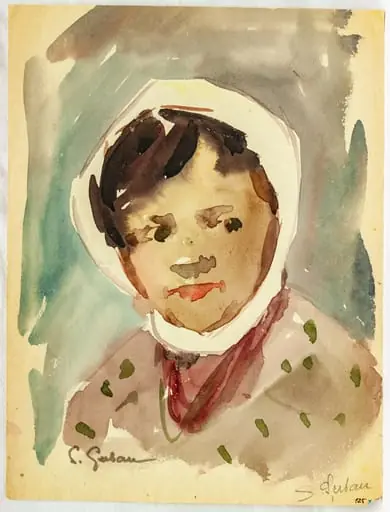
The painting depicts a young girl gazing directly at the viewer with calm stillness. Her hair is neatly gathered in a simple bun, and her face bears faint pink tones suggesting youth and gentle health. The absence of elaborate clothing or setting shifts attention to the child’s presence alone, evoking a sense of quiet dignity and private vulnerability rather than narrative or symbolism.
Technique & Style
This restrained technique avoids sentimentality, favoring a tactile, almost ephemeral quality in the depiction of skin and fabric.
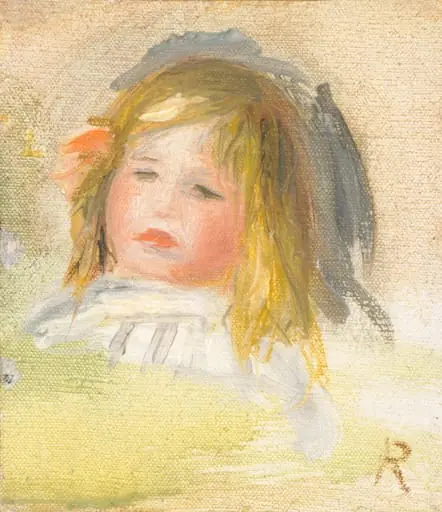
Cantemir employed loose, fluid brushwork with diluted pigments to create a sense of immediacy and lightness. The background is barely defined, allowing the child’s face to emerge softly from the pale ground. The collar is rendered with minimal detail, dissolving into the surrounding space. This restrained technique avoids sentimentality, favoring a tactile, almost ephemeral quality in the depiction of skin and fabric.
History & Provenance
The painting has been held by the Museum of Ethnography since at least the latter half of the 20th century. Its acquisition likely stemmed from efforts to document domestic life and regional artistic practices in postwar Romania. No earlier ownership records are publicly documented, and the work appears to have remained within private or institutional circles since its creation.
Context
Created in the early 1950s, the portrait reflects a period when Romanian art was navigating state-prescribed realism while some artists retained personal, lyrical approaches. Cantemir’s work, though not politically charged, aligns with a quieter tradition of domestic portraiture that persisted despite broader ideological pressures, offering a subtle counterpoint to official artistic norms.
Legacy
Clara Cantemir’s Portret de fetiță remains a quiet example of intimate painting from a time when personal expression was often subsumed by collective narratives. It is not widely reproduced or studied, but within its institutional context, it serves as a modest testament to the endurance of individual observation in art during a period of heightened social conformity.
Artist & collection
Artist
Clara Cantemir made three works we have here—two oil paintings and one print—all titled in Romanian.
Museum
Gavrila Simion Eco-Museum Research Institute Tulcea
Continue through works from the same source collection.
![The Artist's Son Georges [verso], by Camille Pissarro](https://artifactworldgallery.com/img/camille-pissarro--the-artist-s-son-georges-verso--053697550e9f2889-w320.webp)