Artwork
Blackberry
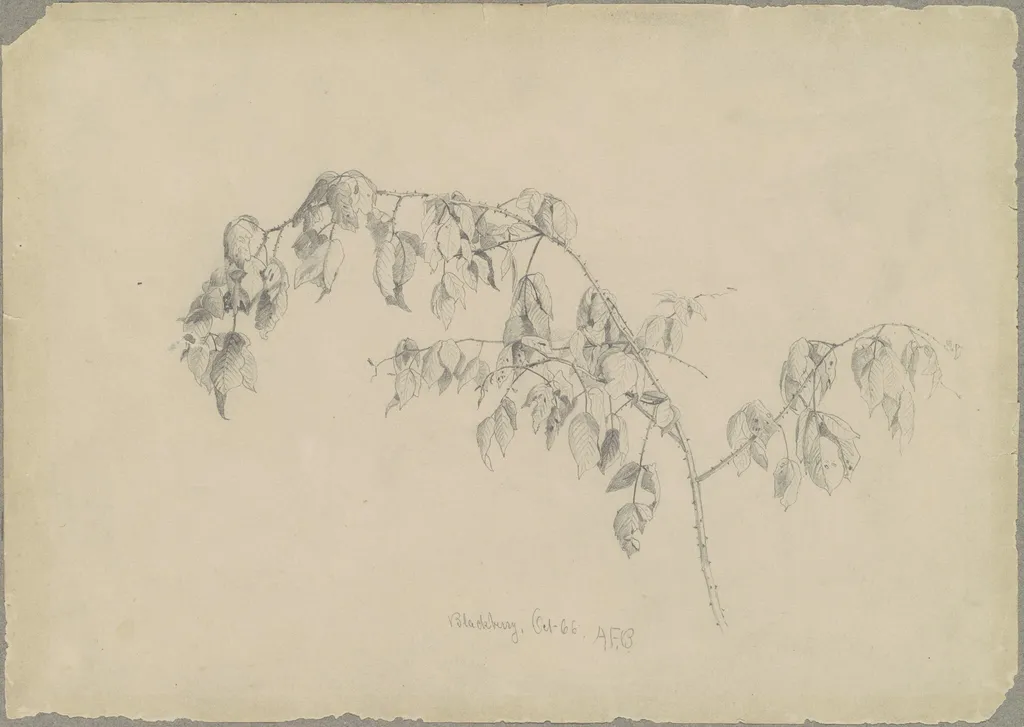
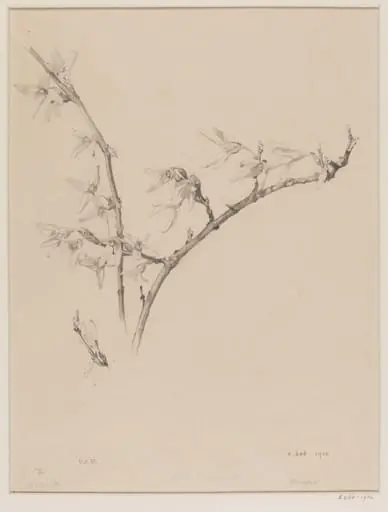
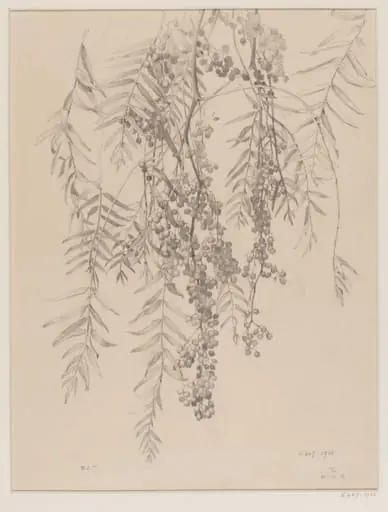
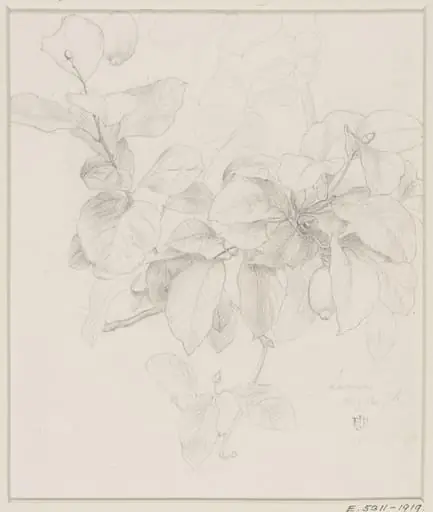
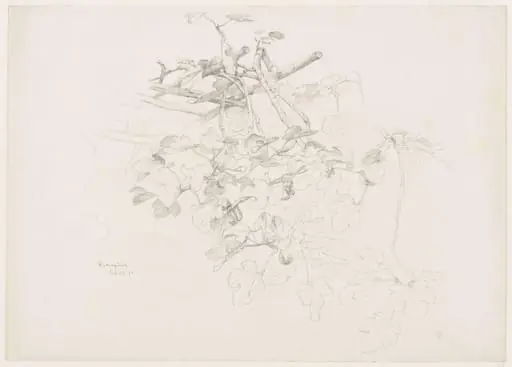
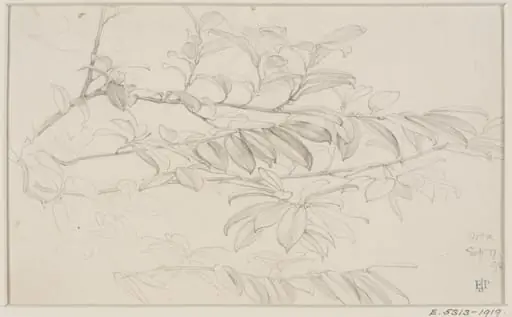
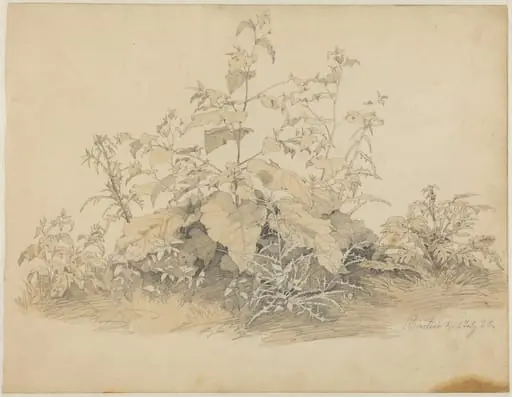
Blackberry is a graphite drawing by the Impressionist artist Andrew Fisher Bunner. It dates from 1866 and is held in the collection of the National Gallery of Art.
About this work
Overview
Unlike contemporaries who favored oil or watercolor, Bunner chose the quiet discipline of graphite to capture nature’s subtle forms.
Created in 1866 by Andrew Fisher Bunner, this graphite drawing depicts a cluster of blackberries resting in a shallow bowl. Executed when the artist was just nineteen, the work stands out for its precision and restraint, using only pencil to render a still life that feels tactile and immediate. Unlike contemporaries who favored oil or watercolor, Bunner chose the quiet discipline of graphite to capture nature’s subtle forms.
Subject & Meaning
The subject is a simple arrangement of blackberries, their dark skins glistening with dew-like highlights. Each berry, stem, and fragment of leaf is rendered with close observation, suggesting an intimate engagement with the natural world. There is no symbolic or narrative layer—instead, the focus lies in the quiet dignity of ordinary fruit, elevated through careful attention to form and texture.
Technique & Style
Bunner employed fine, controlled pencil strokes to model the berries’ rounded surfaces, using soft gradations of tone to suggest light and volume. Delicate lines define the fine hairs on stems and the intricate veins of leaves, demonstrating a mastery of detail uncommon in mid-century American drawing. The absence of color or wash emphasizes the purity of line and shadow, highlighting the medium’s capacity for realism.
History & Provenance
The drawing was completed in 1866, during Bunner’s early years as an artist, before he gained wider recognition. It remains part of the National Gallery of Art’s collection in Washington, D.C., where it is held as an example of 19th-century American draftsmanship. Its survival and preservation reflect its significance as a rare, highly refined graphite work from a period dominated by painted still lifes.
Context
In the mid-1800s, American artists typically favored oil painting for still-life subjects, viewing pencil work as preliminary or academic. Bunner’s choice to elevate graphite to a finished medium was unconventional. His focus on naturalistic detail aligns with broader 19th-century interests in scientific observation, yet his approach remains personal, avoiding the grandeur typical of academic art of the time.
Legacy
Blackberry endures as a quiet testament to the expressive potential of graphite in American art. It influenced later generations of draftsmen who sought to capture natural forms with precision and restraint. Though Bunner’s career was relatively short, this work continues to be cited in studies of 19th-century American drawing for its technical clarity and unembellished beauty.
Artist & collection


![Catskill Mountains, Round-Top in the Distance; Catskills Looking North from Palenville; and Round Top, Catskills, from the Road to Bracketts [verso], by Andrew Fisher Bunner](https://artifactworldgallery.com/img/andrew-fisher-bunner--catskill-mountains-round-top-in-the-distance-catskills-looki--6573d51b388ff9bd-w320.webp)