Artwork
Untitled
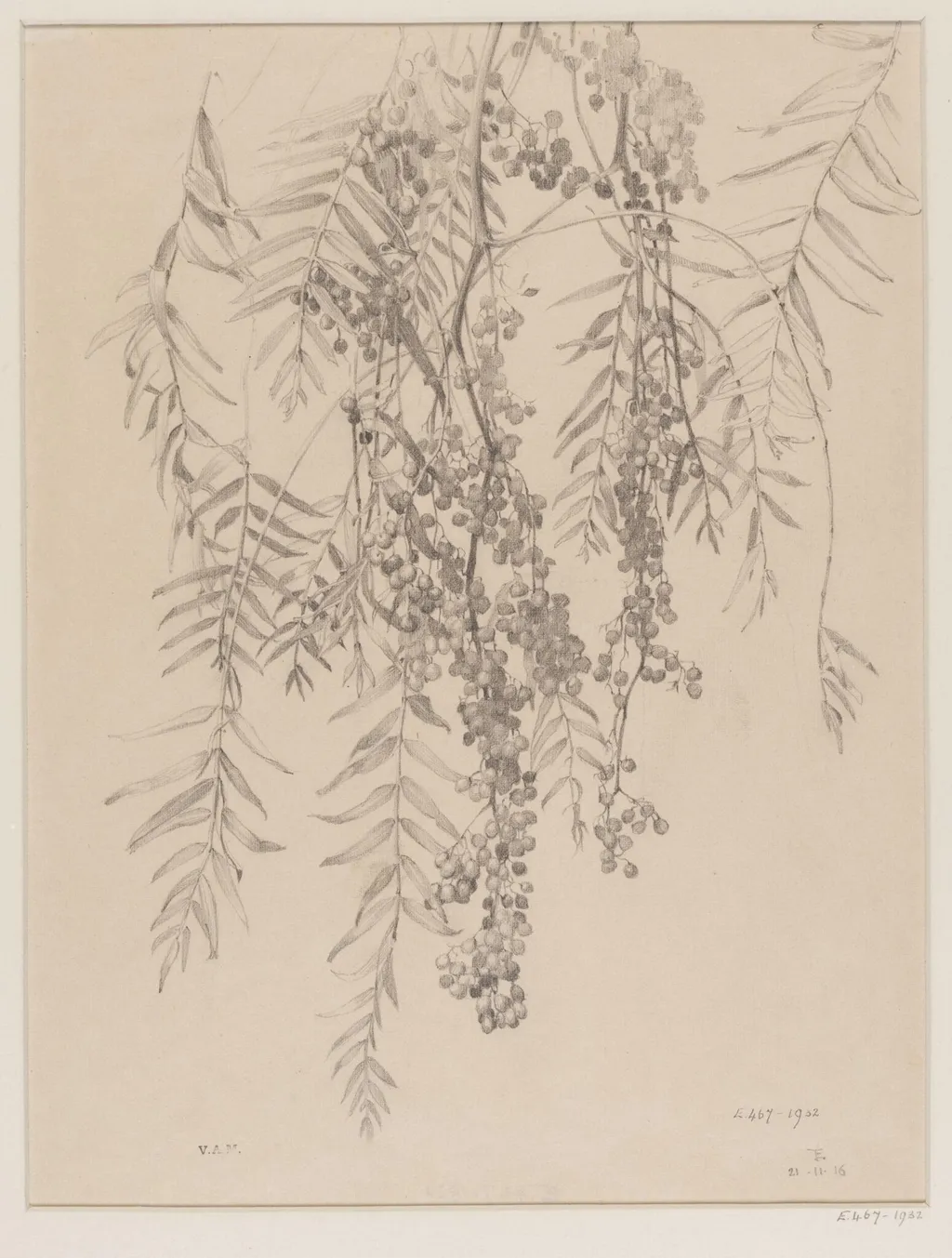
Untitled is a drawing by Edward Ingram Taylor. It dates from 21 and is held in the collection of the Victoria and Albert Museum.
About this work
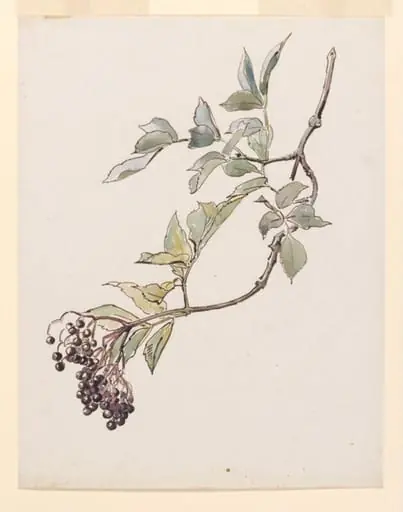
The artist focused on small details, like the way light hits the berries, making them look almost three-dimensional.
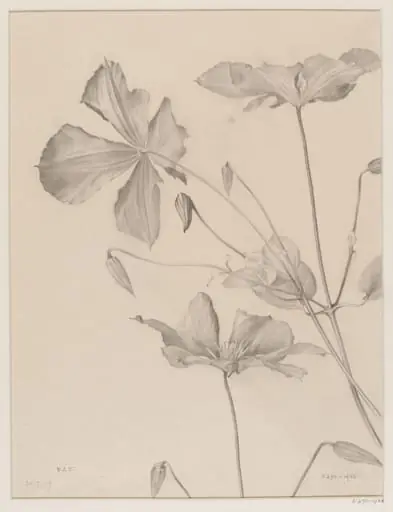
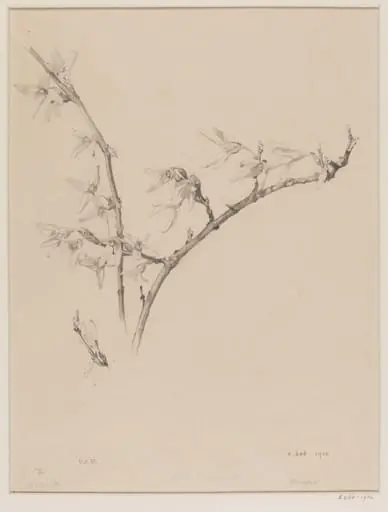
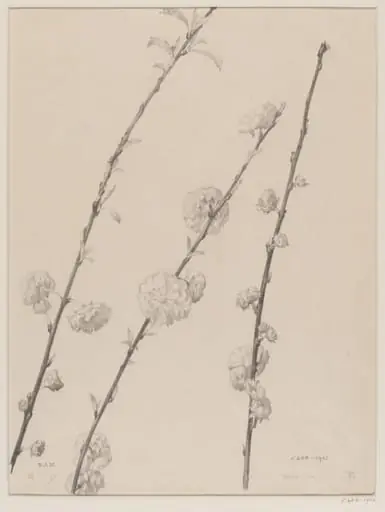
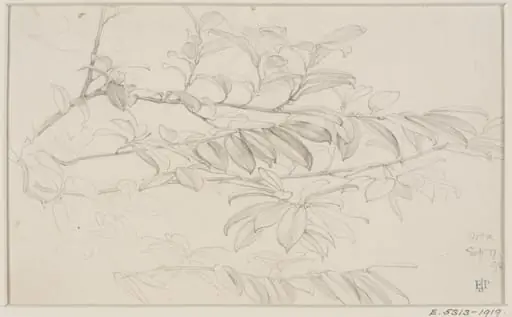
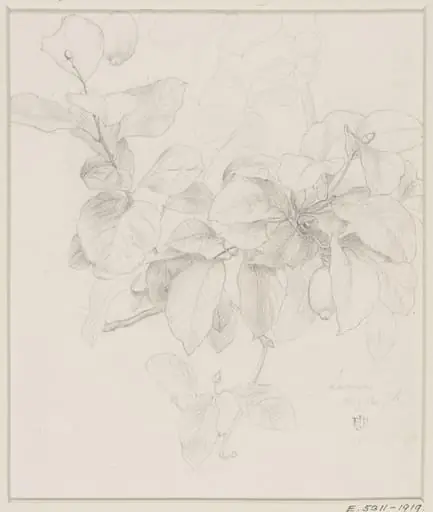
This drawing shows a single branch of a broad-leaved tree, heavy with clusters of small, round berries. The leaves are long and narrow, arranged in a natural, slightly messy way. The artist used only pencil, creating soft shadows and fine lines to show the texture of the leaves and berries.
The date in the corner tells us this was drawn in 1916, and the initials suggest it’s by Edward Ingram Taylor. The artist focused on small details, like the way light hits the berries, making them look almost three-dimensional.
If you like this kind of careful drawing, check out cross-hatching next.
Overview
A pencil drawing from 1916 by Edward Ingram Taylor, this work captures a single branch of a pepper plant bearing clusters of small, round berries. Rendered entirely in graphite, the composition emphasizes quiet observation over dramatic effect. The artist’s attention to subtle tonal shifts and delicate linework reveals an interest in botanical precision, with no color or ink used to enhance the image.
Subject & Meaning
The subject is a natural specimen—a pepper plant branch with leaves and fruit—presented without symbolic or narrative context. The focus on ordinary plant matter suggests an appreciation for the quiet beauty of everyday botanical forms. There is no indication of cultivation or human intervention; the branch appears as found, grounded in direct observation rather than idealization.
Technique & Style
Taylor employed fine pencil strokes to model the texture of leaves and berries, using soft gradations of tone to suggest volume and surface. The leaves are rendered with irregular, loosely arranged lines that mimic their natural asymmetry, while the berries catch light with delicate highlights. Cross-hatching is present but restrained, serving to deepen shadows without overwhelming the delicate realism of the form.
History & Provenance
Dated 1916 and signed with the artist’s initials, the drawing is one of many studies Taylor produced during a period of intense focus on natural forms. Its survival as a standalone work suggests it was kept as a personal record rather than prepared for exhibition. No public record of prior ownership or exhibition history is widely documented.
Context
Created during the post-war years, the drawing reflects a broader trend among British artists of the time to turn toward intimate, observational subjects amid societal upheaval. While not part of a formal movement, Taylor’s work aligns with a quiet revival of naturalist drawing, valuing patience and detail over grand themes or stylistic innovation.
Legacy
Though not widely exhibited or reproduced, this drawing exemplifies Taylor’s consistent engagement with botanical subjects throughout his career. It remains a quiet testament to his method: close looking, disciplined technique, and an emphasis on the aesthetic value of unadorned natural forms. It continues to be referenced in studies of early 20th-century British drawing practices.
Artist & collection