Artwork
Venus
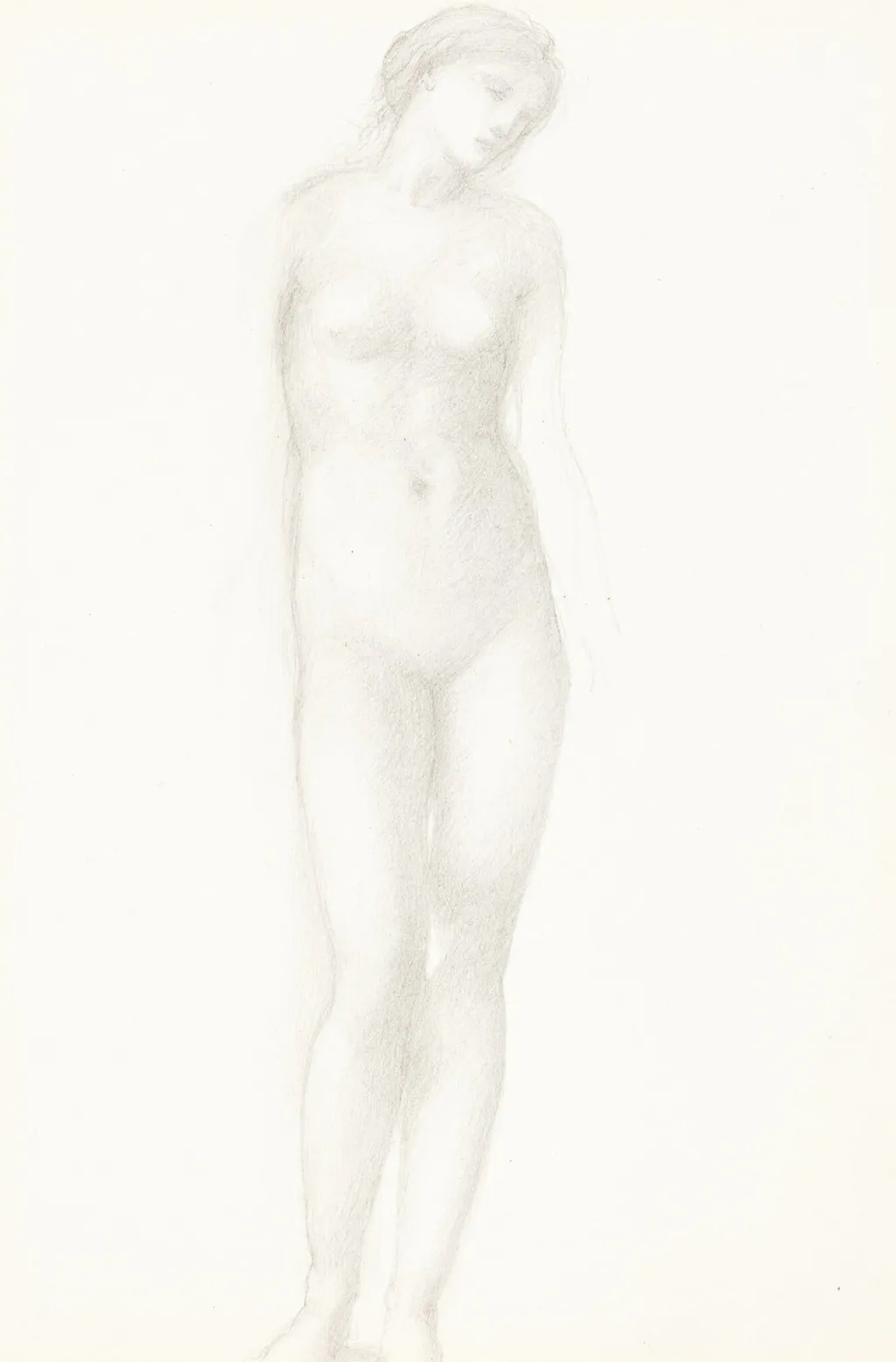
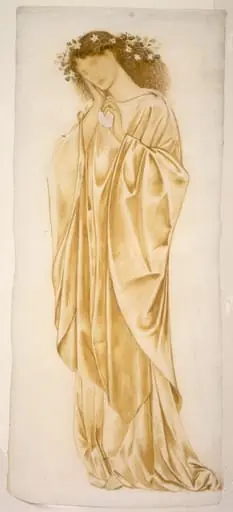
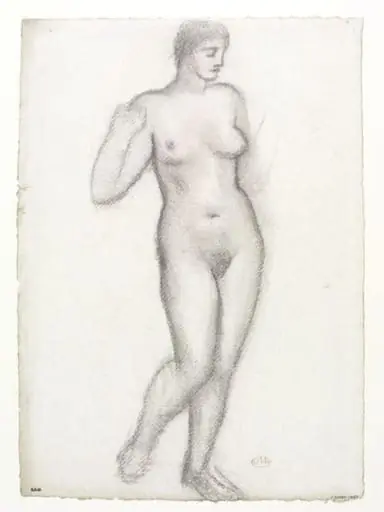
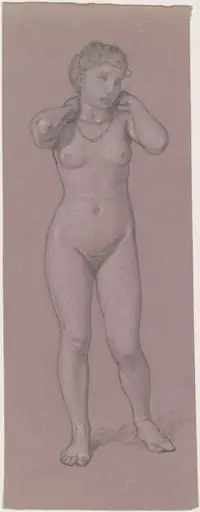
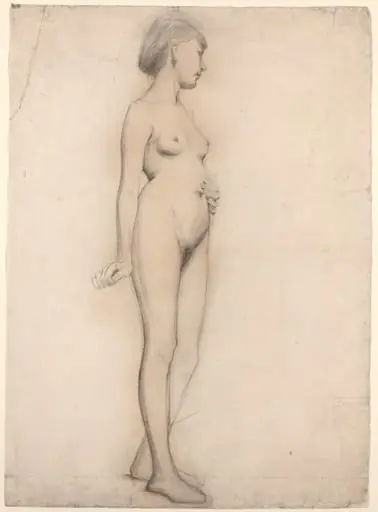
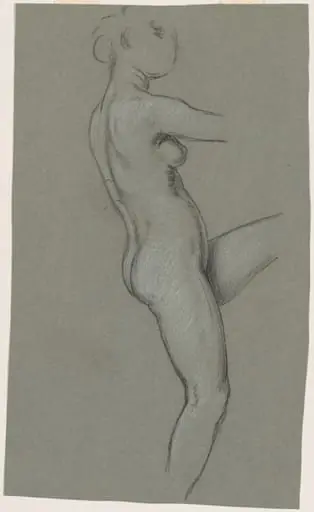
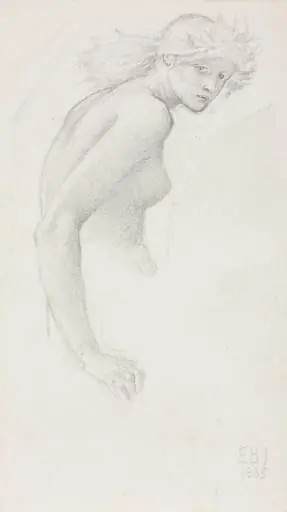
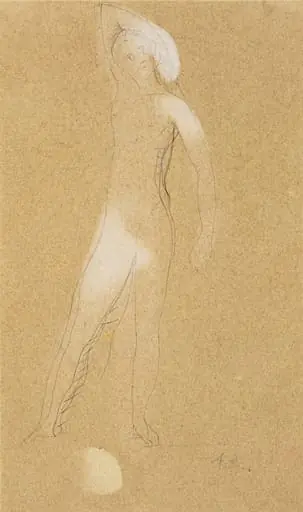
Venus is a graphite drawing by the Romanticist artist Edward Coley, Sir Burne-Jones. It dates from 1866 and is held in the collection of the National Gallery of Art.
About this work
Overview
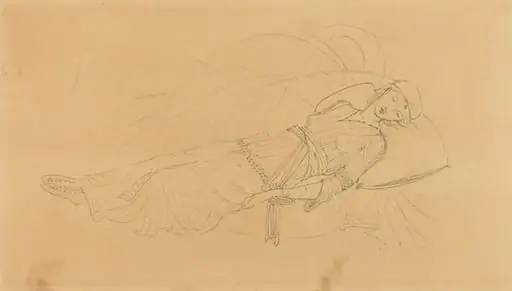
Created in 1866, this graphite drawing titled "Venus" is attributed to the British artist Sir Edward Burne‑Jones. Executed as a single‑figure study, the work presents a standing female form rendered in a side profile. The piece is modest in scale and composed entirely of dry media, reflecting the artist’s interest in mythological subjects during the mid‑nineteenth century.
Subject & Meaning
The figure represents the classical goddess Venus, a frequent emblem of beauty and love in Western art. By depicting her in a simplified, almost anonymous pose, the drawing emphasizes the idealized silhouette rather than narrative detail, inviting contemplation of the timeless form rather than a specific mythic episode.
Technique & Style
Hair and limbs are indicated by a handful of swift marks, leaving portions of the paper exposed to convey translucency.
Burne‑Jones employs light, fluid graphite strokes that suggest the body’s contours with minimal definition. Hair and limbs are indicated by a handful of swift marks, leaving portions of the paper exposed to convey translucency. This economical approach aligns with Romantic‑era practices of rapid sketching, where expressive line work captured the essence of a subject before a more finished treatment.
History & Provenance
The drawing was produced during Burne‑Jones’s early career, a period marked by his exploration of medieval and classical themes. While the work has remained within private collections, it is documented in the artist’s catalogue raisonné and has been exhibited occasionally as an example of his preparatory studies.
Context
In the 1860s, British artists were increasingly drawn to the Romantic ideal of personal expression through spontaneous drawing. Burne‑Jones’s "Venus" reflects this trend, sharing visual affinities with contemporaneous studies by artists such as Dante Gabriel Rossetti, who also favored loose line to convey mood and form.
Artist & collection