Artwork
Desert Cedars, New Mexico
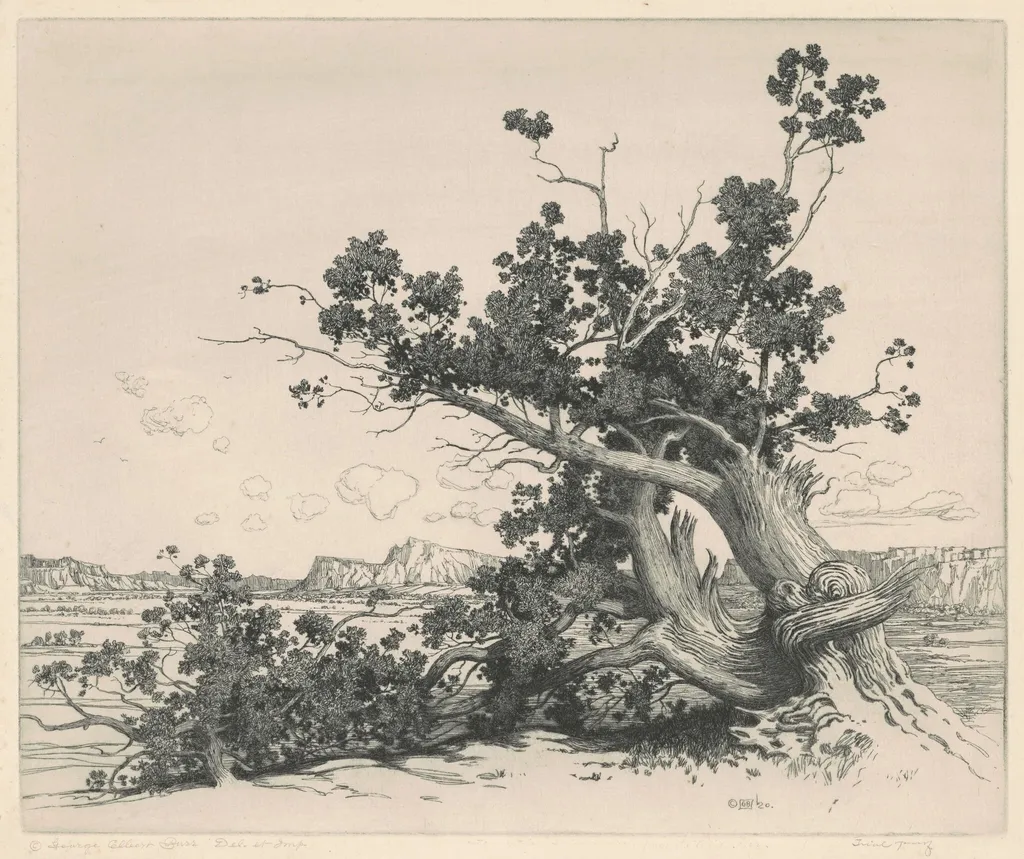
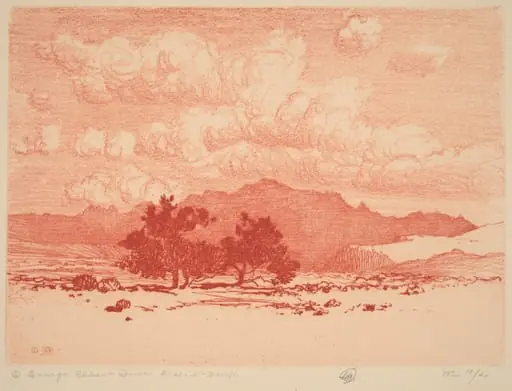
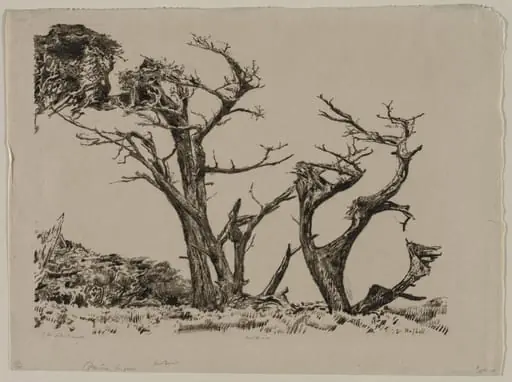
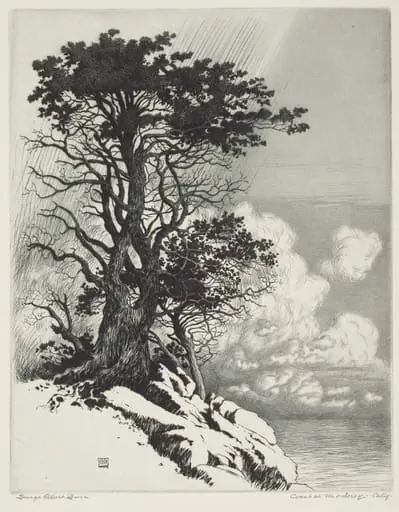
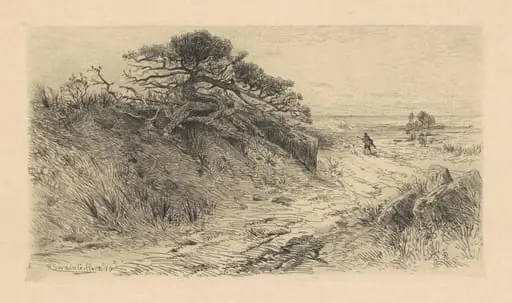
Desert Cedars, New Mexico is an ink print by George Elbert Burr. It dates from 1920 and is held in the collection of the National Gallery of Art.
About this work
Overview
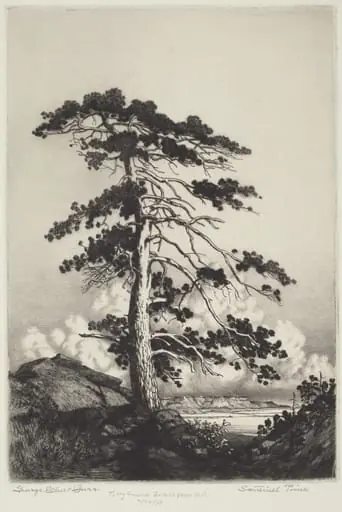
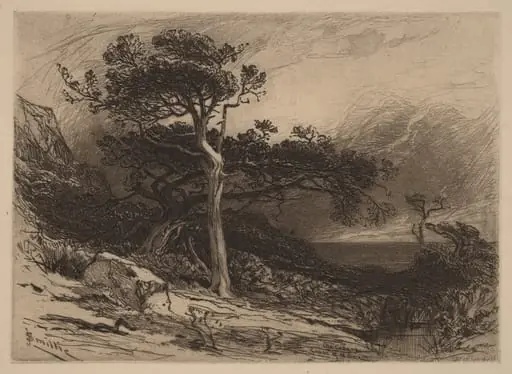
Created in 1920, *Desert Cedars, New Mexico* is an etching executed in blue‑black ink on wove paper. The print portrays a solitary, contorted tree set against an arid, open expanse, with distant low hills and sparse vegetation under a bright sky.
Subject & Meaning
The composition isolates a twisted cedar, its gnarled trunk and sprawling branches emphasizing the resilience of desert flora. The stark, quiet landscape conveys the solitude and enduring character of the Southwest’s terrain.
Technique & Style
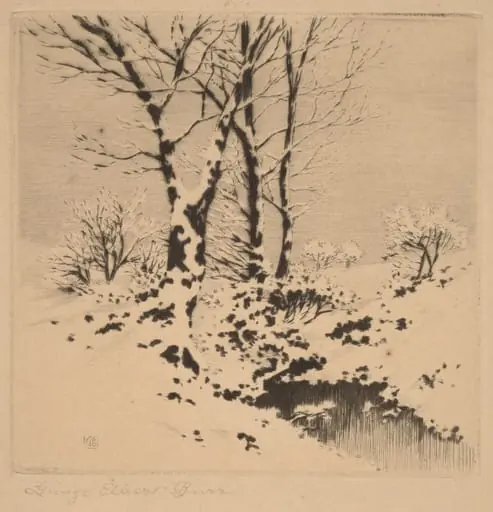
Burr employed fine, controlled lines to render the bark’s texture and the subtle undulations of the ground. The contrast of deep blue‑black ink against the pale paper creates a calm, muted atmosphere, characteristic of his precise etching and drypoint methods.
History & Provenance
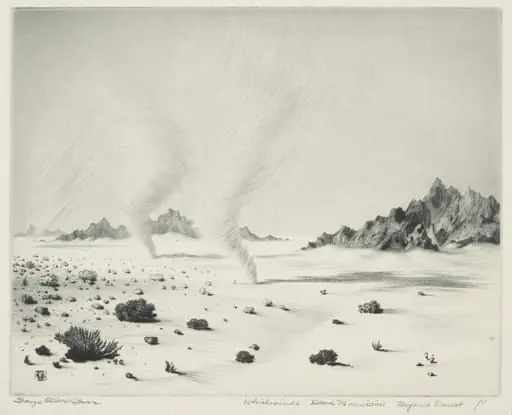
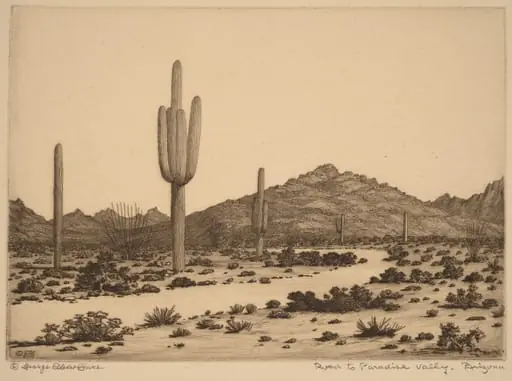
The work belongs to a period when Burr concentrated on the desert and mountain scenery of the American West. It was produced as part of his broader series of Southwestern prints, which were widely circulated among collectors of early twentieth‑century American printmaking.
Context
During the early 1900s, artists increasingly documented the western frontier’s unique ecosystems. Burr’s focus on the New Mexico landscape aligns with contemporary interests in regionalism and the visual documentation of a rapidly changing environment.
Own this work as a print
Artist & collection

Artist
George Elbert Burr (April 14, 1859 – November 17, 1939 ) was an American printmaker and painter best known for his etchings and drypoints of the desert and mountain regions of the American West.