Artwork
Monterey Cypress
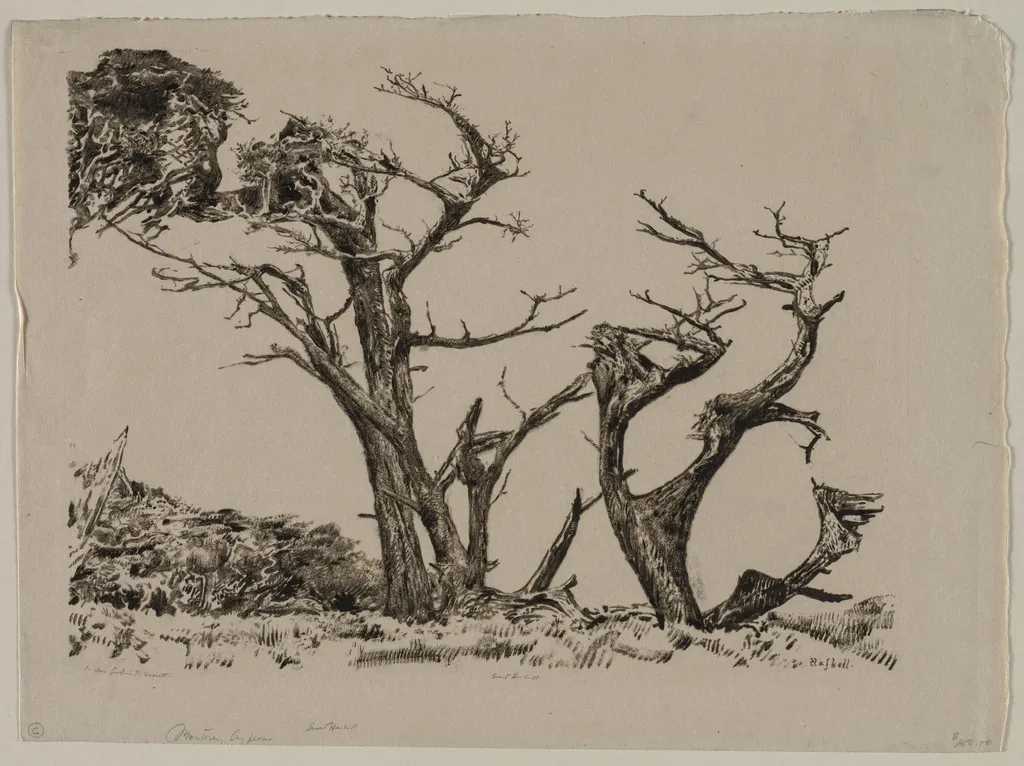
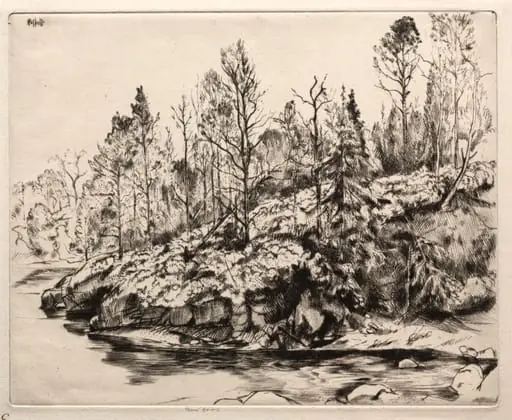
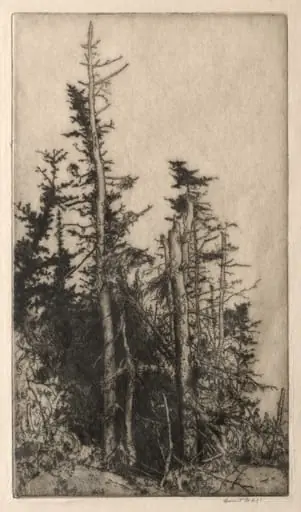
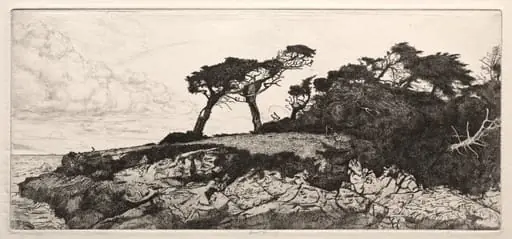
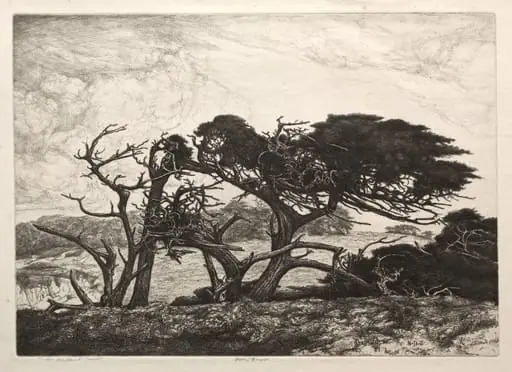
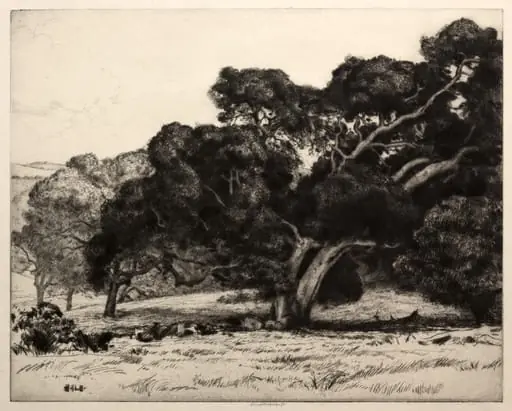
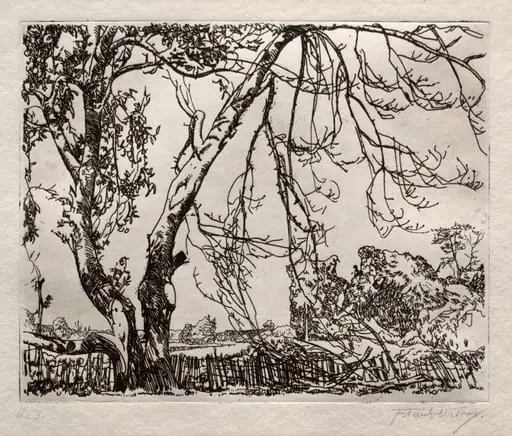
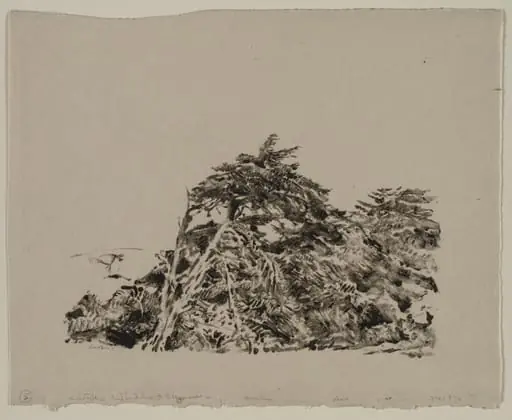
Monterey Cypress is a print by Ernest Haskell. It dates from 1910 and is held in the collection of the Cleveland Museum of Art.
About this work
Overview
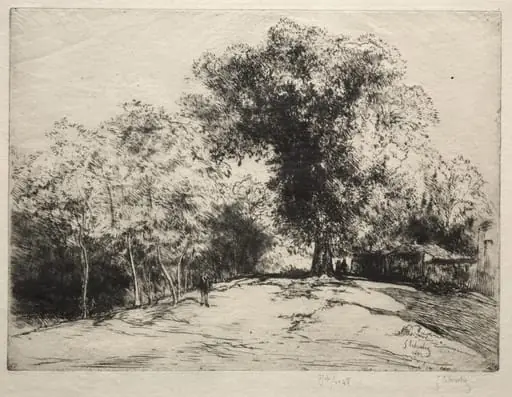
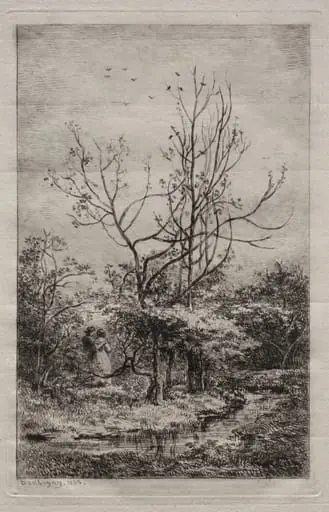
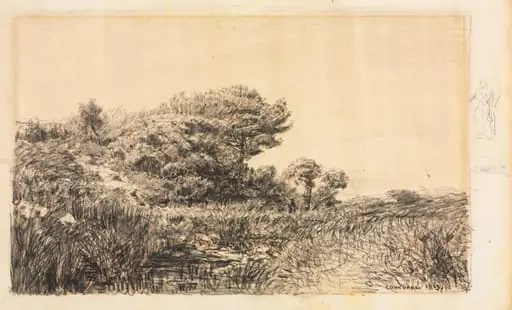
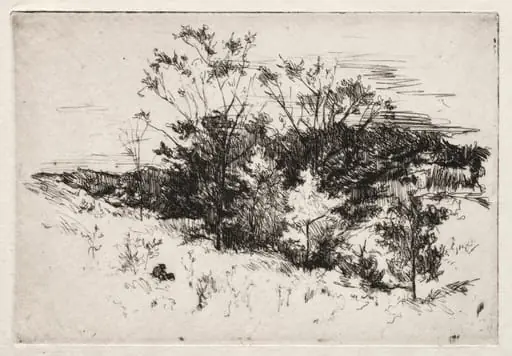
Ernest Haskell created this print around 1910, capturing a solitary stand of Monterey cypress trees in a desolate coastal setting. Executed in ink or similar medium, the work emphasizes the trees' rugged forms against an austere landscape. It resides in the collection of The Cleveland Museum of Art, where it is valued for its restrained yet evocative depiction of nature's resilience.
Subject & Meaning
The subject is a cluster of twisted cypress trees, their limbs contorted by wind and salt spray, clinging to life in a barren terrain. The sparse green foliage and bare branches suggest endurance amid harsh conditions. The composition conveys a quiet sense of isolation, reflecting the tree’s natural adaptation to coastal erosion and limited resources, without overt symbolism or narrative.
Technique & Style
Texture is suggested through varied stroke density—rough, jagged lines for bark, finer marks for clinging foliage.
Haskell employed loose, deliberate linework to render the trees' gnarled trunks and angular branches. Texture is suggested through varied stroke density—rough, jagged lines for bark, finer marks for clinging foliage. The background remains minimal, with faint indications of rock and scrub, allowing the trees to dominate. The style balances spontaneity with control, evoking a sense of natural disorder rendered with precision.
History & Provenance
The print was made circa 1910, during Haskell’s period of active printmaking and landscape observation. It entered The Cleveland Museum of Art’s collection through documented acquisition, though specific provenance prior to museum ownership is not widely recorded. Its preservation reflects early 20th-century interest in American naturalist printmaking and regional subjects.
Context
Created during a time when American artists increasingly turned to native landscapes for inspiration, this work aligns with regionalist tendencies in printmaking. The Monterey cypress, endemic to California’s coast, was a subject of fascination for artists drawn to its sculptural form and ecological resilience. Haskell’s approach avoids romanticism, favoring direct observation over idealization.
Legacy
Though not widely reproduced, the print contributes to a modest but significant body of Haskell’s work that documents American flora with quiet intensity. It remains a reference point for studies of early 20th-century printmaking that prioritize natural form over ornamentation, influencing later artists interested in ecological realism and linear economy.
Artist & collection

Artist
Ernest Haskell was an American artist and illustrator, internationally famous in his lifetime and remembered for his etchings, as well as engravings, pen-and-ink drawings, lithographs and watercolors.