Artwork
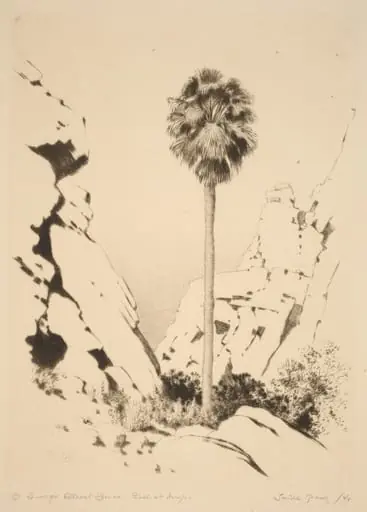
Sketch on Apache Trail, Arizona
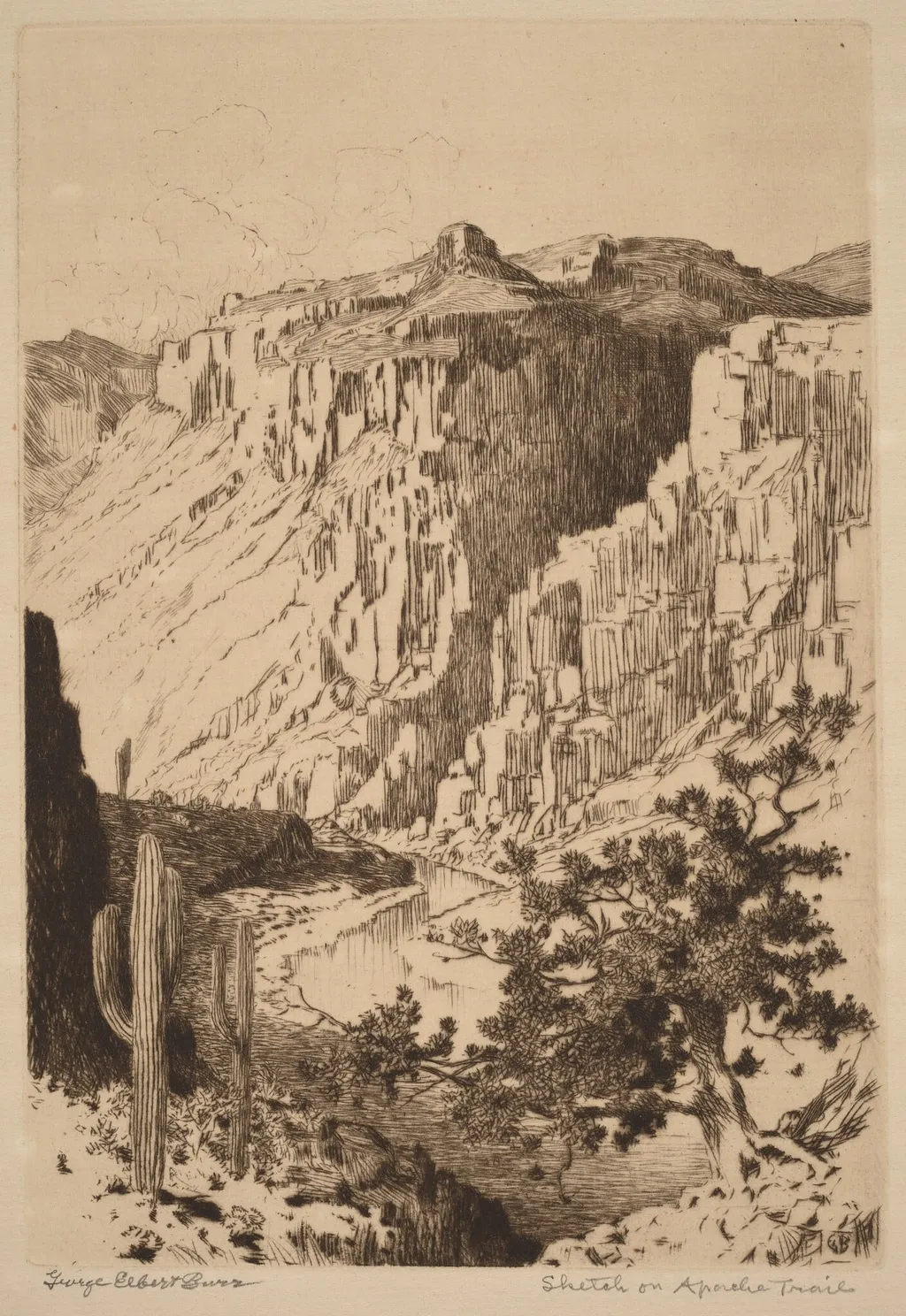
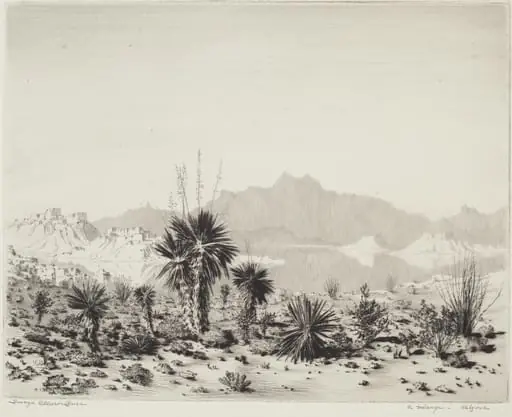
Sketch on Apache Trail, Arizona is an ink print by George Elbert Burr. It dates from 1929 and is held in the collection of the National Gallery of Art.
About this work
Overview
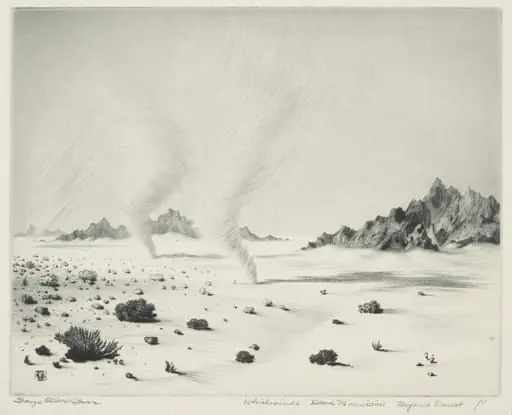
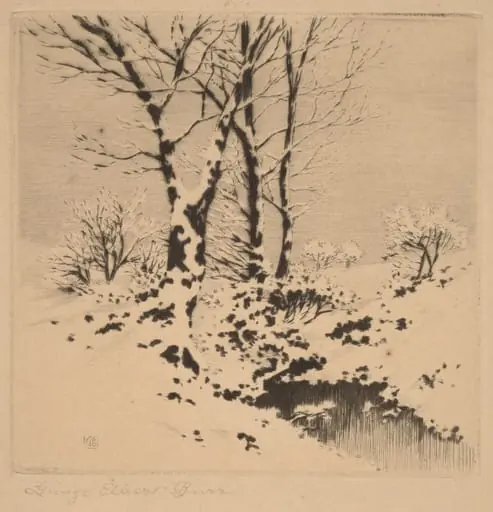
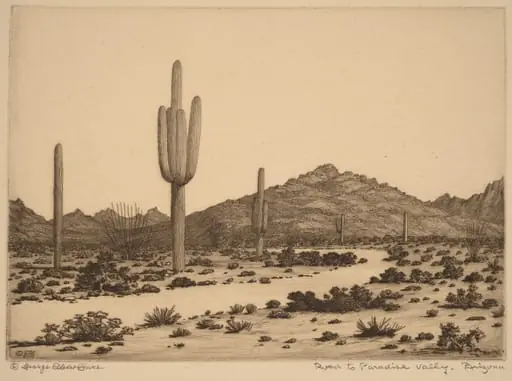
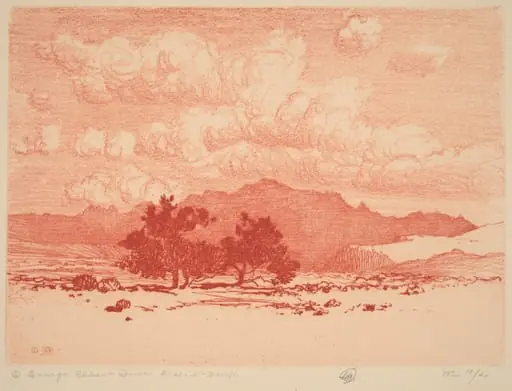
Created around 1929, *Sketch on Apache Trail, Arizona* is a print by American artist George Elbert Burr, executed in etching and drypoint using brown ink on laid paper. Burr specialized in landscape prints of the American West, and this work exemplifies his dedication to capturing the raw topography of desert and mountain regions through intimate, hand-drawn techniques.
Subject & Meaning
The scene depicts a rugged stretch of the Apache Trail, characterized by steep cliffs, fractured rock formations, and sparse vegetation clinging to lower slopes. The absence of human presence emphasizes the land’s isolation and enduring geology. Burr’s choice of subject reflects a quiet reverence for the Southwest’s untamed terrain, conveying its austerity without romanticism.
Technique & Style
Burr employed drypoint to scratch directly into a metal plate, creating dense, burr-laden lines that hold ink and print with a soft, gritty texture. Combined with etching, the method allows for both fine detail and bold, expressive marks. The resulting surface mimics the fractured, uneven quality of the landscape, rejecting smoothness in favor of tactile authenticity.
History & Provenance
Burr produced this work during a period of extensive travel through the American Southwest, where he made on-site sketches later refined into prints. While specific ownership history is not documented, the piece aligns with his broader body of work held in institutional collections, including the Smithsonian and the Library of Congress, which preserve his contributions to American printmaking.
Context
In the late 1920s, Burr was part of a generation of artists turning away from urban subjects to document the American West’s natural environments. His work emerged alongside regionalist movements but remained distinct in its focus on quiet, unpopulated landscapes. Unlike illustrative depictions of the frontier, Burr’s prints convey geological presence over narrative.
Legacy
Burr’s etchings, including this one, are valued for their technical precision and emotional restraint. They influenced later printmakers interested in landscape as a subject of formal and material exploration rather than spectacle. His use of drypoint to evoke texture and terrain remains a reference point in the study of American printmaking techniques.
Own this work as a print
Artist & collection

Artist
George Elbert Burr (April 14, 1859 – November 17, 1939 ) was an American printmaker and painter best known for his etchings and drypoints of the desert and mountain regions of the American West.