Artwork
Road to the White City, No.II
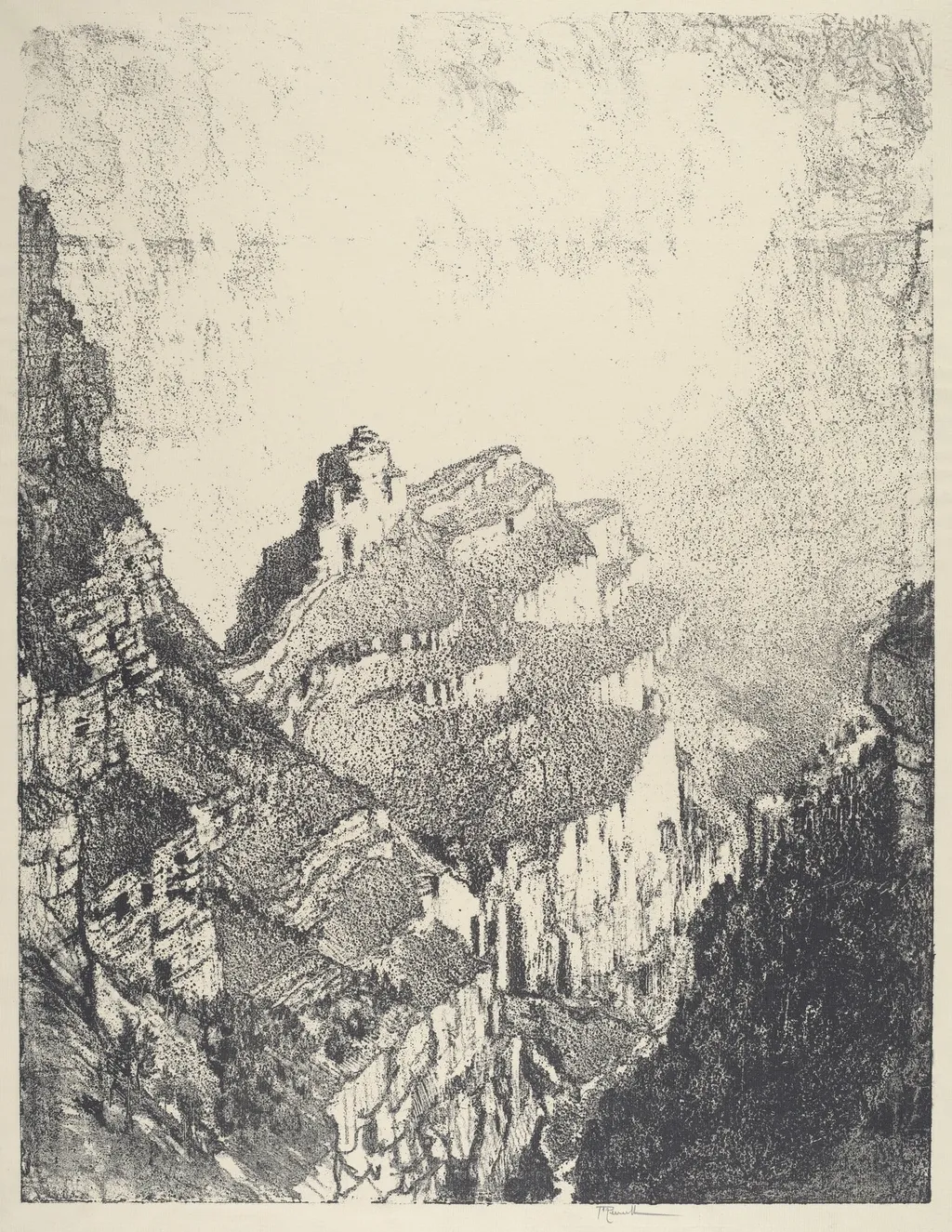
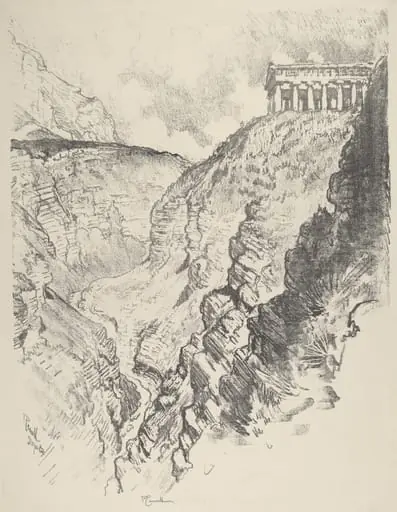
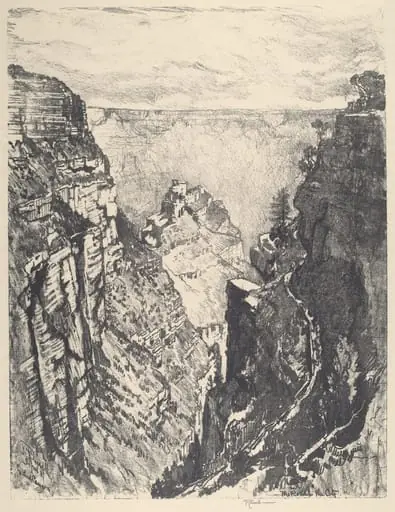
Road to the White City, No.II is an ink print by Joseph Pennell. It dates from 1912 and is held in the collection of the National Gallery of Art. Created in 1912, *Road to the White City, No.
About this work
Overview
Pennell, known for his architectural and topographical subjects, used lithography to translate the spontaneity of sketching into a reproducible medium.
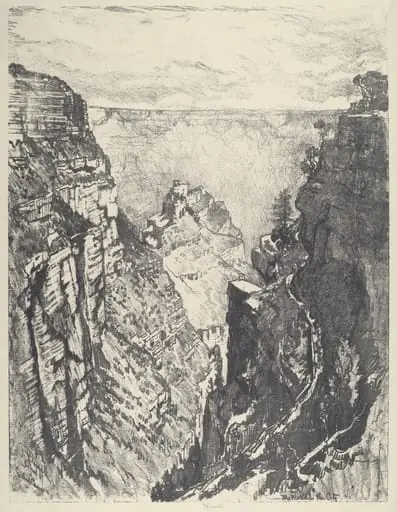
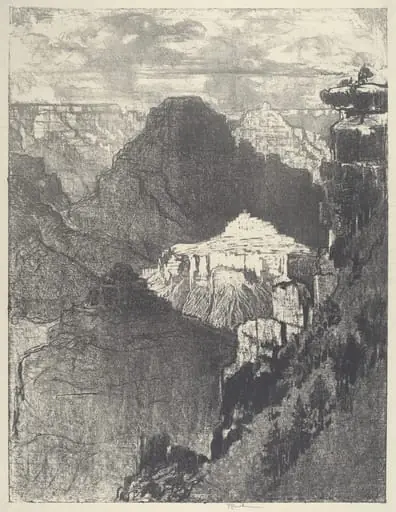
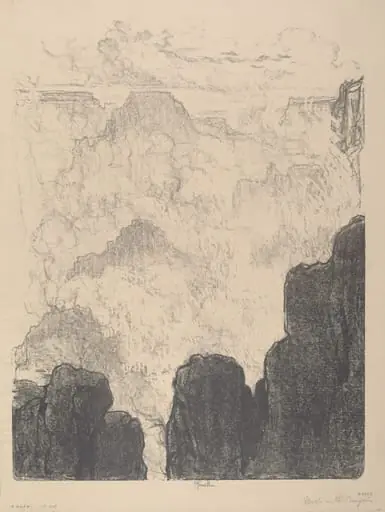
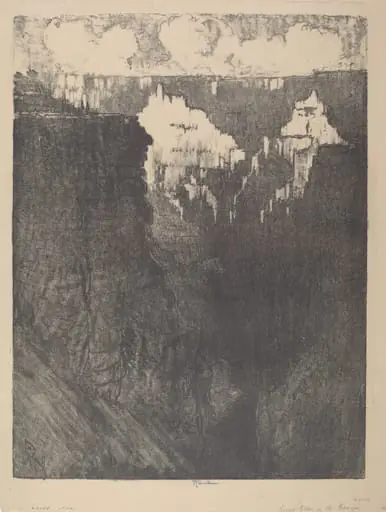
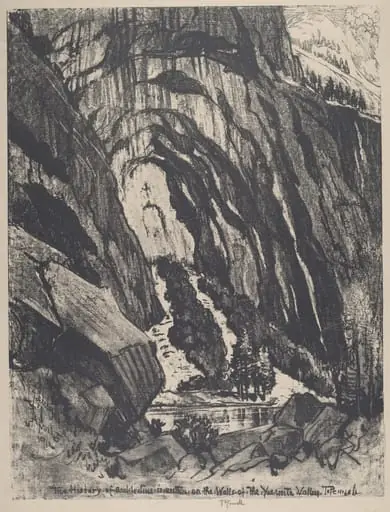
Created in 1912, *Road to the White City, No. II* is a black-and-white lithograph by American artist Joseph Pennell. It depicts a steep, winding path ascending a rugged hillside, rendered with loose, energetic lines that suggest movement and immediacy. The print captures a sense of journey rather than a specific location, emphasizing atmosphere over detail. Pennell, known for his architectural and topographical subjects, used lithography to translate the spontaneity of sketching into a reproducible medium.
Subject & Meaning
The image portrays a solitary road climbing a barren slope, flanked by sparse vegetation and modest structures. There is no clear destination visible, and the faint sky offers no directional cues. This ambiguity invites contemplation of travel itself—its isolation, effort, and uncertainty. The title references the White City, alluding to the 1893 Chicago World’s Fair, but the scene feels removed from grandeur, focusing instead on the quiet, unpolished path toward it.
Technique & Style
Pennell employed lithography to achieve a tactile, sketch-like quality, using coarse, rapid strokes that mimic pencil on paper. The grainy texture results from the lithographic stone’s surface and the artist’s direct handling of the medium, not from photographic reproduction. His approach reflects the influence of Whistler’s tonal subtlety and Eakins’ emphasis on observational truth, merging draftsmanship with the immediacy of spontaneous drawing.
History & Provenance
Pennell produced this work during a period when he was deeply engaged with printmaking and urban landscapes, following years spent in Europe. While the exact provenance of this specific print is not documented, it aligns with his broader practice of creating series that explore architectural and infrastructural themes. He frequently collaborated with his wife, Elizabeth Robins, on writings that contextualized his visual work, though this piece stands as a solitary visual meditation.
Context
In the early 20th century, lithography experienced a revival among artists seeking alternatives to traditional etching. Pennell was part of this movement, valuing the medium’s capacity for direct expression. His focus on roads, bridges, and industrial sites reflected a broader interest in modern infrastructure and the changing American and European landscape, contrasting with the idealized views common in earlier print traditions.
Legacy
Pennell’s *Road to the White City, No. II* exemplifies the potential of lithography to convey emotional and spatial complexity through minimal means. While not widely exhibited today, it remains a representative work of early modern American printmaking, illustrating how artists used traditional techniques to capture the rawness of contemporary experience. Its understated power continues to inform discussions on the relationship between drawing and print.
Artist & collection
Artist
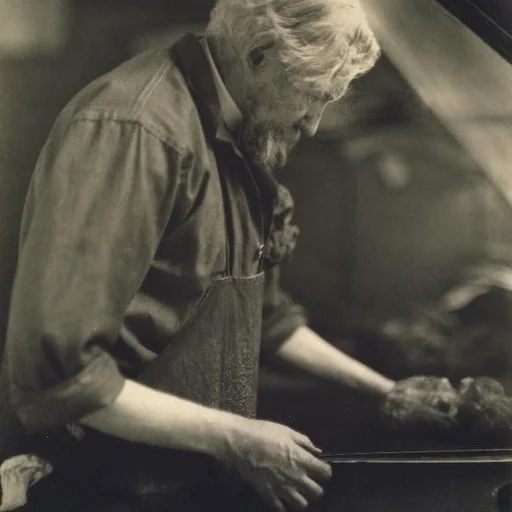
Joseph Pennell (July 4, 1857 – April 23, 1926) was an American draftsman, etcher, lithographer, and illustrator for books and magazines.