Artwork
The Little Canyon
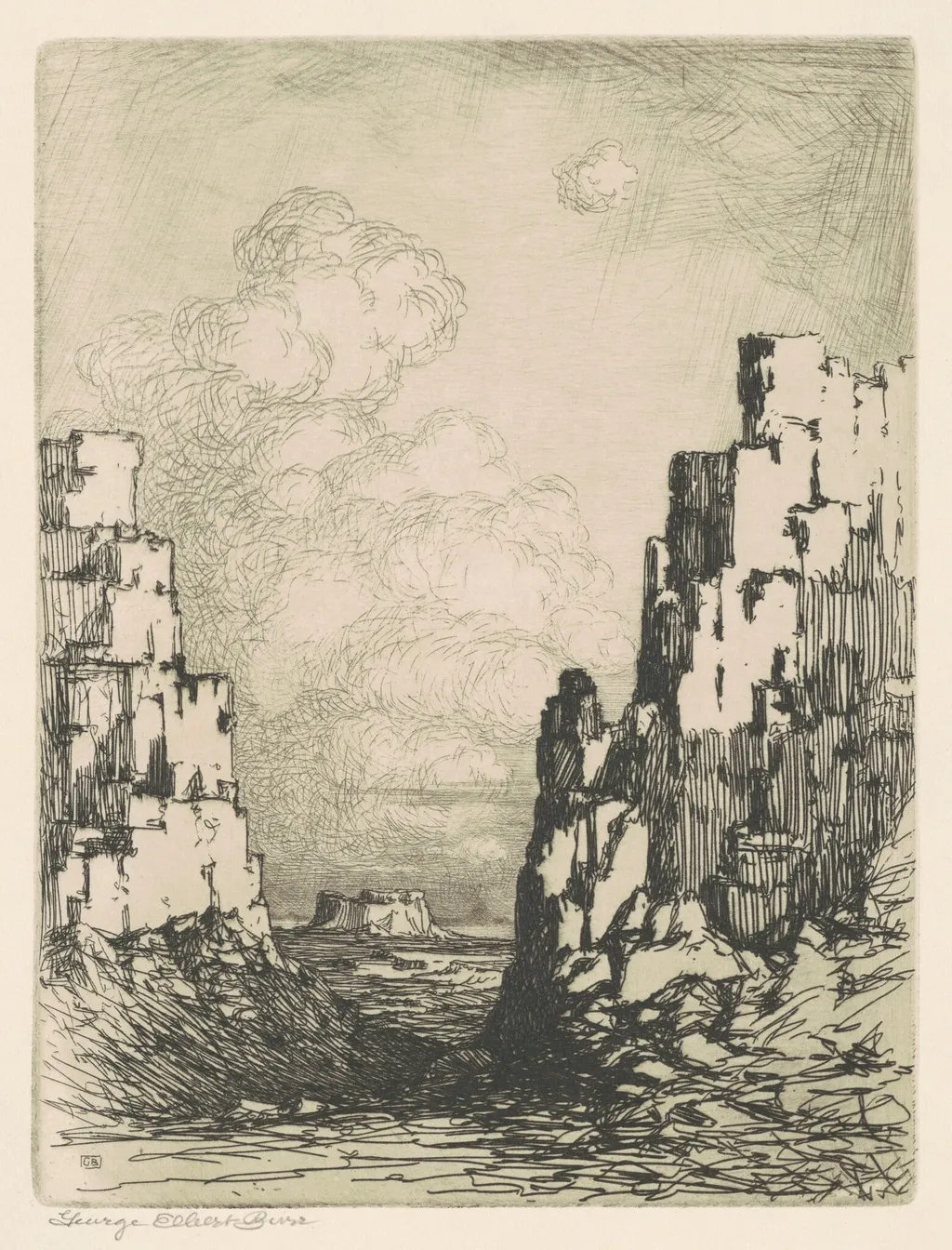
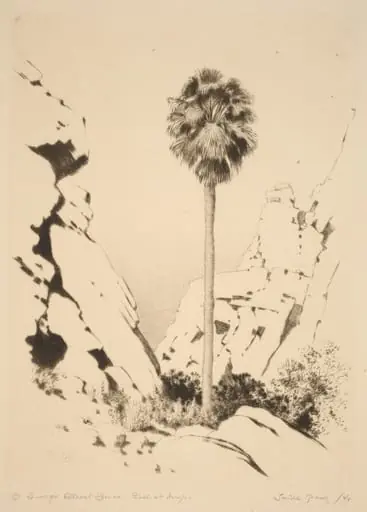
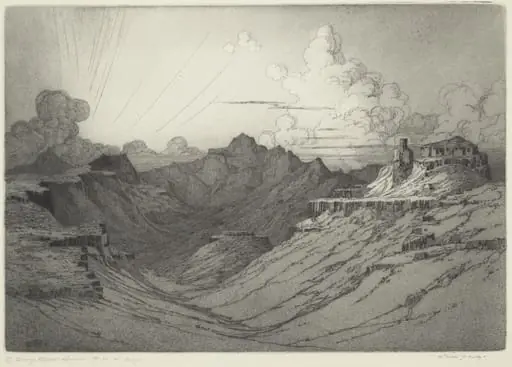
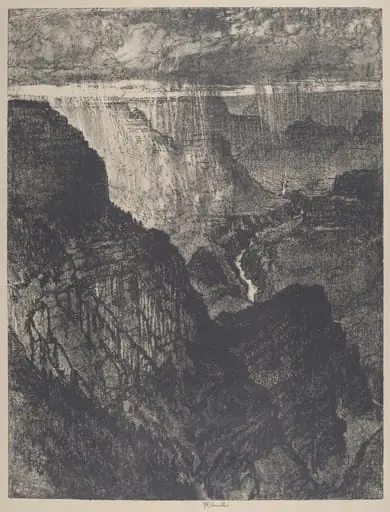
The Little Canyon is an ink print by George Elbert Burr. It dates from 1925 and is held in the collection of the National Gallery of Art.
About this work
Overview
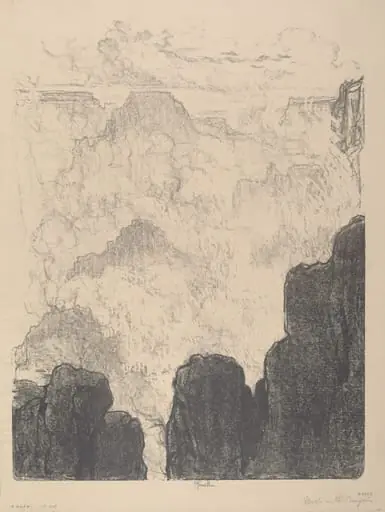
Created circa 1925, *The Little Canyon* is a black-and-white print by American artist George Elbert Burr. Executed with both etching and dry‑point techniques on wove paper, the work captures a stark western landscape through a combination of line and tone.
Subject & Meaning
The image presents two massive rock formations thrusting upward from a flat, arid plain. Below the cliffs the ground appears cracked and uneven, punctuated by small, ambiguous shapes that suggest sparse vegetation or shadows, emphasizing the harsh, untouched character of the terrain.
Technique & Style
Burr employed dry‑point, incising the metal plate with a sharp needle to produce ragged, ink‑holding lines that convey texture. Etching complements this with finer, controlled marks, while the sky is rendered in looser, swirling strokes that contrast with the solid, jagged cliffs.
History & Provenance
The print belongs to the period when Burr was concentrating on depictions of the American West, particularly desert and mountain scenes. It reflects his mature style, developed after years of working in both etching and dry‑point, and is representative of his output from the mid‑1920s.
Artist & collection

Artist
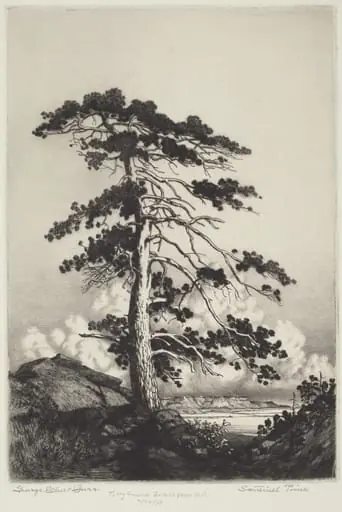
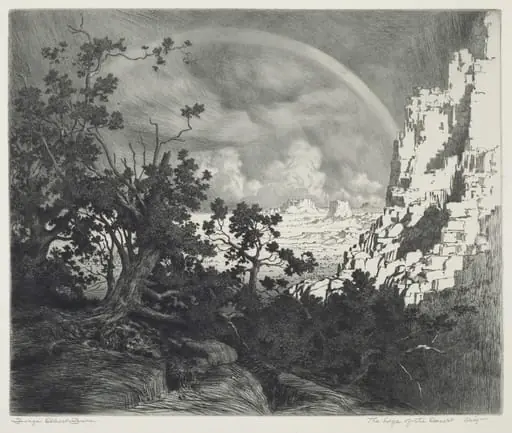
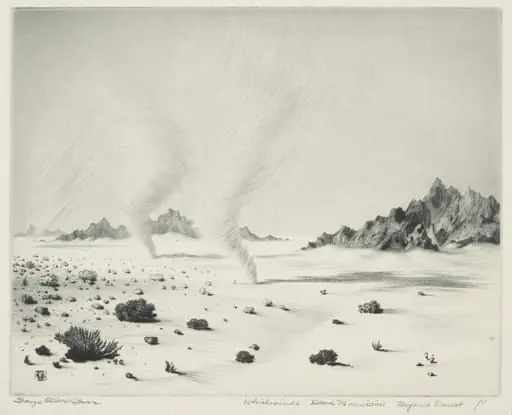
George Elbert Burr (April 14, 1859 – November 17, 1939 ) was an American printmaker and painter best known for his etchings and drypoints of the desert and mountain regions of the American West.

![Landscape [Paesaggio], by Carlo Paolo Agazzi](https://artifactworldgallery.com/img/carlo-paolo-agazzi--landscape-paesaggio--e606f4ada87d2052-w320.webp)