Artwork
The Bright Angel Trail
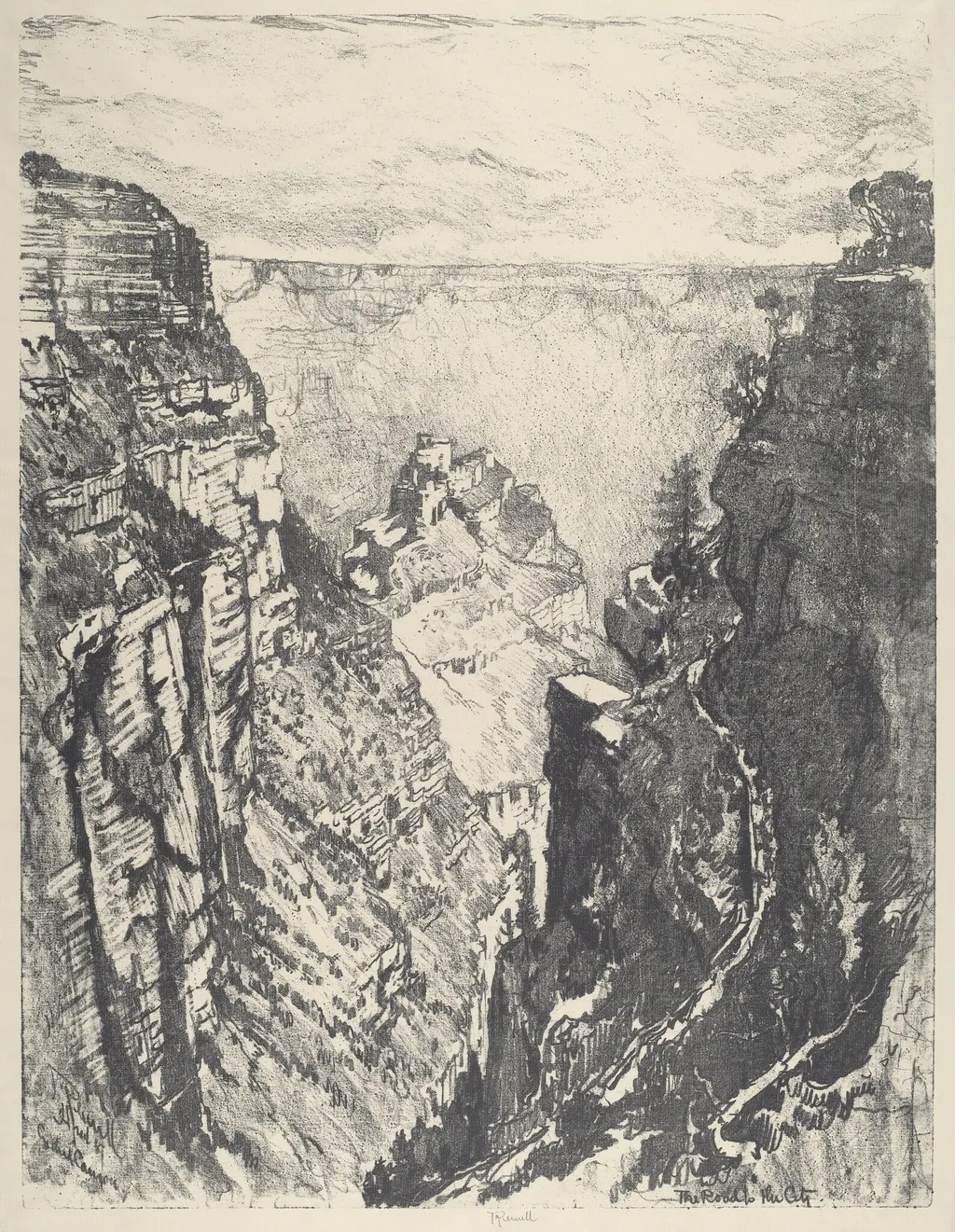
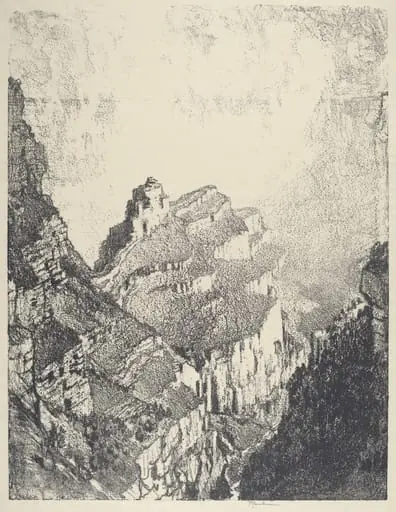
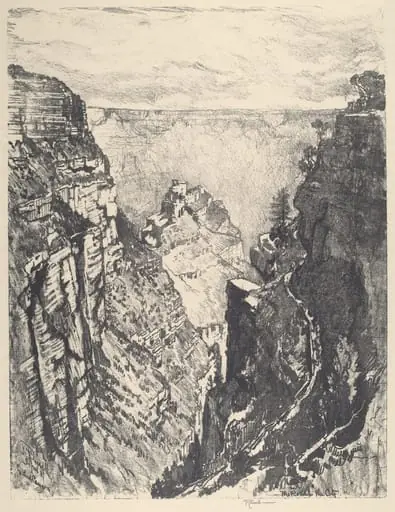
The Bright Angel Trail is an ink print by Joseph Pennell. It dates from 1912 and is held in the collection of the National Gallery of Art.
About this work
Overview
The Bright Angel Trail, executed in 1912, is a lithographic print by American artist Joseph Pennell. Known for his precise yet expressive renderings of both industrial and natural environments, Pennell employed the medium to capture the dramatic topography of a canyon landscape, emphasizing its steep walls and winding path.
Subject & Meaning
The image portrays a rugged canyon cut by a narrow trail that descends toward a valley floor. Layered rock faces dominate the composition, their textures rendered with swift, gestural lines. Small structures cling to the cliffs, suggesting human presence within the otherwise wild setting.
Technique & Style
Pennell’s lithograph utilizes quick, sketch‑like strokes that convey the roughness of the stone and the immediacy of observation. The print’s tonal contrasts and line work reflect his practice of on‑site drawing, translating a fleeting visual impression into a reproducible medium.
History & Provenance
Created after Pennell’s studies with James Lambdin and Thomas Eakins and his later exposure to James McNeill Whistler, the work aligns with his broader project of documenting notable sites worldwide. The print was produced during a period when Pennell spent considerable time in Europe, yet it focuses on an American landscape.
Context
The Bright Angel Trail illustrates Pennell’s interest in the interplay between natural grandeur and human alteration, a theme common in early 20th‑century American art. The depiction of a well‑known trail in the Grand Canyon reflects contemporary fascination with the West’s scenic vistas and the expansion of tourism.
Own this work as a print
Artist & collection
Artist
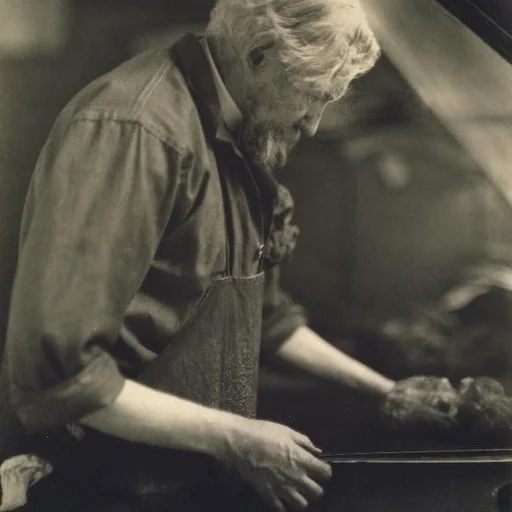
Joseph Pennell (July 4, 1857 – April 23, 1926) was an American draftsman, etcher, lithographer, and illustrator for books and magazines.

 The Yosemite Valley
 Road to the White City, No.II
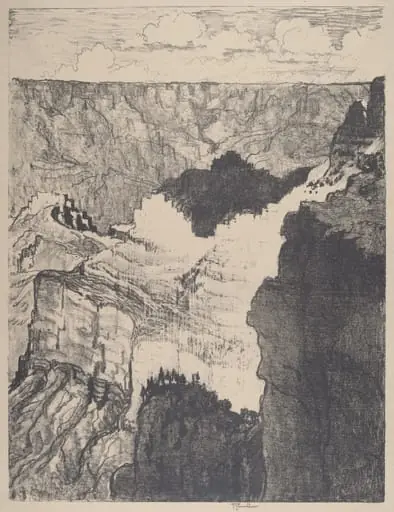 Road to the White City, No.I
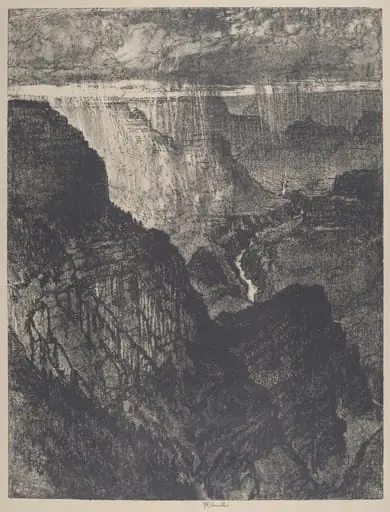 Storm in the Grand Canyon
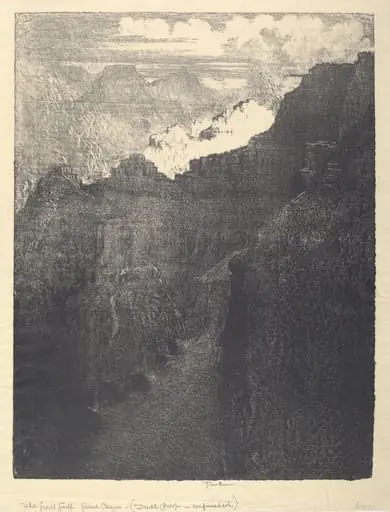 The Great Gulf
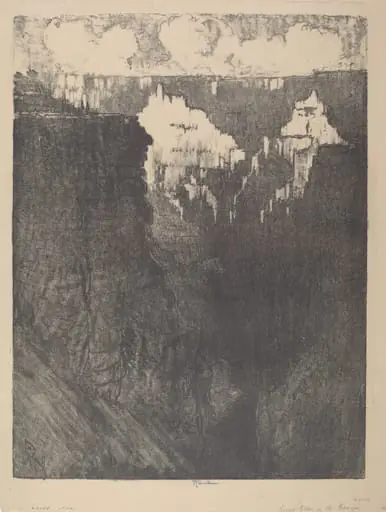 Sunset Cities in the Canyon
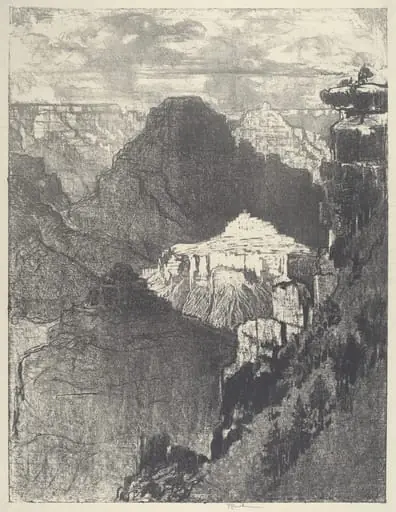 The City under the Black Mountain
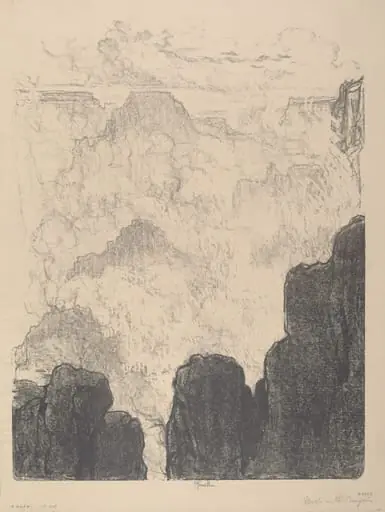 Mists in the Canyon, No.II
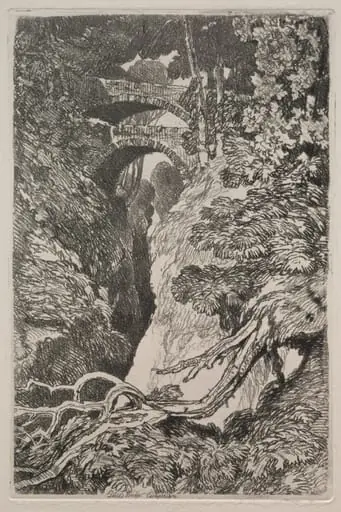 Liber Studiorum: Devil's Bridge, Cardiganshire
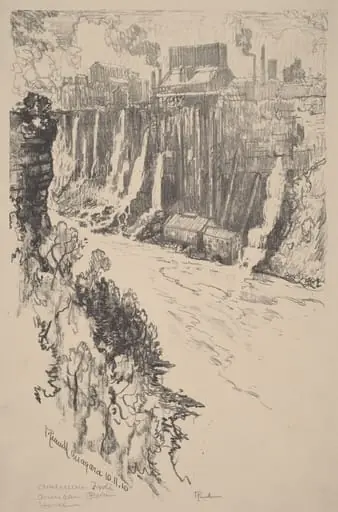 American Tivoli
 The Cathedral Door
 The Bright Angel Trail