Artwork
The Three Trees
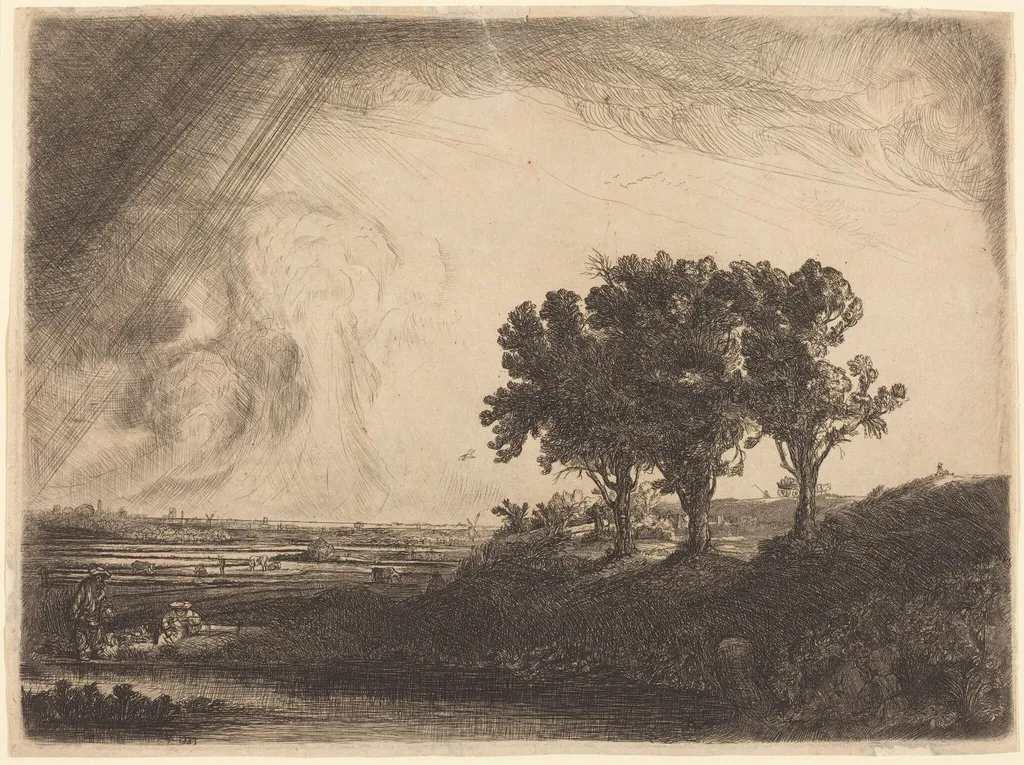
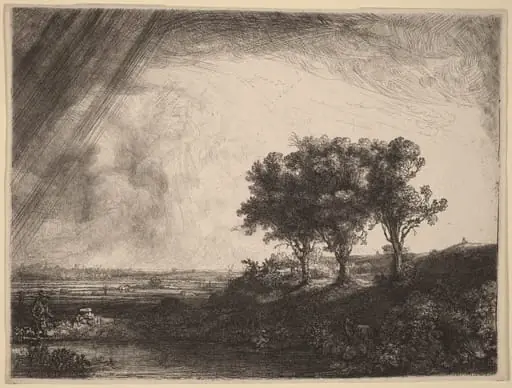
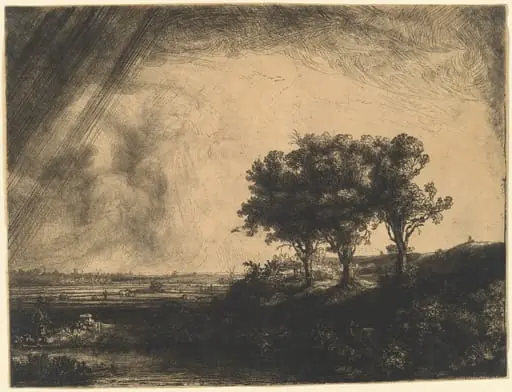
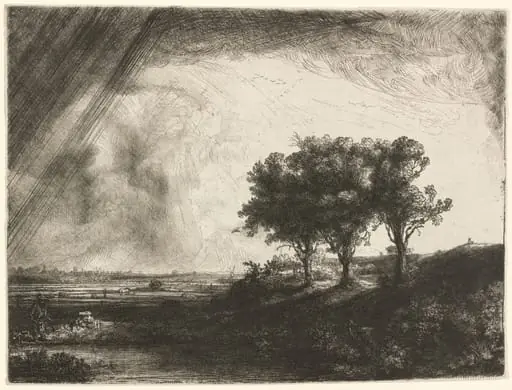
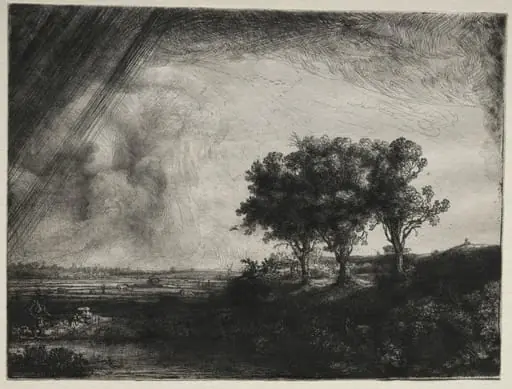
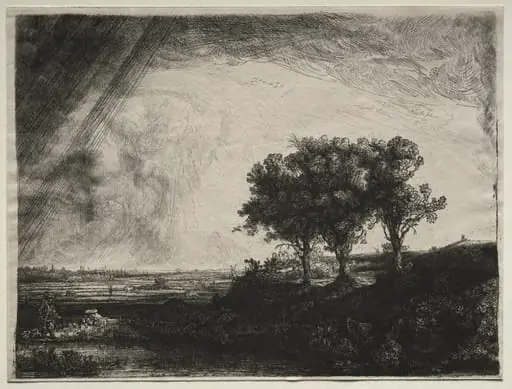
The Three Trees is an ink print by the Baroque artist William Byron. It dates from 1701 and is held in the collection of the National Gallery of Art.
About this work
Overview
The work belongs to the tradition of early 18th-century Northern European printmaking, emphasizing atmospheric detail over narrative.
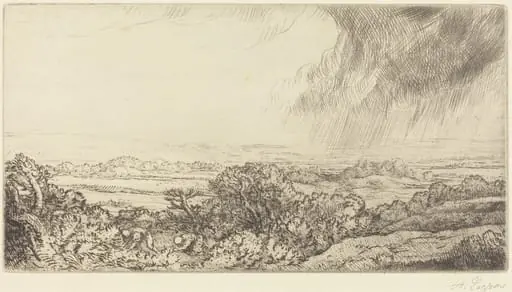
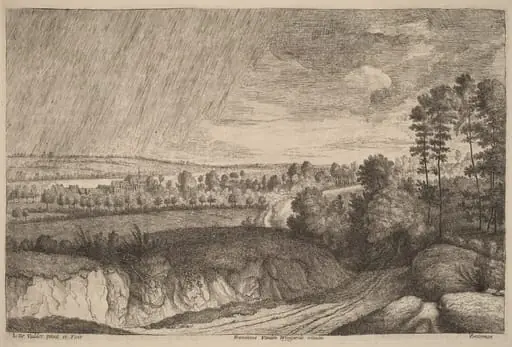
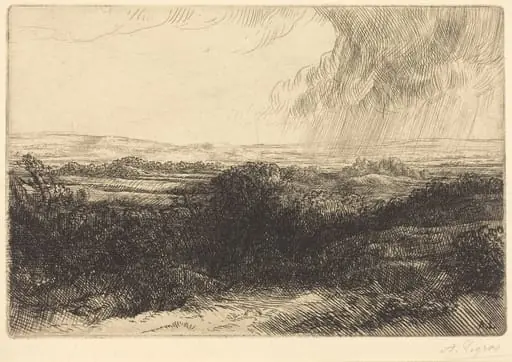
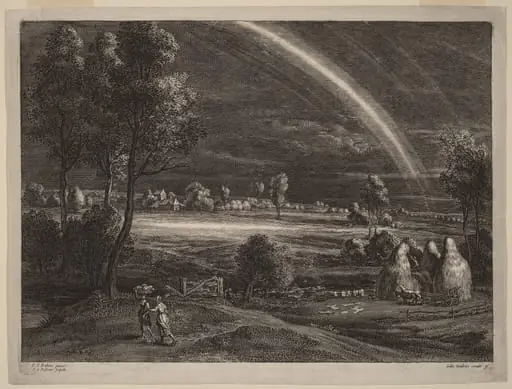
Created in 1701, The Three Trees is a print by William Byron, executed in etching with drypoint and burin. It depicts a quiet rural landscape dominated by three prominent trees in the foreground, set against a gently undulating terrain and a sky filled with drifting clouds. The work belongs to the tradition of early 18th-century Northern European printmaking, emphasizing atmospheric detail over narrative.
Subject & Meaning
The composition centers on three trees, their forms rendered with dense, dark lines that contrast against the lighter, more fluid rendering of the sky and hills. No human figures or structures appear, suggesting a contemplative focus on nature’s quiet presence. The work evokes a sense of transient weather and natural rhythm, possibly reflecting contemporary interests in landscape as a subject worthy of independent artistic attention.
Technique & Style
Byron employed etching for broad tonal areas, drypoint for rich, fuzzy lines in the tree trunks and foliage, and burin for sharp, precise details in the ground and cloud edges. The layered techniques create a tactile sense of texture and depth, while the contrast between dark vegetation and luminous sky enhances the illusion of wind and movement. The手法 reflects a meticulous, almost scientific approach to capturing natural effects.
History & Provenance
The print was produced in the early 1700s, during a period when landscape prints gained popularity among collectors in the Netherlands and England. Few impressions of The Three Trees survive, and known examples are held in institutional collections, including the British Museum and the Rijksmuseum. Its attribution to William Byron is based on stylistic analysis and period documentation, though little is known of the artist’s life.
Context
While not part of the Baroque movement’s theatricality, the print aligns with a growing 18th-century trend in Northern Europe toward naturalistic landscape studies. Artists increasingly turned to the countryside as a subject in its own right, influenced by Dutch Golden Age precedents and Enlightenment-era observations of nature. This work reflects that shift, prioritizing observation over symbolism.
Legacy
The Three Trees is recognized as an early example of landscape printmaking that prioritizes mood and texture over narrative. Though Byron’s oeuvre is limited, this work influenced later printmakers who sought to capture atmospheric effects through nuanced engraving techniques. It remains a quiet but significant reference in the evolution of landscape as a printmaking genre.
Artist & collection