Artwork
The Three Trees
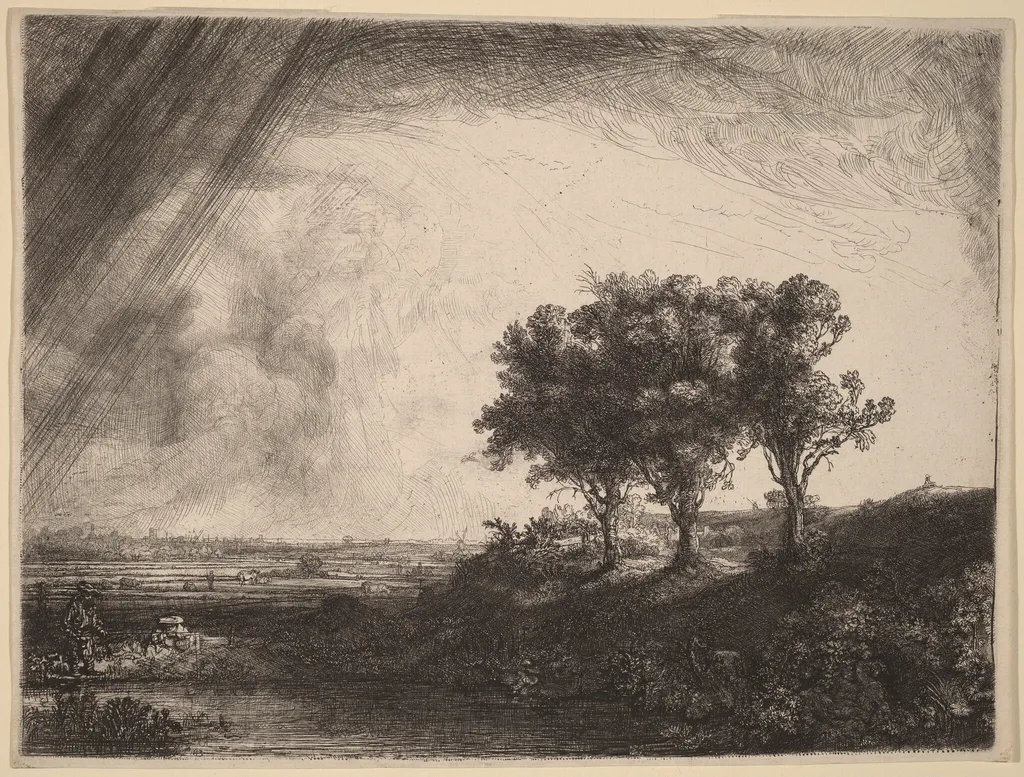
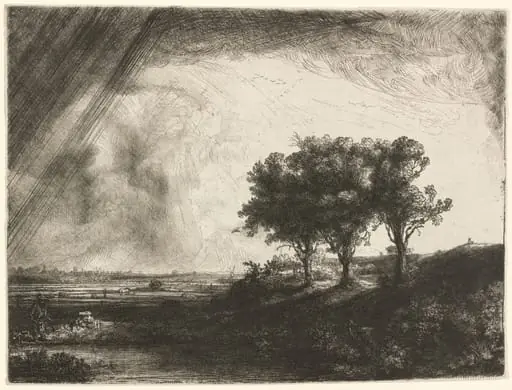
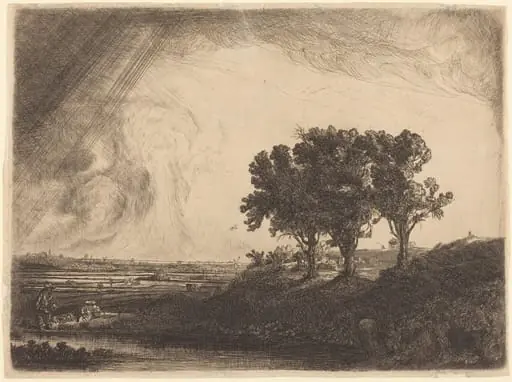
The Three Trees is an ink print by the Baroque artist Rembrandt. It dates from 1643 and is held in the collection of the National Gallery of Art.
About this work
Overview
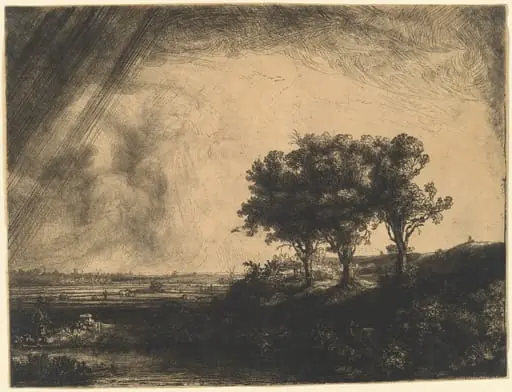
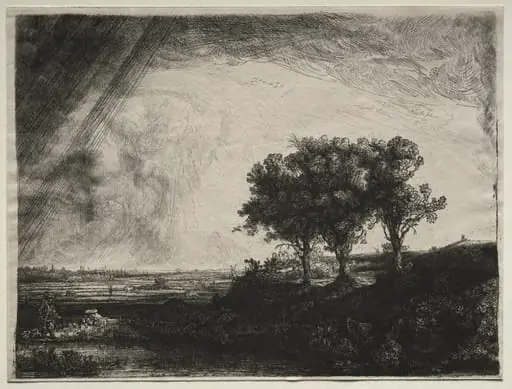
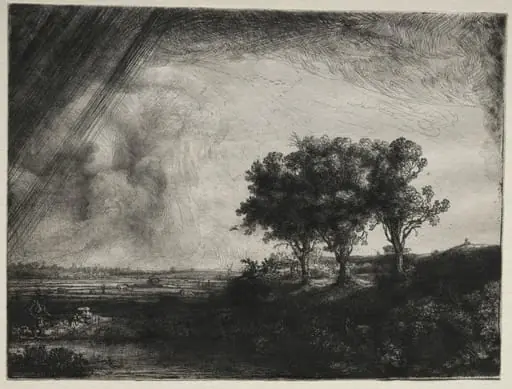
Created in 1643, The Three Trees is a print by Rembrandt van Rijn executed on laid paper through a combination of etching, drypoint, and engraving. The work measures roughly a modest size typical of Rembrandt’s graphic output and presents a tranquil riverside landscape populated by three solitary trees beneath a turbulent sky.
Subject & Meaning
The composition depicts three darkened trees standing on a riverbank, their trunks rendered in stark contrast against a sky filled with swirling clouds. In the distance a small settlement crowns a hill, while the calm water bears the faint traces of figures strolling along its edge, suggesting a quiet, contemplative moment in an otherwise dramatic setting.
Technique & Style
Rembrandt employed sharp, incised lines of drypoint alongside the finer tonal gradations of etching and engraving to model form and depth. The interplay of dense cross‑hatching and delicate stippling creates a pronounced chiaroscuro effect, especially evident in the foliage and atmospheric sky, illustrating the artist’s mastery of light and shadow in printmaking.
Context
The work belongs to a period when Rembrandt explored landscape subjects within his print repertoire, integrating narrative elements with natural observation. The use of multiple intaglio techniques reflects the artist’s experimental approach to achieving tonal richness and atmospheric effects, a hallmark of his mid‑career graphic practice.
Own this work as a print
Artist & collection
Artist
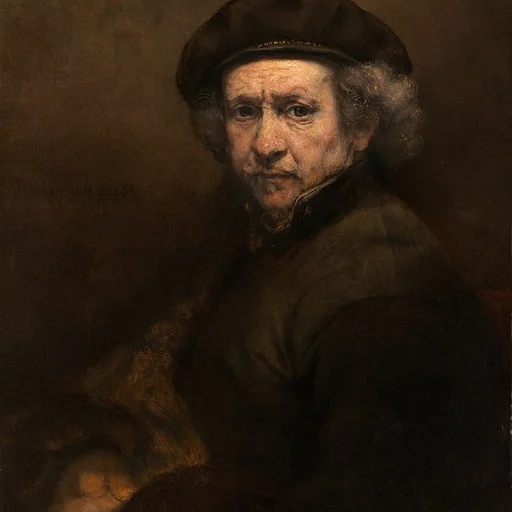
Rembrandt Harmenszoon van Rijn (15 July 1606 – 4 October 1669), known mononymously as Rembrandt, was a Dutch Golden Age painter, printmaker, and draughtsman.