Artwork
The Three Trees
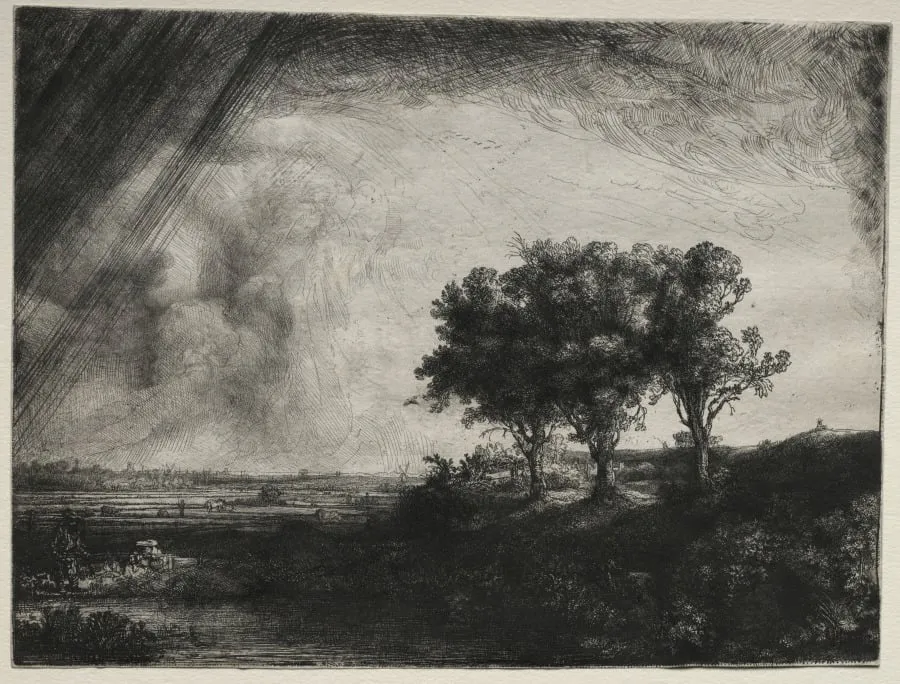
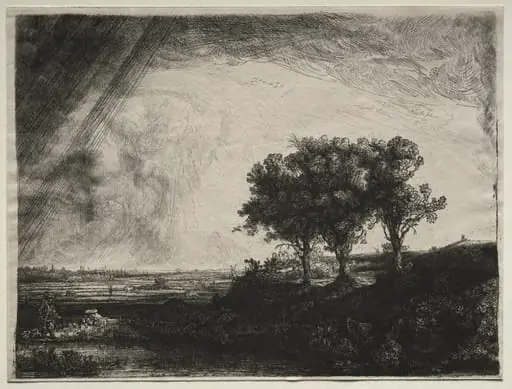
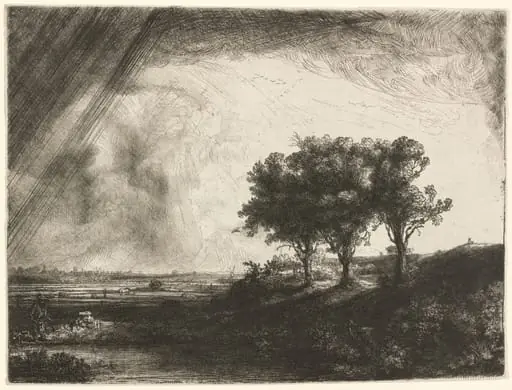
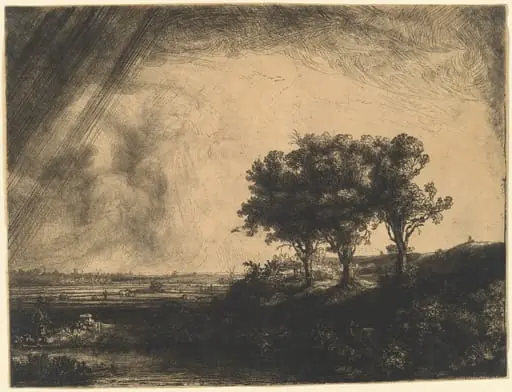
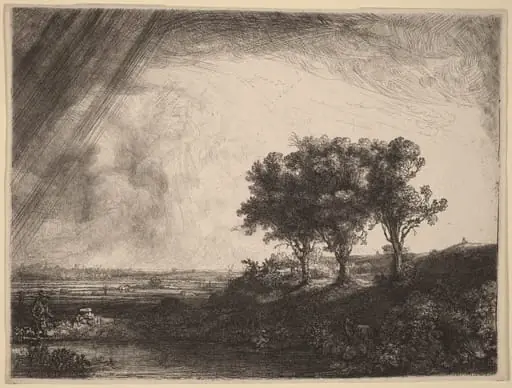
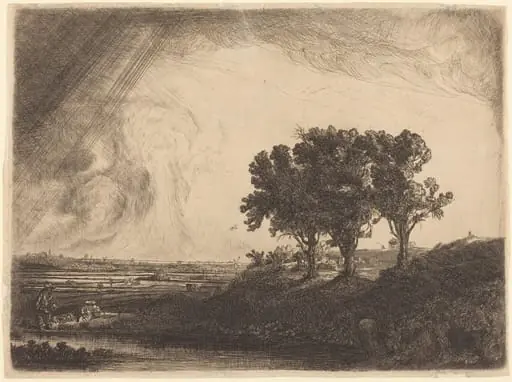
The Three Trees is a print by the Baroque artist Rembrandt. It dates from 1643 and is held in the collection of the Cleveland Museum of Art.
About this work
Overview
The work is part of the collection at The Cleveland Museum of Art, where it is recognized for its expressive use of light and texture.
Created in 1643, The Three Trees is a drypoint and etching by Rembrandt van Rijn. It depicts a rural landscape under a turbulent sky, with three prominent trees rising above a low, wet field. A small group of figures and animals gather near a cart, their presence subtle against the vastness of the scene. The work is part of the collection at The Cleveland Museum of Art, where it is recognized for its expressive use of light and texture.
Subject & Meaning
The scene presents a quiet moment of respite amid inclement weather. The three trees, standing tall and unyielding, serve as both structural anchors and symbolic beacons in the composition. The huddled figures and animals suggest vulnerability to nature’s forces, while the trees, illuminated against the storm, imply endurance. The work evokes contemplation rather than narrative, inviting attention to the relationship between humanity and the natural world.
Technique & Style
Rembrandt employed drypoint and etching to achieve a range of tonal depths. Deep shadows dominate the sky and ground, while the trees and cloud edges are rendered with rough, expressive lines that suggest movement and texture. The wet earth is suggested through irregular, broken strokes, and the contrast between the dark atmosphere and the illuminated trunks creates a strong sense of spatial depth and emotional weight.
History & Provenance
The print was made during Rembrandt’s mature period, when he increasingly explored atmospheric effects in his graphic work. It entered The Cleveland Museum of Art’s collection in the 20th century through established acquisition channels. While its early ownership history is not fully documented, it has been consistently recognized in scholarly studies of Rembrandt’s printmaking for its technical innovation and emotional resonance.
Context
In the 1640s, Rembrandt was refining his approach to landscape printmaking, moving away from detailed topography toward evocative, mood-driven compositions. The Three Trees reflects a broader interest among Dutch artists in capturing transient weather and rural life. Unlike idealized landscapes of the time, this work embraces rawness and imperfection, aligning with a more introspective artistic current in the Dutch Republic.
Legacy
The Three Trees is regarded as one of Rembrandt’s most accomplished landscape prints, admired for its emotional intensity and technical mastery. It influenced later artists interested in expressive use of light and texture, particularly in printmaking. Its enduring presence in museum collections underscores its role as a pivotal example of how print media could convey profound atmospheric and psychological depth.
Artist & collection
Artist
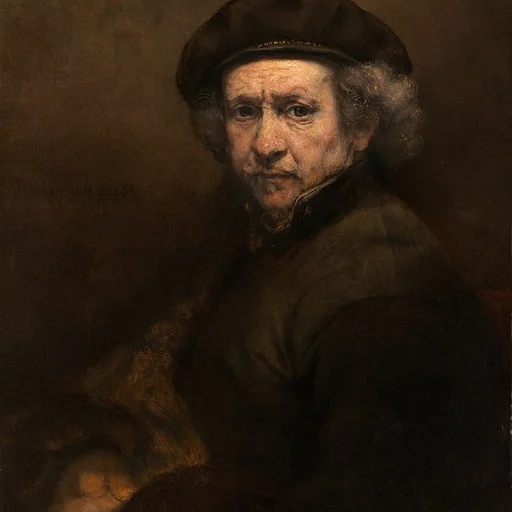
Rembrandt Harmenszoon van Rijn (15 July 1606 – 4 October 1669), known mononymously as Rembrandt, was a Dutch Golden Age painter, printmaker, and draughtsman.