Artwork
Bărbat cu fluier
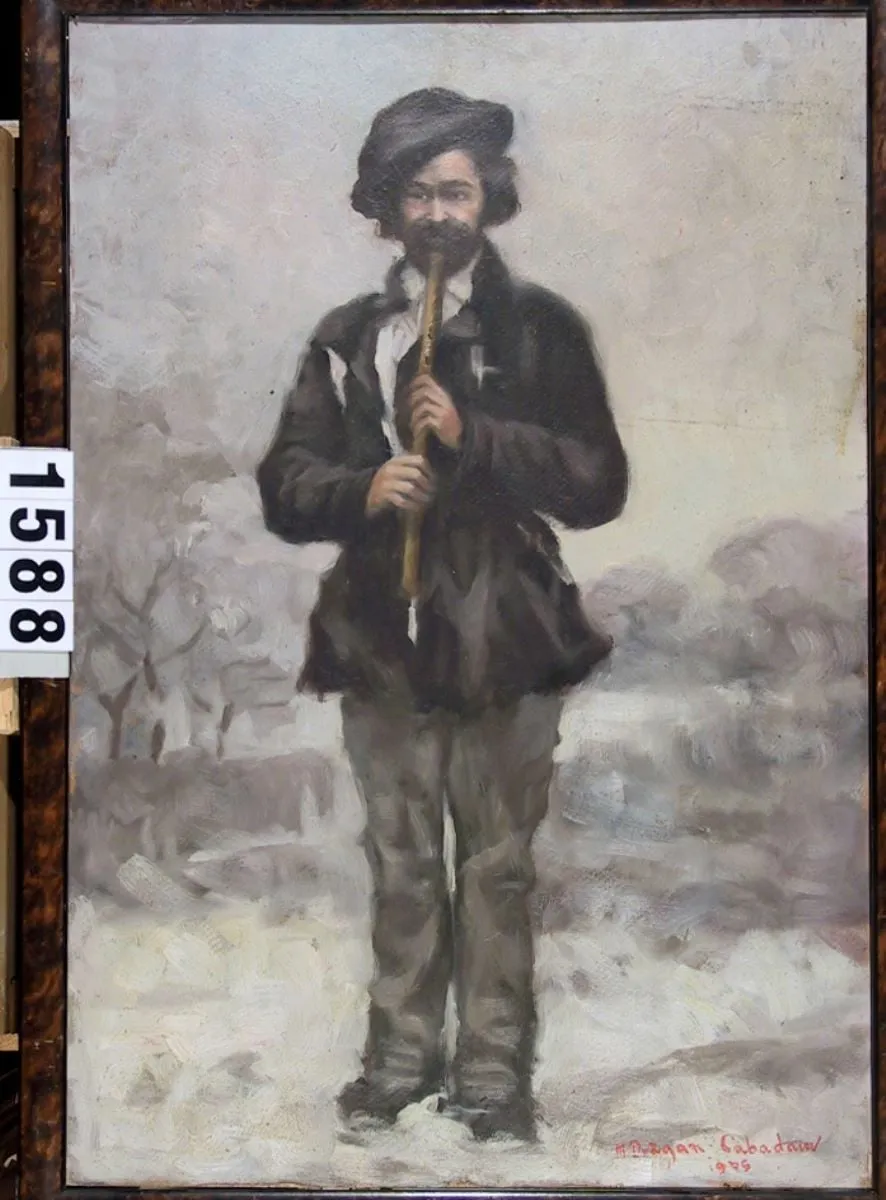
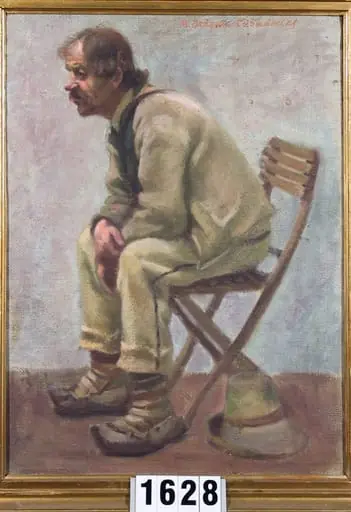
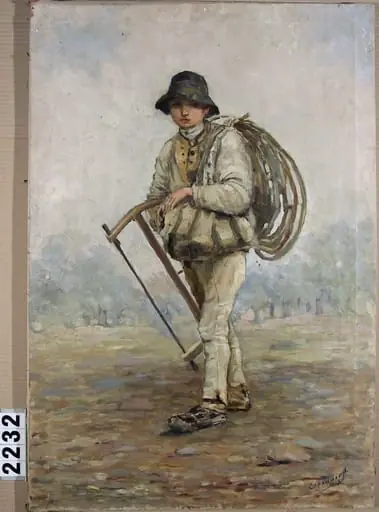
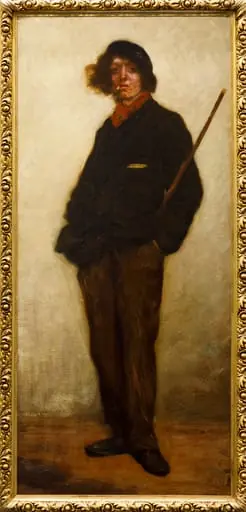
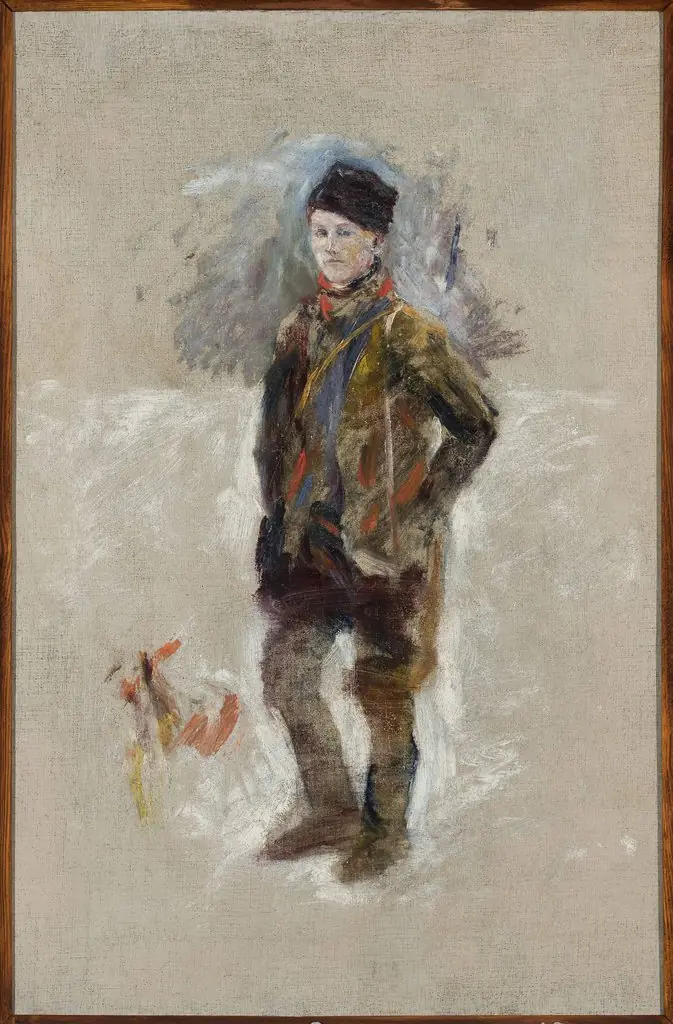
Bărbat cu fluier is an unspecified painting by Maria Cabadaeff-Drăgan. It is held in the collection of the Brukenthal National Museum. This painting depicts a solitary man outdoors in winter, dressed in layered cold-weather attire and holding a wooden pipe.
About this work
Overview
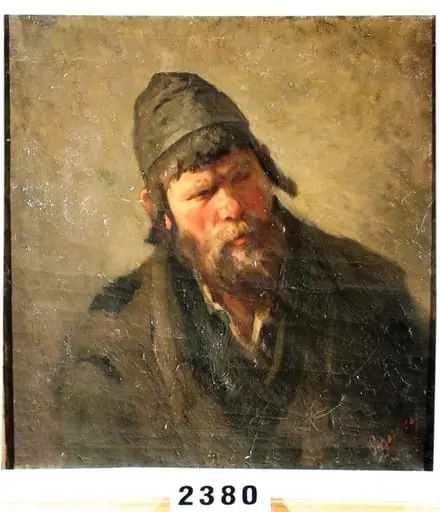
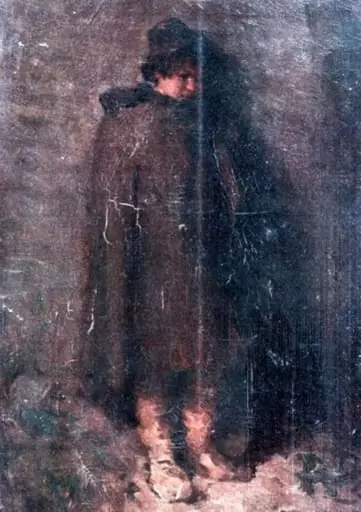
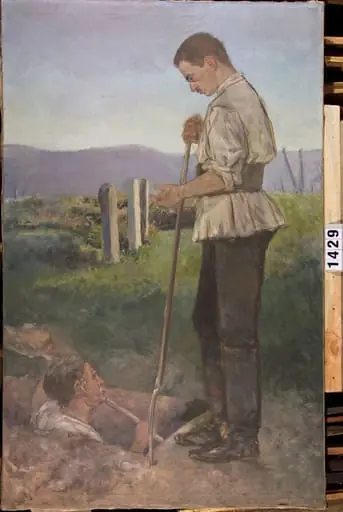
This painting depicts a solitary man outdoors in winter, dressed in layered cold-weather attire and holding a wooden pipe. The brushwork is swift and unrefined, with visible strokes that suggest immediacy rather than careful finish. The artist’s signature appears in one corner, and the overall effect is one of quiet realism, avoiding idealization in favor of a candid, unembellished moment.
Subject & Meaning
The figure is an ordinary man, not a hero or symbol, but a person caught in the routine of daily life. His posture and attire convey endurance rather than emotion, and the muted setting reinforces a sense of solitude. The pipe, a common object, adds a subtle note of personal ritual, grounding the scene in the quiet dignity of everyday existence.
Technique & Style
Paint is applied with loose, rapid strokes, creating texture without fine detail. The background is softly blurred, drawing focus to the figure while suggesting depth through minimal means. The use of impasto-like thickness in places adds tactile presence, and the lack of polish enhances the sense of spontaneity, aligning the work with observational rather than academic traditions.
History & Provenance
The painting’s origin and early ownership are undocumented. The signature suggests it was intended as a finished work, not a study, though its informal style may have led to limited recognition during the artist’s lifetime. No exhibition history or collector records are known, leaving its early reception unclear.
Context
Created during a period when many artists were turning from idealized scenes to everyday subjects, this work reflects a broader shift toward realism in rural and working-class life. Its unpolished technique echoes contemporaneous movements that valued authenticity over refinement, though it remains distinct in its restrained tone and limited palette.
Legacy
Though not widely exhibited or reproduced, the painting exemplifies a quiet strand of 19th-century realism that prioritized presence over narrative. Its emphasis on ordinary life and expressive brushwork anticipates later developments in modern painting, particularly in how emotion is conveyed through gesture and texture rather than detail.
Artist & collection
Artist
Maria Cabadaeff-Drăgan made candid portraits of rural life in late 19th- and early 20th-century Transylvania.