Artwork
Mountain PInes
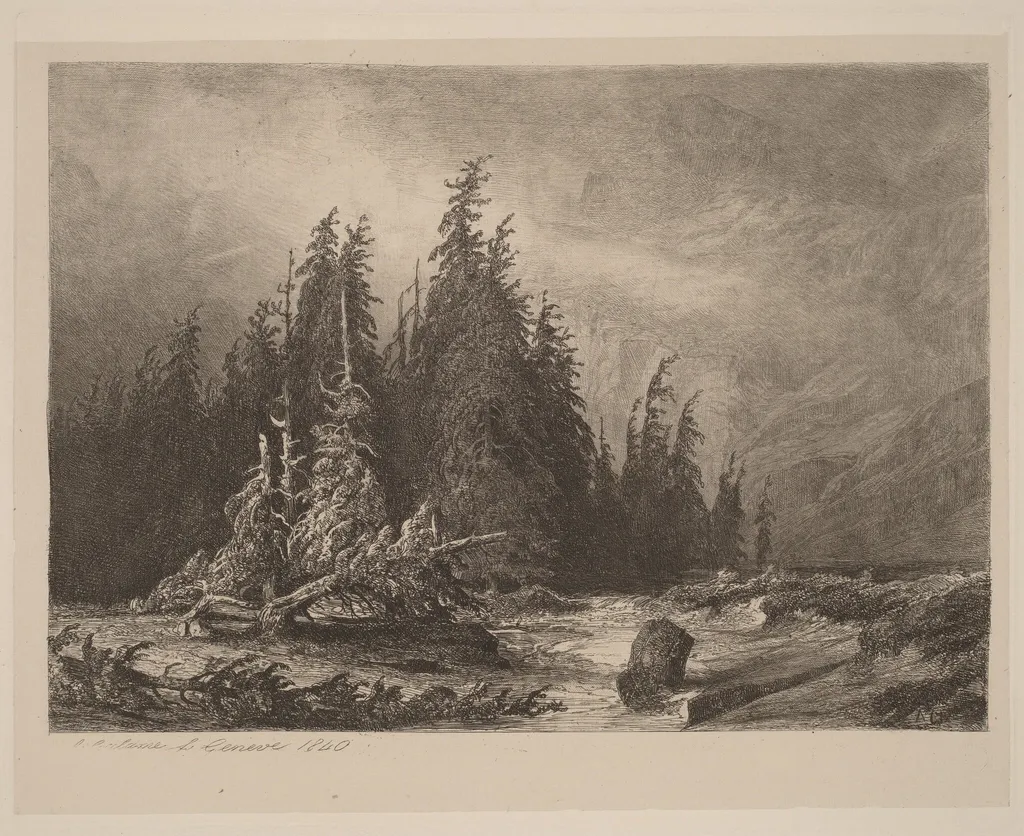
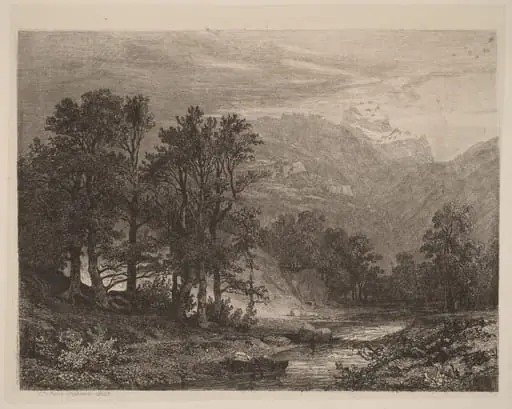
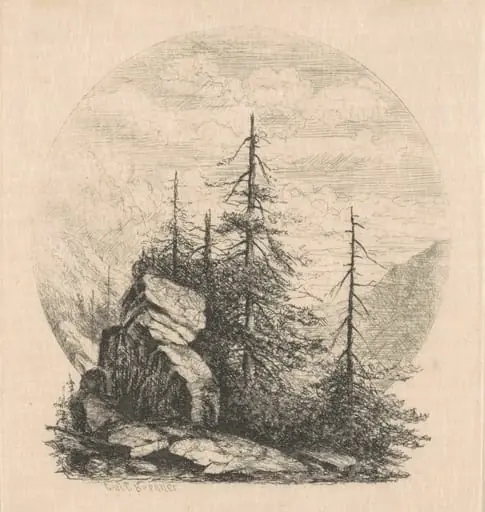
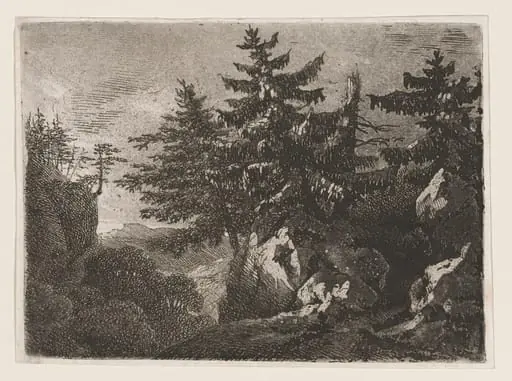
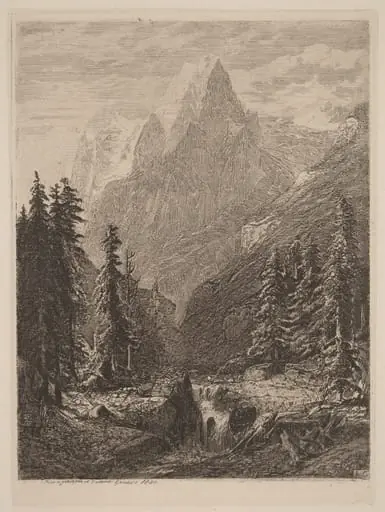
Mountain PInes is an ink print by the Romanticist artist Alexandre Calame. It dates from 1840 and is held in the collection of the National Gallery of Art.
About this work
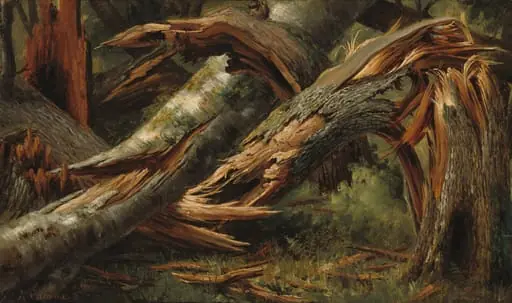
This picture shows tall, dark pine trees by a rocky river. The water looks rough, with small waves hitting the rocks. The trees are thick and twisty, with some fallen branches on the ground.
The artist used a scratchy, textured style to show light hitting the trees. This was made in 1840.
Next, check out etching to see how artists create these kinds of lines.
Overview
“Mountain Pines” is an 1840 print by Swiss landscape artist Alexandre Calame. Executed as an etching on chine collé, the work measures the artist’s interest in Alpine scenery, presenting a compact composition that captures a rugged riverbank framed by towering pines.
Subject & Meaning
The image depicts a narrow, rocky river coursing through a forest of dark, twisted pine trunks. The trees dominate the foreground, their gnarled branches and fallen limbs suggesting the harshness of a high‑altitude environment, while the churning water conveys a sense of natural vigor.
Technique & Style
Calame employed a scratchy, textured line in the etching, allowing the ink to convey the interplay of light on bark and water. The chine collé support—thin paper adhered to a sturdier backing—enhances the fine detail, giving the print a delicate yet resilient surface.
History & Provenance
Created in 1840, the print reflects Calame’s early period of landscape production, preceding his later, more polished watercolors. While specific ownership records are limited, the work has appeared in several 19th‑century print collections, illustrating the artist’s reputation for disseminating Alpine vistas through reproducible media.
Own this work as a print
Artist & collection