Artwork
Mountain Meadow
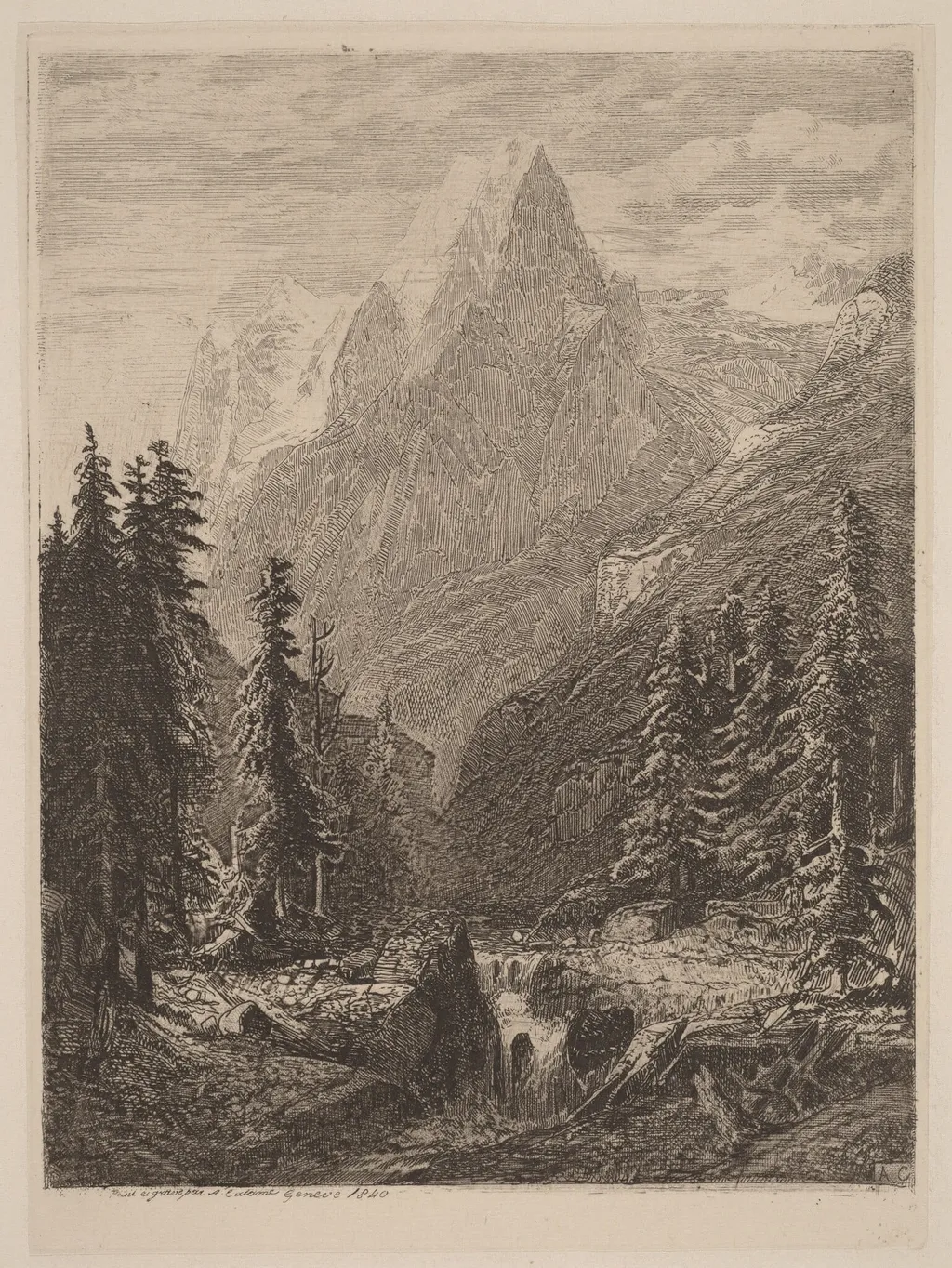
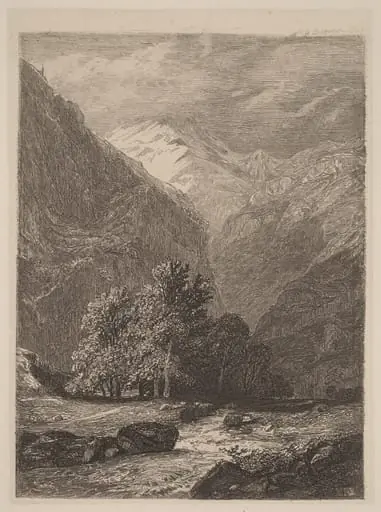
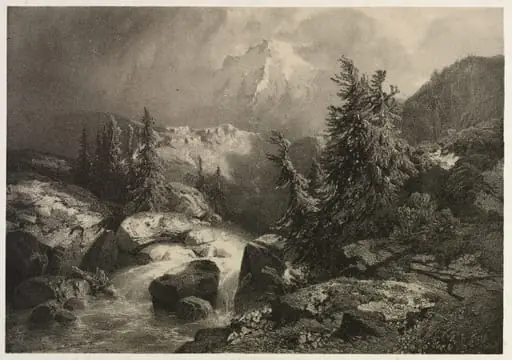
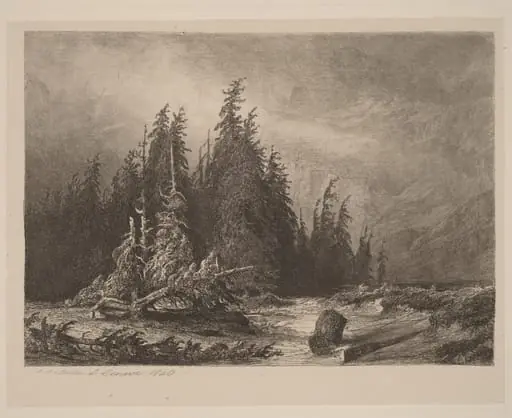
Mountain Meadow is an ink print by the Romanticist artist Alexandre Calame. It dates from 1840 and is held in the collection of the National Gallery of Art.
About this work
Overview
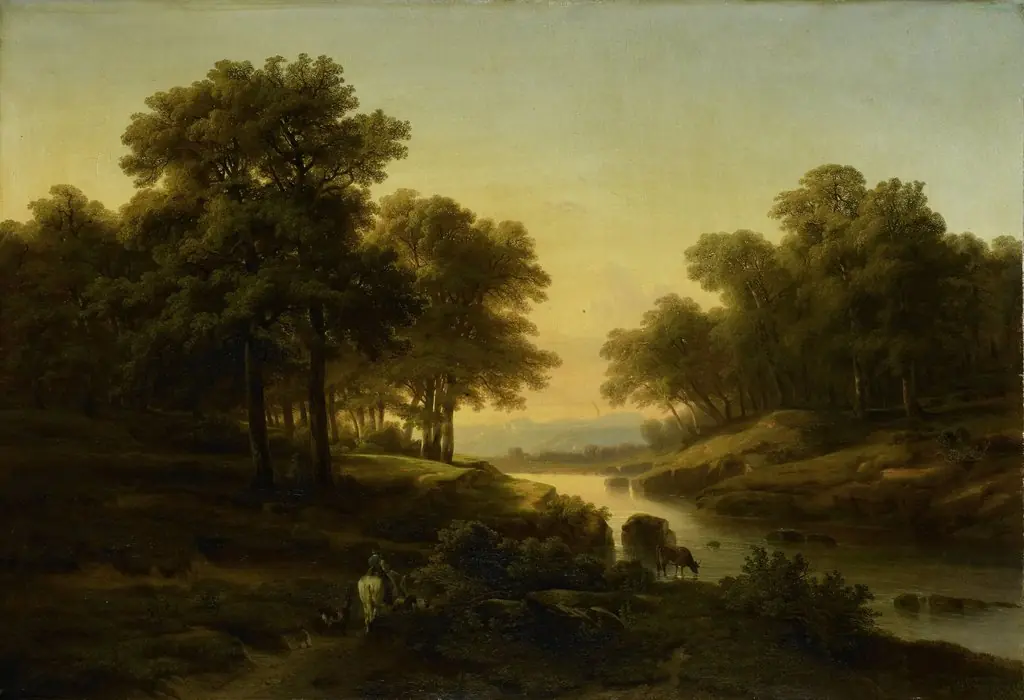
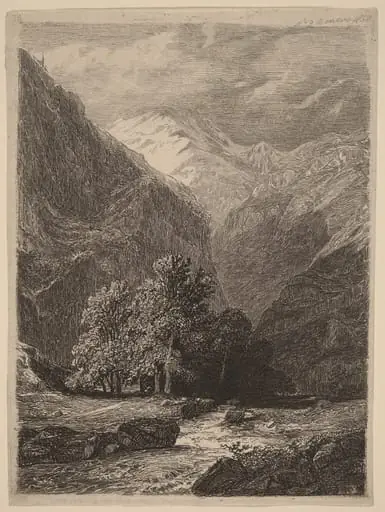
Alexandre Calame’s print Mountain Meadow, executed in 1840, is an etching on chine collé. The work presents a compact forest on the left, a rocky stream at the foreground, and a distant, sharply outlined mountain dominating the centre of the composition.
Subject & Meaning
The scene juxtaposes a dense, shadowed woodland with an open, illuminated mountain peak, suggesting a transition from the enclosed, perhaps mysterious, interior of the forest to the expansive, awe‑inspiring realm of the high Alps. The contrast underscores a Romantic preoccupation with nature’s varied moods.
Technique & Style
Calame employed the etching process on a thin paper support adhered to a backing sheet (chine collé), allowing fine, precise lines to render the bark and rock. Varied hatching creates depth in the forest, while broader washes highlight the mountain’s bright summit, a typical Romantic play of light and shadow.
Context
Created during the height of the Romantic movement, the print reflects contemporary interest in dramatic landscapes and the sublime. Calame, known for Alpine subjects, used this medium to explore atmospheric effects that oil painting could not achieve as readily, contributing to the era’s visual vocabulary of wilderness.
Own this work as a print
Artist & collection