Artwork
Callander Bridge, Perthshire
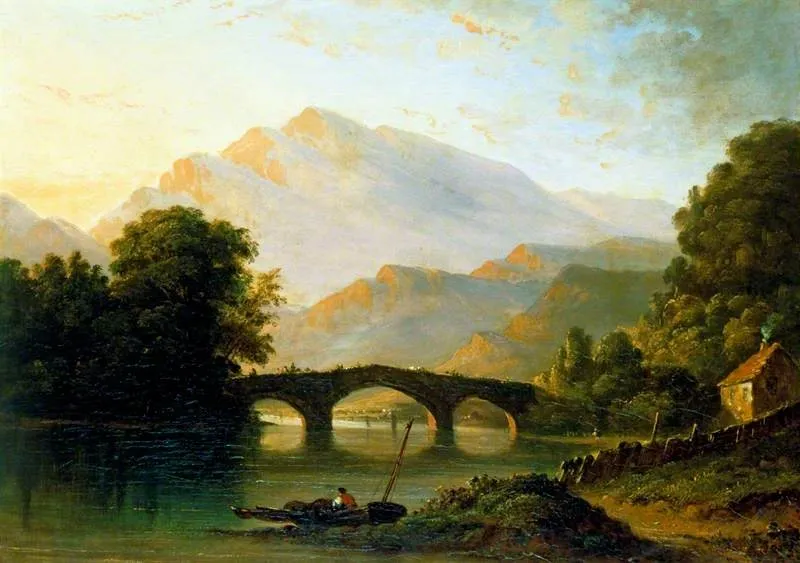
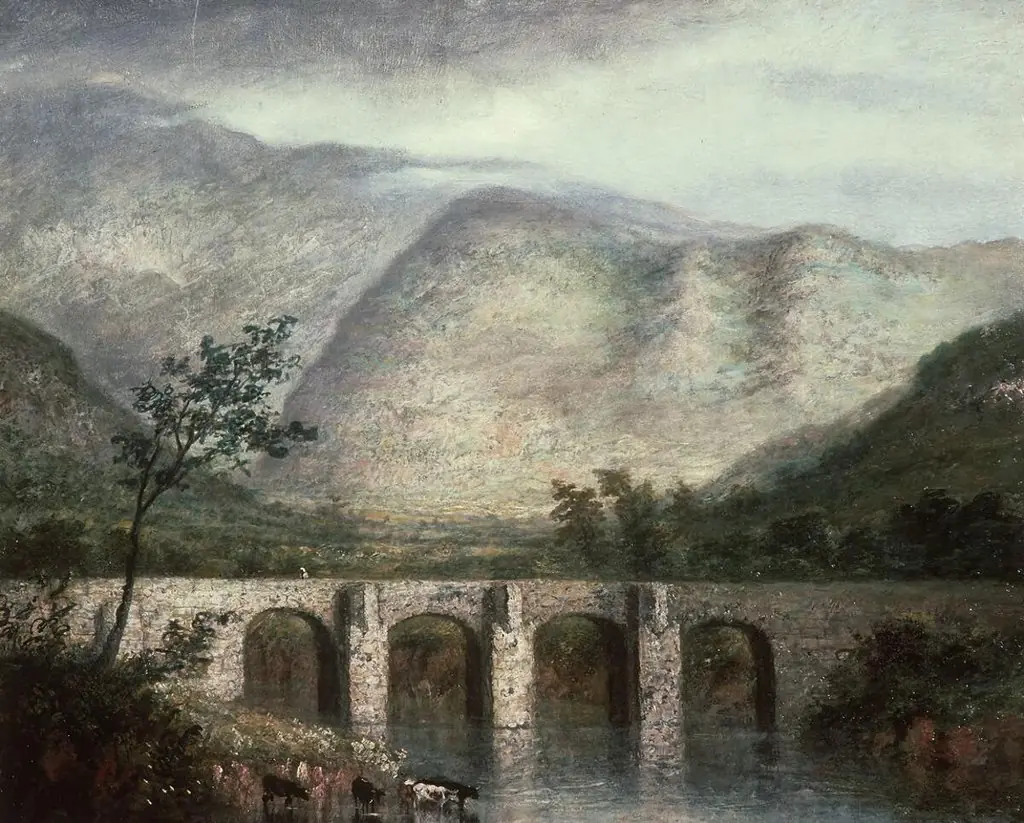
Callander Bridge, Perthshire is an unspecified painting by Caleb Robert Stanley. It dates from 1841 and is held in the collection of the Victoria and Albert Museum.
About this work
Overview
The work is part of the Victoria and Albert Museum’s collection and exemplifies mid-19th-century British topographical painting.
Painted around 1841 by Caleb Robert Stanley, this landscape depicts Callander Bridge in Perthshire, Scotland. The work is part of the Victoria and Albert Museum’s collection and exemplifies mid-19th-century British topographical painting. It captures a quiet rural scene with attention to natural detail and atmospheric conditions, reflecting a period when landscape art increasingly valued observed reality over idealized composition.
Subject & Meaning
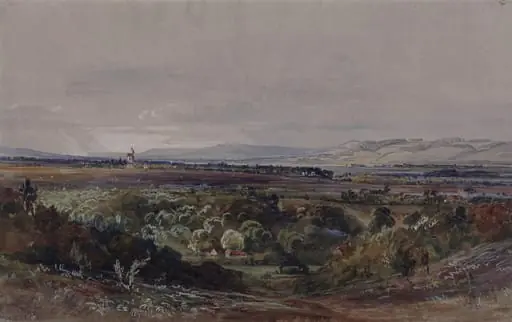
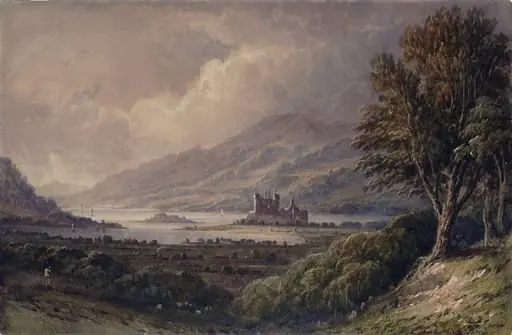
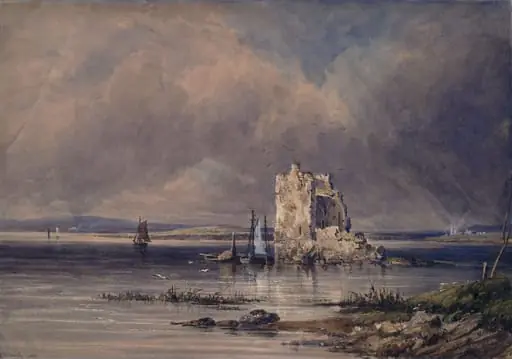
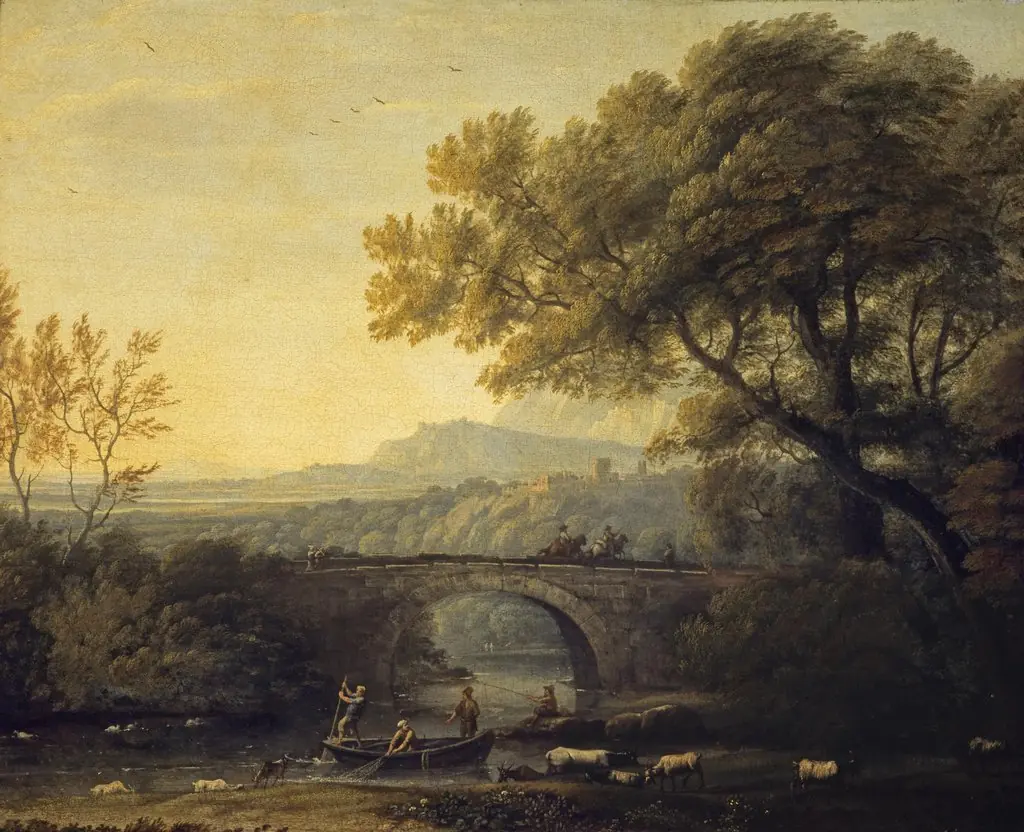
The painting centers on a stone arched bridge crossing a river, flanked by dense vegetation and distant mountains. Sparse buildings on the right suggest modest human habitation, integrated rather than dominant. The hazy sky and diffused sunlight convey tranquility, emphasizing harmony between land and weather. No narrative or human activity is present, reinforcing a contemplative tone rooted in the quiet dignity of the Scottish countryside.
Technique & Style
Stanley employed soft, blended brushwork to render the misty atmosphere and subtle shifts in light. Greens of foliage vary in tone to suggest depth, while the sky’s pale blues and grays are layered to imply cloud movement. The bridge’s stonework is rendered with muted earth tones, grounding the composition. Light is diffused rather than sharply defined, avoiding dramatic contrast in favor of quiet luminosity.
History & Provenance
The painting entered the Victoria and Albert Museum’s collection in the 19th century, likely through acquisition or donation. Its survival in institutional hands suggests it was valued for its documentary quality as much as its aesthetic. No record of public exhibition or private ownership prior to the museum is documented, indicating it may have remained within the artist’s circle or local collectors before institutional acquisition.
Context
Created during a period of growing interest in Scottish scenery, the work aligns with Romantic-era trends that elevated natural landscapes as subjects worthy of serious artistic attention. While not part of the Highland tourism boom centered on Loch Lomond or Skye, Callander Bridge was a known crossing point on the route to the Highlands, making it a familiar, if unglamorous, landmark for travelers and artists alike.
Legacy
Stanley’s work remains a modest but representative example of provincial British landscape painting. It contributes to the historical record of how regional sites were visually documented before widespread photography. Though not widely studied today, it offers insight into the quiet, observational approach taken by artists outside the major urban centers of the time.
Artist & collection