Artwork
Landscape wih River and Mountains
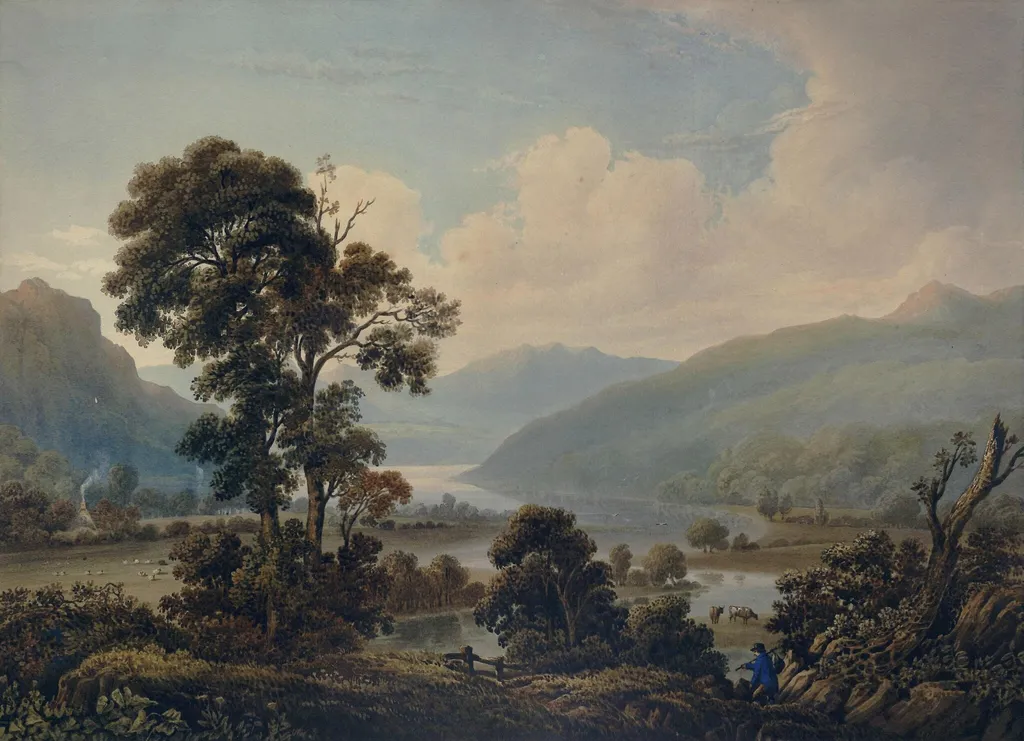
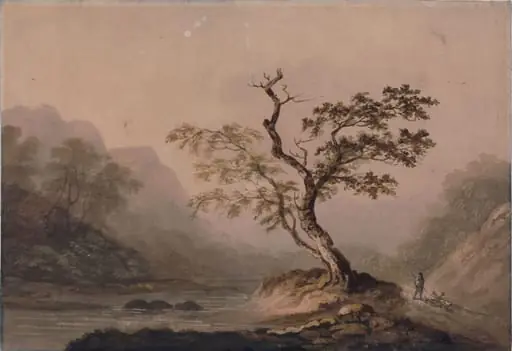
Landscape wih River and Mountains is a watercolor work on paper by the Barbizon school artist Edward James Pasquier. It dates from 1832 and is held in the collection of the Victoria and Albert Museum.
About this work
Overview
The delicate use of watercolour creates a subdued, atmospheric effect, characteristic of early 19th-century British landscape traditions.
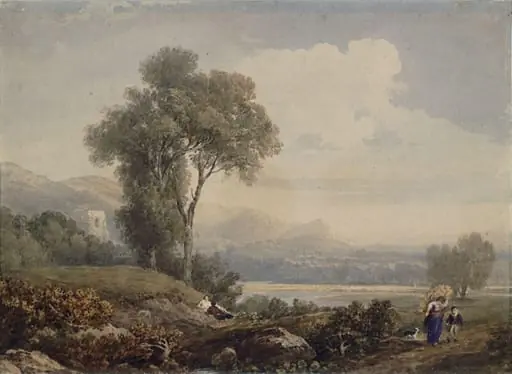
This watercolour landscape, signed and dated 1832 by Edward James Pasquier, portrays a tranquil valley with a meandering river, distant mountains, and soft, diffused light. The composition emphasizes quiet natural harmony, with grazing livestock, scattered trees, and a solitary figure walking beside a fence. The delicate use of watercolour creates a subdued, atmospheric effect, characteristic of early 19th-century British landscape traditions.
Subject & Meaning
The scene presents an idealized rural idyll, where human presence is minimal and integrated into the environment. A lone figure in blue and grazing sheep suggest peaceful coexistence with nature, while the river and clouds imply quiet movement and transience. The painting avoids dramatic narrative, instead inviting contemplation of serenity and the subtle rhythms of the countryside.
Technique & Style
Pasquier employed transparent watercolour washes to build layered tones, allowing the paper’s white to suggest highlights and atmospheric depth. Soft edges and muted hues—pale greens, blues, and greys—enhance the dreamlike quality. The sky, lightly clouded, modulates light across the hills, while fine brushwork defines distant trees and grazing animals without detail, preserving a sense of calm generality.
History & Provenance
The work is dated 1832, placing it within Pasquier’s active period as a watercolourist in Britain. Though little is documented about his career, his signed and dated works align with the practices of amateur and professional artists who documented the British countryside during the early Romantic era. Its survival suggests private ownership and continued appreciation within domestic collections.
Context
Created during the height of Romanticism’s influence on British art, the painting reflects a cultural shift toward valuing nature as emotionally resonant and spiritually restorative. Artists like Pasquier responded to industrialization by idealizing rural life, using watercolour’s portability and delicacy to capture fleeting moments of light and weather in unspoiled landscapes.
Legacy
Pasquier’s work contributes to a broader tradition of British watercolour landscape painting that emphasized mood over monumentality. While not widely known today, his piece exemplifies the quiet, observational approach that sustained the medium’s popularity among collectors and artists seeking to preserve the aesthetic and emotional character of the natural world.
Own this work as a print
Artist & collection
Artist
This artist painted quiet, detailed landscapes in watercolour during the early 1800s.

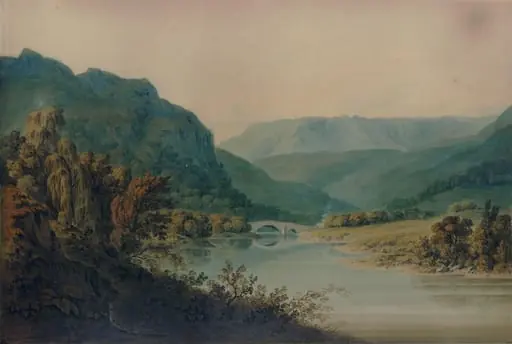 View of Braemar
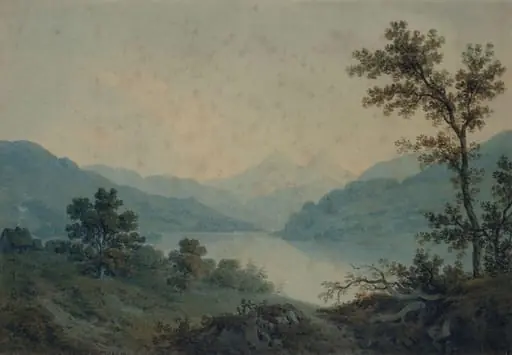 Lake or river scene in the Scottish Highlands
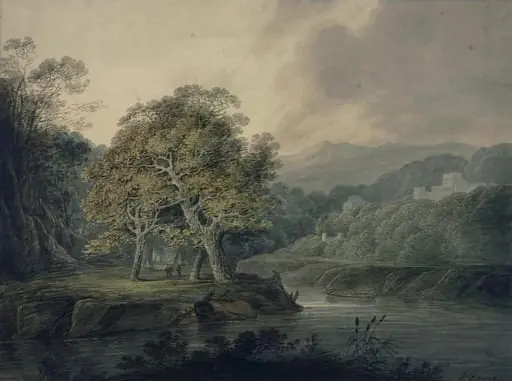 Landscape with river and mountains
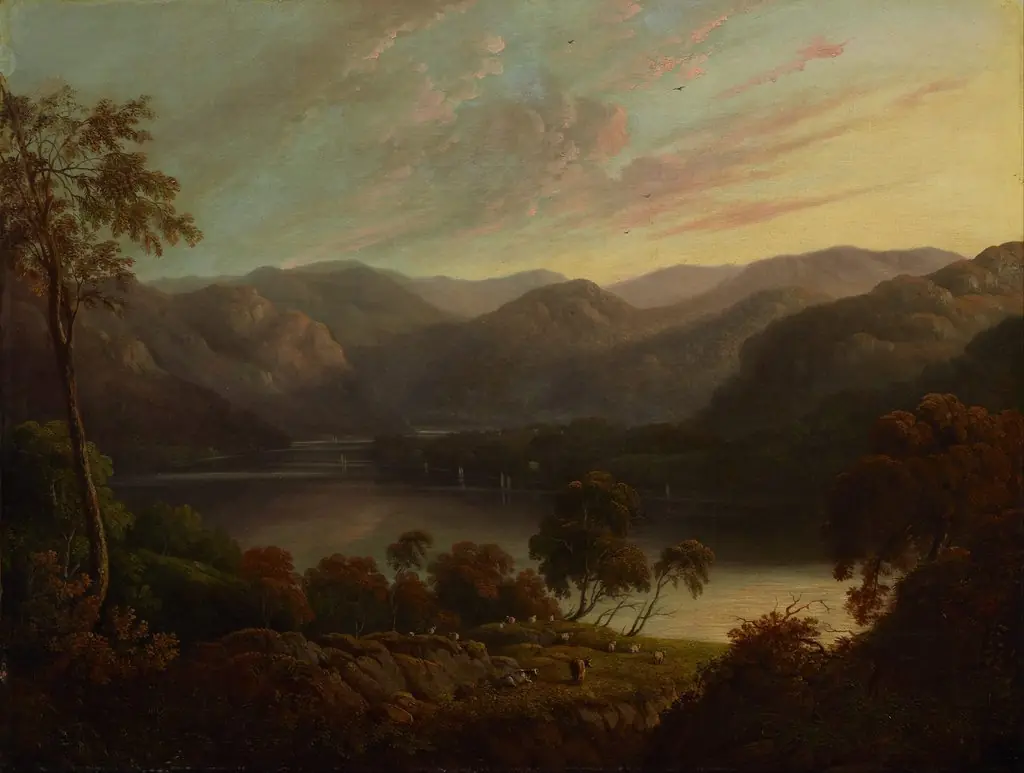 Landscape view in Cumberland
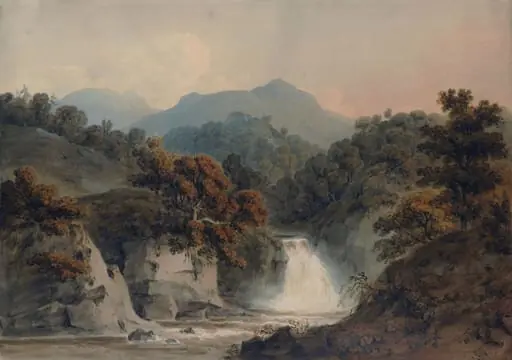 View on the Bran
![Landscape View [?in North Wales], by John Glover](https://artifactworldgallery.com/img/john-glover--landscape-view-in-north-wales--a6780e3d0b73ec67-w320.webp) Landscape View [?in North Wales]
Landscape View [?in North Wales]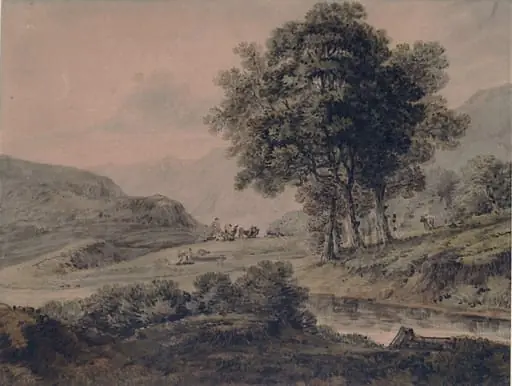 Landscape with stream, cattle and figures
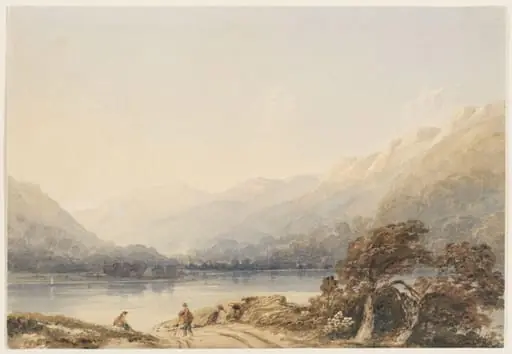 Lake scene with mountains
 Landscape
 Landscape with River Valley
 Windermere
 Landscape with river and mountains