Artwork
Beggar with Dog
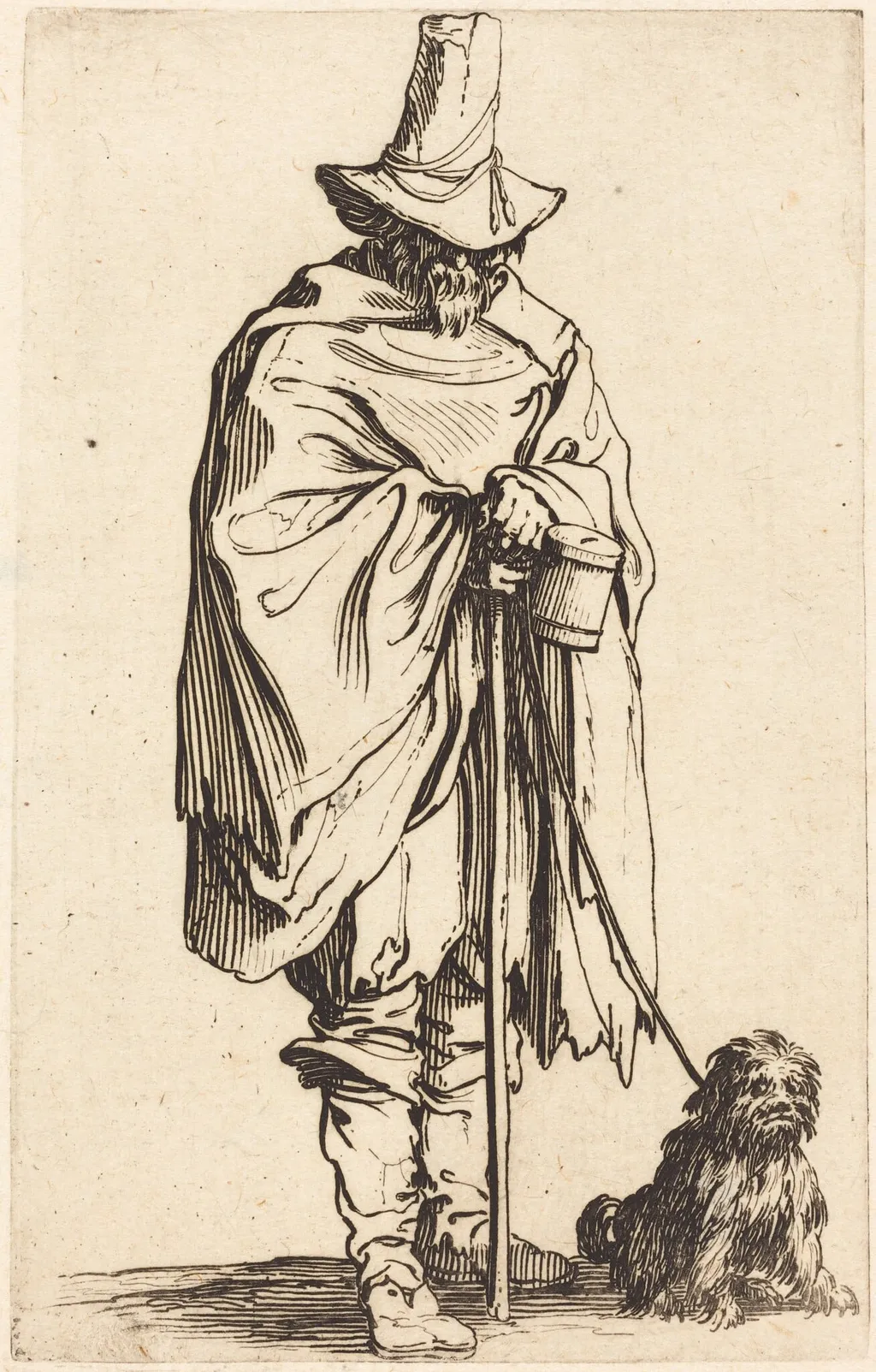
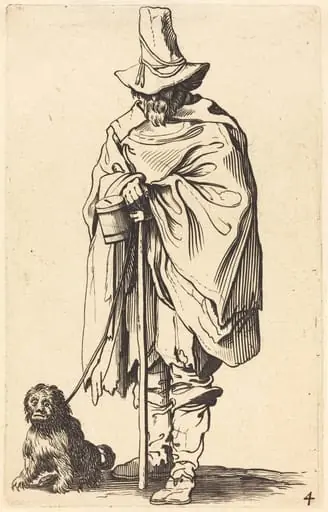
Beggar with Dog is an ink print by the Baroque artist Jacques Callot. It dates from 1622 and is held in the collection of the National Gallery of Art.
About this work
Overview
Callot, a printmaker from the Duchy of Lorraine, produced over a thousand etchings documenting everyday life, often focusing on those on the margins of society.
Created around 1622 by Jacques Callot, *Beggar with Dog* is an etching on laid paper that captures a solitary figure of poverty in early 17th-century Europe. Callot, a printmaker from the Duchy of Lorraine, produced over a thousand etchings documenting everyday life, often focusing on those on the margins of society. This work exemplifies his commitment to observing and recording the human condition with precision and empathy.
Subject & Meaning
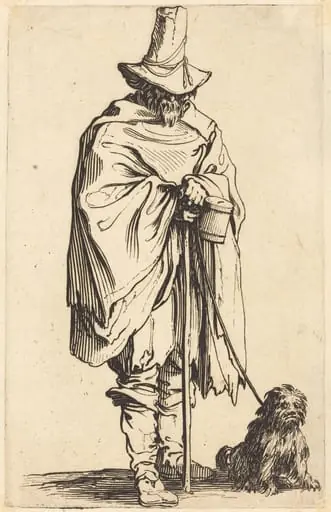
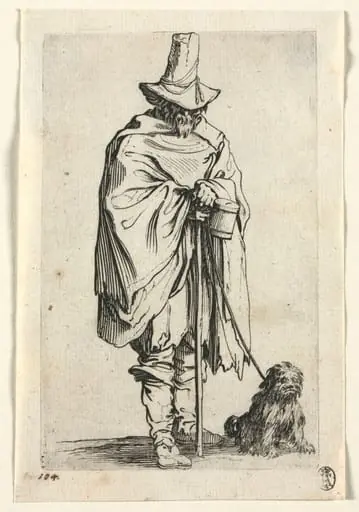
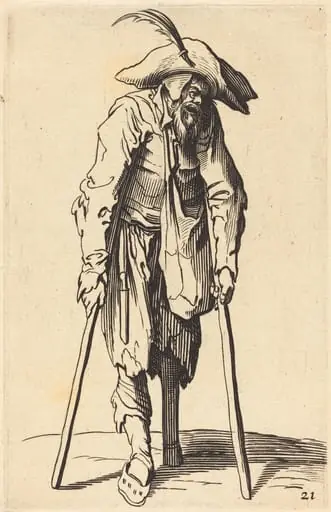
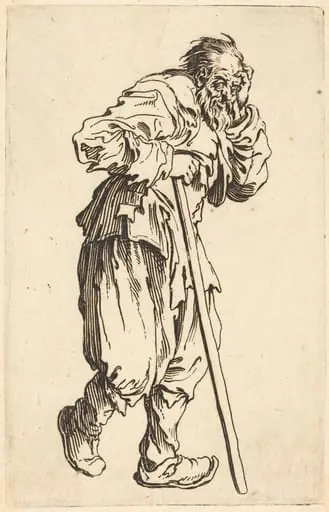
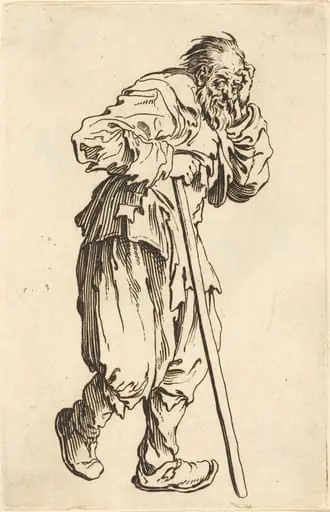
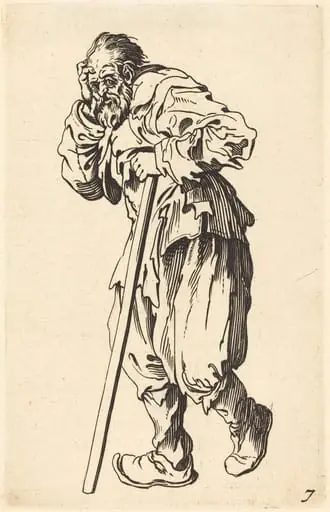
The print portrays a hunched beggar, clad in worn garments and leaning on a staff, accompanied by a small, attentive dog. The dog’s gaze upward suggests a bond of dependence, reinforcing themes of vulnerability and companionship in hardship. Callot avoids sentimentality, presenting the figure with quiet dignity rather than moral judgment, reflecting a broader interest in social realism over idealized narratives.
Technique & Style
Callot employed fine, controlled etching lines to render texture—folds in the beggar’s coat, the dog’s coarse fur, and the rough ground beneath them. His use of laid paper enhanced the tactile quality of the image, while the sharp, incised details create a sense of depth and movement. The background, though sparse, is carefully modeled to suggest space without distraction, focusing attention on the figures.
History & Provenance
The print emerged during Callot’s most prolific period, when he was active in Florence and Paris, producing works for collectors and patrons across Europe. While the exact early ownership of this specific impression is undocumented, it aligns with a broader circulation of his prints among educated audiences interested in social observation and technical innovation in printmaking.
Context
In the early 1600s, European cities saw growing visibility of poverty, displacement, and vagrancy due to war, economic instability, and urbanization. Callot’s prints, including this one, formed part of a visual record that documented these realities without overt political commentary. His work stood apart from religious or mythological subjects dominant in art, offering instead a grounded view of contemporary life.
Legacy
Callot’s detailed etchings influenced generations of printmakers, particularly in their treatment of ordinary subjects with technical rigor. *Beggar with Dog* remains a quiet but enduring example of how printmaking could serve as a medium for social documentation. His approach laid groundwork for later artists who sought to depict the lives of the marginalized with nuance and attention to detail.
Artist & collection
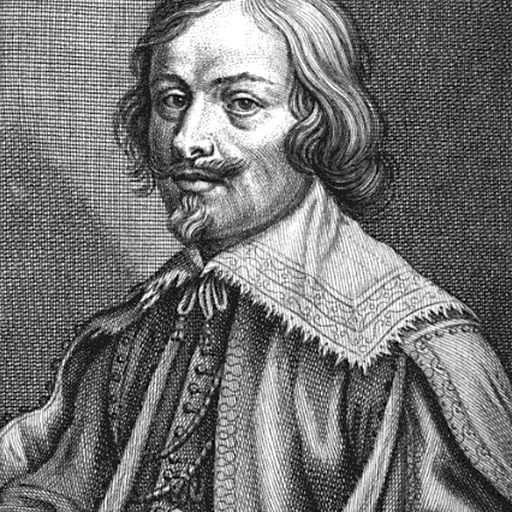
Artist
Jacques Callot was a baroque printmaker and draftsman from the Duchy of Lorraine.

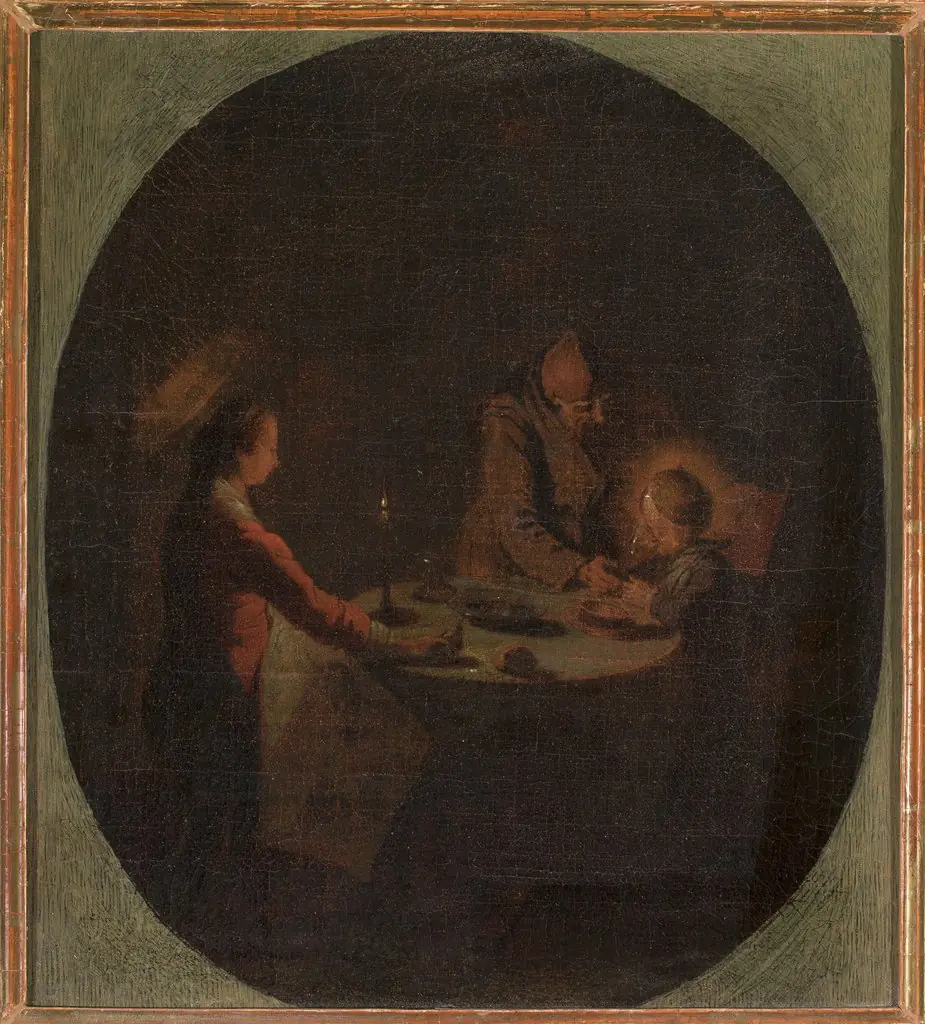 Holy Family at supper
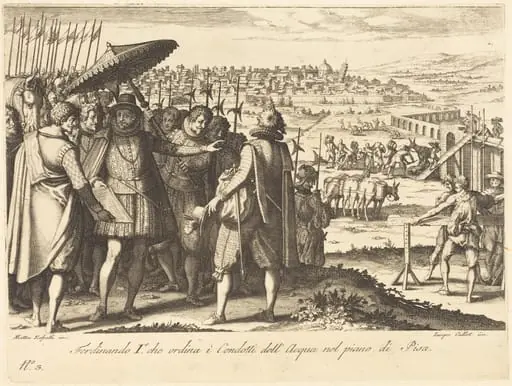 Restoration of the Aqueduct at Pisa
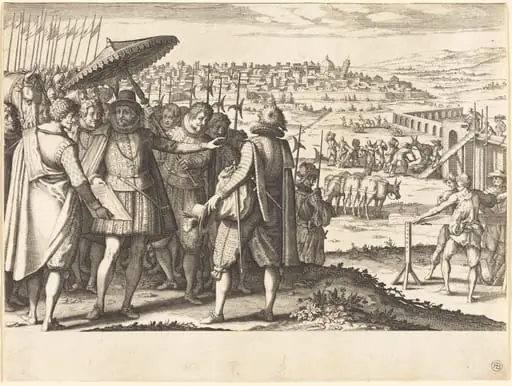 Restoration of the Aqueduct at Pisa
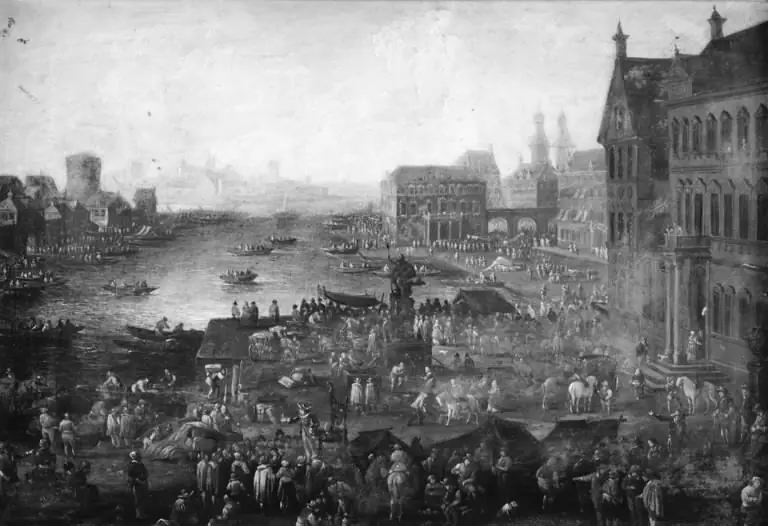 Square in Paris with Many Figures
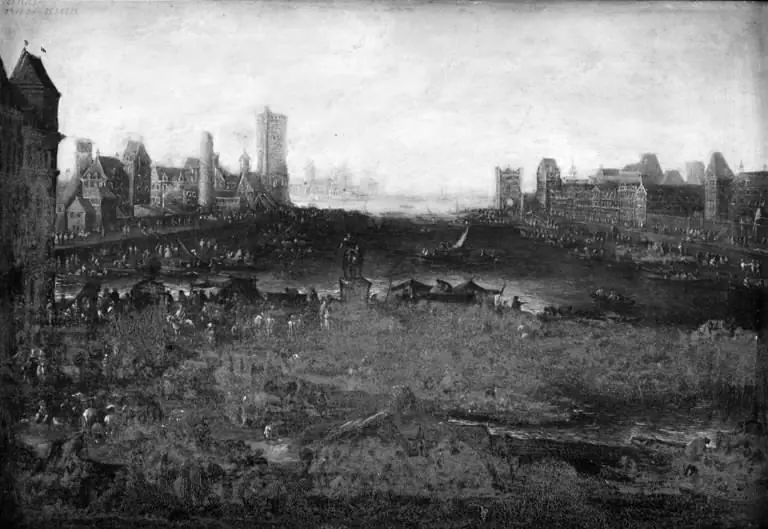 Square in Paris with Many Figures
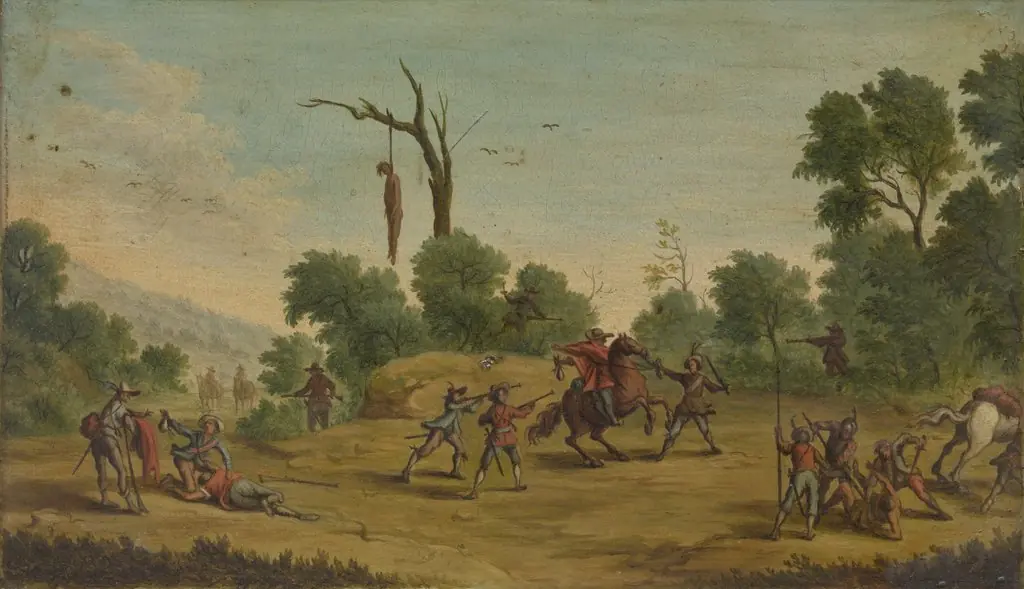 Horsemen Attacked by Robbers
 HOW WILL A COVERED PART BE CORRECTED?HOW WIKA A COVERED HEART DEED CORRECTED?
![Christ Walking on the Water [second plate], by Jacques Callot](https://artifactworldgallery.com/img/jacques-callot--christ-walking-on-the-water-second-plate--2069f3bfe4cb2126-w320.webp) Christ Walking on the Water [second plate]
Christ Walking on the Water [second plate]