Artwork
The Beggars: Blind Man with His Dog
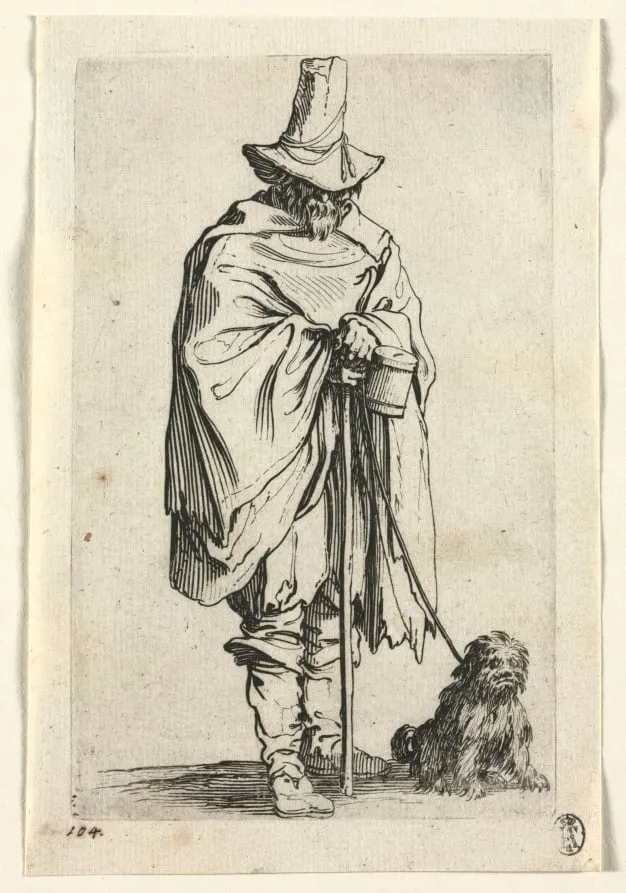
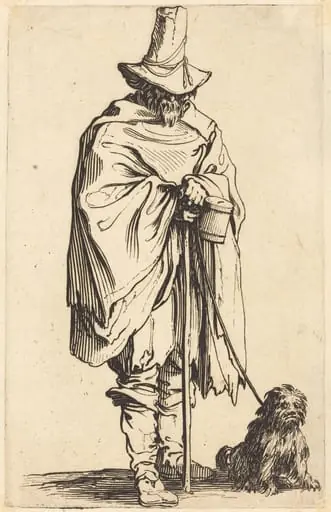
The Beggars: Blind Man with His Dog is a print by the Baroque artist Jacques Callot. It dates from 1623 and is held in the collection of the Cleveland Museum of Art.
About this work
Overview
Created around 1623 by Jacques Callot, this etching depicts a blind beggar accompanied by his dog. The work is part of a series portraying marginalized figures in early 17th-century society. It is currently held in the collection of The Cleveland Museum of Art, where it is valued for its intimate observation and technical precision in printmaking.
Subject & Meaning
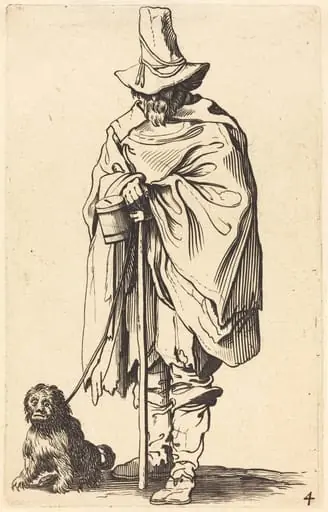
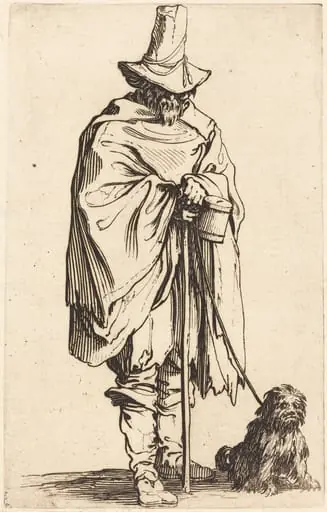
The figure, viewed from behind, leans on a cane while his dog remains close at his feet. Neither figure makes direct eye contact with the viewer, suggesting a private, unobserved moment. The composition avoids sentimentality, instead presenting the man’s vulnerability through posture and attire, reflecting broader social conditions of poverty and invisibility in Baroque Europe.
Technique & Style
Callot employed fine, agile etching lines to suggest texture and movement: rough fabric folds, coarse dog fur, and the cane’s worn surface are rendered with economical strokes. The sparse background and lack of shading heighten focus on the figures, creating a quiet, almost documentary tone. His use of line conveys both physical detail and emotional restraint.
History & Provenance
The print belongs to Callot’s series Les Miserables, which documented the lives of the poor in Lorraine and surrounding regions. It entered The Cleveland Museum of Art’s collection in the 20th century, following earlier ownership by European collectors. Its preservation reflects sustained interest in Northern European printmaking traditions from the early modern period.
Context
During the 1620s, etching emerged as a favored medium for depicting everyday life across Northern Europe. Callot’s work aligns with a growing interest in social realism, distinct from religious or mythological subjects. His depictions of beggars, soldiers, and laborers offered a counterpoint to aristocratic imagery, capturing the overlooked undercurrents of urban and rural existence.
Legacy
Callot’s series influenced later artists who turned to the lives of common people as worthy subjects. His precise technique and empathetic framing helped elevate printmaking beyond reproduction to a vehicle for social observation. The work remains a reference point in studies of early modern visual culture and the representation of disability and poverty.
Artist & collection
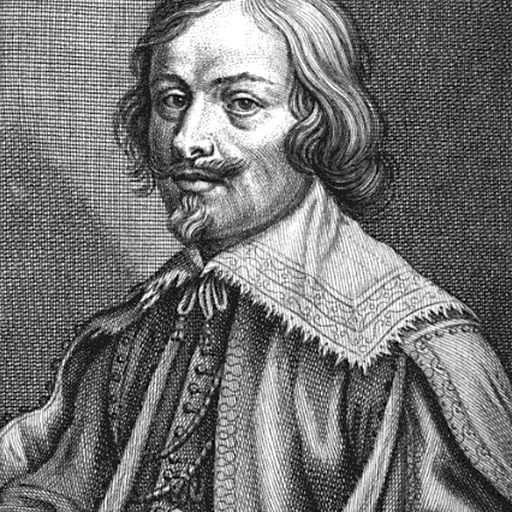
Artist
Jacques Callot was a baroque printmaker and draftsman from the Duchy of Lorraine.

 Holy Family at supper
 Restoration of the Aqueduct at Pisa
 Restoration of the Aqueduct at Pisa
 Square in Paris with Many Figures
 Square in Paris with Many Figures
 Horsemen Attacked by Robbers
 HOW WILL A COVERED PART BE CORRECTED?HOW WIKA A COVERED HEART DEED CORRECTED?
![Christ Walking on the Water [second plate], by Jacques Callot](https://artifactworldgallery.com/img/jacques-callot--christ-walking-on-the-water-second-plate--2069f3bfe4cb2126-w320.webp) Christ Walking on the Water [second plate]
Christ Walking on the Water [second plate]