Artwork
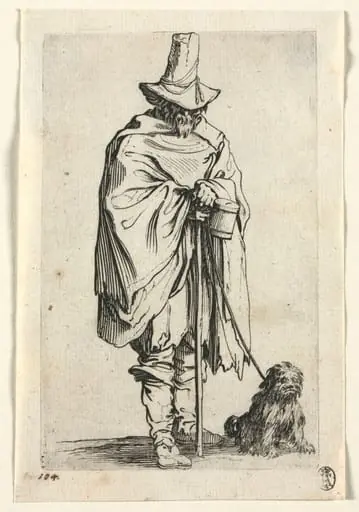
Beggar with Dog
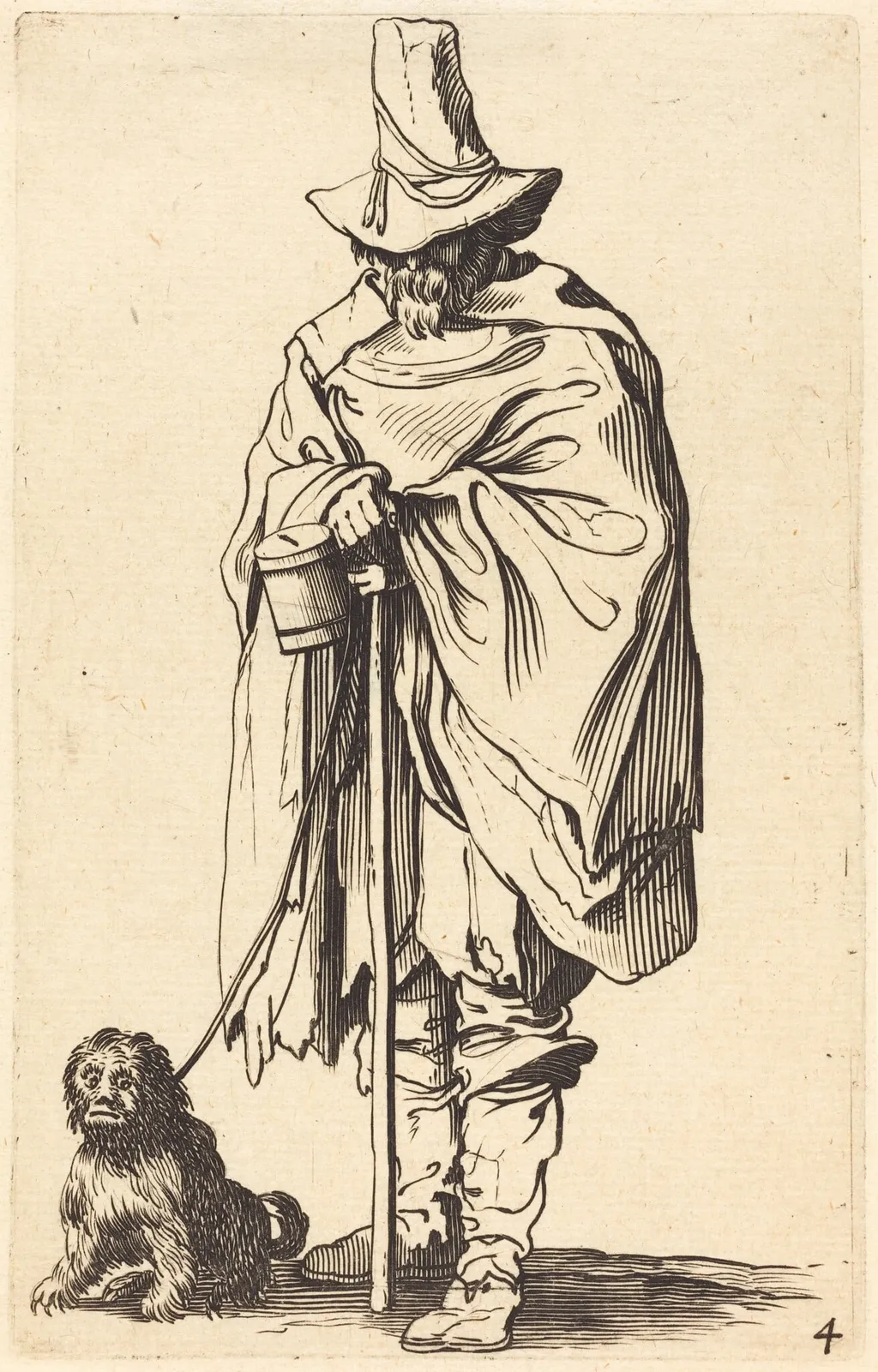
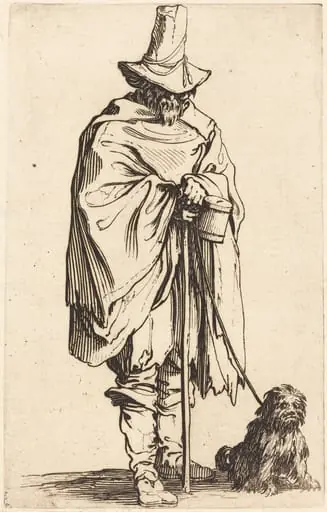
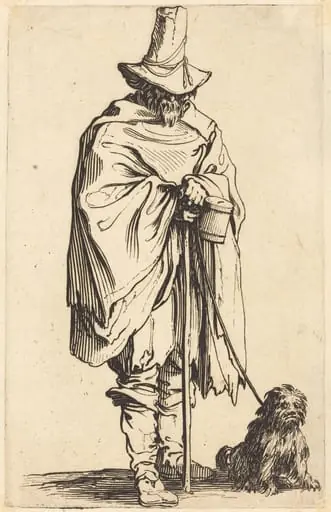
Beggar with Dog is an ink print by the Baroque artist French 17th Century. It dates from 1622 and is held in the collection of the National Gallery of Art. This etching on laid paper depicts a destitute figure, cloaked in worn garments, leaning heavily on a staff.
About this work
Overview
The composition emphasizes solitude and physical strain, rendered through fine, incised lines that define texture and form.
This etching on laid paper depicts a destitute figure, cloaked in worn garments, leaning heavily on a staff. A small dog rests at their feet, gazing upward. The composition emphasizes solitude and physical strain, rendered through fine, incised lines that define texture and form. The artist’s use of sharp, controlled strokes captures the roughness of fabric and fur, typical of etching techniques that rely on acid-bitten metal plates to transfer ink onto paper.
Subject & Meaning
The figure, shrouded in shadow beneath a broad hat, conveys marginalization and hardship. The tight grip on the staff suggests both support and resistance, while the dog’s presence implies companionship amid isolation. No narrative context is given, but the image evokes the quiet dignity of those living on society’s edges, a recurring theme in early modern print culture that observed everyday life with unembellished realism.
Technique & Style
Executed in etching, the work uses acid to bite fine lines into a metal plate, allowing for intricate detail and tonal variation. The artist employs dense, parallel hatching to render wrinkles in clothing and the dog’s fur, creating a tactile surface. The contrast between light and shadow enhances the three-dimensionality of the figure, while the restrained use of line avoids ornamentation, focusing attention on form and posture.
History & Provenance
The print’s origin is undocumented, but its style aligns with 17th- or early 18th-century Northern European printmaking traditions. Similar subjects appear in works by artists who documented urban poverty, often circulated as affordable images for private collectors. The paper type—laid paper with visible chain lines—supports a pre-19th-century date, consistent with hand-made printing practices of the period.
Context
During the early modern era, etchings of beggars and street life gained popularity as social observation rather than moralizing allegory. These images reflected growing urban populations and shifting attitudes toward poverty. Unlike religious or mythological prints, such works offered direct, unidealized glimpses into the lives of the marginalized, appealing to viewers’ curiosity and empathy.
Legacy
This print contributes to a broader tradition of printmaking that elevated everyday subjects to artistic consideration. Its unadorned realism influenced later generations of artists who sought to document social conditions without sentimentality. Though unsigned and unattributed, it remains a quiet testament to the power of simple, precise line work to convey human vulnerability.
Own this work as a print
Artist & collection

Artist
Seventeenth-century French printmakers turned ink into story. Their tools were burin and acid, paper their stage. Look at the Beggar Woman with Rosary (1622), etched on laid paper, her hands folded around faith, or The…