Artwork
Christ on the Cross
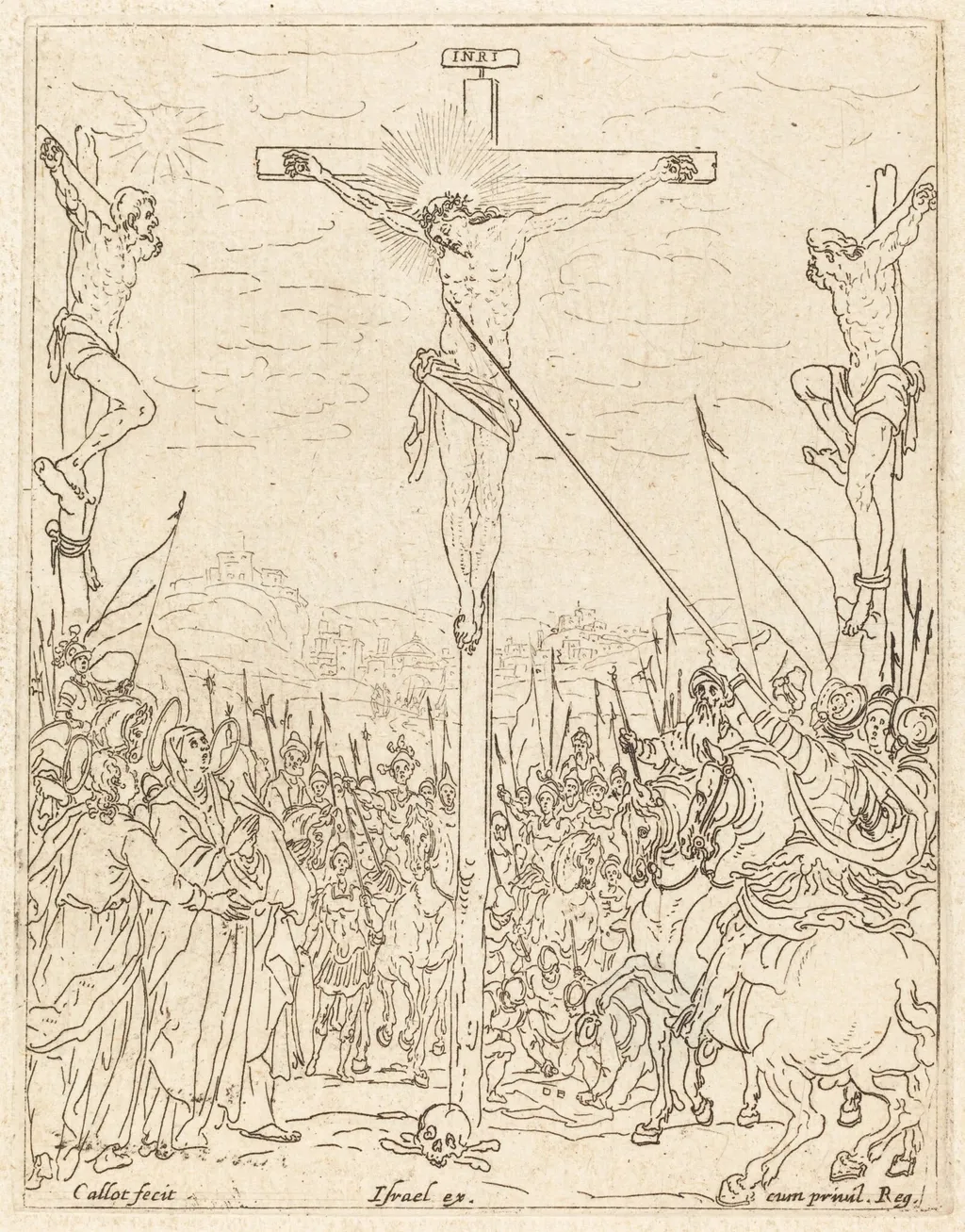
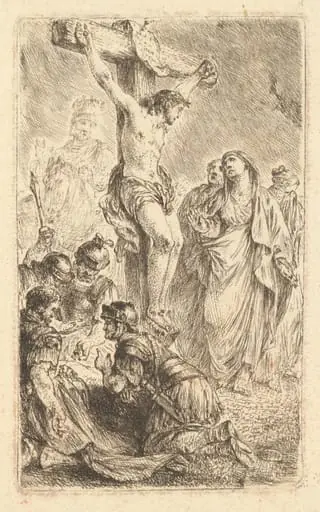
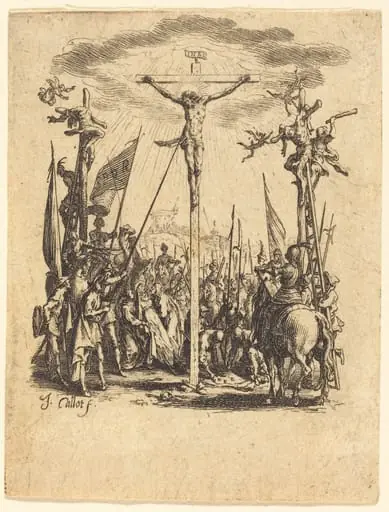
Christ on the Cross is an ink print by the Renaissance artist Jacques Callot. It dates from 1628 and is held in the collection of the National Gallery of Art.
About this work
Overview
Jacques Callot, a printmaker from the Duchy of Lorraine, produced this etching around 1628 as part of a series of religious subjects.
Jacques Callot, a printmaker from the Duchy of Lorraine, produced this etching around 1628 as part of a series of religious subjects. Executed on laid paper, the work exemplifies his mastery of the etching technique, which involved incising fine lines into a metal plate, inking it, and transferring the image to paper through pressure. The result is a delicate yet intense rendering that balances emotional gravity with technical control.
Subject & Meaning
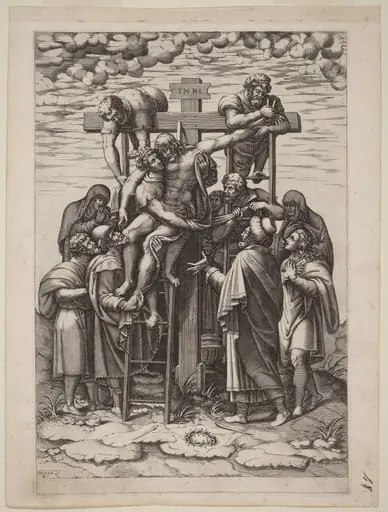
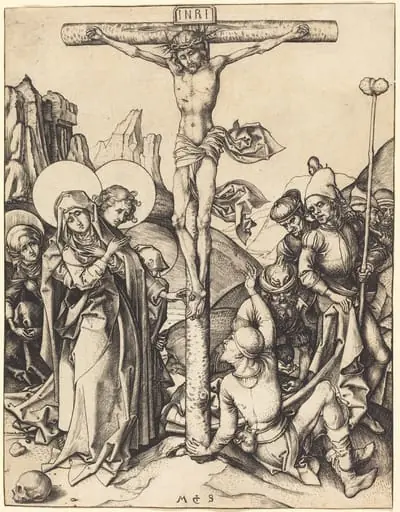
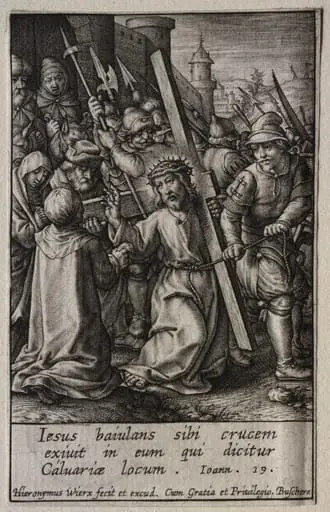
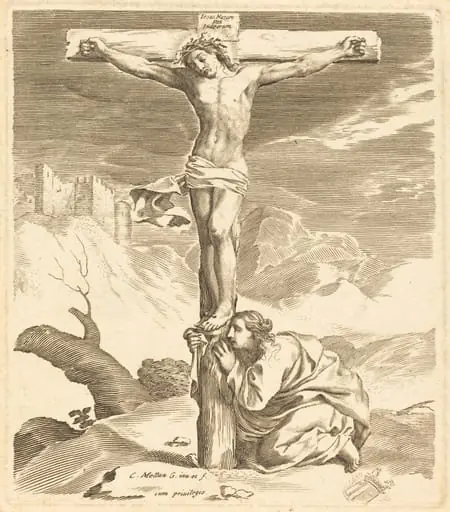
The image depicts Christ crucified, his body sagging under its own weight, ribs subtly outlined by the etched lines. The dark, empty sky behind him amplifies the solitude of the moment. Callot avoids overt theatricality; instead, he focuses on physical vulnerability and quiet suffering, aligning with devotional traditions that emphasized Christ’s humanity. The absence of onlookers or symbolic elements directs attention solely to the figure on the cross.
Technique & Style
Callot employed fine, controlled etching lines to model form and shadow, using varying densities to suggest volume and light falling across Christ’s torso. The thin, precise strokes create a sense of fragility, enhancing the emotional weight of the scene. His use of laid paper, with its subtle texture, adds a tactile quality to the print. Each impression, hand-pulled, carries minor variations, reflecting the handmade nature of early modern printmaking.
History & Provenance
This print emerged during a period when Callot was deeply engaged with religious themes alongside his more secular subjects, such as military campaigns and courtly life. While specific early ownership records are sparse, the work aligns with his broader output of religious prints circulated among collectors and religious institutions in 17th-century Europe. Its survival in multiple institutional collections suggests its early reception and enduring interest.
Context
In the decades following the Council of Trent, Catholic regions encouraged imagery that evoked personal devotion through emotional realism. Callot’s restrained depiction of the crucifixion fits within this climate, offering a contemplative alternative to the dramatic Baroque style of painting. His focus on minute detail and psychological presence reflects both Counter-Reformation piety and the growing appreciation for print as a medium for intimate spiritual engagement.
Legacy
Callot’s etchings, including this one, influenced later generations of printmakers through their technical rigor and emotional subtlety. His ability to convey depth and atmosphere with minimal lines set a standard for narrative precision in printmaking. Though less celebrated than his military scenes, this religious work remains a quiet testament to his capacity for conveying profound human experience through the medium of the engraved line.
Artist & collection

Artist
Jacques Callot was a baroque printmaker and draftsman from the Duchy of Lorraine.

 Holy Family at supper
 Restoration of the Aqueduct at Pisa
 Restoration of the Aqueduct at Pisa
 Square in Paris with Many Figures
 Square in Paris with Many Figures
 Horsemen Attacked by Robbers
 HOW WILL A COVERED PART BE CORRECTED?HOW WIKA A COVERED HEART DEED CORRECTED?
![Christ Walking on the Water [second plate], by Jacques Callot](https://artifactworldgallery.com/img/jacques-callot--christ-walking-on-the-water-second-plate--2069f3bfe4cb2126-w320.webp) Christ Walking on the Water [second plate]
Christ Walking on the Water [second plate]