Artwork
The Descent from the Cross
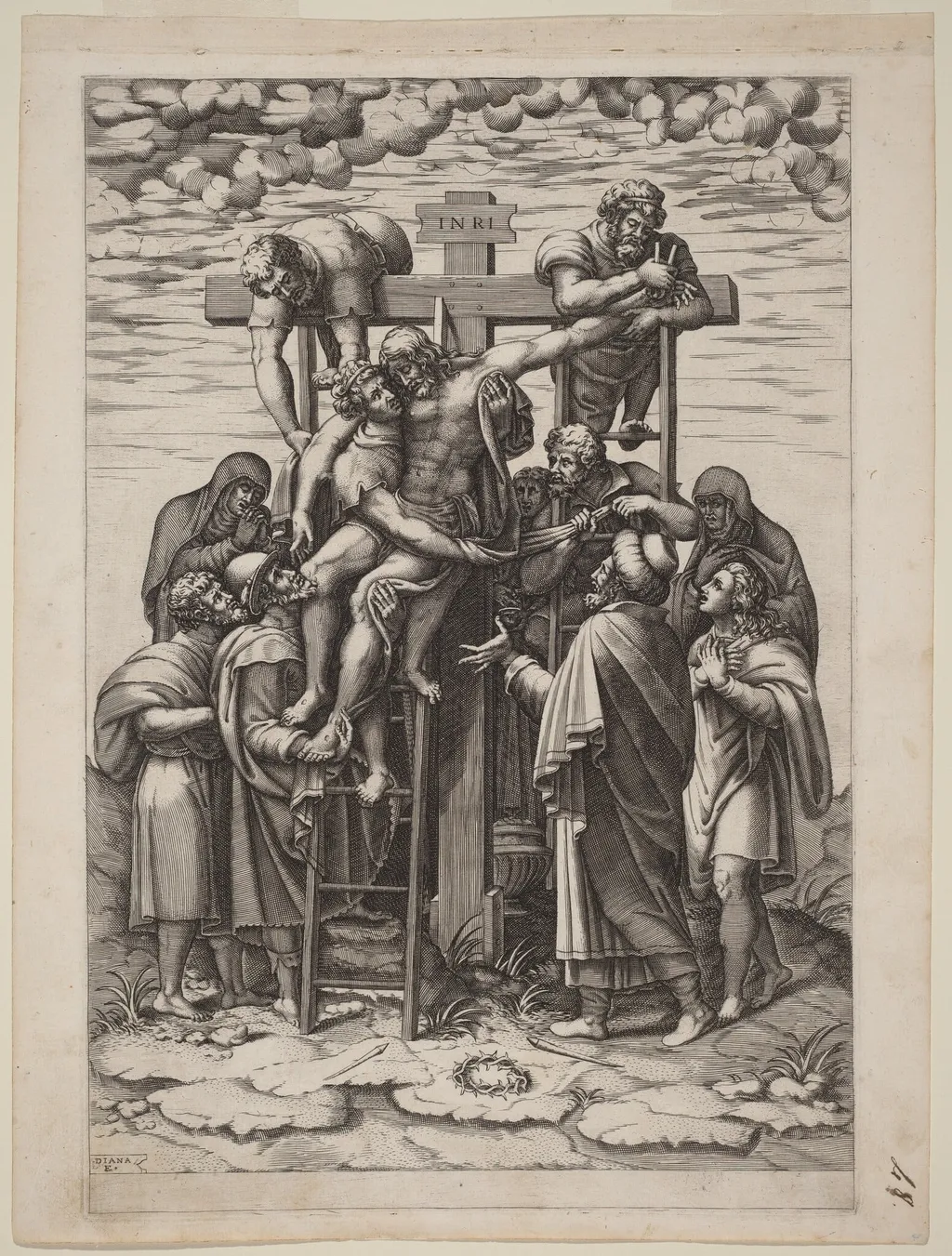
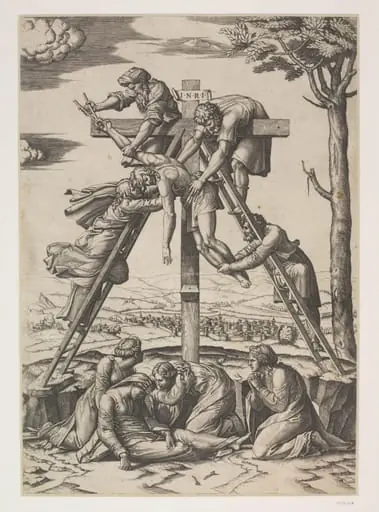
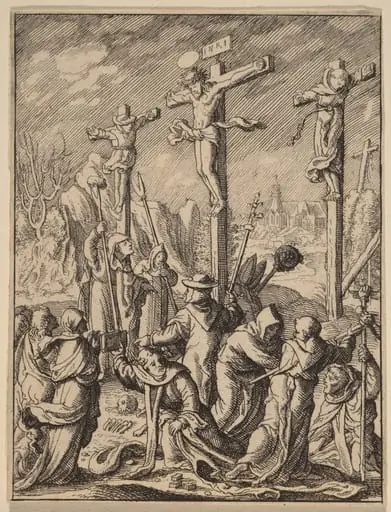
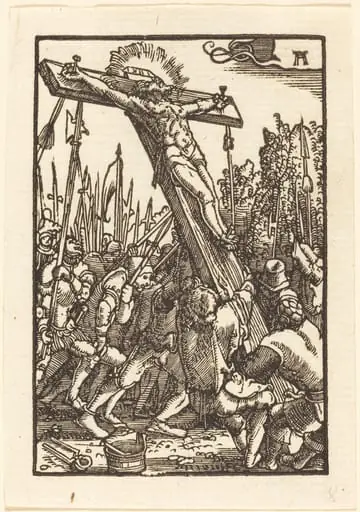
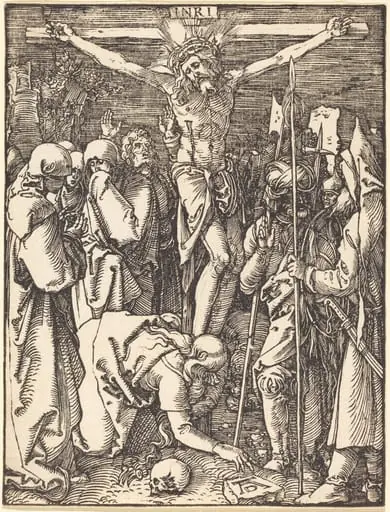
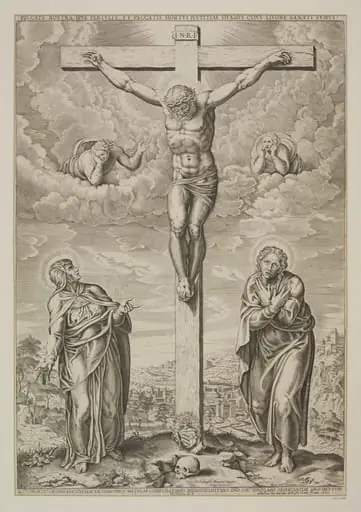
The Descent from the Cross is an ink print by the Renaissance artist Diana Scultori. It dates from 1563 and is held in the collection of the National Gallery of Art.
About this work
Overview
Rendered in fine lines on laid paper, the composition captures a solemn, tightly packed group of figures gathered around the vertical timber.
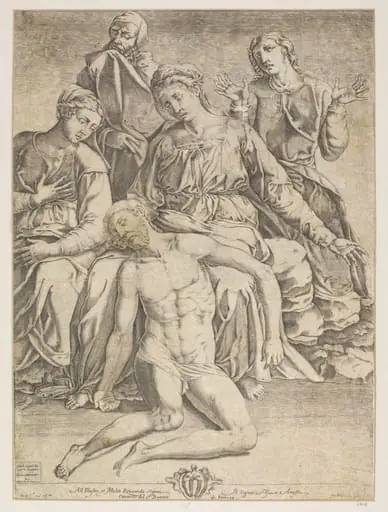
Created in 1563, this engraving by Diana Scultori depicts the moment Christ’s body is lowered from the cross. Rendered in fine lines on laid paper, the composition captures a solemn, tightly packed group of figures gathered around the vertical timber. The dark, clouded sky and uneven ground reinforce the gravity of the scene, while the artist’s precise incisions convey texture and emotional tension without color.
Subject & Meaning
The scene illustrates the biblical account of Christ’s removal from the cross after crucifixion. Figures, dressed in simple, period-appropriate robes, reach toward the lifeless body with varying gestures of grief and reverence. The inscription on the cross and the absence of halos ground the moment in human sorrow rather than divine spectacle, emphasizing communal mourning and physical vulnerability.
Technique & Style
Scultori employed fine, controlled engraving lines to model musculature, fabric folds, and facial expressions. Shading is achieved through cross-hatching and varying line density, not wash or tone. The composition’s crowded arrangement and shallow space reflect Renaissance print conventions, while the meticulous detail reveals the artist’s skill in translating complex imagery into monochrome relief.
History & Provenance
Diana Scultori, one of the earliest known female engravers in Italy, produced this work in Rome during the 1560s. It was likely made as part of a devotional or artistic exchange among print collectors. The plate’s survival and multiple impressions suggest its circulation within religious and intellectual circles, though early ownership records remain sparse.
Context
This print emerged during a period when reproductive engravings of religious subjects were widely distributed across Europe. Scultori’s work responded to popular compositions by male artists like Raphael, adapting them for intimate, private devotion. As a woman working in a male-dominated field, her engagement with sacred imagery carried both artistic and social significance.
Legacy
Scultori’s engraving contributed to the recognition of women in printmaking during the Renaissance. Though not widely exhibited today, her technical precision and compositional discipline influenced later generations of engravers. The work remains a rare example of female authorship in 16th-century religious prints, preserving her role in the history of graphic arts.
Artist & collection