Artwork
Destruction of a Convent
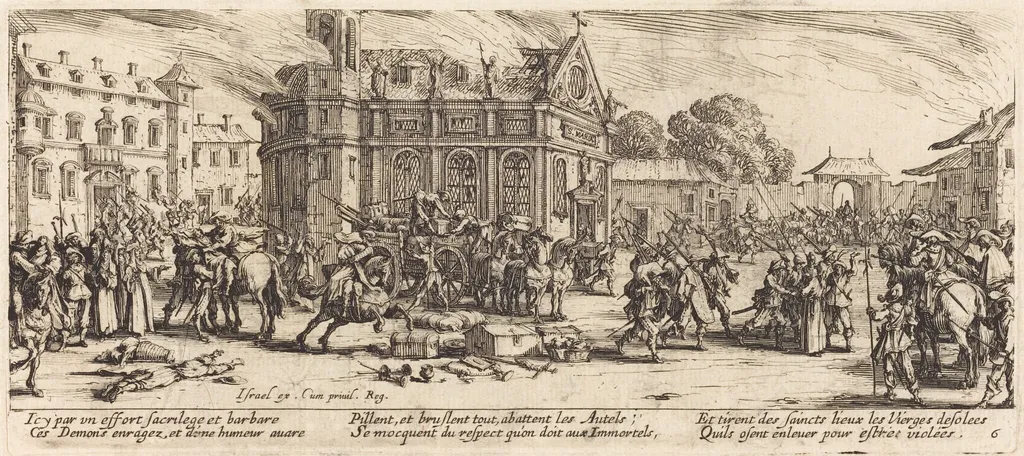
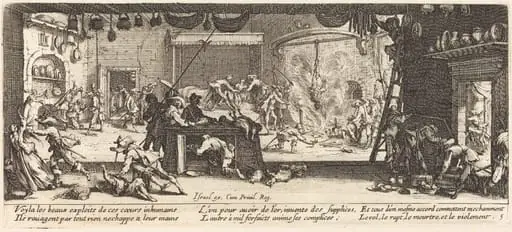
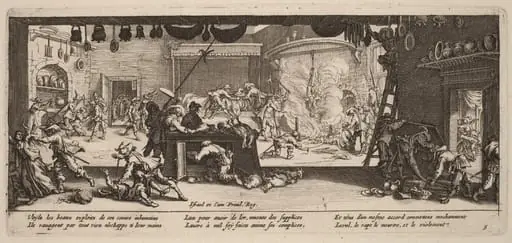
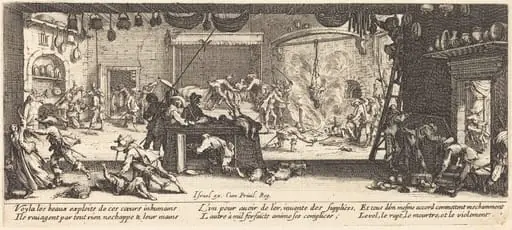
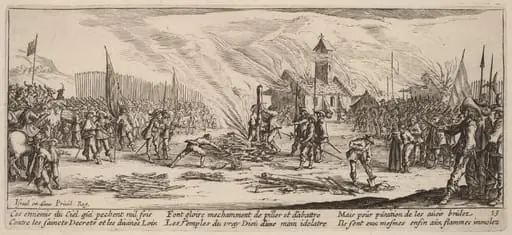
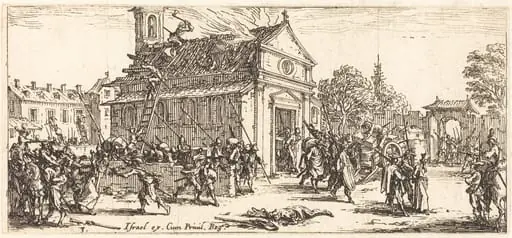
Destruction of a Convent is an ink print by the Baroque artist Jacques Callot. It dates from 1633 and is held in the collection of the National Gallery of Art.
About this work
Overview
Part of a vast body of over 1,400 prints, this work exemplifies his focus on documenting turbulent moments in early 17th-century Europe.
Jacques Callot, a printmaker from the Duchy of Lorraine, produced *Destruction of a Convent* around 1633 as an etching on laid paper. Part of a vast body of over 1,400 prints, this work exemplifies his focus on documenting turbulent moments in early 17th-century Europe. His technique combined meticulous detail with dramatic composition, turning printmaking into a vehicle for social and historical observation rather than mere illustration.
Subject & Meaning
The scene depicts armed soldiers attacking a religious building, with figures scattered in panic—some fallen, others fleeing. The architecture suggests a convent or monastery, implying a violation of sacred space. Callot does not glorify violence but presents it as disorderly and destructive, possibly commenting on the breakdown of social and religious order during the Thirty Years' War. The image functions as a moral warning against the consequences of unchecked aggression.
Technique & Style
Callot employed fine-line etching to render intricate details across a compact format. His use of deep shadows and sharply defined contours creates a sense of depth and movement, despite the monochrome medium. The crowded composition is organized with precision: each figure, garment, and fragment of debris is rendered with clarity, demonstrating his mastery of the etching needle and his ability to convey chaos without visual confusion.
History & Provenance
Created during a period of widespread conflict in Central Europe, the print likely responded to real events involving the looting of religious institutions by mercenary troops. While its exact historical trigger remains uncertain, it aligns with Callot’s broader series on war and its aftermath. The work circulated widely among collectors and intellectuals, contributing to the dissemination of visual commentary on the era’s violence.
Context
In the early 1630s, the Thirty Years' War ravaged the Holy Roman Empire, and religious sites were frequently targeted by marauding armies. Callot, though not a soldier, observed these events closely and translated them into prints for urban audiences. His work reflects a growing public appetite for images that confronted the realities of war, moving beyond idealized narratives to show its human cost.
Legacy
Callot’s *Destruction of a Convent* influenced later generations of printmakers who sought to document social unrest with documentary precision. His ability to compress complex narratives into single, highly detailed images set a precedent for political and war-related printmaking. Though not widely exhibited in his lifetime, his prints became reference points for artists and historians studying the visual culture of early modern conflict.
Artist & collection
Artist
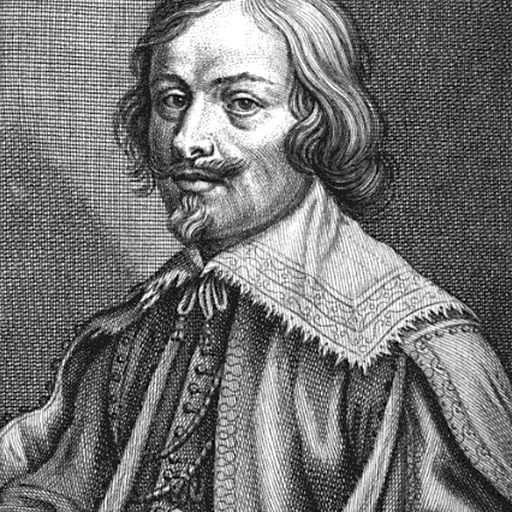
Jacques Callot was a baroque printmaker and draftsman from the Duchy of Lorraine.

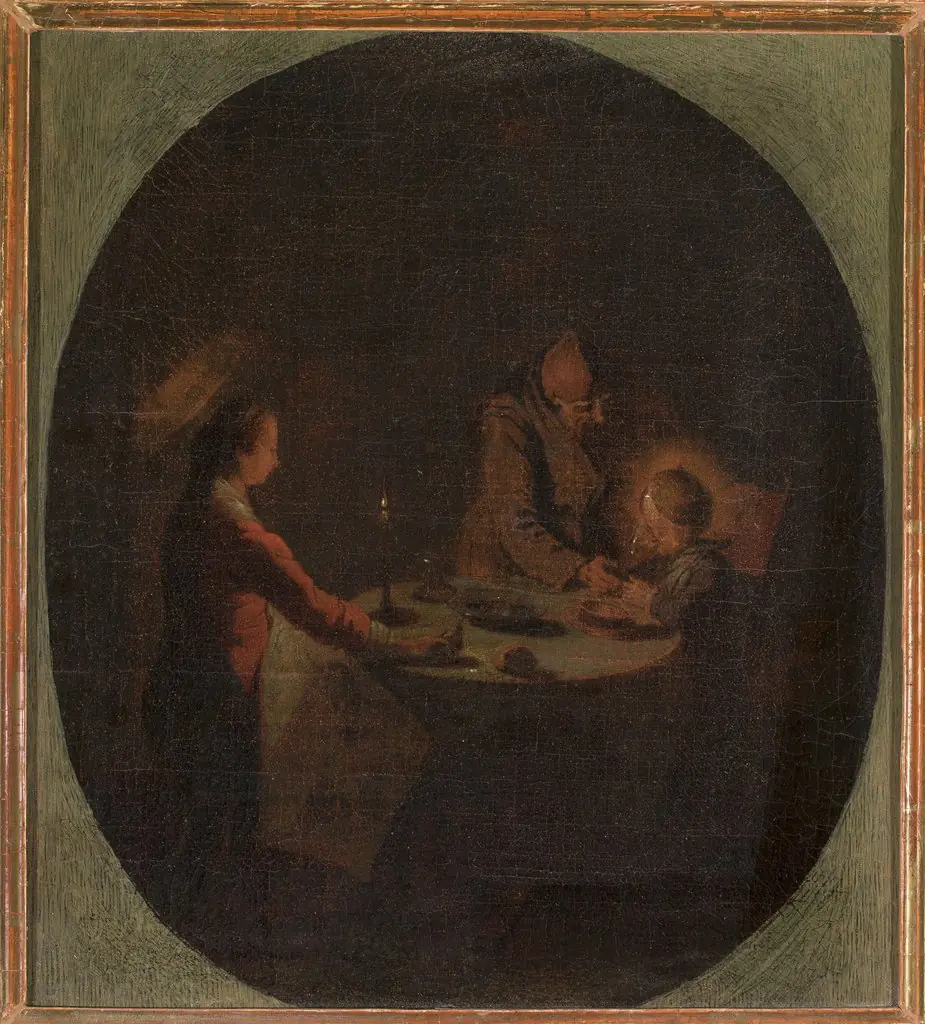 Holy Family at supper
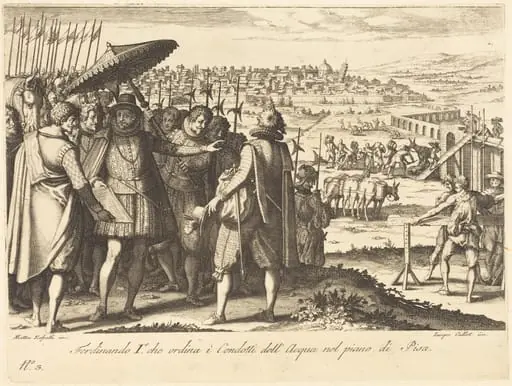 Restoration of the Aqueduct at Pisa
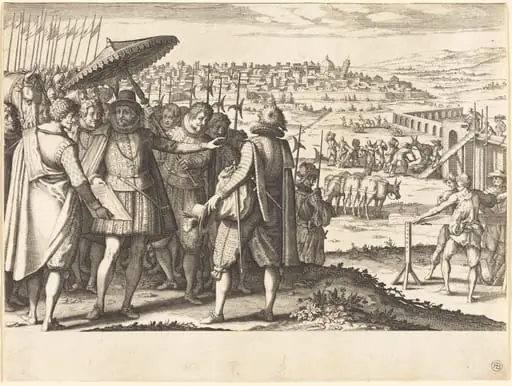 Restoration of the Aqueduct at Pisa
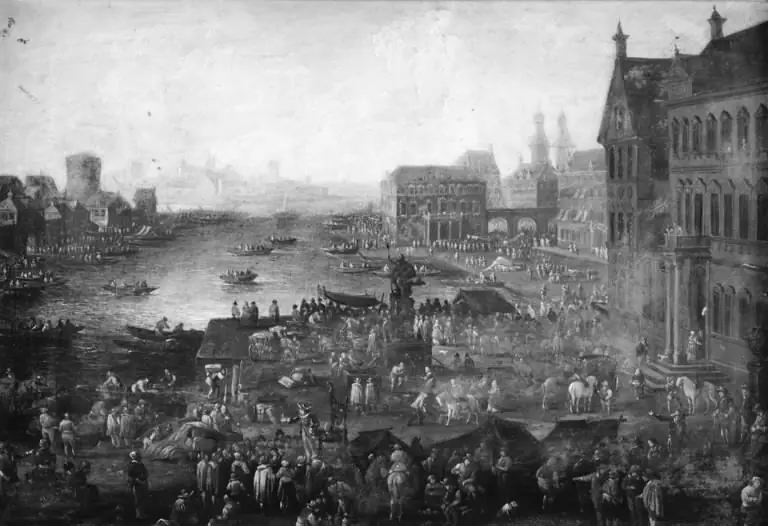 Square in Paris with Many Figures
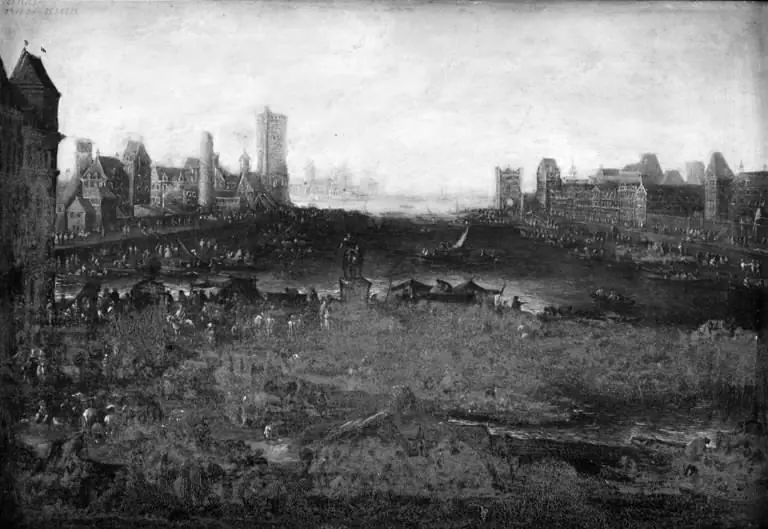 Square in Paris with Many Figures
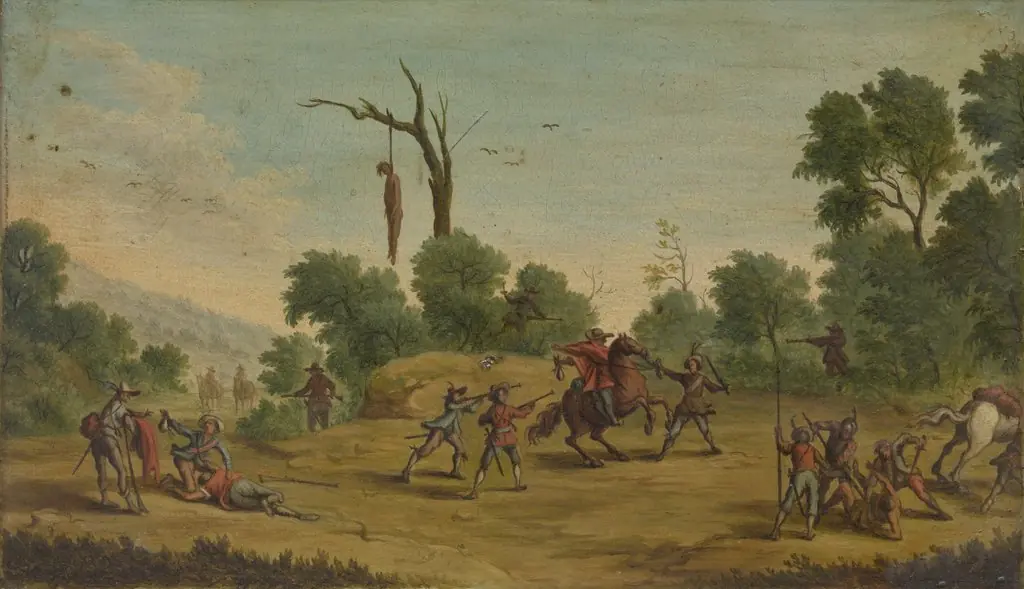 Horsemen Attacked by Robbers
 HOW WILL A COVERED PART BE CORRECTED?HOW WIKA A COVERED HEART DEED CORRECTED?
![Christ Walking on the Water [second plate], by Jacques Callot](https://artifactworldgallery.com/img/jacques-callot--christ-walking-on-the-water-second-plate--2069f3bfe4cb2126-w320.webp) Christ Walking on the Water [second plate]
Christ Walking on the Water [second plate]