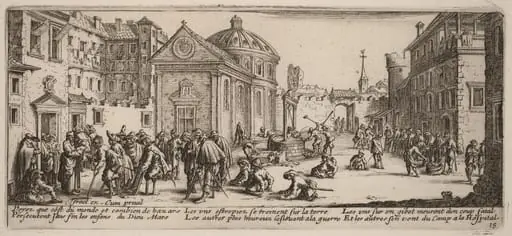
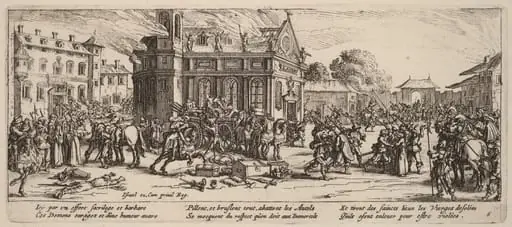
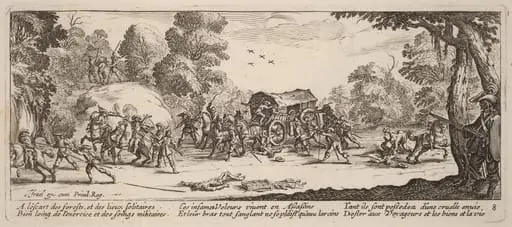
Artwork
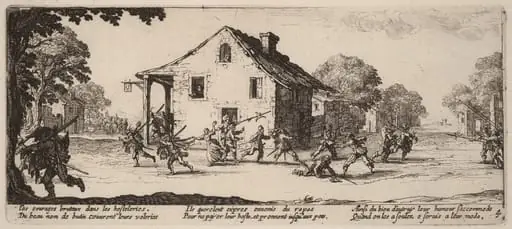
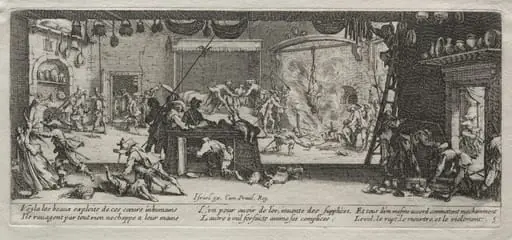
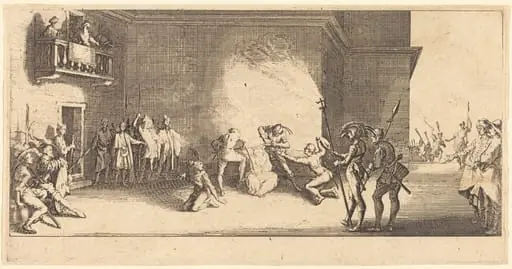
Plundering a Large Farmhouse
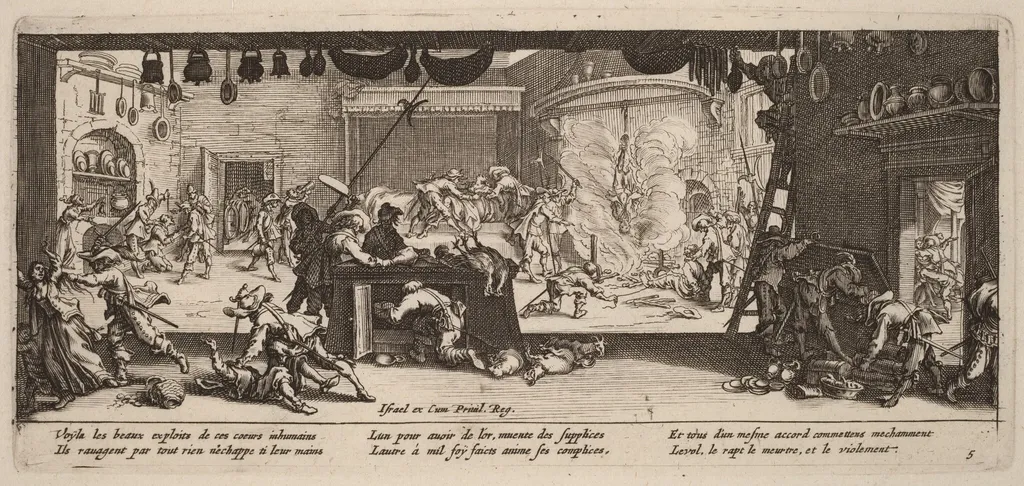
Plundering a Large Farmhouse is an ink print by the Baroque artist Gerrit van Schagen. It dates from 1642 and is held in the collection of the National Gallery of Art.
About this work
Overview
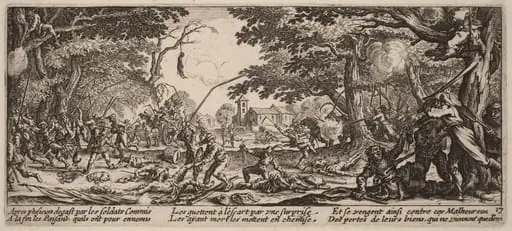
Gerrit van Schagen’s print titled *Plundering a Large Farmhouse* was produced in 1642. Executed as an engraving on laid paper, the work measures the chaotic intrusion of armed figures into a rural dwelling. The composition is densely populated, with figures both inside and outside the structure, creating a sense of frantic movement and disorder.
Subject & Meaning
The scene depicts a violent raid on a farmhouse: men wielding weapons force their way inside while occupants scramble, some fleeing, others collapsed on the floor. Overturned furniture, a burning hearth, and looting figures convey a narrative of aggression and loss, suggesting broader themes of greed, conflict, or the ravages of war.
Technique & Style
Van Schagen employed fine engraving lines on laid paper, allowing intricate detail such as suspended tools, animal forms, and textual elements in French at the bottom. The dense cross‑hatching creates deep shadows and a crowded atmosphere, characteristic of mid‑seventeenth‑century Dutch printmaking that emphasizes narrative complexity.
History & Provenance
The print dates to the early 1640s, a period of intense political and military upheaval in the Dutch Republic. While specific ownership records are scarce, the work survives in several European print collections, indicating its circulation among connoisseurs of narrative prints during the era.
Context
Created during the Eighty Years’ War and subsequent internal conflicts, the image reflects contemporary anxieties about civilian vulnerability amid armed strife. Dutch artists often used domestic scenes to comment on larger societal disruptions, and van Schagen’s depiction aligns with this tradition of moralizing visual commentary.
Artist & collection